
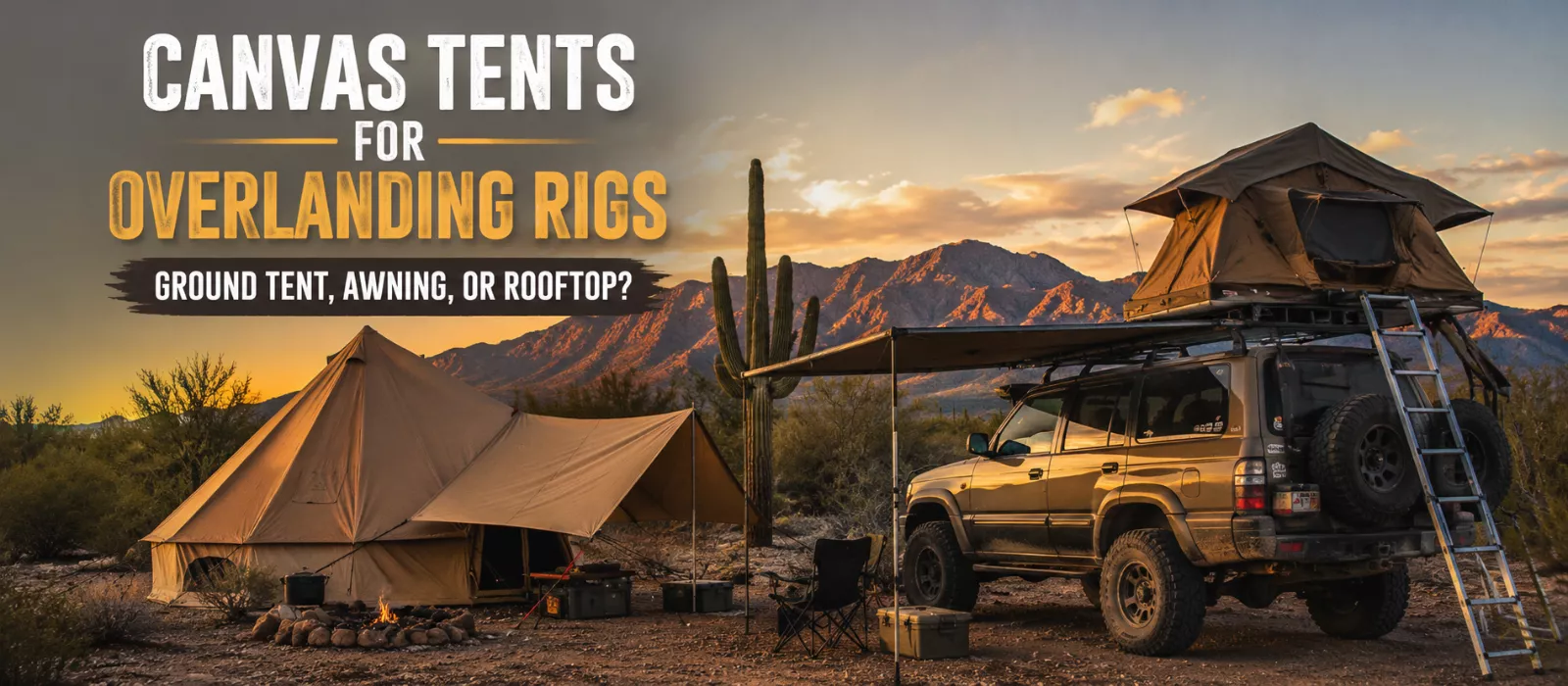
One of the pure joys of living the outdoor life is getting an overlanding rig squared away: tires, the lift, recovery gear, communications. That seems to be the easy part. Too often, people end up bolted to one option before they’ve really thought through what their trips will actually look like.
Table Of Contents
There are three practical shelter setups worth thinking about before you get backed into a corner with the rooftop tent: a ground tent, a vehicle-mounted awning system, or the rooftop tent. Each one works well, but each fits a certain kind of traveler and a certain kind of trip. If you’re still working out the basics of what overlanding actually involves, there’s a beginner’s guide to put you at a good starting place. Today we’re picking up on making the best decision about your shelter and walking through all three options to make sure you have a plan when you set out to buy.
What Does a Ground Tent Actually Get You?
If you’re out there overlanding, the case for a ground tent is largely for space and flexibility, and it’s a better case than the rooftop crowd gives it credit for.
For many, you have to have the interior space, that’s obvious. When you’re building out a rooftop tent, the only thing you’re really able to do is sleep. There’s no food prep in that space, no gathering around the table for cards after a long day, or kicking back in your camp chair away from the sun. A canvas tent for overlanding gives you room to stand, sit out a storm in actual comfort, store gear out of the weather, and in cold situations, run a wood stove. If you’re the type that sets out in all four seasons, that last point is the nail in the coffin. A stove in a winter camp is an absolute game changer and takes overlanding to a new comfort level.
The other major factor a ground tent has going for it is it’s not permanently attached to anything. It works when you’re driving your rig, and it works when you’re not. You can use it at a family campout, lend it to a friend, or throw it into the back of a different vehicle without buying anything new. The argument here is versatility.
The honest tradeoff for the overland ground tent is setup/take down time and the rugged ground you might be sleeping on. A ground tent takes longer to pitch than a rooftop unit, and it needs reasonably smooth ground. On a technical trail where you’re parking at whatever angle the terrain gives you, a rooftop tent will win on convenience. At a planned campsite with defined campgrounds, the ground tent’s advantages take the prize.
Matching the tent to the setup:
The Rover Scout Tent is the right call for a solo overlander or a minimalist two-person rig. At 6’x8’ with a 15-minute setup time and a built-in stove jack, this is the ideal setup and doesn’t require a team to pitch.
The Bell Tent works well for a couple or a few people that want some genuine headroom and usable interior space. A single overlander can use a 13’ Regatta bell tent on their own, pitch it in under 30 minutes, and set up a tent wood stove without a hassle. The ease and simplicity of having immense comfort on your own is a huge advantage.
The Wall Tent is ideal for long-term, basecamp-style overlanding where you’re staying in one spot for several days and comfort matters more than pack size. This is the most involved of the canvas tents to pitch and will require a partner, but nothing else in the lineup matches it for roominess and four-season comfort. If your plans include some extended trips, then this is the overlanding tent to add to your kit.
What About an Awning Setup?
In overlanding, an “awning” usually means a shade or rain cover that mounts to the vehicle’s roof rack and extends off the side of the rig. This isn’t a standalone tent. It’s a shelter that covers the space immediately next to the vehicle, typically a simple ground setup is propped underneath the cover or a lightweight cot is placed alongside the truck or SUV.
The biggest selling point for an overland awning setup is that it’s very fast. Quick deployment, minimal footprint, and it doesn’t add to the camp setup time in any meaningful way. You simply pull into camp, drop the awning, and you have shade or rain cover in a couple minutes. This is a good method for a quick lunch stop, overnight trips in good weather, or a short-term base for a day of riding, hiking, or trail running.
The honest limitations are, however, very real. An awning doesn’t give you an enclosed sleeping space, proper weather protection when it gets bad, or anything close to the interior space of a ground tent. It really is a glorified shade structure, not a shelter. If your trip involves anything like cold nights, rain, wind, or more than one person trying to sleep comfortably, then an awning isn’t the answer.
Right now, White Duck doesn’t carry a vehicle-mounted awning. What the lineup does include is a canvas tarp selection that serves the same flexible purpose of shade-and-rain cover without requiring a rack-mounted system. Rig a canvas tarp off the side of a truck, or between the trees and the vehicle, and you’ll get most of what an awning setup provides with considerably more flexibility in where and how you set it up.
What Do Rooftop Tents Actually Offer?
You gotta give the rooftop tent its credit. They are extremely popular, and folks are keen on them.
The setup speed is legitimate. A hard-shell rooftop tent opens in under two minutes. You pull into your spot, pop the lid, drop the ladder, and you’re done. For overlanders who move camp frequently and don’t want to spend 20 minutes pitching a tent every evening, this arrangement is ideal.
Sleeping off the ground also has its real advantages in specific environments such as rocky terrain where finding some smooth ground is sometimes not so easy. Areas with abundant wildlife can also be concerning. The most obvious consideration is that some folks don’t want to deal with moisture and insects. All of that’s fair.
While the benefits are real, so are the tradeoffs. A rooftop tent is permanently mounted to one vehicle. This is a big one. If that vehicle is in the shop, so is your shelter. Also, the added roof weight affects gas mileage, and the added height affects clearance on tight trails and in low-clearance parking lots. The space when it’s pitched is barely big enough for sleeping. There will be no lounging or spending any kind of meaningful time inside the rooftop tent. And to date, no rooftop tent is stove-compatible. It is not worth risking burning down a whole vehicle to warm a meal on a single burner.
If this is the direction you’d prefer to go, it’s not a bad setup for your rig. Just know what you want out of your setup before you invest.
Which One Should You Actually Buy?
A good rule of thumb to keep in mind for all of your outdoor gear is this: The best gear is trip-dependent, not trend-dependent.
If you’re a solo overlander or a two-person crew moving fast, camping light, and you need setup speed over comfortable space, a rooftop tent is not a bad idea at all.
If you’re overlanding with a family, camping in cold weather, staying in sites for more than a night or two, or want a shelter you can use beyond the rig and more than just sleeping, a canvas ground tent earns its keep in an instant. The space advantage adds up every day that you’re in camp. If you want to head into town for more supplies, the canvas tent will be there waiting for you when you get back. The tent wood stove becomes essential when the temperatures drop, and the cost per use on a canvas tent looks very different over five or ten years when you consider canvas doesn’t degrade like nylon and polyester do. The 2026 canvas tent price guide breaks down what the math will actually look like across tent types so you can weigh your investment.
If you’re mostly day-tripping and want a quick shade structure for lunch stops and short overnighters in good weather, a canvas tarp rigged off the side of your vehicle is a good solution without a permanent fixture bolted on your vehicle.
FAQ
Can you use a canvas tent for overlanding?
Yes, and in many ways they’re more practical than rooftop-tent camping, although they don’t get the credit they deserve. Canvas tents for overlanding work for minimalist solo rigs to basecamp-style family trips. They are not permanently attached to the vehicle, so they work on any trip and with any rig. One thing to consider is that they need reasonably flat ground and take longer to pitch than a rooftop tent.
What’s the real difference between a ground tent and a rooftop tent?
Space and flexibility versus speed and convenience, those are the major advantages of both. A ground tent gives you significantly more room, possibility of a stove, and the chance to use it off the vehicle. A rooftop tent sets up in minutes and keeps you off the ground without needing a flat or smooth campsite. Which one wins depends entirely on how you travel: fast and light favors the rooftop tent while the longer stays and colder conditions favor the ground tent.
Do overland tents need to work with a stove?
Not always, but it will matter for cold-weather trips. If you’re overlanding into late fall or at elevation, a tent with a stove jack turns a survival exercise into a comfortable camp. The Rover Scout Tent and the Regatta Bell Tent both include a stove jack as a standard feature. A rooftop tent does not, and that’s a serious limitation once temperatures get below freezing.
Are large canvas tents allowed in national parks?
Generally yes, but with some exceptions. Most national parks allow canvas wall tents and larger ground tents, but some parks restrict tent size or limit large structures to designated areas. If you’re planning an extended overlanding trip through a national park, check the specific park’s campsite regulations before you arrive rather than assuming it’s okay.
Closing
The honest takeaway here: match the tent to the trip. A rooftop tent is a legitimate advantage for a specific kind of overlanding: moving fast and light with only one or two people. A canvas tent is the right answer for everyone else: families, cold-weather trips, long stays, and anyone who wants a comfortable shelter. For everything else you’ll need on your rig past the shelter, the essential overlanding gear guide covers the rest of the kit. Start with the shelter that fits your needs, and build from there.



No Comment! Be the first one.