
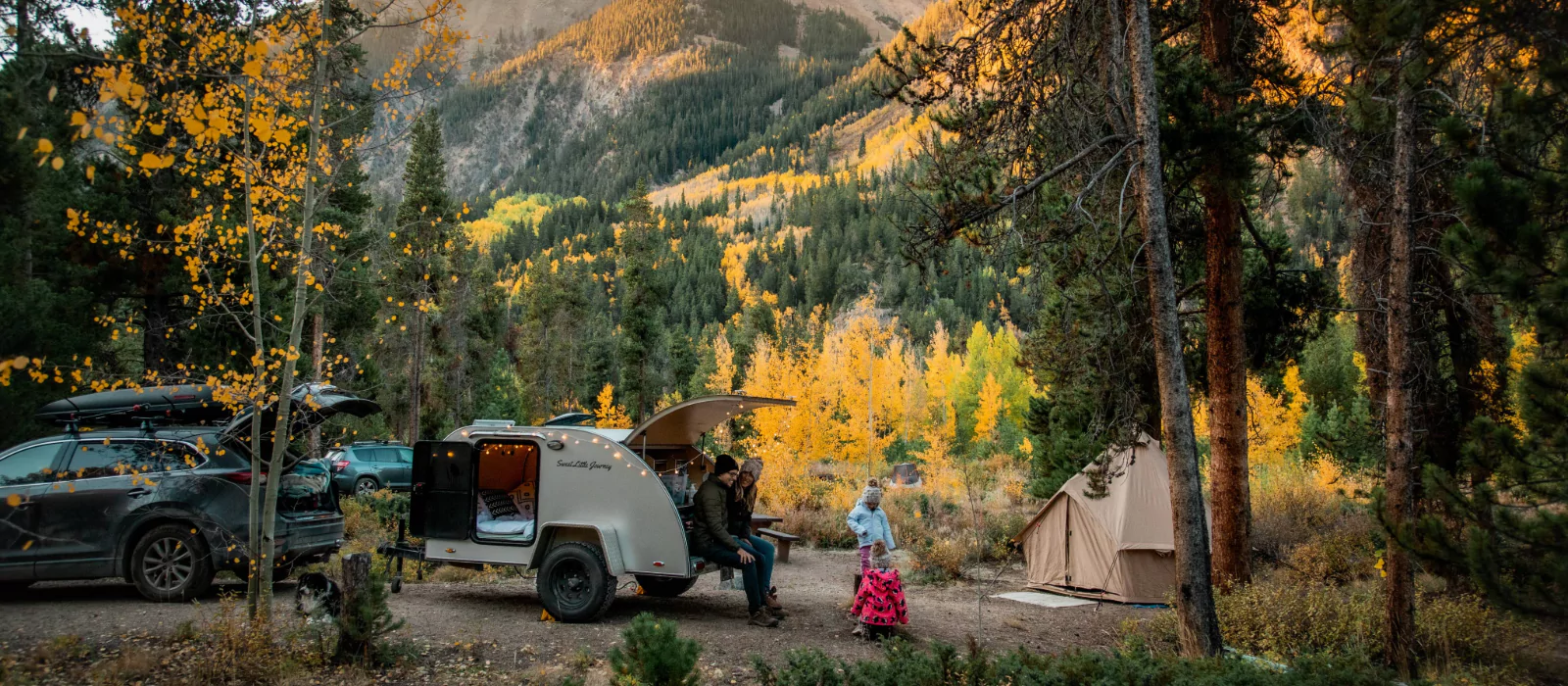
To experience all the beauty and adventure the outdoors has to offer, you have more than a few options for travel, activities, and overnight stays. The well-loved campground experience remains a fantastic option, with designated areas for campsites and a varying amount of amenities to make your stay more comfortable while still allowing you to connect with nature. You could pack a bag with an ultralight tent and download your maps for a multi-day backpacking trip, setting up camp in a mountain outcropping overnight.
Table Of Contents
Dispersed camping also welcomes a growing community to explore the outdoors with a more spontaneous adventure. But if you’re looking for the perfect combination of a road trip and a camping trip—where you cover a substantial amount of ground with the freedom to stop and see the sights along the way—you’ll want to learn more about Overlanding.
What is Overlanding? The Basic Rundown
Overlanding is a blend of road-tripping and car camping, where you move “over land” in a vehicle through mostly remote or unpaved areas for an extended period. While road trips often find travelers on major roads going between notable destinations, Overlanding will invite you out into more rough terrain and will teach you to enjoy the journey just as much– or even more– than any destination you may set.
There’s no right or wrong way to structure an Overlanding trip, and many people simply set out on the road with their camping gear to see where the journey takes them. Many overlanders will drive in an off-roading vehicle like a 4×4 so they can tackle unpaved roads, but creating your own path isn’t a necessity.
Hit the road with a focus on moving through dispersed areas like backroads or forest service roads and camping at multiple locations along the way. Overlanding requires you to navigate over roads that aren’t often traveled and most likely aren’t well marked, and much of the camping experience itself overlaps with a dispersed camping adventure. You may have a final destination in mind, or you may just hop from one to another dispersed site that you find along the way until your trip’s duration comes to an end.
An overlanding setup should be self-sufficient and follow Leave No Trace principles, with any travelers packing in and packing out everything that goes into an overnight camp– waste included. While an overlander is often someone who doesn’t want to have limits on where they explore, any responsible outdoor enthusiast should always focus on keeping their surroundings as free from outside disturbances and permanent damage as possible.
When Did It Begin? A Brief History
Although the term “overlanding” has grown in popularity in recent years, the action of traveling over a relatively unexplored piece of land for long periods has been around for centuries. It’s generally accepted that the first use of the term comes from the Australian outback, where farmers would move cattle over vast stretches of land for months on end. Once roads and highways were built across the continent, travelers used the phrase as a sort of shorthand to describe their time across the outback.
What Should I Bring? The Packing List
It can take more time and intentionality to plan for an overlanding trip than for a weekend getaway at a nearby campground. While many of the basic supplies and safety skills remain the same, overlanding by definition will cover more ground and span a significantly longer period. Your planning and packing list will have to be adjusted accordingly.
Reliable Transportation
It may go without saying, but any successful overlanding trip will need a reliable vehicle. You can be an overlander with any sort of motorized vehicle (although a motor scooter or similar vehicles, while technically motorized, might not be recommended).
Overlanders who plan to travel over more intense and varied terrain will travel in a 4×4 with modifications like upgraded suspension and underbody protection. You can comfortably overland with a 4-wheel-drive station wagon or truck as well. Whichever vehicle you choose to travel in, make sure you trust its capabilities and have the necessary equipment for repairs or car emergencies if you encounter them along the way.
Some vehicle essentials include:
- Jumper cables
- Jack
- Fire extinguisher
- Full-size spare tire
- Spare key is hidden outside the vehicle in a secure location
- Extra fluids (oil, coolant, etc)
- Air compressor
- Heavy-duty poly tarp
Durable Shelter
Now that you have your means of transportation, you’ll need to pack exactly what you plan to use at your campsites each night. Since you won’t know exactly where you’ll be staying, it’s important to bring a durable and reliable tent with materials that will keep you safe and protected in any weather.
A four season tent, made from canvas or a canvas blend that is breathable yet well-insulated for colder nights, is a great choice for unexpected terrain or inclement weather. Some four season tents have windows layered with zippable mesh lining, perfect for keeping bugs away on warm nights.
Four season tents give you a little extra standing space for additional comfort, and while their main drawback is their weight when compared to a two or three season tent made of a thin nylon or poly-nylon material, your vehicle won’t even notice an additional few pounds like a backpacker’s load might.
When camping with a three season tent, bring along a rainfly sheet and a ground cover even if you don’t see any rain in the forecast. It’s common to be surprised by an overnight drizzle, and though you might dry out during your time in the car the next day, your gear will still be wet when it comes time to set up a new camp. Be proactive by bringing along the right equipment for protection against dew and rainfall.
Proper Clothing
Do your research before leaving, and pack your clothing appropriate to the weather in your area and the places you plan to visit on your journey. Invest in good-quality clothing that is crafted with camping in mind. Water-resistant windbreakers are a perfect outer layer to help keep moisture away from your body and allow your inner layers to insulate if you’re in colder temperatures. Pants and jackets meant for adventure wear and rugged conditions, such as the Aztec Tactical Pant, provide a strong base layer that will be resistant to tearing and wear.
When you’re on a longer journey, you’ll need to stop and wash clothes along the way. Packing clothes made of quick-drying fabrics like nylon or polyester makes laundry days easier and helps you save space and money by reducing the need for extra clothing while waiting for your gear to dry fully.
Keep your personal items and clothing included, streamlined, and simple. Even though you’re traveling by car instead of on foot, having excess equipment around will only clutter your space and slow down your camp setup and teardown process, keeping you from the road and your next adventure.
Camping Essentials
As always, never leave home on an outdoor adventure without the proper safety equipment. This includes navigational tools with physical backups of maps or directions, fire starters, a flare kit in case of emergency, first aid, a reliable water filter for purification, a sharp knife, and a satellite communication device.
Overlanding also will take you through areas you’ve most likely never experienced before, so know that you might encounter people and places that are unfamiliar. Respect your new surroundings and don’t be afraid to ask for help if needed. Overlanding doesn’t have to be a solo journey– you may find that you run into new friends along the way, and it’s always good to have contact with backup nearby in case of an emergency. You can help grow the overlanding community and allow more people to safely and considerately experience the thrill of adventure and discovery by exchanging advice, stories, and recommendations for gear or routes.
General Tips and Tricks
Overlanding may require a bit more planning and commitment than a casual weekend by the lake, but if you love the journey, the memories and experiences that you’ll have are more than worth the investment. Here are a few quick tips and tricks to keep in mind before you pack up and head out.
- Start with shorter trips– a weekend or a few days– before building up to multi-week or months-long excursions. This will help you get a sense for your gear and give you a chance to fill in any gaps or get rid of any excess before a longer trip.
- Learn and follow Leave No Trace and Tread Lightly principles.
- Consider your tires. Is it time for an upgrade to offroading tires? Is your traction worn down and not well-suited for a lot of time on the road? Make sure your car is in good condition before leaving to save yourself time and energy later on.
- Air down your tires to a safe psi, ranging from 20-28 psi depending on the specifics of your car, before driving over gravel or rough dirt roads. This will give your tires more stability over uneven ground and lower the chances of puncturing a tire. Bring your portable air compressor along to air back up to a baseline psi once you hit main roads again.
There’s a lot of information out there about the specifics of gear, overlanding modifications, and extreme price tags. As long as you are confident in your basic equipment and are willing to learn as you go, though, there’s no need to invest in a whole new vehicle or camping setup to enjoy a safe and memorable overlanding trip.
Have fun, and drive safely!


No Comment! Be the first one.