
Consider for a moment your ideal wedding setup, or the bridal shower you’ve been dreaming about for years. Think about the season. Think about the day. Think about the weather. Then consider that on any given day, in any season, none of that is guaranteed to go as planned.
Table Of Contents
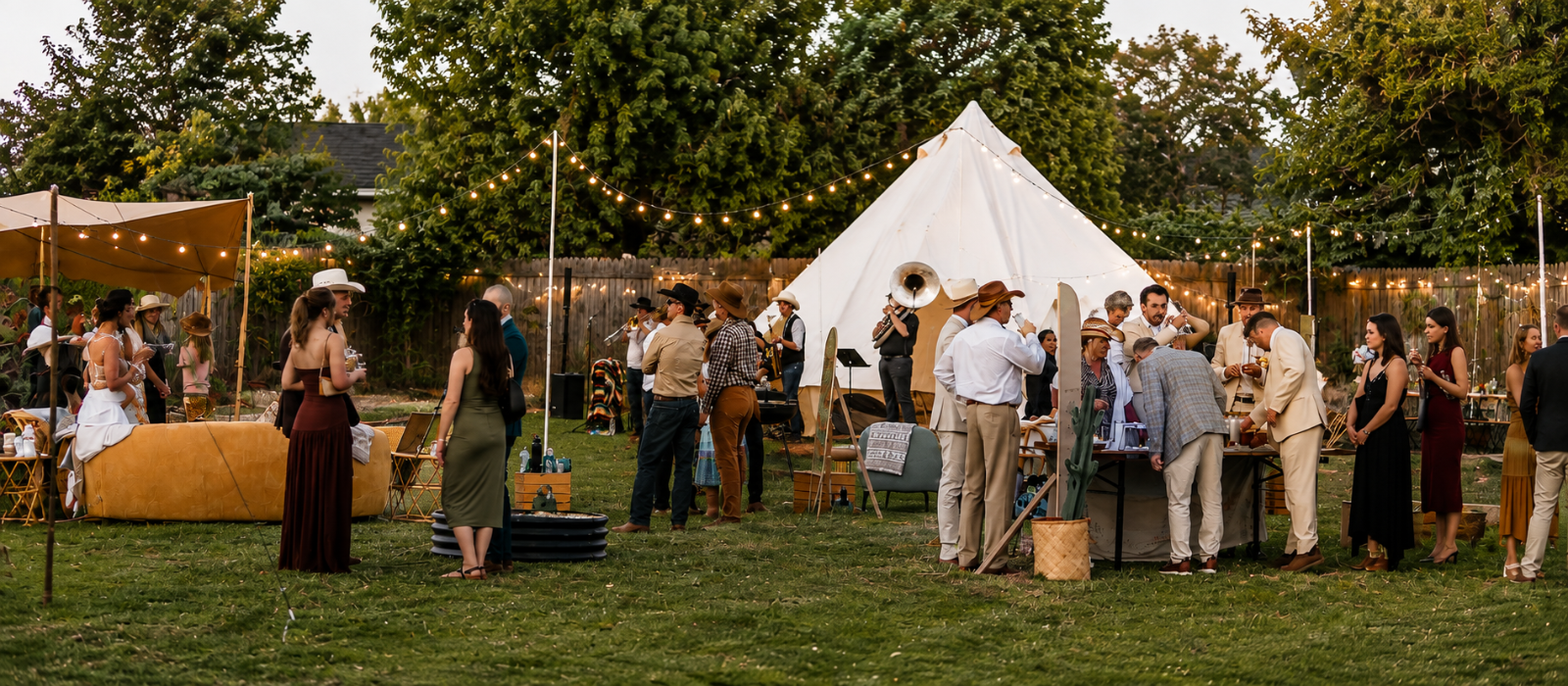
To solve the weather issue, you can rent a venue that comes with a coordinator, a contract, and a catering minimum, on a bill that can double between the first quote and the final invoice. One popular alternative is a micro-wedding in the backyard. It helps avoid unnecessary fees while still keeping the magic of the day intact. The catch is that a backyard still looks like a backyard unless something anchors the space and brings it up to the level of the occasion.
A bell tent does that better than anything else at this scale. The silhouette alone changes the atmosphere of the yard; its architecture is genuinely beautiful, both new and familiar at once. As guests enter, they immediately understand they’ve stepped into a wedding, not just a backyard with chairs in it. This guide covers how to choose the right size for your guest count, how to divide and use the interior space, how to style it without overcomplicating the decor, and how to plan for the one thing nobody wants to think about on a wedding day: rain.
What Size Bell Tent Do You Actually Need?
The obvious answer depends on how many people are coming and how you intend to use the space. If you’d like to serve a meal or provide seating for a bell tent bridal shower, you’ll need more space than a standing cocktail-style setup for the same headcount. The same logic applies to a backyard micro-wedding: same guest count, more space needed for a seated layout.
For a backyard bell tent wedding or bell tent bridal shower, the smaller camping-oriented sizes aren’t going to fit the celebration. For these events, consider the larger Regatta sizes along with the Altimus and Avalon models. These are built for the kind of roomy, spacious interior you’ll actually need, room for a ceremony area, a seating section, and a table or two for the cake and gifts, without everyone pressed against the canvas wall. Lay out the measurements of the space you’ll need and confirm the dimensions of the bell tent you want before committing to a size or model.
A useful rule of thumb: if your guest count is pushing the upper limit of what one tent can comfortably hold, go up a size. At a wedding or bridal shower, people want room to move around, and more movement means more space.
How Do You Actually Lay Out the Space?
The instinct is to think about everything you need to fit inside the tent and start arranging. For a small guest count and a very large bell tent, that works fine. But for a full micro-wedding, the smarter approach is to decide what actually needs to be inside the tent and strip it down to that. Use the tent as the anchor point for the event and let the rest of the festivities extend outside.
For the backyard wedding tent setup, holding the ceremony inside the tent is a practical, weatherproof choice for the most important part of the day. Arrange chairs in two short rows with an aisle down the middle, facing a simple floral arch or altar at one end. The center pole can be draped with greenery or fabric in your chosen colors. Vows happen inside, then guests move outside for cocktails and seating on the lawn. The tent becomes the backdrop for ceremony photos, its warm canvas tone framing the couple and family.
If the event stays primarily inside, divide the space into thirds: a ceremony or focal area near the center pole, a lounge or seating section around the perimeter, and one dedicated space with a small table for gifts. For a combination of inside and out, plan for a ceremony followed by a celebration hour outdoors with a toast. In case of poor weather, keep a few family members or friends on standby to reset the tent as a dance space later in the evening.
Tent placement in the yard matters too. A bell tent set against a treeline, a vine-covered fence, or a blooming garden bed makes for noticeably better photos for the couple and their wedding party.
Styling and Decor: What Actually Moves the Needle
Even before a single piece of decor goes up, the warm tone of the canvas, the conical roofline, and the natural light through the bowed sidewalls already deliver an inviting atmosphere. The styling job is a complement to the tent, not a replacement for it, and a few suggestions from the pros added to your own style go a long way.
String lights with exposed Edison bulbs are the highest-impact addition for the least effort. Yellow or orange filaments accentuate the color palette of a desert red or Tuscan sun bell tent. Skip the blue light, which feels too clinical for a wedding, like a doctor’s office. Drape the lights from the center pole outward to the tent walls, or hang them in loose loops around the interior.
A rug brings the room together. It defines the floor space, adds texture against the canvas, and photographs well. It also keeps traction underfoot for dancing and hides the occasional spilled drink. A White Duck customer who runs pop-up glamping stays and private events, and also hosts backyard bell tent weddings and birthday celebrations with the Regatta bell tent, is real proof this exact setup already works.
Vases, draped blankets, linen, gauze, and a bit of eucalyptus round out the space without adding clutter. Mixing in a few of these fabrics and textures is what small wedding tent decor is really about, tying the whole palette together.
The Practical Side Nobody Plans For
A camping trip can be rescheduled. A wedding date can’t. This is where a useful guide earns its keep.
Rain. A canvas bell tent handles light to moderate rain well. The fabric sheds water when properly tensioned, and the interior stays dry in normal conditions. For a full-day event with uncertain weather, a sunshade tarp rigged over the entrance or the walkway between the tent and the seating area keeps guests moving without getting them wet.
Power. Run power from the house or the nearest structure for string lights, a speaker, and a phone charging station. Do this before the tent goes up, and tape down any cords so no one trips.
Guest flow. People will move in and out of the tent all day and into the evening. Keep the entrance clear of furniture and decor. If your guest list is near the tent’s limit, prop the doors open wide and keep a clear sightline from the back. Placing the ceremony space to the side of the front door lets everyone see the vows without the center pole blocking the view.
Permits and HOA rules. Some neighborhoods are strict about backyard structures. Clear it with your neighbors and HOA before the event date, not after.
FAQ
How many guests fit under a bell tent for a bridal shower or wedding?
It depends on the tent size and how the space is used. A seated event needs more room per person than a standing or cocktail-style one. Bistro tables take up far less space than full round tables with chairs. Check White Duck’s bell tent collection page for the right size and model for your event.
Do you need a permit for a backyard tent event?
Sometimes. Requirements vary by city, county, and HOA, and depend on tent size, height, guest count, and how long the structure stays up. Some areas require nothing for a private backyard event; others require a permit above a certain square footage. Check with your local municipality and HOA before the event rather than assuming it’s automatically fine.
Can a bell tent handle a full day of setup, the event, and teardown?
Yes. A canvas bell tent is built for extended use and handles the repeated traffic a full event day brings. Setting up the morning before the event gives the canvas time to settle and tension properly, and tearing down the following morning is easier than same-day teardown.
What happens if it rains?
A properly tensioned canvas bell tent sheds light to moderate rain without the interior getting wet. For a full-day event with uncertain weather, have a plan for covered extensions; a canvas tarp rigged over the entrance is a good start, and keep an eye on the forecast as it changes.
Closing
Start with the guest count, then lay out what the event actually needs from the space. The ceremony matters most, so plan for that first and work backward from there. Everything else can live in the yard until after the “I dos,” and move back in afterward. If the event grows past what one bell tent comfortably holds, the guide to different types
of wedding tents covers the larger rented structures worth considering at that scale. If you’d rather keep the tent up afterward for overnight guests, the DIY glamping at home guide picks up from there.
With a good bell tent and a decent backyard, the rest is just decisions.



No Comment! Be the first one.