
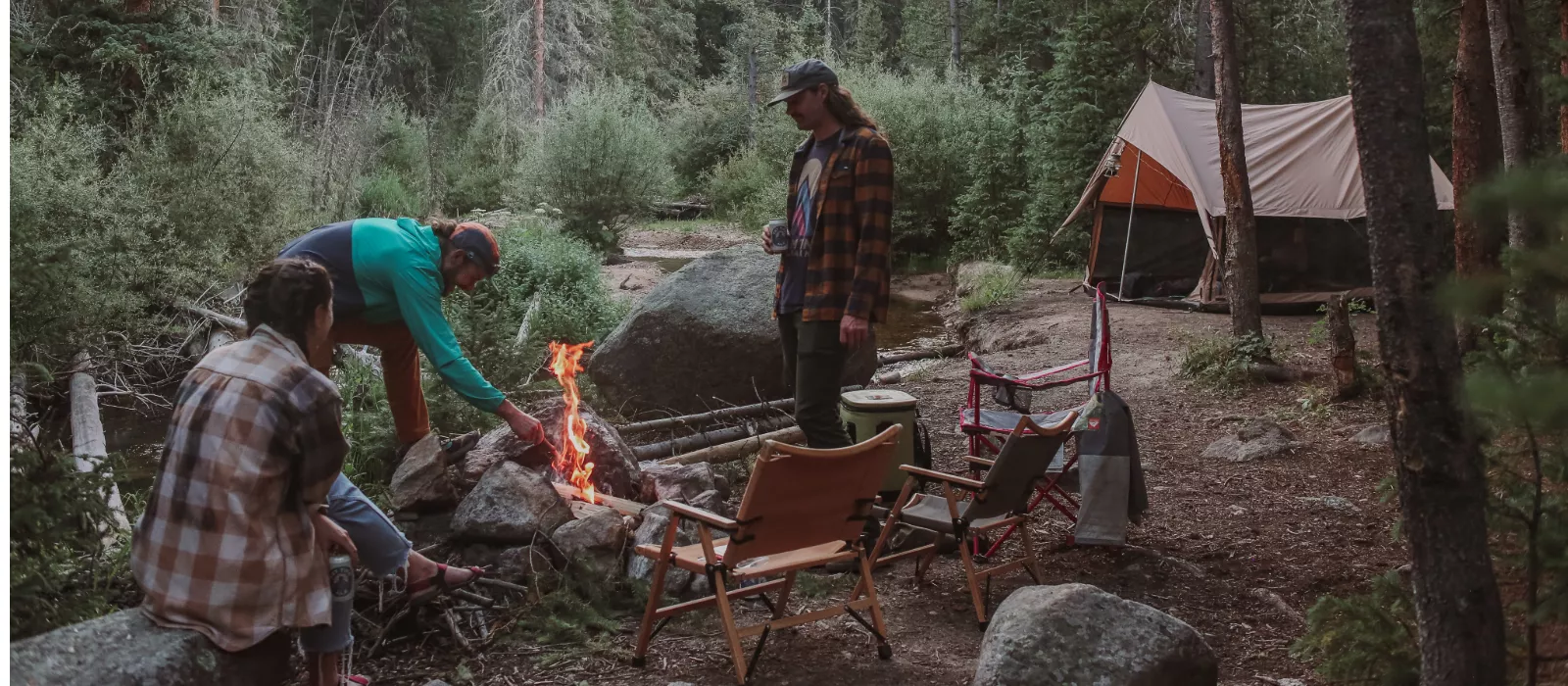
Every troop leader has seen it at least once, and every scout has made the mistake a few times. The leader sends out a message for everyone to bring a tent, and what shows up is a motley crew carrying a six-person tent, multiple single bivys, and a ripped tarp with some old tent poles that may or may not fit together. If the troop leader is lucky, there won’t be a group of kids with unrolled sleeping bags and no shelter at all. In these cases, nobody plans who actually sleeps where, and on the first night, the troop leader ends up doing tent math in the dark by headlamp.
Table Of Contents
Tent count and troop gear planning for a scout troop is more than just a judgement call. It requires a little math skill and the problems seem to have multiple, difficult answers. Scouting America’s tenting policies dictate who can share tents with whom, and the list of names on the troop leader’s roster is the starting point. This guide will help with that. We’ll walk through the logic, the right scout tent for the job, and the shared gear that holds a troop campout together.
How Many Tents Does Your Troop Actually Need?
The final number isn’t based on how many Scouts are coming. It’s based on who can safely share a tent while abiding by all Scouting America’s tenting policies. Those are two different things.
Age separation. Youth sharing a tent must be no more than two years apart in age. That means a 14-year-old and an 11-year-old cannot bunk together, regardless of how long they’ve known each other or what their parents say.
Gender separation. Male and female youths must tent separately. Male and female adults also tent separately. No exceptions and no flexibility here.
Youth and adults tent separately. Adult leaders do not share tents with Scouts. The only exception is a parent or guardian sharing with their own child, and the exception applies to Cub Scouting only.
Two-deep leadership. A minimum of two registered adult leaders, both 21 or older, must be present at all times. No Scout is ever alone with a single adult. This is called two-deep leadership, and it affects how you position your adult tents relative to the rest of camp, not just the headcount.
It should be obvious that before you order anything or ask anyone to bring anything, pull up the roster and sort it by age and gender. Group the Scouts into buddy pairs that fall within the two-year age window and match by gender. Each of those pairs is a tent. Count the pairs. That’s your tent number, not the total head count divided by two.
The Two Tents Every Troop Needs
A troop camp runs on two different tent categories, and conflating them is going to cause some problems.
Sleeping Tents for the Scouts
These are sized to your buddy pairs from the first section. Two scouts, one tent. The tent needs to be simple enough for youth to set up without adult help, durable enough to take a season of patrol use, and packable enough that a Scout can carry it to the site.
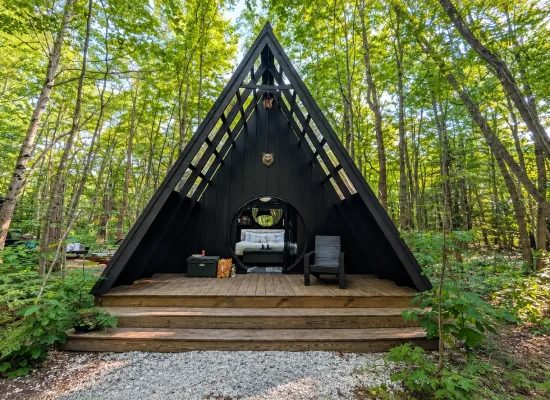
The 6’x8’ Rover Scout Tent fits that profile. It sleeps two, with 48 square feet of floor space and a setup time under 15 minutes. It’s built from DYNATEK canvas (a blend of BCI cotton and recycled ocean-bound plastics), which gives it the breathability and weather resistance of traditional canvas without the load of the full weight. At 43 lbs in the water-repellent version, it’s a two-person carry for the younger Scouts hauling it to a site. It comes with aluminum poles, a storage bag, tool kit bag, and a stove jack already built in for cold-weather trips. This particular tent clocks in at $490.
For troops doing winter or shoulder-season camping, that stove jack matters. Most scout tents in this size category don’t include one.
A Larger Shared Tent for Group Operations
Every troop also needs one larger structure that isn’t a sleeping tent. This needs to be a kind of base of operations, a dry place to gather during the rain, and a covered area for troop business and activities. A canvas wall tent or a canvas cabin tent is ideal for this situation. This isn’t going to be a sleeping tent. This is where everything else happens.
Think of it as the troop’s field headquarters. There are a few items you want to keep in here, and make sure that it is general knowledge of their location: first aid kit, spare gear, food storage for the patrol that’s cooking that night, prep/planning table, maps, spare guy cord, everything. This is a larger structure designated for group use, and it keeps the sleeping tents clean and organized while giving the troop a central gathering point that isn’t exposed to weather.
Troop-owned vs. Scout-supplied tents. If your troop camps frequently, say, six or more times a year, then a troop-owned scout tent is worth the investment. They standardize setup, let you audit gear before every trip, and keep Scouts from showing up with whatever their family had in the garage. If your troop camps occasionally, only once or twice a year, then having the Scouts bring their own gear is reasonable, with a clear list of items to bring communicated in advance.
What Else Should the Troop Pack as a Unit?
Personal gear is each Scout’s responsibility. Group gear is yours, as the Scout leader. Here’s what the troop should own and pack as a unit.
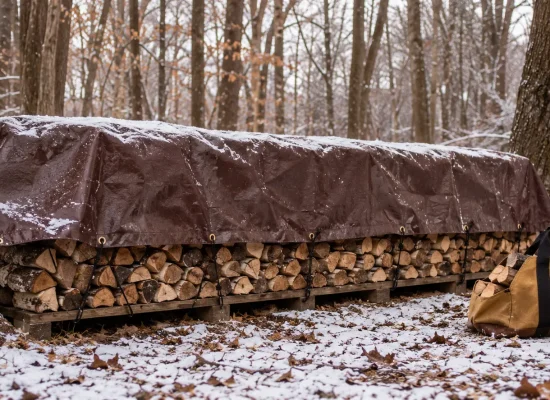
A dining fly or tarp. Rain during meals is a morale issue on a one-night campout and a logistical problem on a three-day camping trip. A canvas tarp is the durable choice for troops that camp regularly. A canvas tarp will handle years of rough use and won’t shred at the grommets the way cheap poly-fibres do. A poly tarp works fine as a budget-conscious\ starting point and is easy to replace. Either way, rig it over the dining area before the first meal, not after the first rain.
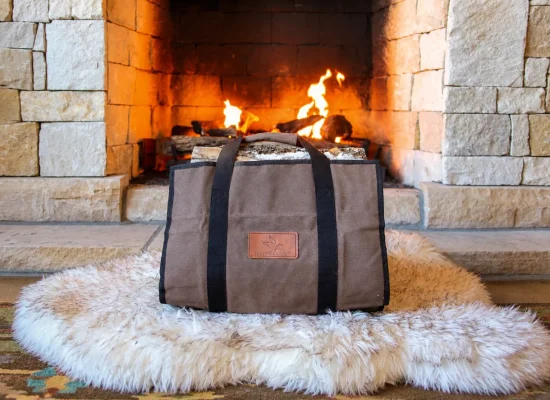
A log carrier. Hauling firewood is real Scout work, and doing it without a carrier means somebody’s arms are getting wrecked or somebody’s dropping half of it across the campsite. It doesn’t have to be this way. A canvas log carrier keeps firewood organized. Distributes the weight and is an easy patrol task to assign. It’s the kind of gear that gets used every trip and costs next to nothing to own and to manage.
A repair kit and spare hardware. Guylines get cut, stakes get bent, zipper pulls break off. This is a fact of the camping lifestyle. If you get it in the wild, then it increases the chances of breaking. Troops that camp regularly will eventually have a tent in a mid-trip that needs a field repair. Keep a kit in the group camping tent: spare stakes, extra guyline, a roll of seam sealer tape, and a few basic tools. Check it after every trip and restock before the next one.
A tent stove for cold-season trips. If your troop camps into October, November, or spends time at higher elevations, a tent wood stove belongs in the group gear inventory. The Rover Scout Tent’s built-in stove jack means you’re not modifying anything. No random holes cut in the roof, just run a stovepipe. A tent wood stove turns a cold-weather campout from a survivalist exercise to a comfortable outing in the backcountry. If you’re building the habit of getting outside year-round, this is the only way to do it.
How Should the Campsite Actually be Laid Out?
Good campsite layout reinforces the policies that we laid out in the first section without requiring anyone to walk around with a whistle constantly enforcing them. When tents are positioned correctly, the separation is built into the geography.
Group your sleeping tents together by patrol or age cluster. If your older Scouts are, say, Patrol A and your younger ones are Patrol B, those clusters should be physically distinct areas of camp and not a bunch of random tents haphazardly placed. This way, the Scouts stay with their patrol section, which naturally keeps them with their age grouping.
Place the adults’ tents on their own side of camp, clearly separated from the youth sleeping area. This helps the youth become more independent when sleep time approaches and encourages them to handle any mishaps in the night on their own. Ensuring they will one day be capable Scouts. This also keeps the separation visible and obvious, not a rule that has to be announced.
Keep the shared group tent, your wall tent or large cabin tent, in a central location between the youngsters and the adults. It’s the natural gathering point and offers a noticeable buffer zone for the kids and the adults alike. Make sure everyone is using the buddy system after dark. You don’t need kids wandering off in the middle of the wild dark. The buddy system is not a silly child’s game, and it is one that folks should practice long into adulthood in unfamiliar territory. It’s good for Scouts to learn this early.
FAQ
How many Scouts can share a tent?
Two, in most setups. Scouting America’s policy requires that youth sharing a tent be no more than two years apart in age, and they must be the same gender. That means your planning unit is a buddy pair, not a group of three or four. Some larger tents can physically fit more, but the policy doesn’t change.
Can a troop leader share a tent with a Scout?
No. Adults and youth tent separately in Scouting America. The only exception is a parent or guardian sharing a tent with their own child, and that exception applies to Cub Scouts only. In a standard troop campout, adult leaders tent on their own side of camp, separate from the Scout sleeping area, with two registered adult leaders present at all times.
What size tent is best for a Scout troop?
A two-person tent is the right standard unit for Scout sleeping arrangements. It maps cleanly to their buddy pair policy, it’s manageable for youth to set up and break down, and it scales with headcount: if you get more Scouts, you get more tents. For the shared group tent, step up to a canvas wall tent or cabin tent sized for your scout troop camping gear and gathering needs.
Should the troop own its tents, or should Scouts bring their own?
Troop-owned gear makes more sense for troops that camp frequently. It standardizes equipment, lets leaders audit everything before a trip, and keeps Scouts from showing up with incompatible or inadequate gear. If your troop camps a few times a year, having Scouts supply their own is reasonable, just make sure the kids know what to bring in advance.
Closing
Make yourself a scout camping checklist and remember these things to have a successful Scout trip: sort the roster before you buy anything. Age, gender, buddy pairs- don’t forget it. The list tells you the tent count, and the tent count tells you the troop needs. From there, the gear planning follows a logical sequence: sleeping tents for the Scouts, a shared structure for group activities and planning, and the supporting kit that makes campouts actually fun.
Get the planning right on the front end, and the campout runs itself. Get it wrong, and you’re doing the tent math by headlamp. Not advisable.


No Comment! Be the first one.