

Just because the weather is changing doesn’t mean you have to sacrifice your weekend camping trips– you’ll need to make sure you’re well prepared. Although camping in the snow or colder climates may seem like an insurmountable endeavor, the old saying rings true: There’s no bad weather, only bad clothing. Or, in this case, a bad choice in a tent. But there’s no need to worry! We’ve compiled a list of the best winter tents to keep you warm no matter where your adventuring takes you.
Table Of Contents
Any Cold-Weather Campsite
The archetypical tent that most of us imagine when we think of our summer camping excursions is most likely a three-season tent. Three-season tents are lighter, constructed with breathable mesh paneling, and are generally more exposed to the elements. This is ideal for a hot summer night where chances of rain are minimal and can be avoided with a standard rainfly or tarp. However, as temperatures drop and the likelihood of heavy rain or snowfall rises, a four-season tent quickly becomes the better option.
Four-season tents, as the name implies, are suitable for even the shortest of winter days. They are usually made of durable canvas material and can feature snow flaps or additional paneling to help withstand inclement weather or wind. Many also have built-in storage space for a larger amount of gear or for setting up a tent stove, flue, and cooking supplies. Whether or not you choose to use a tent stove, though, a four-season tent will automatically provide much more stability and protection from the cold than a standard three-season tent might allow.
Backpacking
If you’re planning on a winter backpacking trip, you’re most likely already aware that your pack weight will be heavier than its summer-loving counterpart. Depending on the climate of your chosen destination, you may be able to backpack with a sturdy three-season tent. A three-season tent will be much lighter in weight and smaller in size than a four-season tent, which is a relief when you’re hiking in all of your gear, but it will also be much more vulnerable to snowfall. Be sure to pack a winter sleeping bag and a sturdy floor mat to protect yourself from the elements as much as possible.
Pros: Lightweight, quick setup
Cons: Less durable in heavy weather
Drive-Up Camping
A drive-up camping trip, where your campsite has plenty of room for both your setup and your vehicle, is the perfect chance to try new gear without being too far from the comforts of, well, however much legroom your driver’s seat will allow. Try the Regatta bell tent for an option with easy setup and teardown. The Regatta is made of cotton canvas treated with a water-repellent coating, which couples with the aerodynamic shape of the bell tent to make a strong roof that allows snow to shed easily. It also offers the option for a tent stove and flue to further help you keep warm.
Pros: Quick setup, water-repellent canvas, sturdy steel framing
Cons: More weight in your vehicle
Large Groups
Planning a cold-weather adventure with a large group of people doesn’t have to result in building a village of small tents that separate people and leave each subgroup equally exposed to the elements. Instead, try a cabin tent, which creates a spacious and durable home-away-from-home with large windows and a high ceiling. Cabin tents also come in a wide range of sizes and can be easily set up to accommodate many people under one well-insulated roof.
Pros: Vertical height for ease of movement, durability
Cons: Bigger windows lead to less protection from heavy weather
Glamping
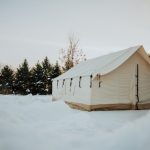
To plan a glamping trip, comfort is the top priority, and finding the best four-season tent so everyone can stay warm and happy while enjoying the outdoors is crucial. Look for a wall tent that comes in a variety of sizes to accommodate nearly any group size along with all of your winter gear. The aluminum or wood frame of your wall tent makes it the best performer in heavy snowfall, but it is best if you keep an eye out for any accumulating snow on the tent roof and gently remove it with an ice brush each morning. Or, if you’re traveling with a bigger party, set up an Avalon bell tent with cozy string lights, and a tent stove, and still have plenty of space left over for a view of the stars.
Pros: Plenty of space for standing, cooking, and storing gear
Cons: Slight roof maintenance
Final Thoughts
While winter camping may require a bit more research than the usual lake weekend in July, it is more than worth it for the beautiful skies, quiet landscape, and exciting cold-weather activities that you will have backyard access to once you set up camp. Stay warm with these tent recommendations while you enjoy everything the colder weather has to offer.


No Comment! Be the first one.