

There’s nothing quite like the feeling of watching a campfire blaze as you cook some well-deserved dinner after a long day of outdoor adventures. When you’re out camping in the winter, though, maintaining a fire outside isn’t as simple, or as comfortable, as its summer counterpart. Investing in a tent wood stove is an excellent way to make your winter camping trips full of fun memories and warm nights– and learning how to use one isn’t as intimidating as it might seem. Read on for a few easy tips for tent stove setup, use, and teardown.
Table Of Contents
Tent Wood Stoves: The Details
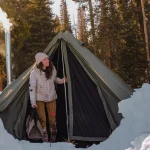
Wood-burning tent stoves are intended for use with 4 season tents, which are constructed with a double-layered wall and certain features specifically made to accommodate a tent stove. Both layers in the tent itself are fire and water resistant; the innermost layer helps reduce condensation while the outer layer protects against harsh weather.
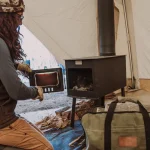
The stove itself sits on the ground inside of the tent, generally on top of a burn mat or plywood base. Most 4 season tents don’t have a floor built in, which reduces fire danger, but it can be helpful to bring along a sturdy wooden base to make sure that your stove is resting on even ground. Not having a tent floor also reduces the chance that the ground underneath your tent could thaw by the heat from your stove in the evening, then freeze to the tent overnight. Once a fire is stoked, smoke leads up the chimney, otherwise known as a stovepipe or flue pipe, and out through a stove jack, which is a hole built into the tent’s roof to allow for proper ventilation.
Tent stoves can be found in a variety of materials, shapes, and sizes, so it’s worth doing a little research to find the one that best suits your lifestyle and camping plans. A good tent stove can raise the temperature inside your tent to nearly fifty degrees above the outside temperature, turning sub-freezing temperatures into an indoor environment comfortable enough for the t-shirt and shorts. Additionally, most tent stoves come with a flat top for cooking, which allows for hot meals from the comfort of your own home-away-from-home without ever having to bundle up to go back outside once you’re in for the night.
Setting Yourself Up For Success
Tip #1: Do Your Research
Simply by reading this article, you’ve already learned a lot about how to safely and successfully operate a tent stove. Each stove is different, though, so please take the time to read up and watch any instructional materials that the specific manufacturer has made to familiarize yourself with your equipment. If your stove has a fast fold body that collapses in on itself, for example, learn how to assemble and disassemble the woodbox ahead of time so you’re not stuck wrestling against stainless steel in the cold.
Tip #2: Seasoning the Stove
Although your tent stove may not be cast iron, it is still important to do a “first burn” to ensure that any harmful chemicals come off of the stove before jumping into the hot tent adventure. Take this as an opportunity to practice assembling and tearing down your stove! Set up the stove and flue pipe outside, stoke a fire, and let it burn for three to four hours in an open outdoor area. Any gasses, chemicals, or manufacturing residues will burn off during this time and will leave you with a stove that is safe to cook on and breathe around.
Tip #3: Prep Plenty of Firewood
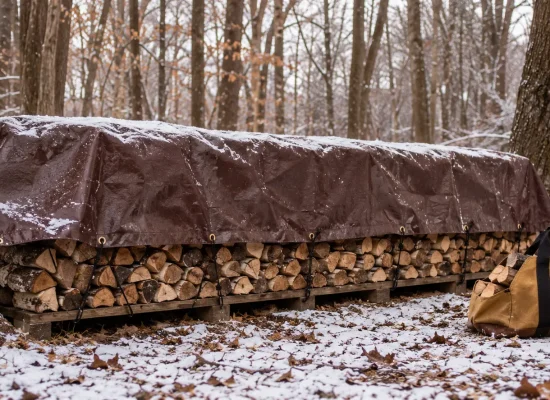
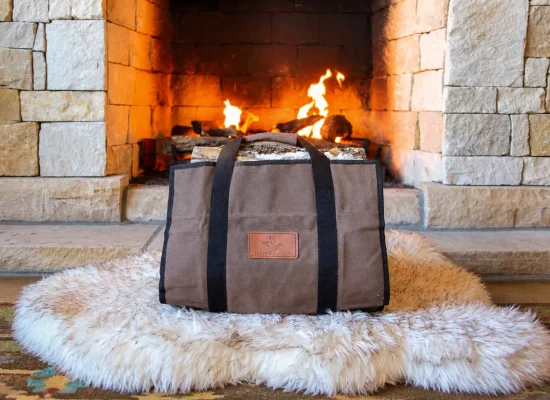
Any functioning tent stove will require a decent amount of fuel. Check the regulations at your campsite or backpacking destination to see if collecting firewood on-site is permitted. Whether or not you’re allowed to gather wood at the campsite, though, it is always wise to bring kindling along with you just in case. Burning wet wood can lead to excess smoke and sparks inside of the tent, which is dangerous to breathe, so keep your firewood in a log carrier, under a tarp, or in an otherwise dry area of the tent before you’re ready to put it to use. If you must gather wet wood, place it underneath the stove to dry, keeping a close eye on it and rotating whenever needed to make sure that the water evaporates steadily.
Tip #4: Location Matters
Where you place your stove within the tent is crucial for it to function properly. If your tent has a built-in fire-resistant stove jack, locate its place on the roof of the tent and position the stove so its flue pipe leads directly up into the opening.
Flue pipes are made from titanium or steel. While the majority of tent stoves will come with their own stovepipes, if you find yourself in a position to look for a standalone flue pipe, titanium, although slightly more expensive of the two options, tends to be a more lightweight, compact, and corrosion-resistant material. Flue pipes can be tricky to shape and set up the first time around, so plan a little additional time into building your first camp with a new stove in order to properly construct your flue pipe. Once it’s been done once, though, the metal will retain a memory of its shape, and your hard work will pay off with a much quicker setup and teardown process in the future.
Your tent stove should sit roughly in the center of the tent. Keep any supplies several feet away from the base of the tent, and be cautious of the heat’s radius when setting up sleeping arrangements.
Tip #5: Wear Gloves for Fire Safety
Always wear heat-proof gloves when operating a tent stove. If you’ve ever accidentally tried to pick up a well-heated cast iron pan without a towel or heat guard, you know firsthand why cast iron– and its companion materials stainless steel and titanium– has such a reputation for having high heat retention properties. Invest in a strong pair of cowhide gloves, and be careful to watch for sparks and hot metal when cleaning the woodbox, adjusting the flue pipe, or disassembling the stove.
Final Thoughts
Learning to use a tent stove brings the comfort and convenience of a warm hearth to all of your winter-weather excursions. Before heading out for some cold-weather camping this season, take the time to explore different tent stoves and compatible tents to find the right fit for your needs—ensuring safe, warm, and enjoyable adventures.


No Comment! Be the first one.