

You love to spend time exploring outdoors or making memories at your campsite, but the change of the seasons always seems to put a stop to your adventures. With hot tent camping, there’s no need to pack up all of your gear and wait for warmer weather– with a few upgrades for safety and warmth, you can bring your camping dreams to life no matter the season.
Table Of Contents
What is Hot Tent Camping?
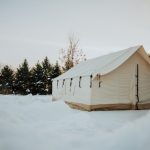
Hot tent camping, a familiar term around winter-camping enthusiasts, refers to using a tent stove inside a canvas tent, or otherwise fire-resistant, four seasons tent, to cook and keep warm no matter the temperature outside. These types of tents can be found in a number of styles and materials, but the most common are wall tents, bell tents, and cabin tents, and are constructed from multiple layers of coated canvas or nylon. In addition to a good tent, there are a few essential elements to a successful hot tent camping adventure that are important to learn about before packing up for your first excursion. Continue reading and you’ll be ready to go in no time.
How Does it Work?
A hot tent is specifically designed to withstand and retain the heat from a wood-burning tent stove. The inner layer of a hot tent is thinner and more breathable to prevent condensation, while the outer layer is durable and waterproof to create a barrier against inclement weather. Most of these tents, like WhiteDuck’s fan-favorite Alpha Wall Tent, have a built-in stove jack for installing the stovepipe and “chimney”, also known as a flue, to prevent sparking or smoke buildup inside.
Another integral part of hot tent camping is, naturally, the tent stove itself. Tent stoves are also available in a variety of materials and sizes, from titanium and stainless steel to galvanized steel and cast iron. Some stoves are meant to fold into themselves before and after use, making for easy packing, while some are more durable but also require a larger storage space. Finding a stove with a flat surface for cooking or warming, as well as a stovepipe with a built-in spark arrestor (such as the relatively compact Hunter Stove Package from WhiteDuck), will save you a lot of time and hassle when it comes to setting up camp and putting your hot tent to use.
Hot tents don’t often have an attached floor, so be sure to pack a reinforced Ground Tarp to create a more comfortable barrier between you and the ground. When using a ground tarp, you’ll also need to be aware of the intense heat underneath and around your tent stove. A fire-resistant fiberglass burn mat on top of a piece of plywood should suffice to absorb the heat from your stove and reduce fire danger inside the tent.
Is it Worth a Try?
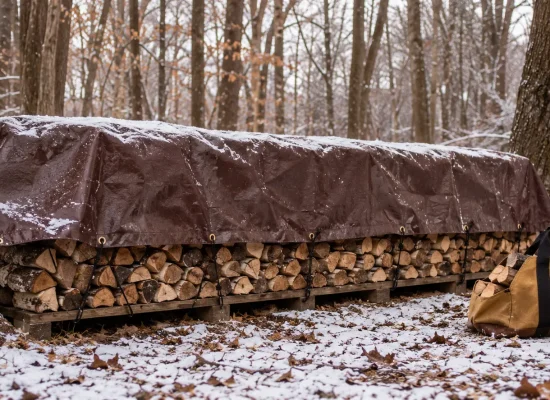
The research and preparation that goes into a hot tent camping experience may seem intimidating, but it is well worth the investment for the cold-weather adventures that will be available to you once you’ve collected your equipment. A quality four seasons tent can– and should– be used in all four seasons, not just during the winter, so it can serve as a permanent upgrade to the archetypical nylon three seasons tent. Any additional supplies, from tarps to log carriers, are also well suited to year round usage. If you’re itching to get outdoors and enjoy the winter weather from a better vantage point than your back porch, hot tent camping is the perfect way to expand your comfort zone and take everything the season has to offer from a whole new perspective.
Pros- Year-round equipment that is durable, water-resistant, and useful in all types of weather
- Confidence in your own camping supplies and abilities
- Access to an entire additional season of outdoor adventures, including hikes, cross-country skiing, and more
- Less crowded campsites in the off-season (both by people and by bugs!)
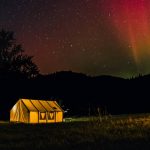
- Better night sky viewing
- Greater financial investment due to additional materials such as a tent stove and burn mat
- Less lightweight supplies for backpacking trips or backcountry camping
Practical Tips for Staying Warm
Now that you’ve decided to give hot tent camping a try, and you’ve found a great hot tent and stove that will keep you and your camping crew protected from the elements, here are a few more practical tips to help you keep extra warm while camping in the cold.
- Opt for wool or moisture-wicking clothing, especially when it comes to socks that might get wet throughout the day.
- Find a sleeping bag and pad with a high R-value (think five and up) that will be properly insulated against the cold.
- Choose your campsite carefully to help ward off intense winds– find a spot where your tent will be safely shielded by trees or bushes on at least one side.
- Invest in a portable camping heater or space heaters instead of a tent stove.
- Cushion your tarp flooring with a layer of dry moss or leaves before setting up your tent for additional insulation.
- Choose a tent with enough space for yourself, your companions, and your gear– but not with too much space where you’ll end up diffusing your heat into empty air.
Don’t let yourself be deterred from enjoying the outdoors by looking at the thermostat! Equipped with a reliable hot tent, a tent stove suited to your space and camping needs, and an adventurous spirit, you’re sure to have an unforgettable– and comfortable– winter camping experience.


Over the years I have enjoyed perfecting the design of a tarp shelter and cookstove.
I will list a few things I have learned.
1. A tent stove which has a hotter chimney than cooktop takes to long to get the coffee going in the morning.
2. I cook my breakfast in my tarp shelter every day of the year and make note of the weather each day so I know why people who say you can’t cook in your tent are at home waiting for the wind to stop blowing.
3. A 2”x36” chimney, 5”x5” stove gets the cooking done. A 10’’x10’ tarp gives 4 sleep spaces. Tarp sides can be tight to the ground ready for a blizzard or all sides raised, propped open in summer sun. A tarp makes a better 4 season shelter than any tent.
5. Any size square tarp and stove can be used. It all depends on how much wood you want to backup and burn. Trying to heat an uninsulated shelter takes a lot of wood.
6. A good cookstove does not need a spark arrestor.
7. A chimney can serve as the centrepole for a shelter.
8. A cookstove oriented vertical burns more efficient with a hotter cooktop even when the firewood is too green.
9. The hot floor of a stove can broil diced bacon in an open top kettle.
Arlen Smith or chimpac