
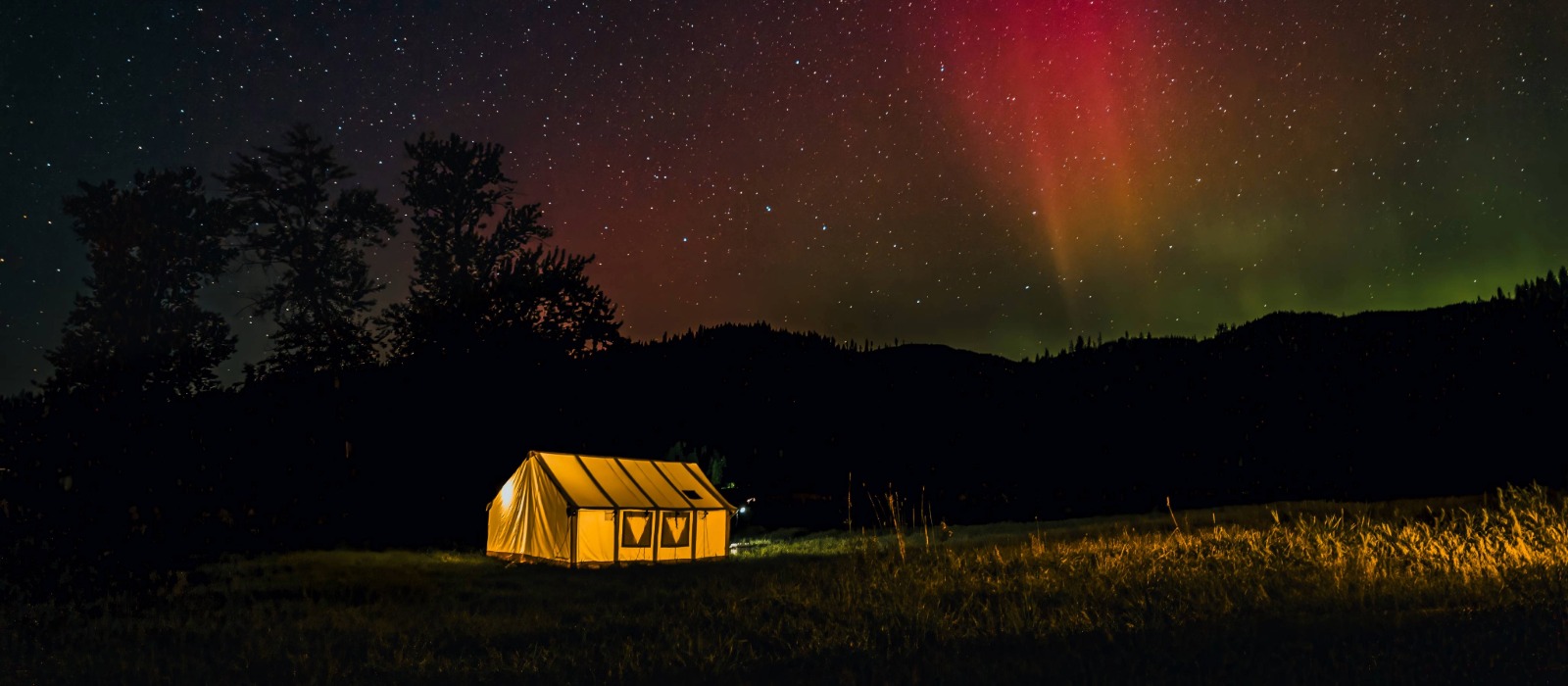
Planning a camping trip in colder weather may require more preparation, but the payoff is well worth your time and effort. If you haven’t yet had the opportunity to try hot tent camping, this season is the perfect time to brush up on your survival skills and brush the snow off of your car before setting out on a new and rewarding adventure. With a proper hot tent setup, you’ll be ready to enjoy the benefits of winter camping with friends and family for years to come.
Table Of Contents
What is Hot Tent Camping?
Simply put, hot tent camping is when you set up camp not with a nylon single-wall tent but with a tightly woven canvas tent made specifically for use with a wood burning tent stove. These shelters, called hot tents, are made of materials pre-treated to be both fire-resistant and water-resistant. This allows you to build and maintain a safe, stove-contained, fire indoors and retain the heat while simultaneously protecting from the weather outside. Hot tents are a subcategory of the durable canvas four-season tents, but while four-season tents don’t by definition have to accommodate a tent stove, hot tents will automatically have a stove jack built into their roofing for safety and ease of setup. Having a hot tent and stove isn’t a necessity to camp in colder temperatures, but having a stove in the same room as your sleeping bag certainly makes it easier to stay comfortable overnight or to enjoy a warm drink by the fire after a full day of winter activities.
The Benefits
Health
As the days get shorter and the temperature drops, physical and mental health tends to drop in quality as well. Unless you’re intentional about getting outside or adjusting your diet to ensure you have the proper amount of vitamins every day, it can be easy to go the entire season without paying much attention to your health– except to notice it getting incrementally worse. Spending quality time outdoors, especially on a trip or a physical adventure like winter sports and camping, will help your body produce the vitamins D and B, both of which are essential for mood regulation, bone development, and overall proper mental and physical functioning. The fresh air will also carry less pollutants and better air quality than the dry air indoors, which will boost your immune system and revitalize your sense of adventure.
Accessibility
Many less-seasoned campers are wary of planning an outdoor excursion in the winter– but with hot tent camping, it can be a breeze. When the majority of people stay indoors, though, it becomes the perfect time for you to explore some popular spots with a little more elbow room. The qualifications for an ideal cold-weather campground might be slightly different than those for the best summer spot, but you’ll be rewarded with unique wildlife, beautiful views, and the ethereal quiet of the snowy landscape. With its additional supplies and more durable materials, a hot tent camping setup will be heavier than its warm-weather counterpart, so your backpacking destinations may be limited based on your pack size, but there are plenty of stunning campsites still accessible via car or a shorter trek.
Ease of Use
Most tent stoves are engineered to be as compact and easy to set up and tear down as possible. Some tent stoves are also designed to fold in on themselves, allowing for an even smoother cleanup process once you’re ready to pack up and head home.
Comfort
When planning and executing a hot tent camping trip, there are three main hurdles: gathering your supplies, finding a campsite, and setting up camp. We’ve compiled lots of reading material to help you prepare your packing list and choose the optimal campsite, and once you arrive, putting a few friends to work makes the camp setup easy as well. The real reward, though, comes once you’ve jumped all three hurdles and can relax and enjoy the fruits of your labor in your newly built shelter. The comforts of having a wood-burning stove within the walls of your tent begin first thing in the morning when you’re able to stoke a fire without venturing out into the cold and continue through streamlined mealtimes until you’re ready to turn in for the night and can curl up next to the controlled fire in your stove.
Hot tents are also crafted with comfort in mind. In order to safely accommodate a wood-burning stove, hot tents are on average much larger than the standard nylon three seasons tent. This extra space allows for fire safety as well as more room to store gear, cooking and food material, and any additional supplies. Canvas bell tents and wall tents are spacious with a high ceiling to create standing and walking space, while cabin tents are true to their name and mimic the feeling of an actual room with their dimensions.
The Bottom Line
Camping in the cold can be intimidating, but it’s certainly not impossible– and it can even become a new favorite tradition if you set yourself up for success with the proper equipment and knowledge. Hot tent camping is great for improving mental and physical health and acuity in the winter months, and the increasingly comfortable and straightforward setup allows for you to enjoy both the snow outdoors and the fire inside.


No Comment! Be the first one.