
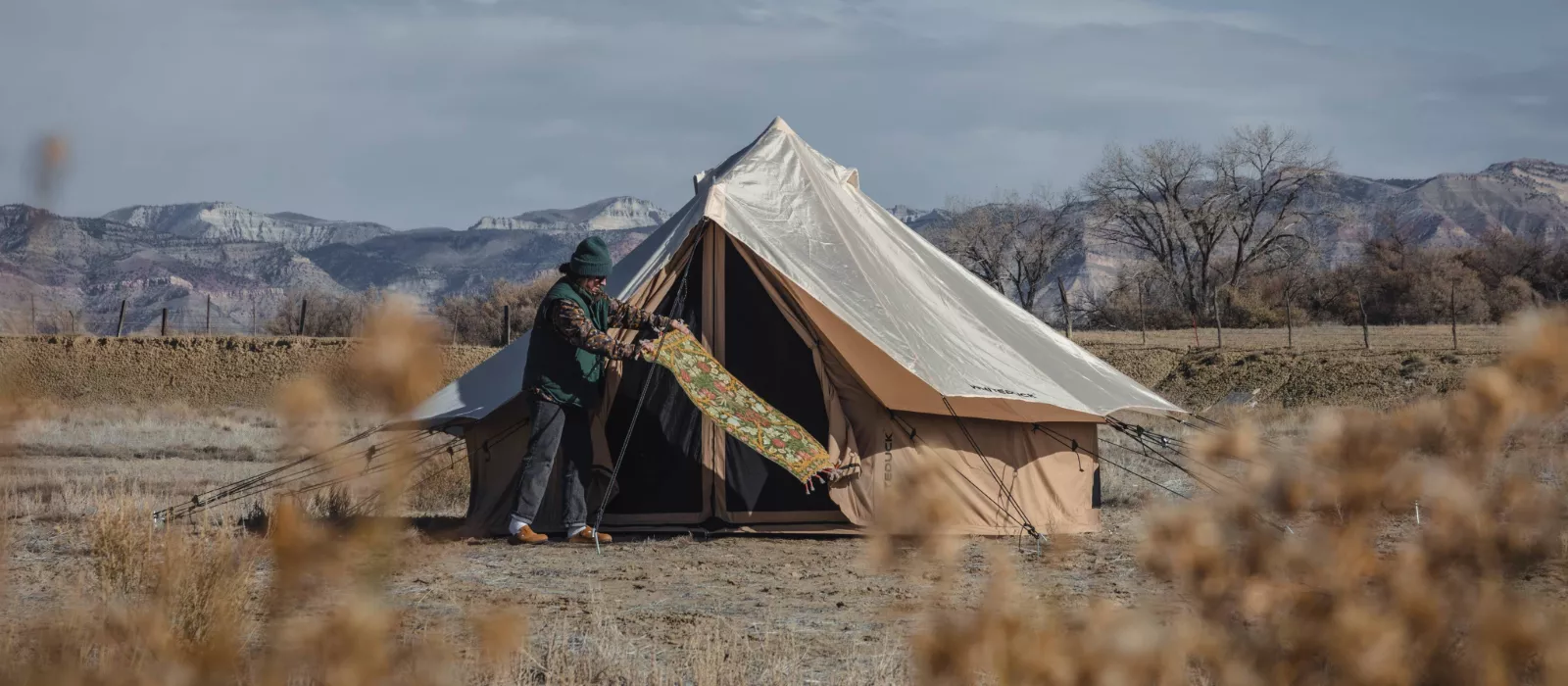
Camping can often feel like a solitary endeavor, where your focus is on enjoying nature and looking inward, but your time outdoors affects more than just yourself. Every action you take has the potential to impact the environment and ecosystems you’re in, the wild animals that live there, and even your fellow campers adventuring nearby.
Table Of Contents
- What Is the “200 Rule” for Camping?
- Where It Comes From
- Why is the 200 Rule For Camping Important?
- It protects the quality and health of our water sources
- It aids in wildlife conservation
- It helps control waste management
- It promotes personal safety
- It provides privacy for campers
- How to Follow the 200 Rule While Camping
- Take 70 wide paces
- Imagine a Football Field
- The Bottom Line
By adhering to the codes of conduct set forth by both the outdoor community and local governing bodies, you can reduce your negative impact and help keep you, your fellow campers, and the environment safe, happy, and thriving.
While many of these codes of conduct are unspoken expectations maintained by the outdoor community to promote good, a handful of them are adopted by park authorities. From National Forests to State Parks, these important regulations are enforced for all visitors.
One of the key outdoor rules you’ll find enforced at most regulated wilderness areas, and the focus of our energy today, is the “200 Rule” for camping.
But what exactly is the 200 Rule, where does it come from, and why is it so important to follow on a camping trip? Read on to find out, and learn how to follow it yourself on your next outdoor adventure. Let’s break it down!
What Is the “200 Rule” for Camping?
The 200 Rule asserts that a camper, and anyone else spending time outdoors, should pitch their camping tent, dispose of their waste, and wash their dishes at a minimum of 200 feet away from all water sources and trails.
Water sources include, but are not limited to:
- Oceans
- Lakes
- Rivers
- Ponds
- Springs
- Streams
In terms of trails, do your best to keep this distance from both manmade hiking trails and the natural trails of animals. Not only will this help protect the trails, but it will also minimize your chances of an unexpected wildlife encounter.
The 200 Rule also applies to the rest of your campsite setup, from your tent accessories to your camp kitchen. So, be mindful of where you place equipment like tent awnings, sunshade tarps, and picnic tables, keeping that minimum distance of 200 feet.
Where It Comes From
The 200 Rule originated as part of the 7 Principles of Leave No Trace, an effort by the USDA Forest Service dating back to the 1960s. The key goal is to promote ethical outdoor recreation and reduce negative impact on our wilderness.
As the 7 Principles of Leave No Trace currently stand, the 200 Rule can be found under Principle 3, which outlines the proper disposal of waste.
Thanks to its positive impact, many organizations that maintain public land have adopted the rule for their areas of jurisdiction.
Why is the 200 Rule For Camping Important?
So why is the 200 Rule so important to follow, and how exactly does it promote good in the outdoors? Here are a few key reasons:
It protects the quality and health of our water sources
By disposing of our waste properly and keeping our distance, we reduce our pollution and mitigate harm to nature’s delicate ecosystems. Whether it’s our plastic trash or our dishwashing runoff, what we produce can seriously harm these water sources if we aren’t mindful of where they end up.
It aids in wildlife conservation
Simply put, if we’re protecting ecosystems by cleaning up after ourselves and keeping our distance, we’ll in turn protect the wildlife that lives there. Wild animals rely on their habitats remaining healthy. Our outdoor stewardship has a true ripple effect of good!
It helps control waste management
If we all do our part by following the 200 Rule, we can help ease the burden of waste management on our park systems and our landfills. And, as we’ve discussed, proper waste management is crucial to the health of our environment.
It promotes personal safety
Proper waste disposal also helps to keep you safe! For example, leaving food scraps around camp can attract wildlife. While it’s awesome to see wild animals in their natural habitats, close encounters can be dangerous for everyone involved. By cleaning up after yourself, you’ll keep yourself and the animals safe from harm.
Staying too close to water sources can also be dangerous during extreme weather events. By keeping at least 200 feet between you and water sources, you’ll be at a lower risk of harm during a flash flood, for example.
It provides privacy for campers
Many of us go camping for the immersion in nature and the solitude it provides. By following the 200 Rule, especially staying away from trails, you’ll naturally experience more privacy from other campers and outdoor adventurers exploring nearby sites.
How to Follow the 200 Rule While Camping
Not everyone can estimate 200 feet just by sight! So how can you be sure you’re following the 200 Rule while camping? Thankfully, there are 2 easy tricks you can use on your next adventure.
Take 70 wide paces
For most average-sized adults, 200 feet can roughly be measured by 70 large steps. Simply start at the trail or water source you’re near, and take 70 large steps in the other direction to determine an appropriate distance to set up camp.
Imagine a Football Field
Since most Americans can easily visualize the size of a football field, this can be an effective method of approximating distance. 200 feet is roughly two-thirds of an NFL football field. If you’re able, visualize this to determine the best place for your campsite.
When in doubt, add a few more steps than you think you need! It never hurts to be on the conservative side, and the wildlife and environment will thank you.
The Bottom Line
We have an ethical obligation to minimize our impact when adventuring outdoors. While many of the codes of conduct we know are maintained by the honor system, some of them are important enough to be enforced by the organizations that manage our public lands.
The 200 Rule is one of these regulations taken seriously by the outdoor community, and it’s something every camper should know before heading into the wilderness. By understanding why it’s important and how it protects not only us, but our environment and ecosystems, we can be more empowered to do our part.
So, practice your 70 steps, prepare to dispose of your waste properly, and feel good knowing you’re helping our natural world thrive!



No Comment! Be the first one.