
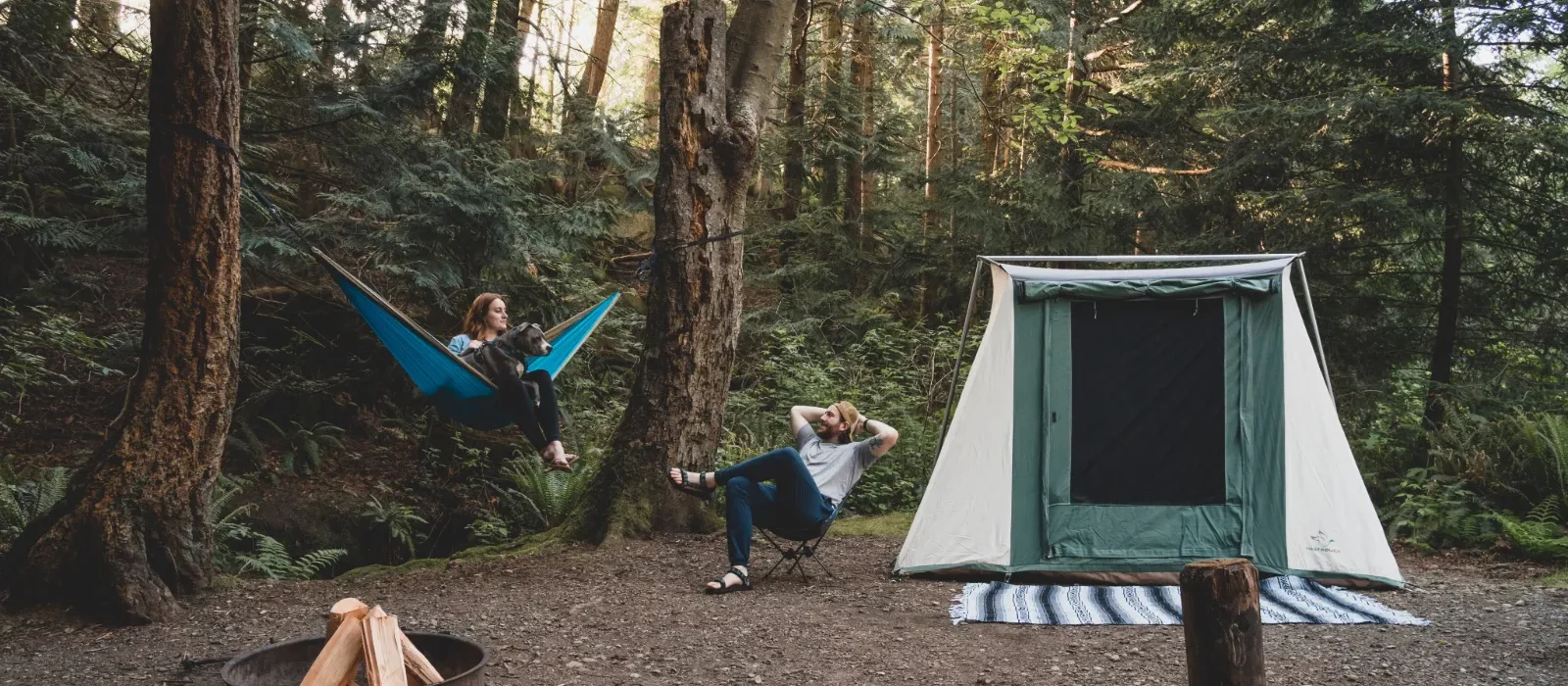
First introduced by the North American Family Campers Association, the “7 C’s of Camping” is a common framework of etiquette used by campers in the outdoors.
With all 7 terms starting with the letter “C,” it’s an easy guide to remember on the fly to ensure your time spent in nature follows the ethical standards agreed upon by the outdoor community.
Between them, the 7 C’s cover everything from personal safety and camper satisfaction to environmental and social impact. But what exactly are the 7 C’s of camping, and why do they matter? Read on to discover the meaning behind each “C,” and learn how you can abide by them on your next outdoor adventure. Let’s get right into it!
1. The 7 C’s of Camping: Care
The first point of the 7 C’s of camping is to show care. This goes for everything and everyone you encounter, from your campground neighbors to the park staff, wildlife, and environment. Be considerate, and do your best to leave the destination better than you found it.
Why Care Matters
Taking care of yourself, everyone, and everything around you ensures a positive experience for all. For example, when using shared campground amenities, like bathrooms, clean up after yourself! Simple actions like this help the outdoors stay comfortable and inviting to all.
2. The 7 C’s of Camping: Caution
Although it’s a relatively safe, family-friendly pastime, camping does come with inherent risks, like most outdoor activities. Danger can arise from several mundane things, including:
- Campfires and the hot coals they leave behind
- Wildlife and dangerous insect encounters
- Harsh or extreme weather, especially when conditions change rapidly
- Dehydration
- Heat stroke and hypothermia, depending on the climate
- Overactivity or missteps that cause physical injury
- Illness from contaminated water
- Carbon monoxide poisoning and fire hazards from cooking indoors
- Injury from dead trees or branches falling
Why Caution Matters
Practicing caution around these potential dangers is vital, not only for your personal safety but for the safety of those around you. Danger can have a ripple effect, after all.
For example, building a campfire too close to your camping tent is a major fire hazard. By not taking the precaution of creating space between your fire and your shelter, you not only risk setting your tent on fire, but you also risk a larger fire that could put you, your campground neighbors, and the nearby wildlife in danger.
Practice caution by following basic camping safety guidelines, including cleaning up after yourself, never leaving a fire unattended, and keeping an eye on the weather, just to name a few.
3. The 7 C’s of Camping: Courtesy
Courtesy doesn’t go away just because you’re outdoors. The third C of camping asks us to be courteous to our fellow campers, local park staff, wildlife, and the environment.
This encompasses everything from being aware of your surroundings to giving others privacy. For example, if you’re camping at a busy campground, don’t just throw your tent accessories everywhere, into other people’s spaces, while you’re setting up camp. Be mindful of your surroundings and respect other campers’ space.
Why Courtesy Matters
You can’t expect respect and privacy from others if you don’t give it yourself. It takes everyone doing their part in the outdoors to make it a safe, welcoming, and fun environment for all.
4. The 7 C’s of Camping: Cleanliness
The next C in the 7 C’s of Camping is cleanliness. This point urges everyone to maintain clean campsites and practice basic Leave No Trace principles while outdoors.
Why Cleanliness Matters
While it may seem like the cleanliness of your campsite is your business only, it’s a little more complicated than that in the outdoors! Outside of keeping your own experience positive, a clean campsite is important for two main reasons:
- Dirty campsites attract pests and wildlife. By leaving food scraps, trash, or anything else smelly lying around without proper storage, you’re unknowingly inviting non-human guests to camp with you. Not only is this dangerous for you, but it also puts your campground neighbors and the wildlife itself at risk.
- Trash harms the environment! Our ecosystems are delicate, and by leaving trash, we make a lasting impact on the health of the environment. Do your part by staying clean at camp.
5. The 7 C’s of Camping: Cooperation
The places we visit have rules and regulations, whether it’s our national parks or public lands overseen by the Bureau of Land Management. The 5th “C” of camping is to cooperate with these agencies and their rules.
Why Cooperation Matters
The people and organizations that oversee our outdoor spaces have regulations in place for a reason. Whether it’s to protect you, other visitors, wildlife, or the environment, there’s good cause for most rules to exist. Cooperating with these rules and regulations helps our campsites, campgrounds, parks, and wider lands run smoothly and thrive, so we can continue to enjoy them for decades to come.
6. The 7 C’s of Camping: Conservation
When we’re exploring outdoors, it’s important to do our part to conserve the environment. This means disrupting the environment and ecosystems as little as possible, and again, leaving no trace!
Simple ways to practice conservation are by taking out everything you bring in, using designated rings for campfires, pitching your tent on pre-existing tent pads, and following only pre-established trails. Additionally, always use environmentally friendly products, from your sunscreen to your dishsoap.
Why Conservation Matters
Practicing conservation allows our natural environments to thrive. Even our smallest actions can leave a lasting negative impact if we’re not thoughtful about what we do outdoors.
7. The 7 C’s of Camping: Common Sense
Last but definitely not least: practice common sense! This goes for anywhere you go, but it’s especially important while exploring the outdoors on a camping trip. Camping requires a fair amount of planning, skills, and thoughtful decisions to be safe and successful.
Why Common Sense Matters
Forgetting your common sense at home can leave you vulnerable to danger while outdoors. To put it simply, common sense saves lives.
This applies to almost every situation you can think of, but one great example is bad weather. Some people may see dark clouds rolling in while on a hiking trail, ignore the signs, and keep hiking anyway. For many hikers, this situation ends poorly – and sometimes it’s even a fatal mistake.
So, don’t be that person and use your common sense! If you see precarious weather coming in, seek shelter until it passes, and follow your common sense in every other situation, too.
Final Thoughts
Just because you’re out in the wilderness doesn’t mean all rules of civilized society fly out the window. The 7 C’s of Camping is a popular etiquette framework that covers the basic codes of conduct expected from the outdoor community. With each term starting with the letter “C,” it’s an easy and memorable guide for campers to follow while adventuring in nature.
These ethical standards are important for keeping the outdoors a healthy, safe, and inviting environment for all – including the wildlife and delicate ecosystems that call our campsites home.
So, before your next trip, study the 7 C’s of Camping outlined above to ensure you’re ready to do your part in the outdoors!


No Comment! Be the first one.