

The ski lifts are quiet, the chairs motionless. The mountain bike trails are roped off with polite little signs that read “Trail Closed — Please Stay Off Wet Dirt”. There’s no snow. There’s no powder. But there is mud. And it’s everywhere. It’s officially shoulder season. Shoulder season refers to the transitional periods between peak outdoor recreation seasons. For anyone who’s ever lived in or near a ski town, you know the spring and fall seasons well. In the spring, the snow is melting, but the trails are still too wet to mountain bike on or hike. Similarly, in the fall, after a wet October, the trails close for a month and await the first snowfall. It’s not the best time of year to ski or mountain bike, but with either the new spring flowers or the gorgeous fall leaves, it’s a fantastic time to go camping.
This does, however, require a little more thought when planning a campout. Shoulder season camping is awesome, and the views are incredible. The cold, dewy mornings and the crisp fall nights are worth every minute being out there, but you’ll need to think about a muddy campsite setup. It’s all good. The following are some great tips to make it through the year.
Why Shoulder Season is Actually Worth It
There are valid arguments to be made to get outside in any season, but shoulder season camping has some particular highlights that you should keep in mind. Most of us just think of the traditional seasons to take a vacation: Summer is when the kids are out of school, and Christmas comes around in winter. But the advantages in spring and fall are not to be ignored.
1. No Crowds:
Many people like crowds. They seek them out. They are looking for the hubbub and the outdoor concerts and the bonfires around the campsites and making new friends, and that’s all great. But there are many of us who would love to avoid the crowds in July and visit the ghost towns in April and October. Also, because the crowds have diminished, the prices usually drop as well. There’s always going to be a campsite open, and the bundles of firewood go on sale.
2. The Animals Come Out:
In the spring, many animals emerge from the winter cold and head down to the valleys where the food is abundant and the weather is warm. In the fall, these same animals come out in the cooler temps and are looking for food, fattening up for the winter. The birds are out in abundance, and the forests are vibrant with life. It’s a good time to be in the wilderness.
3. The Landscapes are Chef’s Kiss:
Camping in the rain is beautiful. It brings out the colors in the foliage, and everything seems to shimmer. Spring camping means blooming flowers and the cliffs all bursting with rich greens and glistening pastel colors. The fall offers deep, rich oranges and yellows as the leaves change. People will travel thousands of miles for these views. Take advantage when you can.
4. The Perfect Temps:
In a month, it’s either going to be too hot or too cold. You’ll either be bundled up to your chin or not be able to escape the blistering heat. The best spring and fall camping tip is to simply enjoy the weather. It’s jacket weather, a hoodie will do all day. You can sit right in direct sunlight, and it feels genuinely good.
The peak seasons are great. Getting into the winter and summer activities is awesome, but getting away from already being away from it all is also really incredible. Some might say those seasons are even better.
You Better Know: The Shoulder Season Reality Check
The shoulder seasons are immaculate to look at, to smell, to imagine before you get there. But the truth is, you’d better know what you’re getting yourself into. It’s good to keep in mind that anything worth doing is going to be a little difficult, and that goes for spring and fall weather camping as well.
The first thing that you need to remember in the spring and the fall is that while the temperatures are mild and even comfortable during the day, when the sun is coming up and going down, there can be dramatic shifts in temperature. That warm afternoon can transition into a freezing cold night. The fix here is to make sure and keep plenty of layers on hand. Make sure you bring extra socks. This is an easy one to forget.
While you’re layering up, you need to plan for rain. It is almost guaranteed during the spring and the fall, so don’t pretend you can just avoid it. While the temperatures are dropping at night, it can be truly miserable if you approach that time of day soaking wet. A good rainshell or a waterproof jacket is a wise investment.
A good spring and fall camping tip: mud is a feature, not a bug. Embrace it. There will be mud. We’ll go over the campsite setup and shelter factors to assist in dealing with mud, but just plan on it being muddy. A good idea is to keep at least one extra pair of shoes/boots. If it’s bad, consider some Wellies for tromping around camp. It may be wet, but that won’t keep us in, right?
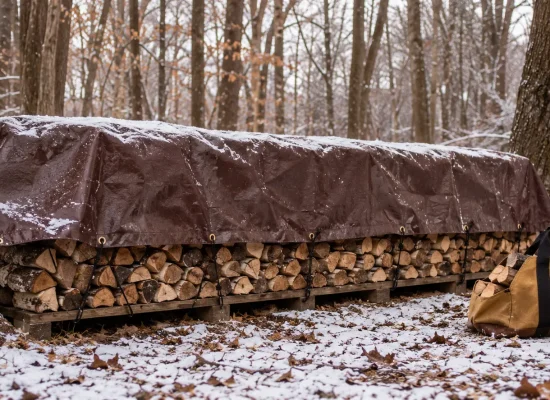
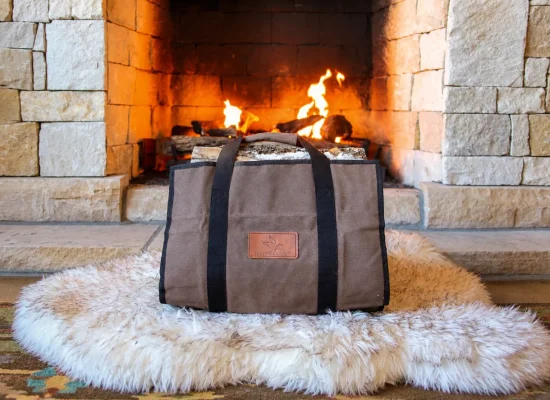
If you are staying near a ski town or a mountain town, many resources in these locations shut down for a month in the spring and a month in the fall. Plan ahead. Make sure you bring a hatchet and an axe. You might be getting your own firewood if the convenience stores are closed. With that, a canvas log carrier is advised to minimize trips when wood hunting.
Check the landscape and the trails. The reason the trails close at resorts and in other places is that erosion is a serious factor in state and national parks. If you are in one of these areas, check with the camp host, the ranger station, or look up local guidelines to see if hiking is advised or prohibited. Sometimes it’s just nice to hang out around camp and enjoy the scenery from under the canopy of your tent.
The weather can be nasty, and it’s going to be wet and muddy, but rest assured, it is well worth it. With a little planning, there isn’t anything you can’t handle while shoulder season camping.
When Everything is Wet, Location Matters
Camping is camping, right? The truth is that something as simple as a little rain can completely change the dynamic of a camping trip. For wet-weather camping, you want to take a few precautions so that you don’t make a wet situation even worse. To do that, you’ll want to do what you do in dry weather, only now it’s much more important.
Make sure to avoid low-lying areas and valley floors. You will be able to see from a bit of an elevated position where the depressions are in the ground. This is where the water is going to gather if there is rain. Even a few inches of slope will help prevent this. It doesn’t mean that you need to be camping out on the highest peak; just look for the section of the campsite that sits a little higher than the other spots.
Check below and check above. Look for loose sandy soil or gravel beneath you where you’ll be setting up your tent. A careless tent placement can mean that you’re setting up right in a soggy bog. Clay soil is imbued with water. That water will all come seeping out when you put some weight on it. After you’re done examining the earth, just take a look up and make sure you’re not camping under a tree, or that the eaves of your tent aren’t touching some branches. Tree branches can act as a conduit for a stream of water to lead right down onto your tent. The excessive water, all hitting in one location, is never a wise idea.
If you’re not staying in a designated campground, look for existing fire rings. This means that someone was recently camping there. The ground will have been tamped down a bit, and more heavily used spots have better designated drainage, even if it is on a random plot of BLM land. Water looks for the path of least resistance, and if someone has been camping there, it will flow around their previous spots.
Find your spot, arrive early, and check the forecast before you head out. There’s nothing to be worried about when camping in the rain, unless you don’t plan for it.
Your Tent Selection for Muddy Conditions
This is really what it all comes down to. Camping in tougher weather is absolutely enjoyable, but the fact is that in these circumstances, much of the time is going to be spent inside or near the tent. You want to make sure you’ve selected the best shelter for the occasion.
Tents made of synthetic materials are lightweight and go up in a second. They also lose their waterproofing over time, and either need to be replaced or require re-treatment. At some point, they are going to break down in the harder rain. The best all-weather, four-season tent is one made of canvas. Canvas tents breathe in all conditions. This may not seem like a benefit, but if all the hot air that a few sleeping people breathe sits in a tent all night, condensation will build up on the walls and end up dripping on the sleeping folks. This is a frequent occurrence in synthetic tents. Canvas tents regulate the temperature with the breathable fabric, keeping a solid and consistent temperature through the night when the temperatures outside drop.
A couple of go-to shoulder season tents are the Alpha Wall Tent and the Regatta Bell Tent from White Duck Outdoors. Both of these are made from high-quality canvas, can stand up to any kind of weather, and are roomy enough for the whole crew, their gear, and a tent wood stove, if the cold temps are coming.
For the family adventurer or someone looking for a base camp for hunting, the Alpha Wall Tent is the way to go. It’s spacious, has a simple, rectangular design, and has a high, pitched roof that nearly anyone can stand up to. It’s practical, functional, and good for any season and all weather.
For the best glamping tent for wet weather camping, the Regatta Bell Tent is the way to go. It’s stylish, has plenty of room for everyone, and it looks like a secluded destination in the rain. It’s perfect for any kind of weather, but with a pitched center pole and round design, water just shucks off it with ease.
The Necessary Canvas Tent Accessories
This is really where we separate the beginners from the pros. The canvas tents mentioned above are awesome all on their own. But in this instance, it is possible to make something awesome even greater. Both the Alpha Wall Tent and the Regatta Bell Tent come with canvas tent awnings. These are absolutely necessary for shoulder season camping. Not only does this allow you to increase your square footage of comfortable space, but it also gives you an immediate mudroom to remove all wet clothes and nasty, muddy boots. These awnings are a huge benefit in any weather, but absolutely necessary in shoulder season camping.
The next necessary canvas tent accessory is a rainfly. These act as a protective layer shielding the outside of your canvas tent, providing an insulating layer of air between the outside temperature and the tent body. This rainfly ensures a comfortable, consistent temperature inside, and you’ll stay dry as a bone.
For that camp kitchen coverage, and to match the rest of your camp structures, a solid canvas tarp is an awesome option to use to build a lean-to. If it’s going to rain, and it is going to rain, then the kitchen needs to be covered. It’s nearly impossible to have too many tarps.
Not Impossible, but Important to Prepare
There’s no reason to skip out on an entire two months out of the year because of a little rain and mud. To do it comfortably, however, there are a few things to keep in mind. Make sure you stay off the trails when you need to. Stay on the higher ground. And, most importantly, make sure you’re prepared with the proper canvas tent. When the ski lifts are closed, and the bikes aren’t yet on the trails, there’s still time to get out and break camp.


No Comment! Be the first one.