
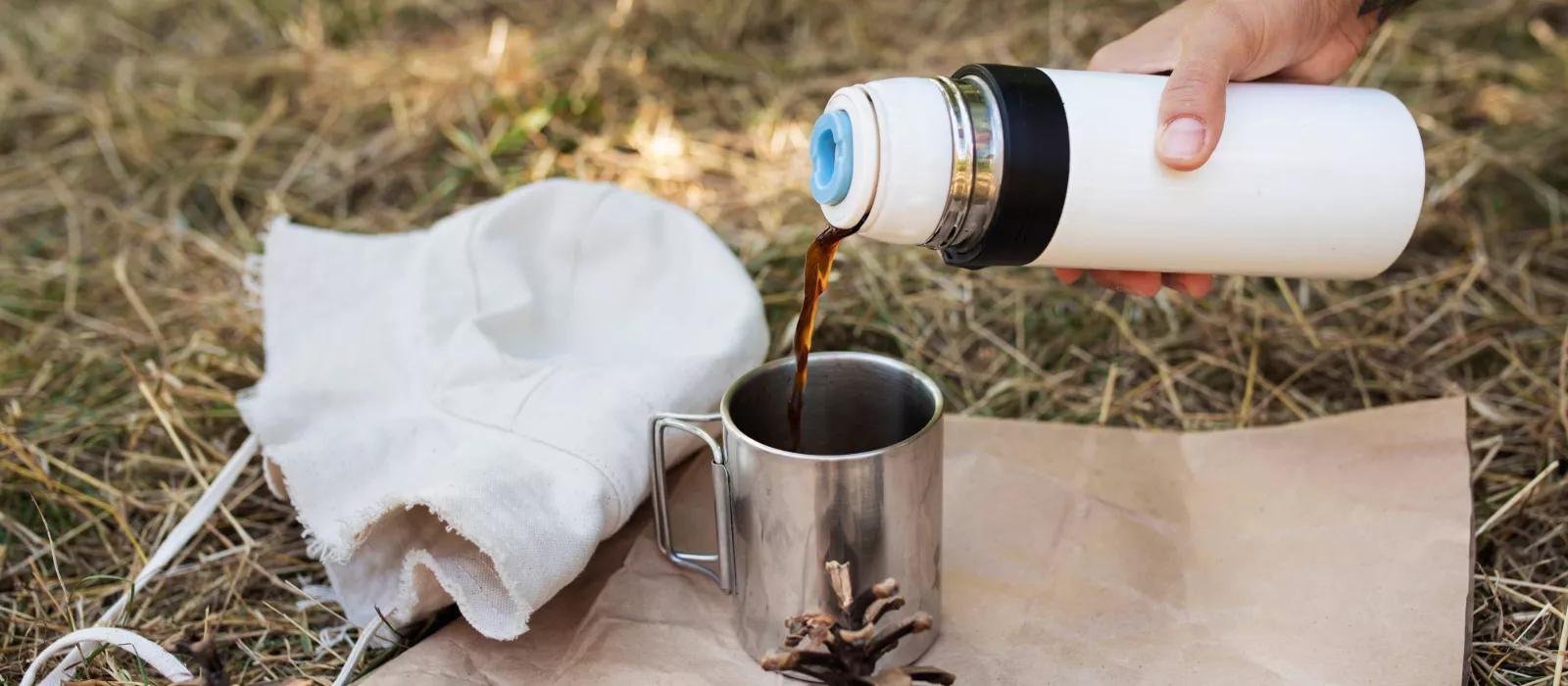
Before the sun comes up, when the dew is gathering on the still leaves, the sagebrush smells dank and cold, and everyone is still sleeping in their sleeping bags, it’s time to get up and start the morning for camp. There are no alarm clocks out here. There is no outlet to plug in a timed coffee brewer, a pod machine, or a barista waiting to take your order. This is where the best cup of coffee you’ll ever make happens. Cowboy coffee predates every modern brewing gadget by 150 years. For something those rugged individualists on the range perfected so long ago, it’s wild that we’ve departed so far from it. Put simply, cowboy coffee is a method where coarse grounds are added directly to hot water in a pot, usually over an open fire or camp stove, and allowed to settle before serving. No filter, no press, no equipment beyond the pot itself.
Table Of Contents
- A Brief History of the Tin Cup: Where Cowboy Coffee Comes From
- Before You Brew: The Gear You Actually Need
- The Pot
- The Heat Source
- The Altitude Factor
- Cold Water for Settling
- Grounds for Flavor: Size is Everything
- How to Make Cowboy Coffee: Step-by-Step
- The Modern Method
- The Traditional Method
- The Ratio of Grounds
- The Temperature Science
- The Steep Time
- The Cold Water Step
- The Cowboy Coffee Hack
- Where Cowboy Coffee Belongs
If it sounds different, it’s because it is. This is the perfect kind of jet fuel that will keep you going all day. On the trails, in the river, or relaxing around camp, this is the best way to start your day in the wilderness. Here’s a little history and the perfect recipe for how to make cowboy coffee.
A Brief History of the Tin Cup: Where Cowboy Coffee Comes From
We take some of our routines and rituals for granted. We forget that these practices have been honed over hundreds of years. Our morning cup of coffee is no different. It wasn’t Starbucks that began the coffee trend in the United States. Over a hundred years before the first Starbucks was built, coffee was being served on the frontier.
The chuck wagon was invented in 1866 by Colonel Charles Goodnight, a Texas cattleman looking to drive 2,000 longhorns from Texas to Colorado. Until this time, cowhands would provide their own wares on the trail and prepare their own meals. He rebuilt an Army surplus wagon with cupboards and compartments, drawers, and a hinged worktop. Cooks were called “cookies” and were among the most respected people on any cattle drive. Cowboy coffee immediately became a coveted ritual on every wagon train and cattle drive.
According to True West Magazine, one chuck wagon cook named Oliver Nelson reported using approximately 175 pounds of coffee beans per month for his crew. Trail boss George Duffield wrote that during one storm, his men were in the saddle for over 60 hours straight, sustained with only coffee and bread. At this time, cowboys would get furious at a weak cup of coffee, calling it “dehorned belly wash” or “brown gargle”. A strong cup of coffee, the good stuff, was called “Six-shooter coffee,” and was said to be strong enough to float a revolver.
Coffee really spread through the West after the Civil War. Union Soldiers received a formal coffee ration: 8 pounds of roasted grounds per company. When soldiers broke camp, coffee was the first thing prepared. This took practice later on the frontier, and the cookies would push ahead of the cowboys and set up camp, brewing a fresh pot while awaiting their arrival.
It’s worth noting that cowboy coffee is technically an immersion brew, very similar to a French press. The difference is you’re not pressing the grounds, you’re settling them with gravity, cold water, and patience. Same principle, zero equipment. Let’s go over exactly what you’ll need.
Before You Brew: The Gear You Actually Need
The Pot:
Although the practice of making cowboy coffee is still widely revered, there’s no problem with updating some of the equipment. Traditionally, cookies were made in a tinned-iron pot with a capacity of about 3-5 gallons to serve 10-12 men. That might be a bit overkill for modern campers. Ideally, a 1-2 quart stainless steel or enamelware pot that can cleanly handle 2-4 cups. Enamelware is a campfire coffee favorite because it distributes heat evenly and imparts any flavor to the coffee, as some metallic materials can.
The Heat Source:
Without a doubt, heating water or cooking over an open campfire is intriguing and romantic. But there is a learning curve to being able to control the heat of a fire. When setting up an open flame, there are a couple of things to keep in mind. Good, consistent heat is the best way to get the best cup of campfire coffee, and this can be difficult on the campfire. One mistake you want to avoid is keeping a rolling boil after you’ve added the grounds. This can scorch the grounds and ruin the whole pot of coffee. A camping stove is ideal for a really good cup. If you’re set up in cold weather and have a tent wood stove, this is the best option. A tent stove with an adjustable dampener will provide actual temperature management. Exactly what you’re looking for. White Duck Outdoors makes an awesome Anchor Stove that comes in four different sizes, an ideal setup for your tent, and makes the best cup of camping coffee.
The Altitude Factor:
You’ll want to consider this when you really start to refine your cowboy coffee recipe. Water boils at 212 degrees Fahrenheit, but that’s at sea level. That boiling point drops approximately 2 degrees for every 1,000 feet of elevation. At 5,000 feet, the elevation of many camp sites and mountain campgrounds, water boils at around 202 Fahrenheit. At 10,000 feet, water boils closer to 194. The National Coffee Association identifies 195 degrees as the minimal threshold for proper extraction. If you’re camping at high elevations and your coffee tastes flat or sour, you might be boiling it at a lower temperature.
Cold Water for Settling:
For the best camping coffee, you’ll need a separate pan or bowl of cold water. Keep a canteen nearby for this recipe. You’ll need about ¼ cup for a 1-quart pot. The cold water serves two purposes: it drops the temperature quickly, stopping the active extraction, and the sudden temperature change causes the grounds to clump and sink faster.
Just a few items are needed, but with just these tools, you’re going to have an incredible cup of coffee. But before we get into the recipe, we need to look at the key ingredient: the grounds.
Grounds for Flavor: Size is Everything
Making coffee is, admittedly, a little science experiment we all perform each day. Let’s just take a quick look at the miracle that happens in that little cup of energy. Fine grounds have dramatically more surface space (per gram) than coarse grounds. Research shows that very fine ground reach 93% extraction in just five minutes, while very coarse grounds reach about 61% extraction in the very same window of time.
What this means for cowboy coffee: fine grounds become imbued with water and remain suspended in the water. For an average, modern cup of coffee, these suspended grounds are fine; they will eventually be filtered out. For cowboy coffee, there is no filter. The method relies on the coarse grounds to fall to the bottom of the pot and get separated from the drinkable coffee.
For cowboy coffee, we’re looking for something that resembles coarse sea salt. Medium-coarse looks like coarse beach sand. Fine ground looks like table salt. This is a little practical visual test you can do with your camping coffee. If your grounds look like sand or powder, they won’t settle properly, and you’re going to end up with a muddy cup of coffee.
The best method for fresh grounds but not needing to haul along a hand grinder is to grind some coffee the night before or the morning of heading to camp and seal it in a plastic bag. Ground fresh right at camp is ideal, but there are some steps we can condense for convenience.
How to Make Cowboy Coffee: Step-by-Step
There are two basic methods for making a good cup of cowboy coffee. Try them both and see where your preference lies. They are both historically and technically valid, so take your pick.
The Modern Method:
Both methods are pretty simple. For this first method, boil the water first, then add your grounds. This allows for better temperature control, but when compared to the second method, it will not be as strong as the second method. Traditionally, a good, strong cup is what we’re going for.
The Traditional Method:
In this method, begin by adding the grounds to the pot with cold water and then bring it to a boil. In this case, the grounds remain in contact with the water much longer and thus begin extraction earlier and for a longer duration. The coffee will naturally be stronger. Getting either right will take a couple of times to practice, but you’ll get there.
The Ratio of Grounds:
Depending on how strong you like your coffee, this changes for everyone. The Specialty Coffee Association recommends 1:15-1:17 coffee to water by weight for immersion brewing. For the best camping coffee, that works out to roughly two tablespoons for about 8 oz of water. Experienced cooks who like it strong will push that ratio to 2.5 Tbls/8 oz of water, but you might want to start at 2.
The Temperature Science:
The best temperature to add the grounds, or get the mixture to, is 105-205 Fahrenheit. Once you hit this temperature, remove the pot from the heat and let it rest before introducing the grounds. As mentioned above, the best method is to use a tent stove. Similarly, cooking in a canvas tent is an ideal setup for not only good coffee but also good camping. More on this below.
The Steep Time:
Grounds, if they are introduced at the right temperature, need 4 minutes to reach the proper extraction. This is the same time for the French press. Steeping for under 3 minutes will under-extract. Likewise, steeping for over 5 minutes will cause over-extraction and make for a bitter cup.
The Cold Water Step:
This is the actual trick to making the cowboy coffee; this step makes all the difference. After the steep time, four minutes, add about ¼ cup of coffee for every quart of water. This will immediately cool the temperature and force the coffee grounds to clump up and sink to the bottom. This, effectively, is what stops the steeping process, slows the extraction down to nearly nothing, and concludes the brewing process. At this time, the grounds remain on the bottom, and you’re able to pour the coffee off the top.
The Cowboy Coffee Hack:
As you can tell, there is no filter, so there will be grounds. Similar to Turkish coffee that uses extremely fine grounds, there are bound to be a few grounds in your cup at the bottom. Cowboys traditionally throw out the last half ounce because there might be some grounds. To help mitigate the issue, cookies will let the coffee pot steep at an angle, perhaps on one of the campfire rocks, to let the grounds gather in the bottom corner of the pot.
BONUS HACK: The real pros will gently tap the side of the coffee pot to encourage the grinds to fall to the bottom. This will ensure the cleanest cup of coffee possible.
Where Cowboy Coffee Belongs
There are no real rules out in the wilderness. Make the coffee, don’t make the coffee. It’s up to you. But for those who know the appeal of certain aspects of traditional camping, understanding how the West was settled, this is a fun practice to get in on your camping adventures with your friends and family. This is a perfect setup to practice if you’re in a canvas tent. Stoking the fire in the morning while everyone sleeps, getting a low boil on the coffee, and then adding the cold water. The smell slowly emerges and encourages the group to rise.
Most quality canvas tents come with a stove jack where you can safely install a tent stove. On the super cold mornings, being indoors makes for a much more comfortable coffee-brewing ritual. The fire is hot, the cooking surface is warm, and once the coffee is drunk, it’s a perfect time to start some eggs and bacon.
This is an awesome camp tradition to start. In no time, you’ll be telling your friends about the history of frontier coffee, and they’ll want to pour in the cold water. It’s a simple pleasure and one that becomes a daily longing when you’re back at work. Like sleeping in a comfortable sleeping bag, in a warm canvas tent, on a nice cot, you’ll be thinking of cowboy coffee when you think about camping.



No Comment! Be the first one.