

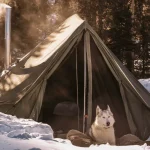
Whether you’re camping in the desert during the peak of summer or adventuring with a hot tent in the extreme cold, the evenings are always the coldest part of a day outdoors. Odds are, if you’re camping in a winter tent with stove compatibility, your main goal is to stay warm, especially once the sun goes down and the temperatures drop. To do that in cold weather, you’ll need to ensure your wood burning tent stove stays burning through the night.
Table Of Contents
While it seems easy enough to keep a fire going, it can be more challenging than you think – especially when you’re fast asleep in the comfort of your tent. Luckily, there are a few measures you can take to optimize the burn in your stove. So without further ado, here are the top tricks to keep your wood stove burning and your tent toasty all night long.
Choose Your Wood Fuel Wisely
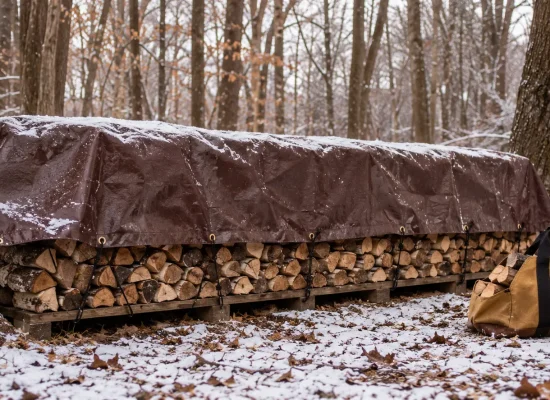
The wood you choose to fuel your stove is paramount to a successful extended burn. Hardwoods, including oak, hickory, ash, and pine, make ideal firewood thanks to their dense makeup. As a general rule, the denser your firewood, the slower it’ll burn. It’s also vital that your wood fuel is dry and seasoned. Fresh wood is more susceptible to holding moisture, resulting in excessive smoke and faster burn times. Seasoned wood that’s been dried out for at least 6 months is a better choice when fueling a tent stove for this reason. Once you’ve collected the logs you’ll use to fuel your fire, dedicate a space at camp to store them that’s as protected from the elements as possible. Whether under a poly tarp or a canvas canopy, you just want to ensure you minimize their exposure to moisture.
Create a Solid Foundation
To begin the process of building a long-lasting tent stove fire, you need to start by creating a solid foundation. The first goal is to build up a hotbed of coals. To do this, start with a small kindling fire a few hours before you plan to go to bed. This will give the fire enough time to create a stable, hot coal bed that will help to keep your logs lit through the night.
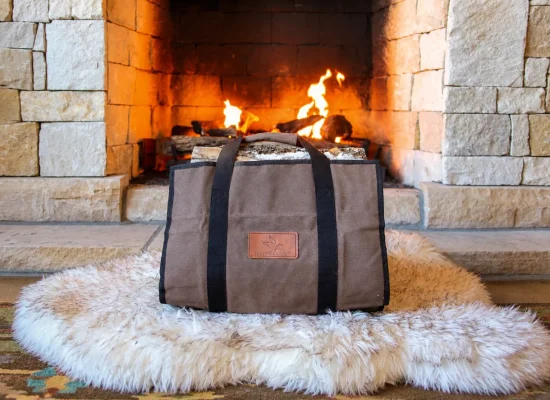
Once a hotbed of coals is established, rake the live coals to the front half of your stove. From there, arrange your seasoned firewood on top, placing the largest logs on the bottom. Stack them in a criss-cross pattern, leaving minimal space between each piece. While you want a few larger logs, they should be mostly consistent in size to ensure a steady burn. Don’t forget your canvas log carrier to collect the best ones! How much firewood you need will depend heavily on the size of your stove, but try to fit in as many as you can without completely over-stuffing it. The more wood there is to burn, the longer your fire will last.
Regulate the Air Flow Into the Stove
Oxygen is an integral part of the combustion process, but too much can cause excessive burning that’s faster than you want. At this point, you’ll want to adjust the air vents to maintain control over the air flowing into the stove. Don’t close them completely as it will cut off the oxygen supply, but don’t open them so much that that excessive burning we talked about occurs. Cracking the vents open just enough to allow small amounts of oxygen in will slow down the burn and create a more stable fire from the one you initially lit to create a hot coal bed.
Maintain a Consistent Burn
Everything you’ve done up until this point should result in a long-lasting fire in your tent stove. From here, you’ll just need to keep an eye on it to ensure there are always hot embers to fuel the fire. As needed, add in small, dry pieces of wood to keep a substantial layer of coal. Look out for excessive build-ups of ash, too, as this can potentially block airflow and poorly impact your fire.
With your bed of embers glowing red and orange, your seasoned wood stacked properly, and your air vents adjusted, you should be good to shut your eyes for the night and enjoy the warmth of your stove!
What To Do in the Morning
When you wake up in the morning after a cozy night of sleep in your tent, depending on how long you slept, there’s a good chance that you’ll only be left with the glowing embers in your stove. As long as the coals are still hot and active, reigniting your stove fire is as simple as placing on more seasoned logs. Crack the air vents a bit more, and the added oxygen and new fuel will awaken your fire and keep you warm during your morning tasks at camp. Maybe you’ll even decide to scramble a few eggs and fry up some bacon, right on your tent stove cooktop!
A Note on Prioritizing Safety
While wood burning tent stoves are phenomenal additions to a campsite, they’re not without some drawbacks. One of which is the very real risks of starting an uncontrolled tent fire and carbon monoxide poisoning. It’s generally advised to not leave a burning tent stove unattended, and while sleeping is technically not breaking that advice, it sure does come close. For that reason, you should be as prepared as possible in other ways to mitigate these risks. That includes installing your tent stove correctly, properly ventilating your shelter, being mindful of how you organize gear around the stove, and packing safety tools like fire extinguishers and portable carbon monoxide detectors.
Final Thoughts Keeping a tent stove burning through a long, cold night can be a challenging undertaking, even for an experienced camper. But, it doesn’t have to be if you take a few measures before shutting your eyes for the night. By choosing the right fuel, creating a foundation of hot coals, regulating the airflow into the stove, and maintaining a consistent burn before bed, you’ll enjoy an extended burn to last you through a bitter winter evening. No matter how you plan to use this luxury camping accessory, following safety precautions is of the utmost importance when using a tent stove. With the right preparation and a basic understanding of how to achieve an extended burn, you’ll be ready to relish in the toasty heat of your hot tent!


No Comment! Be the first one.