

Every camper needs some kind of kitchen at their campsite. Unless you plan on eating only premade or pre-packaged foods, you’ll need a place to cook meals, and sometimes purify water, on a multi-day trip outdoors. But what’s a functional kitchen without a stove?
Table Of Contents
For camping, there are two main options to choose from: wood stoves and gas stoves. Gas stoves are arguably the more common of the two, but that doesn’t necessarily mean they’re superior. When shopping for camping tents, you’ll quickly find that some tents are compatible with the second option: wood stoves. Both stove types have their pros and cons, but they ultimately serve two different kinds of campers.
When using a camping stove for the first time, it may not be immediately clear which style is right for you and your specific adventure. Dive in for a comprehensive breakdown of what each stove entails, including their unique advantages and drawbacks. Let’s get started!
Wood Stoves
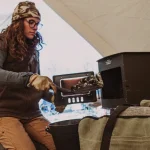
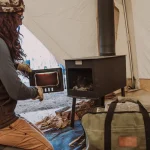
A tent wood stove is a solid metal heating appliance, typically made of cast iron or steel, featuring a boxy design and a long ventilation pipe. Wood stoves use firewood as their primary fuel source. They are most commonly seen inside camping tents, instead of in an outdoor camp kitchen. Whenever you come across a canvas tent with stove compatibility, they’re most likely referring to these classic wood-burning stoves. This type of appliance has numerous benefits that make it a great option for campers, but there are also a few notable drawbacks to consider.
The Advantages
First and foremost, wood stoves are more than just cooking appliances. They’re well-rounded tent accessories that offer campers multiple functions, including ambiance, warmth, and convenient cooktops. The ability to heat a tent in the winter is a huge advantage to this style of stove, and you can’t beat the cozy feel of crackling firewood right inside your tent while you relax after a long day of exploring.
Like most camping stoves, you don’t need any electricity to operate a wood stove. But unlike the alternatives, powering a wood stove is relatively sustainable, since wood is a renewable resource that produces fewer carbon emissions than the gas alternatives. On top of that, campers will enjoy abundant access to their fuel when camping in the wilderness.
Because they’re designed to work as heating systems, they can easily be used for hours on end (or as long as you can maintain the fire). Plus, your stove will continue to emit heat, even after the fire’s gone out, thanks to the stove’s metal body.
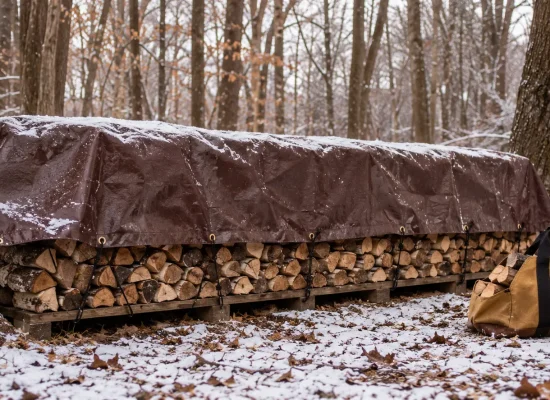
The fuel for wood-burning stoves is also incredibly affordable, and oftentimes free if you know where to look. When you purchase a wood stove, you’re saving money in the long run on the cost of fuel alone. In addition to that, their high quality sets them up for a long lifespan, meaning you may only need to purchase one in your entire lifetime if you maintain it properly.
There’s also a significant advantage when it comes to cooking since it’s the only safe option for cooking inside your tent. Protection from the elements while cooking is something we take for granted in our everyday lives. But with a tent wood stove, it’s not a luxury we have to sacrifice when camping.
The Drawbacks
While the benefits of wood stoves are abundant, there are definitely some drawbacks worth considering, starting with tent compatibility. To operate a wood stove safely, you must have a camping tent built for stove usage. That typically means investing in a canvas tent, which not every camper has. Even with a canvas tent in hand, you’ll still need to install a stove jack if your tent doesn’t already come equipped with one. While it’s not a hard task, it is one extra step that makes this stove a much less convenient option.
On the topic of convenience, it’s also important to note that wood-burning stoves are much heavier than gas stoves due to their heavy-duty metal bodies. They’re still portable, of course, but not nearly as portable as many gas camping stoves.
Further, using wood as fuel can be messy. Burning firewood inevitably leaves behind remains including soot and ash, alongside any smoke that’s generated during use.
When it comes to operating a wood stove, basic fire-starting skills are required. This is usually no issue for frequent campers, but it can be challenging to maintain a consistent output of heat when dealing with wood as fuel, whether you’re trying to warm your tent or cook a good meal. This effort that’s required to get a wood stove lit also means you’ll have longer cooking times as you wait for it to heat up to temperature.
Lastly, while you’ll save money in the long run when opting for a wood stove thanks to its longevity and affordable fuel, there’s no getting around the fact that these appliances require larger upfront investments than most gas stove alternatives.
Gas Stoves
In stark contrast to wood stoves, gas camping stoves are small, portable appliances that use gas as fuel. Typically butane, propane, or a mixture of gases, this fuel is pressurized in cans and cartridges that connect to a portable stovetop. Most notably, gas stoves are only used for cooking, not heating. They range in size, with the smallest featuring a single collapsible burner, and the largest with 4 burners and collapsible wind guards. This type of stove is much more reminiscent of a modern stove found in homes today. Gas stoves are beneficial in their own way, with a few disadvantages to note.
The Advantages
Like wood stoves, gas camping stoves require no electricity, which is why they’re so great for outdoor adventuring. Another major advantage is their weight. While there’s a large range of what these stoves can look like, they’re typically lightweight, highly portable, and easy to pack up quickly. This makes them super convenient and easy to travel with, no matter where you’re going. Because they’re much smaller than wood-burning stoves and made from more economical materials, you’ll find that most gas stoves are also much more affordable upfront.
Additionally, gas stoves offer a mess-free experience thanks to the fuel being contained in canisters, so you won’t come in direct contact with it. No soot, ash, or smoke to clean up after use!
Last but not least, gas stoves are much more controlled heat sources than wood stoves. Most gas stoves will have a dial that allows users to adjust the strength of the flame. This makes it easy to maintain consistent heat and cook food with more precision.
The Drawbacks
As we briefly covered, gas stoves are only used for one purpose: cooking. Unlike wood stoves, these are not multi-functional appliances. It’s also generally advised to not use gas stoves inside a tent. That means you’ll have to set up your camp kitchen outside to use a gas stove, exposing you and your supplies to the elements. While most campers expect to be outside during the majority of their trip, cooking outside can be a challenge when the weather isn’t on your side.
In contrast to wood stoves, gas is not an environmentally friendly fuel. Well-known as fossil fuels, gases are non-renewable resources that emit large amounts of greenhouse gases when used. If the environment is important to you, it might be worth considering the impacts of gas stoves on our ecosystems.
Finally, gas fuel can be a little harder to obtain when camping. If you run out mid-trip, you’ll need to venture back into town to find a shop that sells the kind of fuel you need. Not only is this inconvenient, but it can also be a headache when camping in remote wilderness areas. In addition to that, it’s going to cost you much more money over time to refuel a gas stove compared to a wood stove.
The Bottom Line
Camping stoves are vital pieces of equipment at any successful campsite – unless you only plan on eating premade foods. Campers can choose from two main styles: wood stoves and gas stoves. They’re two very different appliances, with few similarities. Both have abundant advantages and a few drawbacks worth considering, but they ultimately serve two different types of campers. By understanding these pros and cons, you’ll be better equipped to pick the appliance that’s right for you and your unique camping needs.


No Comment! Be the first one.