
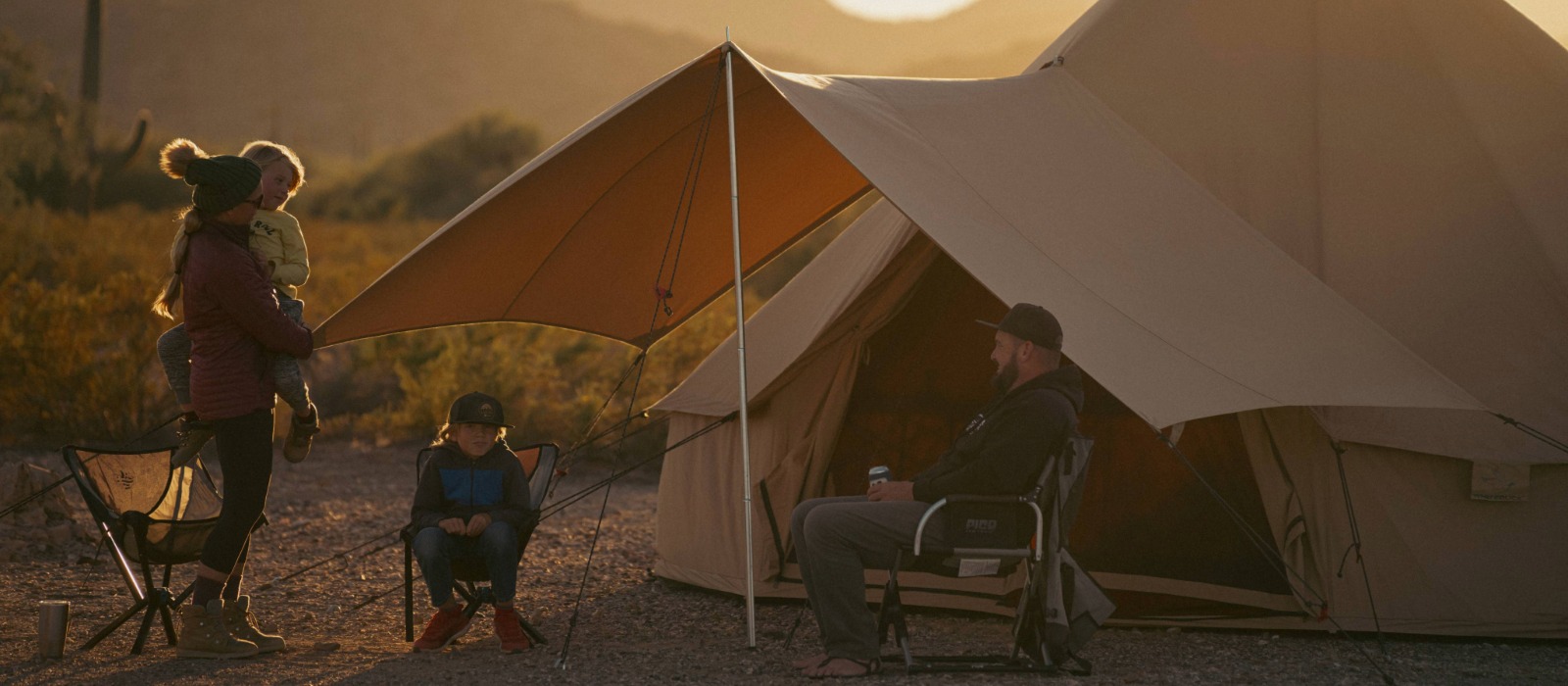
Last summer, I sat back and watched my kids work together to build a fort out of fallen pine branches. They worked together for hours without screens or snacks, and never complained about being bored. They were focused and creative. As I’ve known all along, kids are more creative when they spend more time outside. They don’t need technology; they need adventure.
Table Of Contents
First-time family camping can induce a bit of anxiety. I get it. There’s gear to pack, kids to wrangle, and a million things that could go wrong. But the benefits far outweigh the chaos. Family camping not only creates lasting memories but also builds grit and makes kids resilient. It builds confidence in young ones and brings families closer together.
The trick is knowing what to expect, and each age group will react differently. Toddlers need constant care but see everything, wide-eyed, for the first time. School-age kids want to explore and learn, and take on new challenges. Oh, the teens. Teenagers can be resistant at first, but usually end up surprising themselves and me when they do engage.
I’ve made every mistake in the book, believe me. I’ve forgotten the marshmallows, pitched tents in a drainage ditch in the dark, and I learned the hard way that little kids can’t hold it all night. However, these experiences taught me valuable lessons. More importantly, they showed me that camping disasters often become the best stories later.
Kids Need Wild Time More Than Ever
For children, stepping into the wild changes something in them. I’ve seen hyperactive kids calm down within hours of reaching camp, while shy children become confident explorers. Screen-addicted teenagers start noticing bird songs and cloud shapes. Nature has a way of pressing the reset button in young minds.
It’s not just my observations; the research backs up what every camping parent knows. Studies show that, for children, outdoor time improves focus and reduces stress. Additionally, kids who spend time in nature score better on attention tests and show less anxiety and depression. Their immune systems get stronger, and in turn, they become more resilient.
Physical benefits are obvious as kids spend the day running, climbing, and exploring. But the creative benefits might be even more important. Without toys and screens, children use their imagination differently. Kids build things with their surroundings and create games from nothing. They touch unfamiliar objects and textures, and most importantly, they learn to entertain themselves.
Furthermore, problem-solving skills develop naturally outdoors. Kids figure out how to cross streams without getting wet. I love teaching kids to start fires safely. They discover which plants are safe to touch, and sometimes what not to touch. These experiences build confidence that carries over into other areas of life.
The Under-Five Crowd: Tiny Explorers, Big Needs
Camping with toddlers requires patience and realistic expectations. On our first trip, when one of my kids was two, he wanted to taste everything. Dirt, questionable berries, everything. The constant watching can be exhausting but also extremely entertaining.
The truth is, little ones need structure, especially in the wilderness. Keeping normal nap times prevents meltdowns. Pack familiar snacks and comfort items. One of my kids couldn’t sleep without their stuffed elephant, even under the stars. Some routines are worth keeping for everyone’s peace of mind. Always keep a portable crib that can be moved into and out of the family camping tent.
As you know, toddlers move fast and have no sense of danger. So, scout campsites carefully before letting kids loose. Check for steep drops, deep water, or dangerous plants. Baby gates can create safe play areas around camp. I built a large playpen out in the shade for the kids, where I’ll lay down a canvas tarp and put out some toys.
The reward for the extra work is priceless. The kids get to actually see and hear the birds in the wild, not from an electronic learning pad. They point at trees and feel the cold river. There is nothing like the actual experience of family camping.
Elementary Age: Natural Scientists and Adventure Seekers
Kids between six and ten hit the sweet spot for family camping. They’re old enough to help with camp chores but young enough to discover new worlds. This age group loves learning about nature and feels proud of pitching in.
With a little help, this age group becomes junior scientists almost immediately. They want to identify every bird, bug, and plant. Field guides become their favorite reading material. I bring a small science kit with magnifying glasses and petri dishes so they can perform “experiments” in their surroundings. Their curiosity always leads to great teaching moments and some awesome mud pies.
First time camping with kids this age is great. They can handle longer hikes with proper planning, strategic stops, and plenty of water and snacks. Keeping a destination in mind always helps, such as leading to a fishing pond or river. Kids want challenges that make them feel grown-up and capable.
Responsibility is important to this age group, whether they know it or not. They can gather firewood safely with a little supervision, while some of the older kids can help cook simple meals. Setting up camp is a team effort, and everyone should have a job. This involvement teaches valuable outdoor skills and instills confidence.
Teens: Reluctant Campers Who Often Convert
Taking older children camping requires different strategies. Teenagers have mighty opinions and sometimes will resist family camping at first. They worry about missing their friends, social media, or looking uncool. But the first-time camping with kids this age often surprises everyone if you do it right.
At this age, the technology withdrawal is real. Expect some complaining about the lack of WiFi or cell service. I learned to frame disconnection for them as an adventure rather than a punishment. Emphasizing the freedom of camping, away from school and social pressures, helps shift their thinking. Tell them they can run wild and yell in any direction. They might roll their eyes, but it’s a good suggestion. It’s tough to explain this longing fora screen away; they might need to experience it.
Physical challenges appeal to older kids and teens more than simply watching trees in nature. They want activities that test their limits. So get them rock scrambling, find longer hikes, and take a dip in a mountain lake. By this age, I’ve introduced my kids to trail running, and I try to push their physical abilities just a bit when they’re ready. This is also a good age to start learning archery or other skills that require more focus and coordination. These kids can also handle actual responsibilities, not just made-up chores. Have them manage camp kitchens or lead younger siblings on nature walks.
Surprising changes often happen with reluctant teenage campers. I’ve watched phone-obsessed kids become passionate about photography in nature. Teenagers who never helped at home suddenly volunteer for camp tasks. The outdoors brings out different sides of everyone’s personalities. I think the secret is to treat them as though they are already capable. They are always watching. So I do something once in front of them, like chop wood, and then let them take over. Honestly, most people think swinging an axe is fun. One factor to consider is not to push too hard. In their heads, these teenagers have a lot of life’s secrets figured out, especially their own preferences. Making suggestions and providing fun options is the best way to let them feel like they came up with the idea themselves. They’ll be more inclined to put forth the effort to have fun that way.
The Right Choice for Your Family Camping Tent
The right family camping tent makes for the right experience. I’ve paid the price for a shabby tent during a rainy weekend when we were all cramped inside for three days. We were all cranky and crowded and just wanted to leave. Big mistake. You learn quickly that too much space is never enough.
Family camping tents need more than just sleeping space. Kids need room to play during bad weather, and parents need space to organize gear and prep meals. A cramped tent turns minor problems into major conflicts. If the destination is fun, don’t skimp on the gear.
Canvas tents are, in my opinion, the ideal family camping tent. The natural material breathes better than synthetic fabric and mitigates moisture issues that plague nylon tents. Canvas is also better in varying temperatures. It stays cooler in heat and warmer in cold conditions.
For smaller families, cabin tents are an excellent value and plenty comfortable. White Duck Outdoors cabin tent designs have plenty of headroom and floor space. Multiple windows let all the light in and make for airy interiors that don’t feel cramped. They’re quick to set up, which I appreciate when the kids are ready to hit the trails.
Larger families might want to try the more spacious wall tents. These formidable shelters allow for multiple sleeping areas and gear storage. Wall tents can also fit plenty of cots to get everyone off the floor. For the parents putting in all the work, a good night’s sleep is necessary.
Tent accessories make first-time family camping significantly better. Guy lines and canvas tarps make quick outdoor shade shelters and help protect kitchen areas from hot sun and rain. I always recommend a tent footprint. These protect the tent floors from sharp objects and keep any moisture out. No one wants to wake up soaked. The best addition anyone can make is an awning. For a quick outdoor living space and to extend the square footage of your camping home, post up an awning outside the front door. These small additions make family camping more comfortable, and no one really thinks about them. They just enjoy that they’re there.
First Time Family Camping is a Gateway to the Wild
Family camping opens doors to a lifetime of outdoor adventures. Children who learn to love nature become adults who protect it, and this is something we all need. Families who camp together have stronger relationships and are more likely to stay closer into adulthood. I know that’s how it’s been with my siblings and me.
The benefits of kids getting to know the wild far outweigh the challenges of the logistics. Children need wild time for healthy development, and they need to be challenged. It builds confidence and hones skills to encourage self-reliance. Most importantly, they need family experiences that don’t involve screens or schedules.
First time camping with kids will test your patience and planning abilities. It will also create some of your family’s best memories. The child who complains about hiking today might become tomorrow’s outdoor blogger. The teenager who shrugs their shoulders and tags along might plan backpacking trips for their friends in college.
Start small and build gradually. Local campgrounds are great for first family camping. Success builds confidence for more ambitious adventures later. The goal isn’t to conquer mountains, but to develop comfort and confidence outdoors. It’s to find our place in tandem with the natural world and know that every action we take affects our public lands. There is no single event that will save or ruin our wild spaces; it’s something that happens over time and becomes a practice. We should all be good stewards of the land and learn good practices. Look for me cutting kindling with my kids. I’ll see you out there.


No Comment! Be the first one.