
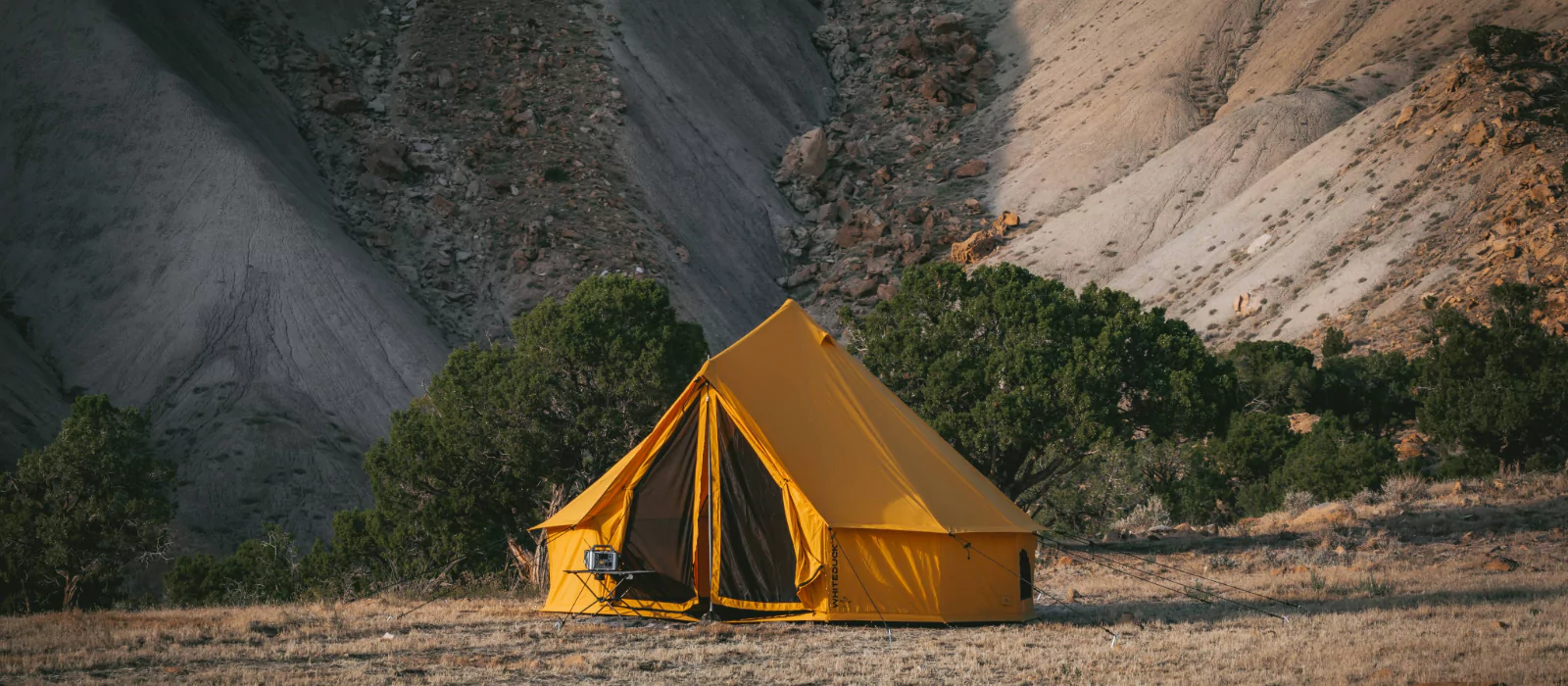
Wide open skies, sandy dunes, and towering cactuses across an endless horizon. Nothing compares to the desert. It’s no wonder so many are drawn to sleeping under the stars and hearing coyotes in the distance. These remote locations offer a feeling of escape and adventure!
Table Of Contents
- Why the Desert?
- Unique landscape
- Flora, Fauna, and Wildlife
- Dark Skies & Stargazing
- Music and Arts Festivals
- Challenges of Desert Camping: Everything You Need to Know
- Harsh environment
- Remote Locations
- Hazardous Critters
- Heat Dangers
- How to Have a Successful Desert Camping Trip
- Where to Camp
- Tent Setup
- Beat the Heat: Prep Your Campsite
- Sun Protection: SPF & What to Wear
- Staying Cozy at Nights
- Leave No Trace Principles
- Staying Hydrated
- Navigation
- Mind the Critters!
- Check the Weather Forecast
- Wrapping Up…
And like any good adventure, a desert trip requires special preparation and knowledge. Keep reading this blog to learn all about camping in the desert– the risks, rewards, and everything in between.
Why the Desert?
Some of the world’s most breathtaking wonders and landscapes happen to be deserts. The Grand Canyon, Arches National Park, Death Valley, just to name a few in the U.S. It’s hard to fight the allure of desert camping– and we say, go for it! With the right preparation, of course.
Camping in the desert is no joke, with its harsh elements and sensitive ecosystem. But for all its hazards, desert destinations offer a truly unmatched outdoor experience. If you’re down for a challenge, desert camping is so worthwhile!
Unique landscape
The unmatched rugged beauty of the desert truly sets it apart in the natural world. Each desert in the world is so unique. Whether it’s red rock canyons, or miles of sandy dunes as far as the eye can see, the desert is full of variety.
Flora, Fauna, and Wildlife
The desert hosts an unassuming yet thriving ecosystem. It may seem impossible for life to be sustained in these harsh elements. But some of the world’s most resilient species call the desert “home”. From venomous reptiles to shocking insects, to surprising cactus blossoms, there’s so much life in the desert to discover.
Dark Skies & Stargazing
Deserts host exceptionally clear night skies because of their low humidity and cloudless conditions. That’s why so many desert areas are certified Dark Sky parks. Your first night in the desert will have you in awe at the sight of endless stars.
Not to mention desert nights are quiet. Far removed from major cities and roads results in close to silent nights. Paired with brilliant cosmos above and you’re ready for some unforgettable experiences.
Music and Arts Festivals
The desert is flat, expansive, and remote. So what does that make it? The perfect place to host music festivals and events! There is nothing quite like bonding with friends out in the desert, hanging out in a canvas camping tent, and enjoying music and art. During the spring and summer months, popular desert locations become the backdrop to your favorite artists and amazing memories.
Challenges of Desert Camping: Everything You Need to Know
Camping in the desert is a worthwhile experience for those who are well-prepared. A harsh environment, sensitive ecosystem, and limited resources make desert camping risky. We’ll break down the challenges of desert camping so you can feel more prepared as you plan your next adventure.
Harsh environment
Deserts experience extreme swings in temperatures. Daytime heat and nighttime lows. Not to mention unpredictable weather: sweeping windstorms, monsoons, flash floods, and dust storms. Do your research, and pack accordingly. Ensure your camping tent accessories will support you in heavy weather or emergencies. A rainfly and durable grounding system are a great place to start!
Remote Locations
There is often no cell service or amenities in desert locations. Come prepared by informing others where you plan to be, with whom, and for how long. Bring walkie-talkies and other forms of communication like a SAT phone.
Hazardous Critters
Venomous animals like rattlesnakes and scorpions are often camouflaged in the scenery. Cactus spikes can cause serious irritation to the skin if not dealt with properly. These critters can be unpredictable, and pose a threat to campers’ health if things get a little too close for comfort.
Heat Dangers
Heat stroke is one of the main dangers of desert camping. Not to mention sunburns and dehydration. Beat this by limiting time spent in direct sunlight, hydrating, and wearing sun protection!
How to Have a Successful Desert Camping Trip
Where to Camp
There are tons of places to camp in the desert. BLM lands are abundant. But be mindful of their lack of amenities and resources. Camping on free land, while convenient, isn’t always a great idea for the environment. The delicate ecosystem that is the desert requires balance. If possible, book an established campsite! That way, a spot has already been made for you. Not to mention possibly some amenities.
If you are camping on BLM land, there are a few things to note. Check regulations and restrictions for the area you’re traveling to. Pack in and pack out. That means you are responsible for containing and properly disposing of your waste and trash in these areas. Do your research on weather conditions, water sources, etc.
Tent Setup
It’s tempting to sleep under the stars! While it may be okay to try sometimes, desert campers should always have a tent setup. A heavy-duty canvas wall tent is perfect for remote camping. The canvas itself is durable enough to stand against unpredictable elements. It offers relief from the direct sun, and protection from heavy wind and rain. Canvas is both insulating and cooling, so it regulates temperature fluctuations day to night.
Designs like bell tents or cabin tents are great choices. These include tall ceilings and a spacious interior. For groups, there are options for multiple sleeping arrangements, gear, and more. Utilize a rainfly for protection from rain, and to act as a sunshade. A footprint, like a poly tarp, adds a layer of protection underneath, and extra insulation.
Beat the Heat: Prep Your Campsite
Prep your campsite for the heat! Plan on shade, shade, and yeah, more shade! A rainfly, like a canvas tarp, is excellent at blocking the sun. Bring fans, and raised sleeping platforms for better airflow. Camp chairs to kick your feet up after hiking in the sun help tremendously with circulation and recovery.
Sun Protection: SPF & What to Wear
You may be surprised to hear that layering clothes is actually effective in the desert sun! Shop for lightweight clothes treated for UPF. These may be long sleeves and pants, but they work hard to protect your skin from harmful UV rays. A wide-brimmed hat is a must in your wardrobe. And don’t forget your sunblock! Sunburns are nothing to joke about. The less your bare skin is exposed to the afternoon sun, the better. Remember, you can always check the forecast for a UV rating!
Staying Cozy at Nights
High winds may prevent you from having a campfire. There are plenty of ways to stay warm when those desert night temperatures drop!
Camping in an insulated canvas wall tent, with plenty of warm blankets and pillows
Leave No Trace Principles
Following the 7 Leave No Trace principles sets campers up for success. These guidelines ensure campers are leaving minimal impact on their campsite. From the moment we arrive to the moment we leave, being aware of our actions towards nature. It’s about being stewards of the environment while enjoying it too! Read more about the Leave No Trace principles here.
Staying Hydrated
Pack the amount of water you think you’ll need. Then, pack even more! Water sources are few and far between– if at all– in the desert. As a general rule, pack a gallon of water per person per day. Then, an extra gallon for cooking and washing per day. Double up, and don’t worry about going overboard. This is not an area to skimp on!
Navigation
You may be surprised how easy it is to lose your way in the desert. It can be disorienting to look across an unfamiliar landscape in the heat of the day. When you arrive, establish some landmarks near your campsite, especially if you are camping on free land. Offline GPS devices are helpful, as remote desert locations are often out of service range. And remember, physical maps are always foolproof and can be reached at a visitor center.
Mind the Critters!
Be mindful of the animals you’re sharing space with! Always fully zip your tent– especially at night. Shake out your shoes and bags before use! Remember that we are just as dangerous to these animals as they can be to us, so keeping a respectful distance is crucial. Never approach or intimidate wildlife.
Check the Weather Forecast
Don’t make any assumptions about desert weather! While dry days are pretty reliable, high winds and heavy rains are always a possibility. Check the weather continuously up until leaving for your trip. That way you can be as prepared as possible.
Wrapping Up…
So you want to do some desert camping. Go for it! With a flexible mindset and proper preparation, it can be an amazing experience. Camping in the desert presents challenges, unlike any other landscape. Its complex ecosystem requires balance and minimal human interaction. Campers themselves need to be extra cautious of their own health when desert camping. Ample sun protection and water are necessary. Tent setups need to be fairly robust, also. A weatherproofed tent, sleeping platforms, rainfly, and footprint will complete the campsite. Overall, remember to have fun! The desert is brimming with life, beauty, and adventure!


No Comment! Be the first one.