
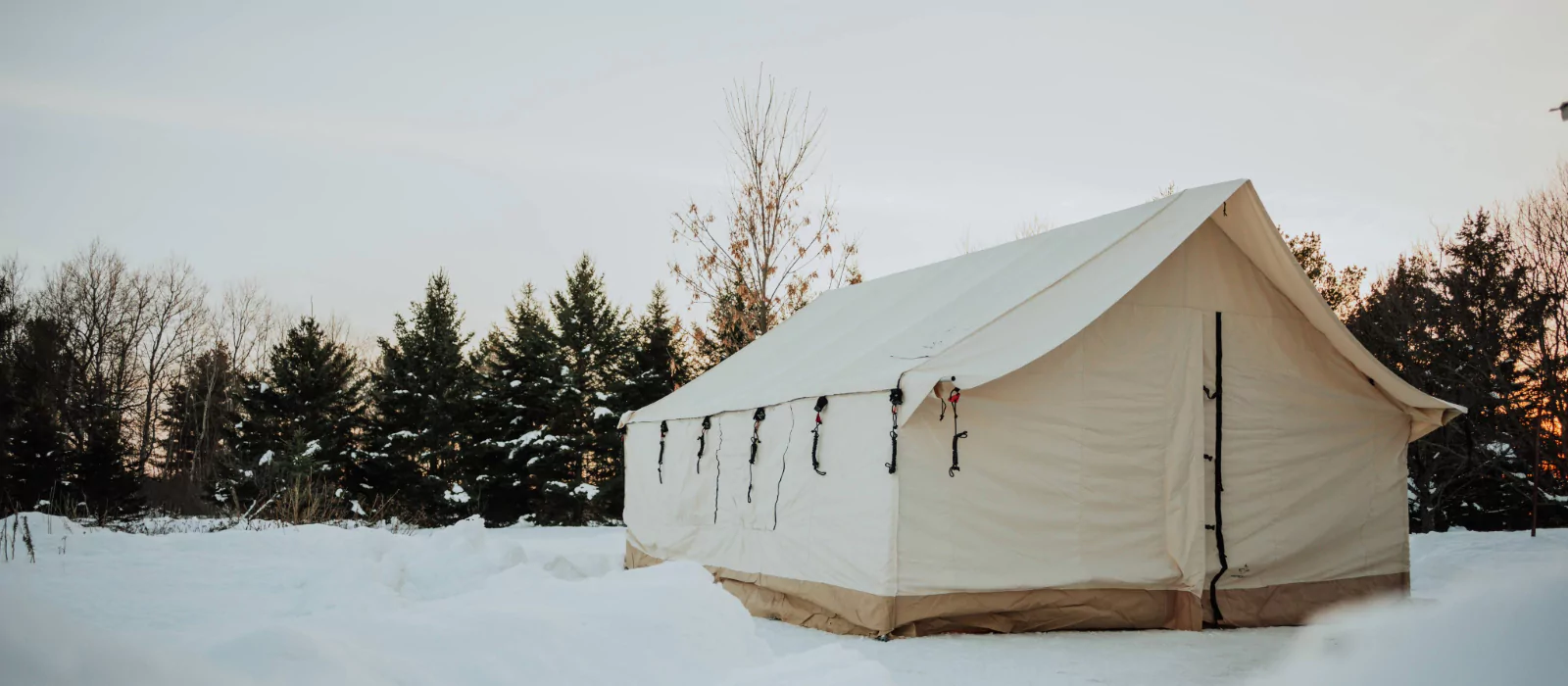
This winter, don’t hesitate to venture your way into the snowy wonderlands of the great outdoors for an adventure. Whether you’re camping with family and friends, on a hunting trip, or just in need of a cozy getaway, we are big believers that cold weather should not keep you from reconnecting with nature. And what better way to help endure the long winter months than to embrace them?
Table Of Contents
Part of the beauty of winter camping is that it requires a little extra planning and attention to detail. Gear, clothing layers, tent setup, and more are different from those in the summer. So, if you’re up for it, this can be an excellent and highly rewarding challenge.
As the excitement arises planning all the components of your snowy endeavor, as does the question of keeping the tent warm. In this blog, we’re going to give you the rundown on insulating a tent for winter, our best tips and tricks, and discuss some winter tent accessories you won’t want to forget.
What you should know about winter camping
Before you hit the road, it’s always crucial to do your research about the weather and terrain conditions of your destination at the time you’ll be there. Because the colder months are subject to more intense precipitation and road or trail closures, make sure you’re prepared to be flexible with plans, as well as equipped for any situation.
Picking a Tent
Perhaps the most important part of planning will be the shelter in which you choose to stay. Because of the increased chances of heavier weather, you’ll want to look into a heavier-duty tent and overall setup to withstand the elements and keep you and your group nice and cozy. Canvas stands out on the market as an excellent material for four season tents due to its unmatched durability, insulation, and waterproofing. We highly recommend investing in a canvas winter tent to be your warm and reliable oasis for your chilly adventures.
Tent Stove & Heaters
Now that you have your tent picked out, we’re going to dive into how to generate and sustain heat in your space. There are plenty of options out there as far as heaters and stoves go. We believe one of the most effective and safe ways to fill your tent with warmth is with a tent stove. Most of White Duck’s tent models have a built-in stove jack, so that whichever stove you decide on can easily be installed into the tent upon setup, and you can be assured the smoke will filter out and the warmth will stay in.
Tent stoves typically run on either wood or propane. Propane is beneficial in many ways: it’s cost-effective, far safer than an electric stove or heater, and quite efficient in heating the stove as well as the tent space. If you’re considering using a wood burning stove, you’re in for a treat. You can enjoy all the same benefits, but with the added nostalgia and allure of the warm glow it provides.
Winter Tent Accessories
Here are a handful of helpful accessories to add to your winter camping list this year, as well as some extra tips and tricks to boost the insulation in your tent!
Firewood log carrier
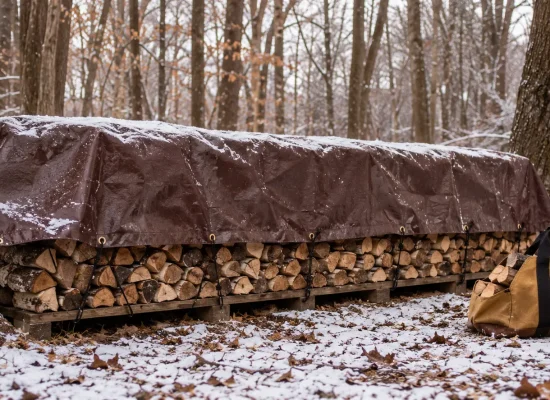
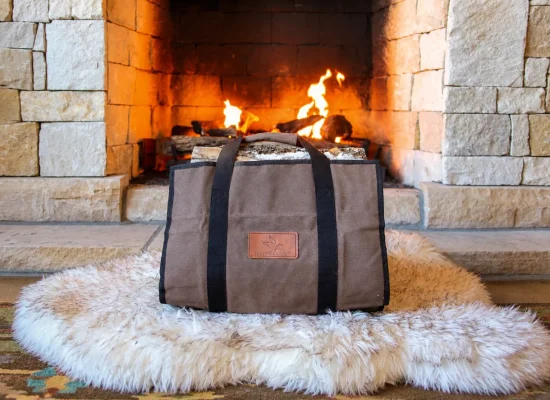
Whether you’re planning on using a wood burning stove or you hope to enjoy a cozy campfire in the snow under the starry night sky, it’s a great idea to use a canvas firewood log carrier. Bundles of firewood are almost always tied up anyways to carry, however using a carrier eliminates the extra mess, makes it easier to transport from one place to the next, and means you can store your firewood inside the tent without mess or worry of the stack falling over.
Rugs
The addition of rugs and ground coverings inside your winter camping tent is an excellent way to cozy up your space. Not only do they add aesthetic appeal in the bleak winter and a soft cushion under your feet, but the extra coverage doubles as insulation from the cold.
Don’t forget your rainfly
This is one of those essential pieces you should always carry in your tent bag. A rainfly is installed over the tent to act as a sort of umbrella for the structure. Rain and snow can slide off of this, protecting the canvas from wear and tear, as well as from soaking and getting cold.
Tent footprint
Setting up your tent at any time of year, but especially so in the colder damp months, should involve a tent footprint. This is a tarp or ground covering meant to go outside underneath the tent itself. Think of it like a foundation. Similar to the rainfly, its purpose is to protect the bottom tent material from damage, moisture, and of course, the cold.
Our Tips & Tricks
Use a sleeping pad/cot
Make sure you’re getting full nights of sleep on your winter camping trip by having the coziest tent sleeping setup. In addition to using a down or synthetic down sleeping bag with perhaps even extra blankets, we recommend using a sleeping pad or cot. This keeps the body lifted away from the hard, cold ground while you sleep.
Double up on rainfly and footprint
Once again, the more distance you can put between yourself and the cold weather, the warmer you’ll be!
If you find you’ll be in a more extreme cold, it may be worthwhile to pack a little extra and double up on a rainfly and tent footprint.
Pack extra guy lines
With a higher likelihood of wind, rain, and snow it would be wise to include extra guy lines and stakes as part of your tent gear. These are always a good idea for putting that little extra tension on your tent to secure it to the ground. Keeping tent material pulled taut ensures that wind and precipitation can more easily roll off the sides and not collect on top or soak through.
This season, don’t let a little cold weather be what keeps you away from getting outside! With the tips and tricks, gear, and preparation you can enjoy the unique natural wonders and activities that winter has to offer.



No Comment! Be the first one.