
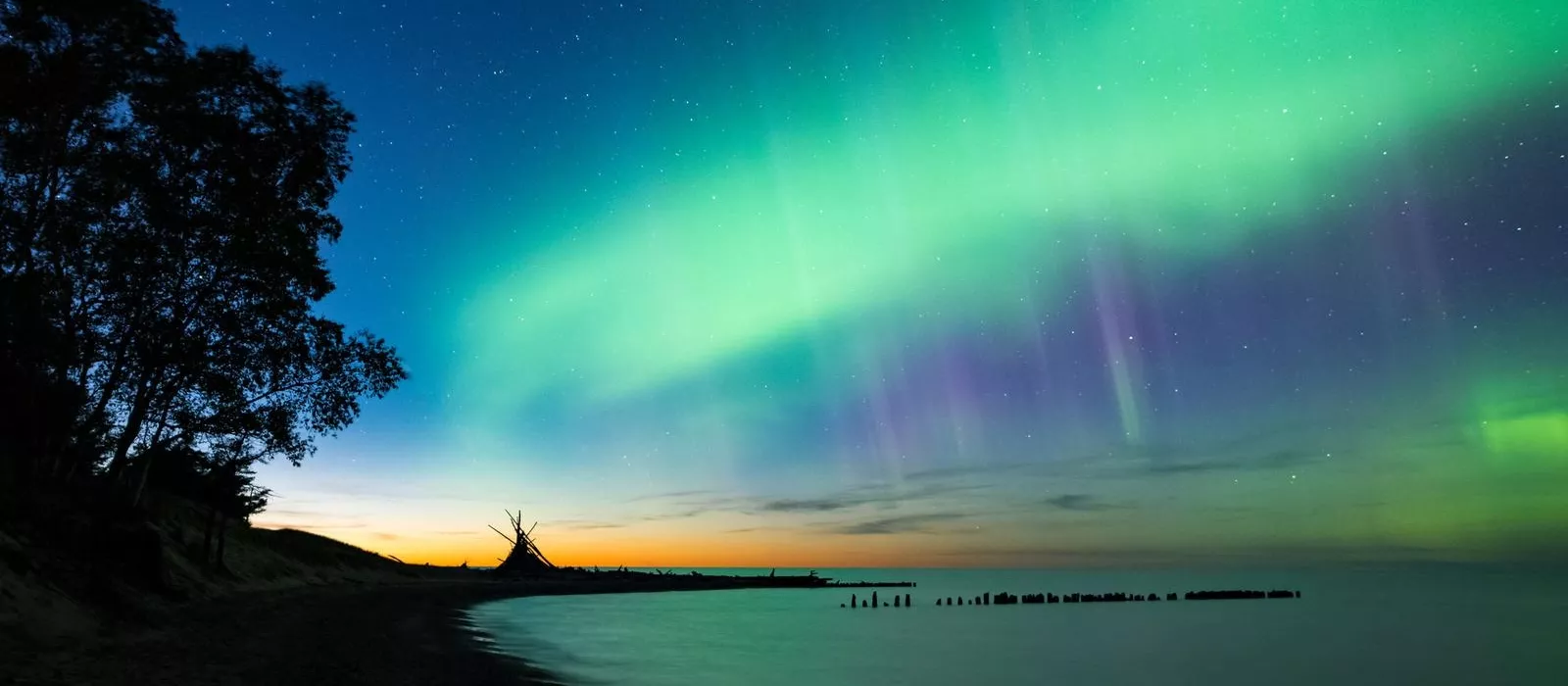
Most people don’t think it’s possible to see the Northern Lights in the US. Oftentimes, people assume the only places to see the lights are in Iceland, Canada, or Scandinavian countries. The truth is, in recent years, there have been numerous places in the contiguous United States where the lights can be seen. For many, to see this majestic phenomenon is a once-in-a-lifetime opportunity. It requires travel and planning, reaching often cold and unrelenting frontiers, and traversing unfamiliar spaces. For this blog, we’re going to look at some of the best places to see the Northern Lights in the U.S. Read along, and it should save you some time and trouble planning.
Table Of Contents
- What Exactly are the Northern Lights?
- Location is Everything
- Fairbanks, AL: The Gold Standard
- Nearby Parks: Denali National Park
- Chugach State Park
- Frequency of the Lights
- Voyageurs National Park, Minnesota: Mirror Lakes and Dancing Curtains
- Camping in Minnesota
- Best Time to Visit
- The Winter Tip!
- Glacier National Park, Montana: Big Sky, Bigger Canvas
- Best Spots and Best Time
- Upper Peninsula, Michigan: The Overlooked Gem
- Pictured Rocks Camping
- Beaver Island Bonus
- Katahdin Woods & Water, Maine: The East Coast Secret
- Know Your Location
- Secure Your Pack, Stare at the Skies
- The Cabin Tent
- The Bell Tent
- Once is Never Enough
What Exactly are the Northern Lights?
The scientific name of the Northern Lights is the Aurora Borealis. Those brilliant photos that look like streaks of paint across the dark night sky? Those are actually charged particles from the sun colliding with gases in our atmosphere. Depending on the type of gas or the elevation at which they collide, these colors can range from brilliant reds and yellows to intoxicating greens and blues.
Seeing the Aurora Borealis depends on your location. The lights form an elliptical oval over the magnetic north pole, called the aurora oval. High latitudes offer the best viewing, but in recent years, the oval has expanded south, making the lights visible deeper into the United States. Solar winds push the sun’s particles far north or south.
If you’re setting out to see the Northern Lights, you need to ensure that where you’re going is going to be dark. While the Aurora Borealis is beautiful in photographs, it is not an overwhelmingly bright occurrence. Professional photographers are good at their jobs, but in order to properly see the Lights, make sure it is lights out and far outside of town.
Lastly, you know the frustration if you’ve ever set out on a night hike during a full moon only to have your evening spoiled by a thick blanket of clouds. Check the forecast, and know before you go. If you’re going to travel hundreds of miles to see the Northern Lights in the US, then you’d better make sure it’s not on a stormy weekend. Beyond just cloudy weather, check the NOAA’s Space Weather Prediction Center (swpc.noaa.gov) and the Kp index to make sure the lights are going to show up. The NOAA Center relies on the Kp Index as an indicator of the auroral size. The oval can expand and dip into more southern regions when geomagnetic activity is enhanced.
Find a spot closest to you, check the NOAA Center website, and plan ahead. The Aurora Borealis isn’t far away. Below will help you decide where you’re headed.
Location is Everything
Fairbanks, AL: The Gold Standard
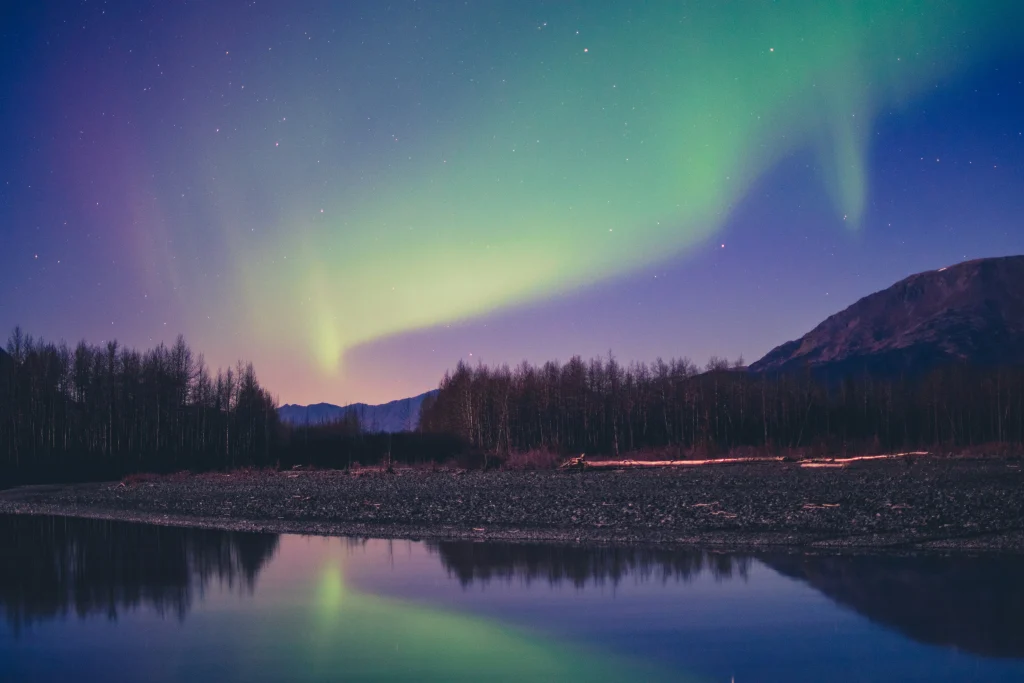
It’s true, this is a bit of an adventure for most people, but Fairbanks sits right below the aurora oval, and the city has built a whole winter rhythm around watching the sky. Clear nights in the interior, when there are no clouds in sight to keep the heat in, can be brutally cold. Like, colder than you can imagine. But these crisp evenings bring long-standing bouts of night that make for prime viewing hours. A short drive gets viewers away from the streetlights toward open horizons and near sites like Murphy Dome or the flats near Creamer’s Field. Oftentimes, light streaks and faint arcs can be seen in these spots before other places.
Nearby Parks: Denali National Park
About 250 miles north of Anchorage, Denali is Alaska’s most popular park and the best place in the U.S. to see the Northern Lights. There is little to no light pollution, and out here, you’re going to feel away from everything. Fall is the best season to see the lights, and with a little luck, they start to appear as early as the second week of August.
Chugach State Park:
This is an immense park with nearly half a million acres of land. This state park is one of the four largest state parks in the country, and there is brilliant Northern Lights camping throughout. As mentioned above, it can get very cold in these parts. If you’re headed up north with the family or the crew, a durable canvas tent is highly recommended to keep the cold out and the warm in. More on that below.
Frequency of the Lights:
People who live in Fairbanks grow accustomed to seeing the brilliant glow of the Northern Lights. During the years that experience maximum solar activity, the lights will start early in the season and last for months at a time.
Voyageurs National Park, Minnesota: Mirror Lakes and Dancing Curtains
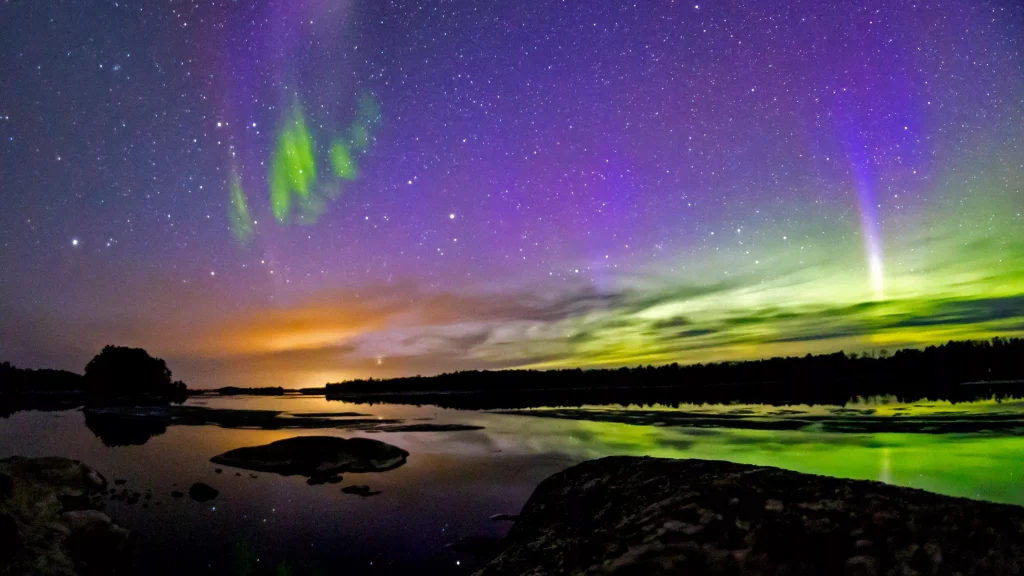
Voyageurs is among the darkest spots in the contiguous U.S., perfect for seeing the Aurora Borealis. The park gets about 200 Northern Lights nights a year, making it ideal for those south of Canada.
Camping in Minnesota:
No one said it would be warm; they only said it would be worth it. All of the camps at Voyaguers are private and secluded, equipped with fire rings, picnic tables, raised sand-filled tent pads, bear lockers, and bathroom facilities. It’s one of the easiest parks to arrive late, set up quickly, and bundle up for a nighttime viewing experience. A rush of stars in the Milky Way, glowing planets, and the Northern Lights are all frequently seen in this Minnesota park.
Best Time to Visit:
Late summer (mid-August through early September) presents the best overall conditions for viewing. There’s warm water for swimming, the bugs have mostly hatched and offer less annoyance, and the spectacular skies are begging to be stared at.
The Winter Tip!
It does ensure a colder adventure, but if you want to increase your likelihood of seeing the Northern Lights, plan a trip in the winter. Check the ice and trail reports and make sure your gear is durable enough to handle the heavy frost.
Glacier National Park, Montana: Big Sky, Bigger Canvas
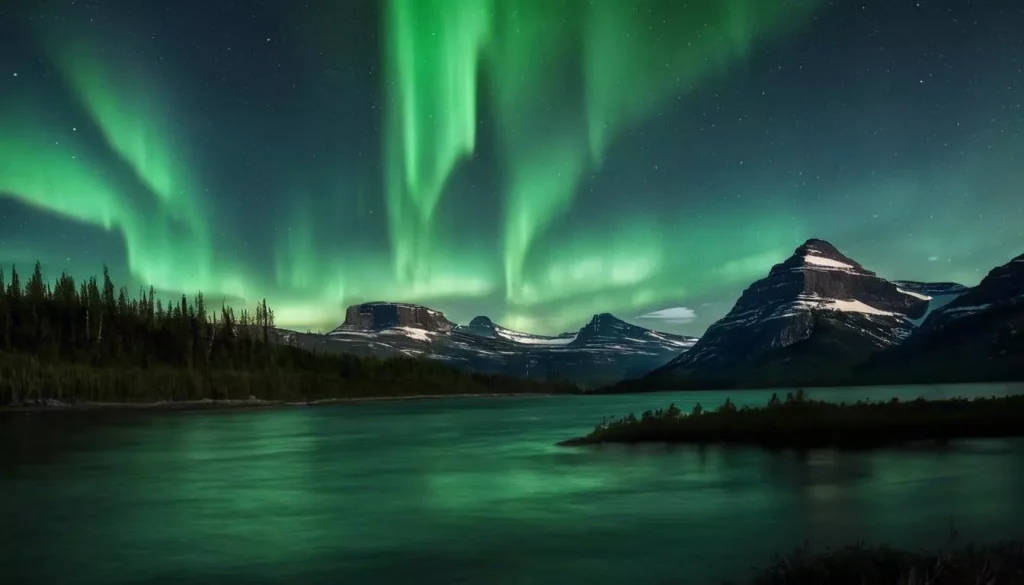
Glacier is not an absolute guarantee, like Anchorage and other parts of Alaska, but in instances of high geomagnetic activity, those night skies can light up like a Christmas tree. Aside from the brilliant skies, lakes running through long valleys provide clean sightlines and reflections, even in the midnight hour, that glisten like a dream and shine like a photograph. If your luck runs out and the sky doesn’t light up, nothing about Glacier National Park will leave you wanting.
Best Spots and Best Time:
Fall, winter, and spring are the best seasons to catch the Aurora Borealis in Glacier. The best spots to increase your chances are Many Glacier, Fish Creek, and St. Mary’s campgrounds. Apgar offers one loop for first-come, first-served campers through the winter season, so if you’re checking the KP Index and it’s popping off, get there early.
Upper Peninsula, Michigan: The Overlooked Gem
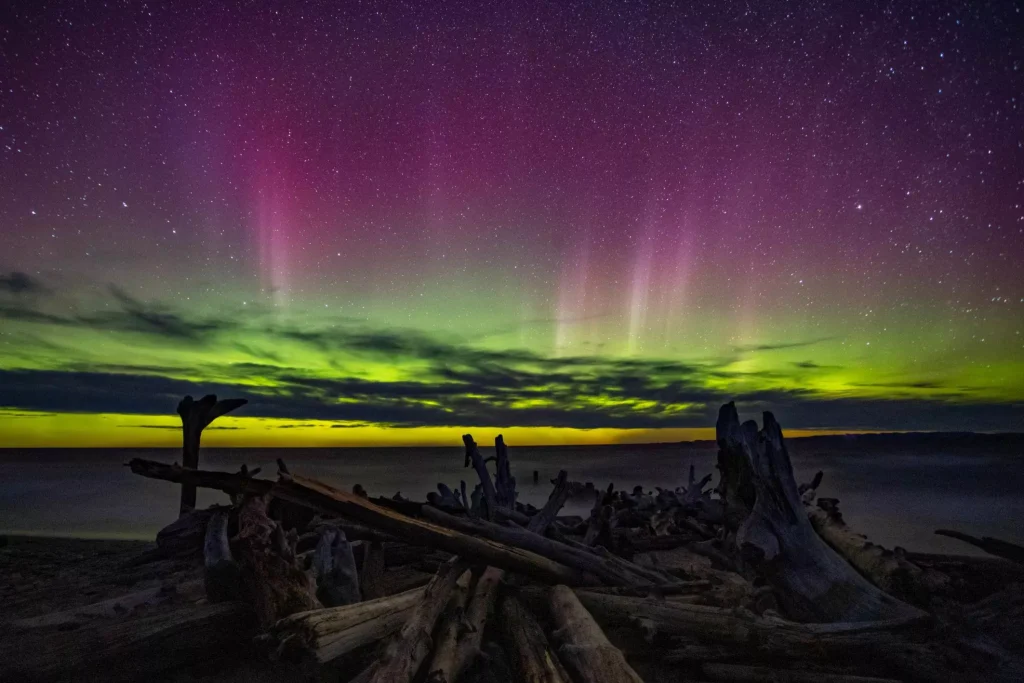
With its northern latitude and minimal light pollution, the Upper Peninsula of Michigan is one of the best places to view the Northern Lights in the U.S. The “U.P” offers incredible views and an incredible stage to see the Northern Lights in person. From the shores of Lake Superior, hanging out here during the colder months is the ideal time to see some night sky activity.
Pictured Rocks Camping:
Pictured Rocks National Lakeshore is a Michigan classic. It can be found on the southern coast of Lake Superior and is one of the best locations in the region to take in the Northern Lights. The campgrounds at Little Beaver Lake, Hurricane River, and Twelvemile Beach are open from May 15 to October 15. The lights, however, are best seen in the late fall months and into the winter months. So, plan accordingly.
Beaver Island Bonus:
Beaver Island on Lake Michigan is a designated Dark Sky Sanctuary. This means there are certain rules about the kind of public lighting they do have, when they even have it at all (among other standards). Visitors and campers alike love the exceptionally dark skies while they are surrounded by protected land. By land or by air, it’s the best way to see the lights.
Katahdin Woods & Water, Maine: The East Coast Secret
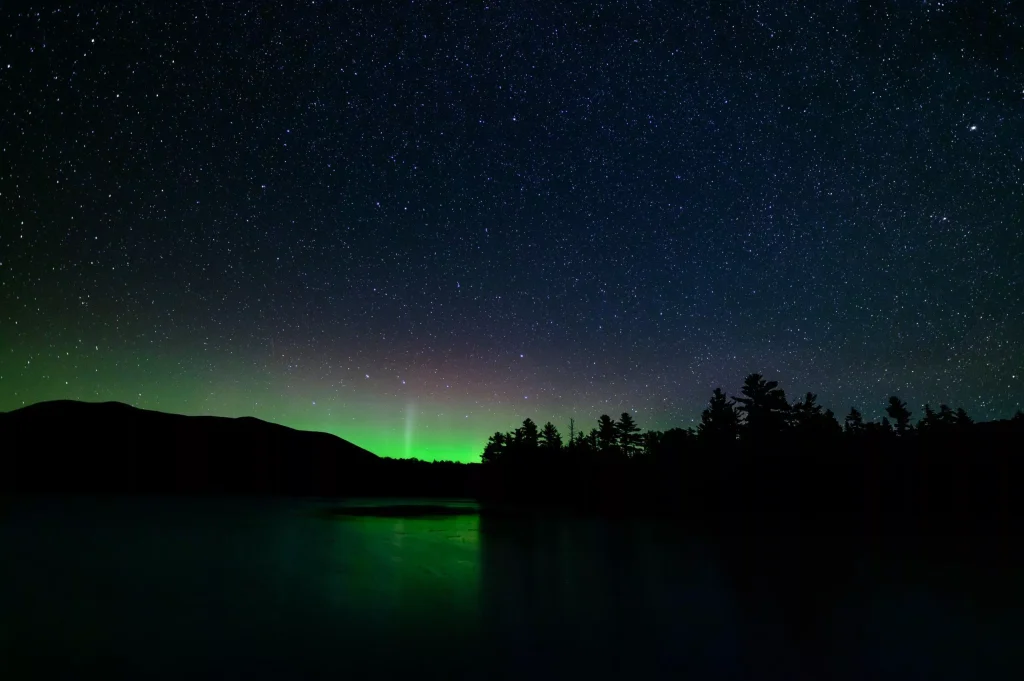
Maine offers various Dark Sky locations around the state, but Latahdin Woods and Water is simply the best. This is an International Dark Sky Sanctuary, so you know those skies are going to have pristine viewing conditions. There are plenty of campsites and reservations available all year round.
Know Your Location:
If you’ve never been to this region, picture this: Katahdin Woods and Water is about 150 miles north of Bangor, right on the U.S.-Canadian border. It’s not difficult to picture how high that latitude is. At this location, seeing the lights is a guarantee during the fall and winter months. For any of these locations, you’re going to want to pack well. Since most of the best time to see the Northern Lights in the U.S. is the fall and winter months, you’ll need some gear that can handle the extremes.
Secure Your Pack, Stare at the Skies
If you end up planning a long trip to go see the Northern Lights, you want to make sure your gear is in great shape. No one wants any slip-ups after a long day (or days?) of travel. Also, you’ll notice these regions are farther north in the U.S. This means temperatures are going to be dropping, and if you’re going all that way, you’re probably not going alone. The ideal structure for this experience is a canvas tent.
Canvas is an incredible material that breathes in the hot months and insulates in the cold ones. This material is incredibly strong and can stand up to any kind of inclement weather. The real problem is finding the right one for you and your crew. White Duck Outdoors makes some of the best canvas tents on the market. The Cabin Tent and its Bell Tent are two of the best options for your Northern Lights viewing trip.
The Cabin Tent:
This four-walled design is practical, durable, and sets up in no time. It’s completely intuitive and doesn’t require a lot of geometric understanding to get it off the ground. There is a built-in canopy off the front door, and the durable floor will handle any high traffic, kids, and such. The windows open for the breeze to get through in the summer, and they secure down in the winter to keep a warm ambient temperature while out seeing the lights.
For the frigid cold nights, these Cabin Tents allow for a tent wood stove to keep the space toasty while you’re out enjoying lights. They are spacious enough for a family of four, with two kids, but with a larger crew, you might want to consider going a little bigger with the Bell Tent.
The Bell Tent:
The Bell Tent from White Duck comes in numerous sizes: 8’, 10’, 13’, 16’, and 20’. No matter how many people are in your crew, there is a Bell Tent to accommodate. The shape of these is absolutely beautiful, making it easy to set up different sections for lounging and sleeping.
Just like the Cabin Tent, the Bell Tent can also accommodate a tent wood stove for the cold nights while winter camping. If the Aurora Borealis is out, chances are you are going to be in good company. Knowing that, the Bell Tent will attract a crowd of its own. You’re guaranteed to have a viewing party at your campsite in no time.
Once is Never Enough
Seeing the Northern Lights in the U.S. is a rare experience. Just because they occur in our country doesn’t mean they are readily accessible. For some, it may require a lot of planning and preparation to get to a location where the lights will be visible. If you’re going to visit, stay for a while. Bring the family. Enjoy the trip. Remember, this is going to be an experience you’re never going to forget. It might, in fact, be so incredible that seeing it once will not be enough.


No Comment! Be the first one.