
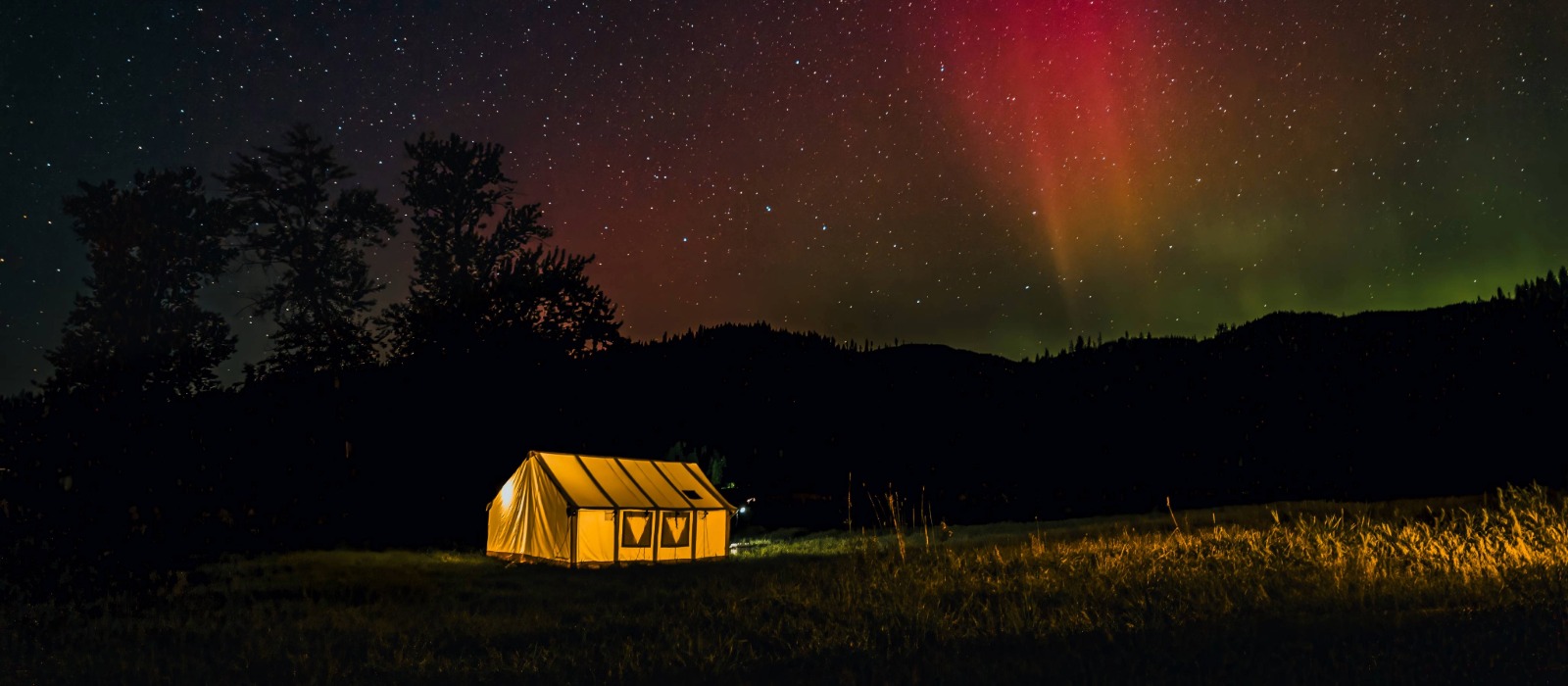
Take your adventures from summer to winter in a hot tent! Discover the various methods for insulating and weatherproofing your tent. Whether you seek a glamping getaway, a long-term hunting trip, or a winter trip to the desert, these hot tent methods will help you escape the chill and turn your trip into your coziest adventure yet.
Table Of Contents
- What is a Hot Tent, Exactly?
- How Canvas Keeps You Warm
- All About Tent Stoves
- Installing and Using a Tent Stove
- What to Know About Sleeping Bags
- Other Insulating Tent Accessories
- Tent Footprint
- Rainfly
- Storm Doors & Windows
- Heavy-duty Zippers
- Rugs and blankets
- More Tips for Creating a Hot Tent
- Reinforcing Seams
- Waterproofing the Tent
- Extra Panels and Windbreakers
- Final Thoughts
What is a Hot Tent, Exactly?
Think of a hot tent as the most insulated a tent could be. That is going to include not only reliable heating methods, but also taking extra measures to weatherproof the tent. It might include a wood-burning stove, extra rugs and blankets, and some exterior weatherproofing. These methods enable campers to transform their standard tent setup into a safe, cozy, and multi-season getaway.
In this blog, we will discuss why canvas makes the best hot tent material, tent stoves, and so much more. Keep reading if you want to have the coziest camping trip yet!
How Canvas Keeps You Warm
Any tent can be turned into a hot tent to some degree. But the most reliable, heavy-duty material that will ensure long-lasting warmth is canvas. 100% army duck cotton canvas is naturally insulating as it is. Its thick, tightly knit fibers work to trap heat inside and keep the cold out.
All the while, canvas remains breathable, too. That means there is less risk of condensation accumulating, and therefore a smaller risk of mold and mildew. This powerhouse of a fabric is the ultimate foundation for creating a hot tent.
All About Tent Stoves
One of the best and safest ways to maximize heat retention and circulation is with a tent wood-burning stove. A wood stove pumps out a lot of heat at a time, and opens up opportunities for more comfortable indoor dwelling. From cooking to hot water to just stoking the flames and hanging out, this is a great way to keep a tent warm.
Installing and Using a Tent Stove
Installing a tent stove is fairly simple. Just ensure you and a friend follow the directions closely, as they may differ model to model. Lay down a stove mat to protect the floor of the tent. Then, the stove can stand on this, slightly away from any walls.
Locate the stove jack either on the ceiling or the side of the tent. This allows safe installation of a chimney. That way, smoke can flow up and out of the tent. The body of the stove, or the firebox, is where the wood is placed, lit, and stoked. Just like outdoors, never leave a fire unattended, and make sure it is completely out before leaving or going to sleep.
What to Know About Sleeping Bags
Temperatures drop the most during the night, so bring a sleeping bag you can rely on. It’s the perfect addition to your hot tent that you can bundle up into! Depending on where you’re located and what the elevation is, you may require a different fill power and temperature rating.
In extremely cold areas, a down-filled mummy bag might be the trick to staying warm all night! In milder scenarios, a well-insulated rectangular sleeping bag works great. Be sure to double-check the temperature rating before using it. Consider this rating like a guideline. It should fall within 10 degrees lower than you actually anticipate the weather being, just in case! Keep in mind that a synthetic fill tends to stay drier than down, in case dampness is of concern.
Add an insulated sleeping pad underneath for an extra layer between you and the floor. This is crucial to ensuring you maintain a healthy level of warmth all night long.
Crawling into a super soft, warm sleeping bag in your hot tent can’t be beat. It’ll surely keep you warm all night long, ready and rested for tomorrow’s adventures.
Other Insulating Tent Accessories
Creating a hot tent involves a lot of extra weatherproofing measures. Anything you can do to block the wind, rain, and snow might be a little extra work, but it pays off in warmth and comfort.
Tent Footprint
A tent footprint is an essential part of pitching a tent. It keeps the bottom of your tent protected from the natural elements and sharp debris, and adds a layer of insulation. Your feet will thank you! This protective layer acts as a barrier from the cold, wet earth below. So walking on the interior tent floor is instantly more bearable. Just ensure that this layer is a fully waterproof tarp. Otherwise, you may have an unpleasant surprise out in the field.
Rainfly
Similar to a footprint, a tent rainfly protects the roof of the tent from precipitation, debris, wind, and more. In the summer, it acts as another layer of shade. But in colder temperatures, a rainfly can help keep a hot tent from sustaining a chill. It blocks wind and allows rain and snow to roll off the sides, protecting the roof of the tent and helping trap heat in. A rainfly that slightly overhangs the edges of the tent, too, goes the extra mile in shielding from cold.
Storm Doors & Windows
Heavy-duty canvas covers for doors and windows help trap heat in. Especially on stormy nights, they act as windbreakers and protection from debris. Think of these sorts of things like shutters on house windows. Bring that extra feeling of warmth and hominess to your hot tent.
Heavy-duty Zippers
Sometimes a draft or a little dampness can creep in in the sneakiest ways. One of the best ways to combat this is by making sure all your tent doors and windows have heavy-duty, military-grade zippers. These aren’t going to budge and will create a seamless closure on the tent openings.
Rugs and blankets
What’s a hot camping setup without a little functional style? Amplify the cozy factor with extra rugs and blankets. While it may seem like extra bulk at first, these do wonders for insulation. Especially in glamping yurts and on long-term camping trips, they help keep the floor of the tent clean and also add a plush, warm layer to walk on. Like the tent footprint, this is an interior way to avoid a chilly tent floor.
More Tips for Creating a Hot Tent
There are so many more ways you can ensure your hot tent remains well-insulated beyond the basics. If the forecast is calling for some pretty low temps, be extra prepared! Learn why it’s important to reinforce seams, test your waterproofing, and more.
Reinforcing Seams
Eliminate the possibility of drafts and leaks with reinforced seams. Over time, general wear and tear can weaken tent seams. Before you go, check the health of your tent before leaving to see whether any holes or tears need repair. It’s a good idea to bring seam tape with you! This is an easy way to reinforce seams and keep the cold out.
Waterproofing the Tent
Waterproof finishing on the exterior of a tent helps seal in the warmth overall. Similar to checking the seams, test out your tent’s waterproofing before leaving for your trip. Hose it down, and if any areas soak through, simply reapply the finish! This is a subtle but necessary way of protecting your tent from soaking through with snow or rain, and strengthening insulation.
Extra Panels and Windbreakers
In extra windy places, protect your hot tent and install some sort of windbreaker. It’s easy to DIY this solution with waterproof or fire-retardant canvas tarps, guylines, and stakes. Some manufacturers even offer canopies to place over the tent as a full exterior shield.
For those doing a makeshift windbreaker, pitch the tarp at an angle outside the tent to prevent drafts and wind from hitting the side of the tent. Secure it taut with stakes and guylines.
Final Thoughts
A hot tent is the best way to have a warm, safe, and comfortable winter camping trip. With the right preparations and supplies, it’s easy to continue overnight adventures even in the cold.
For maximum heat retention, start with a canvas wall tent. Its fibers naturally work to trap heat inside and keep the cold out. With the addition of a wood-burning tent stove, you can maximize heat circulation and retention. A wood fire produces a lot of long-lasting heat, which works in harmony with a strong canvas. Rugs and blankets make for a stylish interior, and sneaky insulation, too!
Additional measures like having an insulated sleeping setup, windbreakers, reinforced seams, and more go a long way in keeping a hot tent insulated.
So don’t let the cold keep you from having a great adventure! With a hot tent, you can keep the good times rolling all year round, without catching a chill.
Happy camping!



No Comment! Be the first one.