
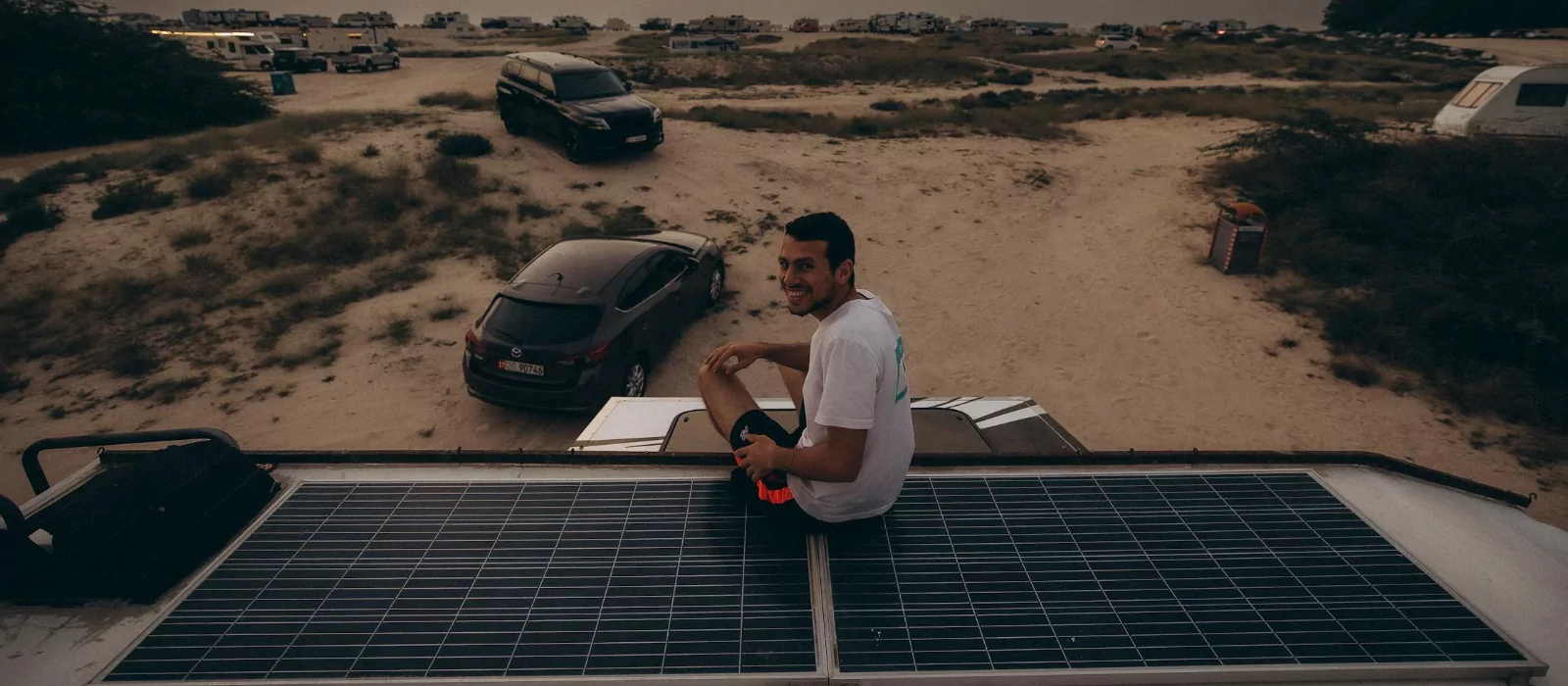
As much as we love the simplicity of primitive camping, we’re serious about balancing comfort and convenience with the rustic experience. Harnessing solar power during a camping trip keeps you in alignment to connect with nature while providing modern advantages. In this guide, we’ll cover some of our very best solar-powered camping tips. Together, we’ll explore some recommendations for the best solar camping gear, the environmental benefits of solar camping, and how solar camping can enhance the overall experience of camping no matter where you go.
Table Of Contents
- What Does Solar-Powered Camping Mean?
- Advantages of Solar-Powered Camping
- Clean Energy
- Keep the Peace
- Cost-Efficiency
- Reliable & Convenient, No Matter How Far From Civilization
- Superior Versatility
- Basic Equipment and Gear for Solar-Powered Camping
- Solar Panels
- Monocrystalline Solar Panels
- Polycrystalline Solar Panels
- Solar Batteries
- Charge Controllers
- Inverter
- Get Going on Your Personalized Setup
- Assess Power Demands
- Choose Panels & Batteries Accordingly
- Position Panels Properly
- Connect Your Setup Correctly
- Monitor Power Usage for Optimization
- Solar-Powered Gear Must-Haves
- Solar-Powered Lanterns & Lights
- Solar-Powered Device Chargers
- Solar-Powered Cooking Devices
- Solar-Powered Water Systems
- Solar-Powered Portable Refrigeration
- Conclusion
What Does Solar-Powered Camping Mean?
Solar-powered camping is the practice of harnessing the sun’s energy to energize tools, lights, generators, and anything else you might need at camp that requires electricity to run. Portable solar panels make this possible by converting UV rays from the sun into electricity. You can then use the energy from the solar panels to power devices like lights, batteries, cooking appliances, electronic devices, and more.
Advantages of Solar-Powered Camping
Clean Energy
Using solar power when camping rather than relying on electricity or fossil fuel is a superior method of electrifying camp for its portability, sustainability, and eco-friendliness. Solar power is a clean, renewable energy source, greatly reducing campers’ carbon footprint.
Keep the Peace
Picture this: you’re in the dead of the forest, stars shining, and all is peaceful, still, and completely silent except for the sound of the wind… until you crank up your generator. But alas! Solar power exists! Bring your portable solar panels along, and you will no longer have to compromise the sounds of nature for lighting, heating, or cooking.
Cost-Efficiency
While setup costs and solar equipment are more expensive than other options, over time, solar power will actually save you tons of money in the long game. There’s a one-time cost of panels and setup, but you won’t have to continue purchasing fuel and/or batteries. What’s more, solar panels normally require very little maintenance.
Reliable & Convenient, No Matter How Far From Civilization
When camping with solar power, it doesn’t matter how far into the wilderness you venture– you can still rely on having a power source. The level of self-sufficiency available when you choose solar camping is ideal for long-term camping trips, backcountry hunting, or hiking.
Superior Versatility
Solar-powered setups are so useful in so many different settings and circumstances. You can use solar power for everything from lighting to heating/cooling, running electronic devices, food preservation (refrigeration or dehydration), powering an RV, basic cooking, and navigation.
Basic Equipment and Gear for Solar-Powered Camping
Before getting super specific about must-have gear and setup details, it’s important to understand the foundations of solar-powered camping to get you started on the right track. You’ll need:
Solar Panels
Okay, we’ll state the obvious: solar panels are the most important part of the entire solar power setup. They absorb the sun’s rays and convert them into usable electricity. You can purchase solar panels of all sizes and capabilities, but for camping, you’ll probably want to stick with the portable models. They’re lightweight, compact, and easy to pack up and move. However, even portable models vary in size, efficiency, and energy output–so it’s important to know your needs and purchase accordingly.
There are two primary types of solar panels that are most popular for camping.
Monocrystalline Solar Panels
Renowned for amazing efficiency and long-lasting durability, monocrystalline panels are the best choice for folks looking to maximize power capabilities but minimize space taken up by the panels themselves.
Polycrystalline Solar Panels
Polys are generally less expensive than monocrystalline solar panels. However, they are less efficient, meaning they produce significantly less electricity than monos. For campers who want to stick to a budget or don’t have many devices that require electricity, these panels are a good choice. It’s also worth noting that polys tend to be slightly less compact than monocrystalline panels.
Solar Batteries
Solar panels, while amazingly efficient, can’t power your electronic devices and light fixtures alone. You will need to purchase a solar battery–also referred to as a power bank–as part of your setup, to store up the energy that your panels are producing. Such batteries vary in size and capacity, so choose one that is relevant to what you’ll be using energy for. Solar batteries have USB ports, AC outlets, and DC outputs so they can be easily used for all the necessary purposes.
Charge Controllers
A charge controller manages the solar power flow between the panels, battery, and any connected devices. It protects from overcharging and preserves your battery life. Check your systems as you decide which setup to purchase–some come equipped with built-in charge controllers while others require a separate purchase.
Inverter
If you’re planning on running a refrigerator or laptop, you will need AC power capability, which means you’ll need an inverter. An inverter does exactly what it sounds like– converts Direct Current (DC) power into Alternating Current (AC) power. Put simply, what you need to know is that an inverter will require more energy to do its job, and drain the solar battery’s reserves fast. Use sparingly!
Get Going on Your Personalized Setup
Assess Power Demands
Before you get started on your solar setup, think through the electronic devices you own and which ones you will want to take with you on your camping trips. This will help you get a good idea of which size solar panel system you’ll need.
Choose Panels & Batteries Accordingly
Based on your previous calculations, choose panels and batteries with appropriate wattage and capacity for energy storage that lasts the whole trip. Double-check to ensure your battery has the right ports for your devices to connect.
Position Panels Properly
Make sure that you place your panels in an area where they’ll get the most prolonged exposure to sunlight. Generally speaking, the best case scenario is having the ability to position them facing south at a 30-45 degree angle.
Connect Your Setup Correctly
Once you’ve got your panels situated, connect them to the charge controller, and then to the battery. If you’re using an inverter, now’s the time to connect that piece as well.
Monitor Power Usage for Optimization
Track your energy consumption! This will give you a good idea of any improvements or adjustments you may need to make when it comes to future solar-powered camping trips. It’ll also eliminate any surprises and give you an opportunity to conserve energy when you start to come close to using up all of your power reserves.
Solar-Powered Gear Must-Haves
Now that you have a working understanding of what you’ll need to set up your solar-powered camp, let’s talk about the fun stuff: gear and accessory recommendations!
Solar-Powered Lanterns & Lights
Lighting is an essential part of campsite comfort. Solar-powered lanterns and lights are a great way to warm up your camping tent and ensure that your camp is both cozy and functional for 24 hours. Look for solar-powered lanterns or string lights with rechargeable batteries. These charge during the day when they’re not in use and are ready to go from the time the sun goes down, all night long.
Solar-Powered Device Chargers
If you plan on using your smartphone/tablet/laptop or any GPS navigation devices during your camping trip, a portable solar-powered charger is a wise investment to make. Usually, these devices come with multiple USB ports so you can easily charge multiple devices at the same time. Solar chargers that are good for camping should have a decent output wattage and be able to withstand potentially extreme temperatures or wet conditions.
Solar-Powered Cooking Devices
Solar ovens, grills, and even stoves are widely available for campers who like a good hot meal in the wilderness. Solar ovens are super cool options for energy efficiency– they harness solar energy to cook food very slowly and steadily. This makes for delicious baked goods, stews, or even heating dehydrated meals efficiently on the go.
Solar-Powered Water Systems
If you’re camping in an area that is particularly remote, it’s a good idea to have a way to access water without having to rely solely on any water jugs or bottles you brought with you. Solar-powered water pumps draw water from a nearby lake/stream and efficiently filter it for safe drinking and cooking use.
Solar-Powered Portable Refrigeration
If you’re planning on incorporating lots of perishables into your camp meals, a portable solar-powered fridge is a great way to keep meats, veggies, and dairy food items fresh and cool. You can buy small, compact refrigerators for quick trips, or more robust models for extended stays.
Conclusion
Solar-powered camping is an awesome way to enjoy the comforts of home and the convenience of having electricity while still staying closely connected to nature. You won’t emit any sort of carbon footprint by using solar energy, and you’ll get to keep the serenity that a generator would interrupt. What’s more, you’ll save yourself tons of money in the long run if you continue using your solar setup for years to come. By using solar energy to power your devices, refrigeration appliances, cooking equipment, and other essential tools, you can greatly enhance your entire camping experience.




No Comment! Be the first one.