

Winter is finally over! We’re all eager to get outside and head to camp. But before you rush out the door with your duffle bags packed, stop to think. Do you have your first aid kit? Compass? Have you downloaded your maps? Do you know your Ten Essentials?
Table Of Contents
Every adventure holds the element of risk as much as it does reward. Emergency preparedness and wilderness awareness are absolutely essential for a successful camping trip!
In this blog, we are reviewing all things related to outdoor safety. From a solid tent setup to watching the weather, wildlife protocol, and so much more. By the end, you will be ready to hit the trails with new knowledge under your belt!
A Quick Note Before You Go…
Share your detailed itinerary with others whom you trust. Even if you’re someone who likes to play it by ear, give a rough idea of where you will be and for how long. On the off chance something goes awry, reliable people know your whereabouts!
The Ultimate Tent Setup
A reliable shelter is one of the most important aspects of camping safety. Not only is this your outdoor home, but it also protects you and your gear from the natural elements. In the spring, your tent should be able to regulate temperature, withstand heavy weather, and be simple to pitch and tear down.
Heavy-Duty Tent
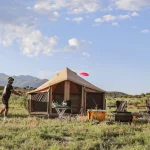
The perfect tent will be a canvas 4-season tent. Also known as an outfitter tent, this is fully waterproof and has technical features to support it in the elements. Canvas is naturally insulating and breathable. This helps keep everything dry, preventing condensation.
An outfitter tent is spacious enough to store all your gear and offers room for various sleeping arrangements. Storm windows and doors, mesh coverings, and military-grade zippers add extra security.
Pitching Your Tent
Make camp before dark! Full daylight helps to scope out your campsite and ensure you’re securing everything properly. A proper spring tent will have a strong grounding system. Secure the tent stakes with a rubber mallet for extra durability. Be sure to keep guy ropes taut and have extras on hand for attaching a rainfly.
Wildlife Safety & Awareness
While wildlife sightings are often the most exciting thing on the trail, wild animals are no joke. Even though you can’t always see them, don’t treat them as “out of sight, out of mind”. Remember that you are first and foremost in their territory as a camper and hiker. It’s better to assume that they know more than you do!
Before you go, do your research!
Understand what animals are native to the area– especially predators. Then, familiarize yourself with the various calls and sounds of these animals. What’s the difference between a warning call, mating call, playful call, etc.?
Bonus points if you chat with rangers! Learn about recent sightings and regular animal activity. In the spring, animal activity picks up. It’s mating time, baby time, and protective mother animals are out and about. Do your part in keeping yourself and fellow campers aware.
Animal Viewing
Remember to never approach a wild animal– of any size. Keep a respectful distance and never intimidate or taunt them. Just admire from a distance! Bring binoculars to help with viewing, too!
Food Storage
Campground animals are notorious for getting into people-food! From bears to mice, keep critters out and away from your campsite. Use proper air-tight containers like bear boxes to seal away the scent. Then, pack out waste and trash in the same way– a sealed container or bag. Furthermore, hide visual food containers under blankets so as not to entice curious bears or other critters.
Weather Preparedness for Spring Campers
Springtime weather is a heck of a rollercoaster! Check the forecast constantly; what starts as a sunny day can quickly shift into a windy, snowy night. The weather affects everything at camp. It may change your plans for the day, dictate how you dress, and it may even keep you from being able to get home!
Ensuring you have access to accurate forecasts is important. Download offline weather apps on your devices. Some smart watches even operate offline! They provide accurate weather and navigation information. Keep an eye on the forecast from the planning stages of your trip all the way until the day you’re heading to the location!
Navigation Tips
Navigation is one of the easiest aspects of preparedness to overlook. Many campers assume trails will be well-marked or busy. Especially during a peak season like spring! While this may be true to some degree, it’s not a guarantee. Snow-pack can often make trails almost unrecognizable!
Firstly, simply pay attention to your surroundings. As you enter camp and hit the trails, establish landmarks! And stay on the trails as much as you can. They are paved for a reason, and that reason is your safety!
If you’re backpacking or backcountry trekking, have maps downloaded offline beforehand. Bring along a compass for basic directional help (it comes in handy more than you’d think!). Familiarize yourself as much as possible with the area before arriving. When in doubt, physical maps never fail! They never run out of battery and are always available at a ranger station.
First Aid
Include a basic first aid kit in your camping essentials. You may not be a doctor, but minor cuts and bruises require immediate attention. Crazy spring weather may even prevent you from getting to a clinic right away. So, having the ability and supplies to tend to wounds is crucial.
Your first aid kit should include disinfectant solutions like alcohol wipes, antibacterial ointment and salves, bandages, gauze, burn gel like Aloe Vera, cotton pads and swabs, and more. Also include disposable gloves and masks.
The Ten Essentials
The best place campers can start when it comes to the basics needed for a safe trip is known as the Ten Essentials. You can read more about this in detail at the National Parks Service website, or from other outdoor information sites.
At a glance, the Ten Essentials are:
- Navigation
- Offline maps, a compass, physical maps, a GPS system.
- Sun Protection
- Basic SPF and UPF protection. Hats, sunblock, sunglasses, longsleeves, and more.
- Insulation
- On your person: baselayers, fleece layers, wool socks, and jackets.
- In your tent: Heater or stove.
- Illumination
- Flashlight, lanterns, and a headlamp.
- First-Aid
- Basic first aid kit with essential bandages, disinfectants, and gauze.
- Fire
- Matches, a lighter, and a fire starter.
- Repair Kit & Tools
- Multitools, knife, tape, needle and thread, etc.
- Nutrition
- Sufficient protein, fiber, and vitamins.
- Hydration
- More than enough water. About a gallon per person per day to start. Water treatment supplies.
- Emergency Shelter
- A waterproof tarp or space blanket, etc. Extra guylines and stakes to pitch.
Check out the Forest Service site for more detailed wilderness safety tips! Most rangers and outdoor retailers will have detailed information about the Ten Essentials, as well as pro tips for a specific area!
Final Thoughts
The key to the ultimate springtime camping adventures is plenty of preparedness! Having safety and survival skills under your belt may take some more time and resources, but it’s always worthwhile. With these skills, a flexible mindset, and a positive attitude, you’ll have the perfect camping trip!
A great camping trip starts before you even leave! In the planning stages, be sure to do ample research. Get to know the area, forecast, wildlife, and terrain as much as possible. Once you’ve planned your trails and activities, download their maps offline. Then, tell a trusted person your detailed itinerary.
In the spring, you really can’t trust the weather forecast too much. That’s why it’s important to be constantly checking it. Ensure that you’ve packed sufficient layers and the perfect tent to house you in the elements. A heavy-duty canvas tent with a strong foundation is ideal for the season.
As you explore the outdoors, remember it’s an active season for wildlife. Should you spot any animals, keep a respectful distance away. Keep your food, or anything that may entice curious critters, sealed up!
When in doubt, ask friends, family, and park rangers who know the area you’re camping in. They will have the expertise you’re looking for and can share resources. Before leaving, double-check your Ten Essentials checklist. Have you crossed everything off? Do you have your fully-stocked first aid kit? A repair kit? Once you have, you can be out the door and on your way to unlocking a spring of adventures! Even if you never end up in a situation where you need to practice survival, you can inform and teach other campers! So, here’s to safe and fun camping trips to kick off the spring season!




No Comment! Be the first one.