
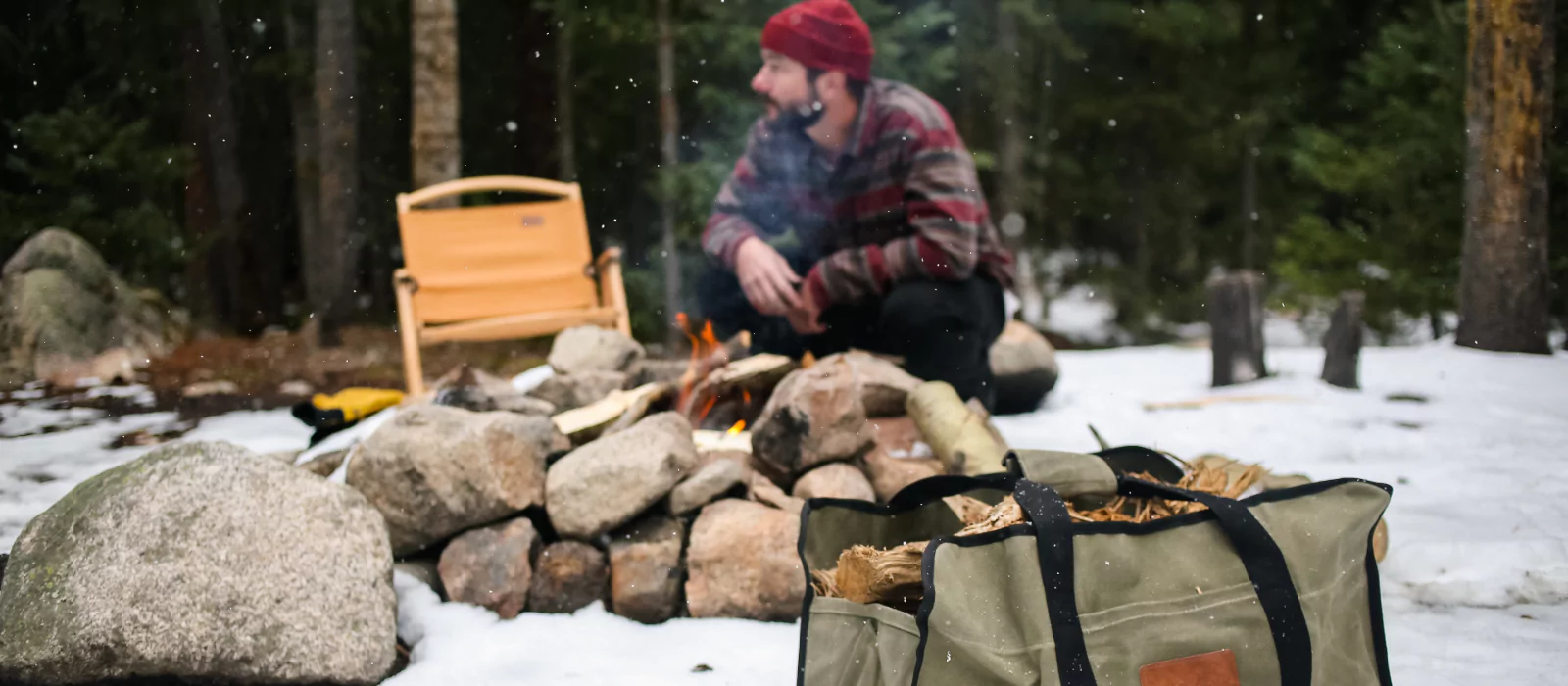
If you plan to light a campfire at your campsite or utilize a wood burning stove in your hot tent, you’ll need firewood at the ready for fuel. When out and about on a camping trip, however, it can be difficult to know where and how to store firewood. Your tent is likely your only shelter out in the wilderness, making outside the only sensible place to store the amount of logs you’ll need to last you through your entire trip. But how do you properly organize and store firewood at camp? Read on for top tips on keeping wood at camp, including a brief explanation of why thoughtful storage is so important. Plus, get practical advice on firewood safety. Let’s dive in!
Table Of Contents
The Importance of Thoughtful Firewood Storage
While you may be inclined to just throw a bundle of logs under the nearest tree at your campsite, it’s essential to be more thoughtful when storing your wood. When lighting any fire at camp you want to exclusively use dry, seasoned firewood. If you’re unfamiliar, seasoned firewood is essentially just wood that’s already been cut, split, and dried out. Logs with excessive moisture burn less efficiently and create more smoke. Opting for seasoned wood is especially important if you’re using a tent stove or trying to keep a fire burning through the entire night.
With this in mind, the importance of proper log storage is much clearer. Your main goal when storing firewood at camp is to keep it dry and protected from the elements, especially moisture. So how exactly can you achieve that?
Top Tips for Storing Firewood Outside
Keeping firewood free from moisture on a camping trip can be a bit challenging when it comes down to it. Here are 4 top tips to keep your logs dry, secure, and ready to burn at your campsite!
1. Choose a Smart Location
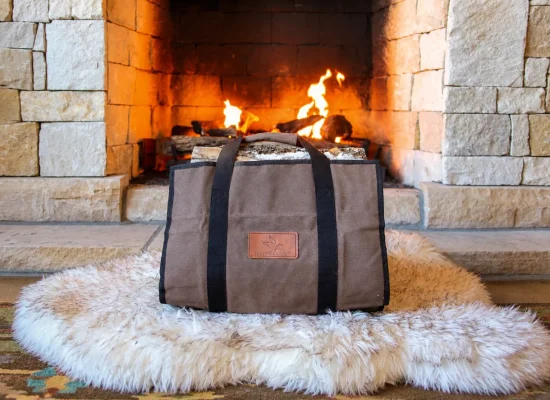
It may seem like storing wood inside the tent makes the most sense if keeping it dry is your top goal, but, frankly, it’s just not practical. Not only do logs take up a ton of space, but they can also house bugs, mold, and fungus – elements you surely don’t want near your sleeping bag. Your firewood storage should be at least 5 feet from your tent to avoid attracting these pests. That being said, you still want it close enough that you’re not embarking on a major trek across camp every time you need more wood. No matter where your storage ends up, bring along a canvas firewood carrier to make fetching logs and refueling your fires easy.
In addition to its distance from your tent, you also want to find a relatively sunny and breezy location, if possible. Sun rays and a consistent breeze can help to keep them dried out before use. Wood stored in the shade will take much longer to dry if it does happen to come in contact with moisture.
2. Elevate Your Firewood
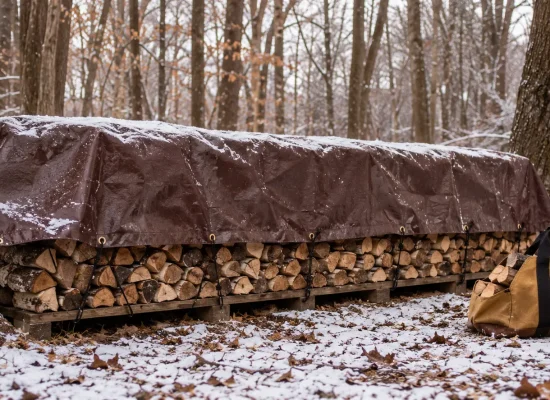
Another great way to keep your wood dried out and protected from the elements is by elevating it. The ground outdoors naturally hosts moisture and pests that can quickly diminish the quality of your logs. By simply elevating your storage, you’ll create air circulation around the wood and make it harder for bugs and insects to reach them. Wood pallets and firewood racks are the two most popular ways to elevate your stack. These both come in a range of sizes and styles, so you can easily find something that fits your exact needs as a camper.
3. Promote Airflow When Stacking
How you stack and organize your wood is just as important as where you store it. And if you haven’t caught on already, maximizing airflow is the name of the game! An easy stacking style that promotes efficient air circulation is the criss-cross pattern. To achieve this, simply alternate the direction you lay each row of logs.
When stacking, avoid stuffing your wood too close together. Instead, purposely leave small spaces between each log to further promote airflow. Additionally, always stack bark-side up, since bark will naturally protect a log from any moisture coming from above.
4. Pitch a Canopy Cover
While the bark of the logs will help to protect them from moisture, it won’t be nearly enough to effectively keep your firewood stack as dry as it needs to be. The solution? Pitching a simple canopy cover! Instead of throwing a large tarp over the entire stack, opt to create a canopy that covers the top of your pile but not the sides. This will protect your firewood from above while allowing air to flow freely through the sides to further encourage ventilation.
Choose a poly tarp or a canvas tarp that’s been treated with a water-resistant fabric coating. Remember, the goal is to keep your wood free of moisture, so opting for a waterproof tarp is paramount to the success of your firewood storage.
5. Safety First
Even more important than the dryness of your firewood is your safety at camp. Never store your wood near any open flames or around highly flammable objects. For tent stove users, only bring your firewood inside your tent when you’re ready to use it.
We briefly discussed the possibility of pests burrowing in your logs. While this isn’t an ideal scenario, spraying firewood with insecticides can be dangerous as many of these chemicals are flammable. Even though you want to start fires at camp, you want them to be as controlled as possible for the safety of you, your fellow campers, and the natural ecosystems around you.
Last but not least, always remove your firewood carefully and only pull from the top of your stack. Reaching carelessly for a log in the middle of a large pile can risk it toppling over and seriously injuring anyone in the way.
Final Thoughts
Whether you’re igniting a classic campfire to roast marshmallows or fueling a luxury tent stove to heat your hot tent, firewood is common to have around your campsite. Storing it mindfully is essential to creating a successful fire, as dry, seasoned wood makes the best fuel for burning. To achieve this, choose a smart location for storage, elevate your setup, prioritize airflow when stacking, and create a canopy to protect your pile from above. By following these top tips, you’ll have plenty of firewood at the ready to fuel your fires at camp!


No Comment! Be the first one.