
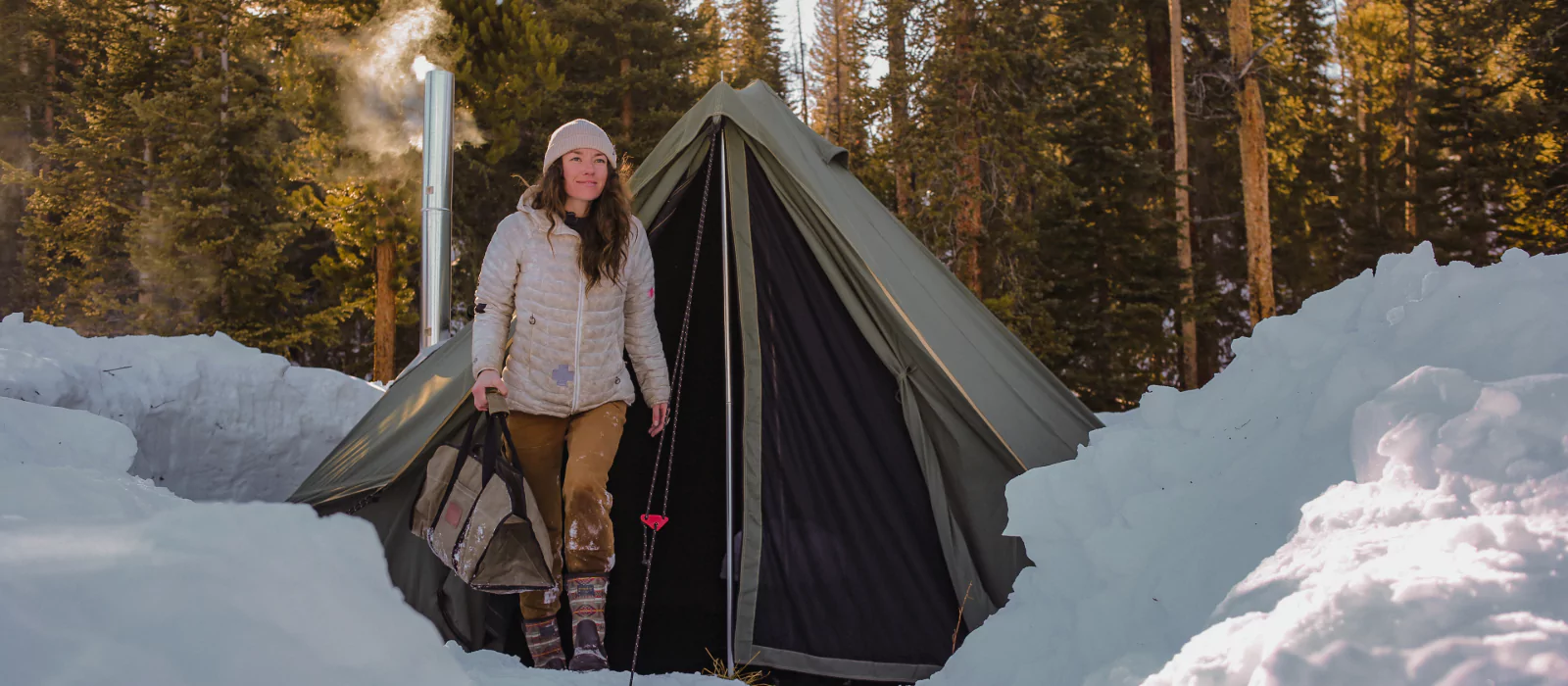
Winter camping is one of the best ways to celebrate the changing weather and enjoy everything the season has to offer. If you’re planning for a winter camping trip, you know firsthand that the Boy Scout motto rings true when ensuring that your trip goes smoothly. Learn about setting up your ultimate tent shelter now so you can be prepared for what to do once you arrive at your destination.
Table Of Contents
Choosing a Campsite
Before you can pitch a tent or warm yourself up by a fire, you’ll have to know where you’re planning to stay the night. Winter camping is much less crowded than weekends in the summer, but your favorite campsite may only be open seasonally. Be sure to check in advance to know what your destination’s guidelines are to save yourself from counting on a closed campground.
Once you know that a campground will be accessible, or if you’re backcountry camping and looking for a spot to spend the night, look for a space with relatively level ground. Try to set up camp in a forested area that provides a natural shelter from the wind. This method, called treeline camping, is more common– and usually warmer– than winter mountaineering, where you hike above the treeline to camp in an exposed environment. Whether you’re among or above the trees, though, pack down the snow under your tent as firmly as possible before laying down any tarps or sleeping mats. Loose snow can melt from body heat and freeze your supplies overnight. If possible, build a short wall out of snow around your tent to protect any entrances from excess wind. If you aren’t able to build a snow wall, try digging out the snow underneath where you plan to set up your tent to create a reverse wind barrier.
Picking a Tent
When it comes to the tent itself, you have several options to find one that best suits your individual needs. If you’re interested in hot tent camping using a wood burning tent stove, you’ll need to find a tent made specifically to accommodate a stove inside. Many hot tents are made with a built-in heat-proof stove jack for the stove’s chimney, making the shelter safe for use with tent stoves. Most hot tents are made from canvas or canvas blend materials, such as cotton canvas or polyester canvas, that have been treated to be heat and water-resistant. The fabric and build design allow the tent to retain the heat from your stove without trapping smoke and creating excess carbon monoxide.
There are several sizes and shapes of four-season winter tents, and while the final decision comes down to personal preference, read on for a few recommendations for tents that fit certain adventures or lifestyles best.
Bell Tents
The classic bell tent, which looks the most similar in shape to a nylon three seasons tent, features an aerodynamic roof and slightly slanted walls, both to allow for an easy snow shed. Bell tents are spacious, and although they do have an inconsistent ceiling height, a good quality bell tent will be tall enough even at its outermost walls to accommodate a comfortable standing height.
Cabin Tents
Cabin tents, much like the name implies, are made to look similar to a cabin structure when pitched. These tents are spacious and strong, with an equally high ceiling in all areas enough room to store supplies, and comfortable sleeping arrangements. Cabin tents are also an excellent choice if you’re looking for large windows or built-in awnings since their design accommodates more useable wall space.
Wall Tents
Camping with a big group, or planning to make your campsite home for a while? A wall tent comes in several sizes large enough to hold your whole group as well as everyone’s gear. Its anodized aluminum frame makes for a strong barrier against inclement weather, and its three-layer storm windows offer added protection and comfort from wind, rain, or snow.
Winter Camping Accessories
Your ultimate winter camping shelter is more than just a tent– now that you’re outfitted with the perfect campsite and the ideal tent for your group, it’s time to make sure you have all the proper supplies.
Sleeping Bags, Pads, and Liners
Bring along suitable sleeping equipment, making sure that your sleeping bag has a temperature rating of at least ten degrees lower than what you expect to encounter on your trip. It is always easier to cool down than to warm up when you’re trying to get a good night’s rest. Winter sleeping bags have hoods and draft collars to keep as much body heat in as possible without creating condensation, although they are often padded with down or synthetic insulation that doesn’t stand up well to water. A sleeping pad helps keep the ground underneath you and your sleeping bag warm and dry. Stack an inflating pad with an R-value of 4.0 or higher on top of a foam pad for the best insulation.
Tent Stoves
You can also invest in a wood-burning tent stove, which has the potential to bring the temperature inside your tent fifty degrees higher than the outside temperature. Tent stoves bring an extra layer of comfort to the winter camping experience– but they come with their own set of recommendations and accessories, so check out our articles on how to find, use, and maintain a tent stove before purchasing one of your own.
Layers
It goes without saying that if you’re going to be out in the cold, you need to dress for it. Operate with the three-layer principle, keeping your base layer midweight wool or polyester for maximum breathability to avoid perspiration, your middle layer a thick down or fleece jacket and pants for insulation, and your outer layer a waterproof shell. Add warm gloves, a hat or ear protection, and strong snow boots to complete the ensemble.
Final Thoughts
Winter camping is, for many seasoned campers and newbies alike, a wonderful way to challenge yourself, have easy access to your favorite cold-weather activities and discover a new way to enjoy the season. Keep these tips in mind when setting out on your adventures this winter, and you’ll be one step closer to creating the ultimate winter home-away-from-home.


No Comment! Be the first one.