
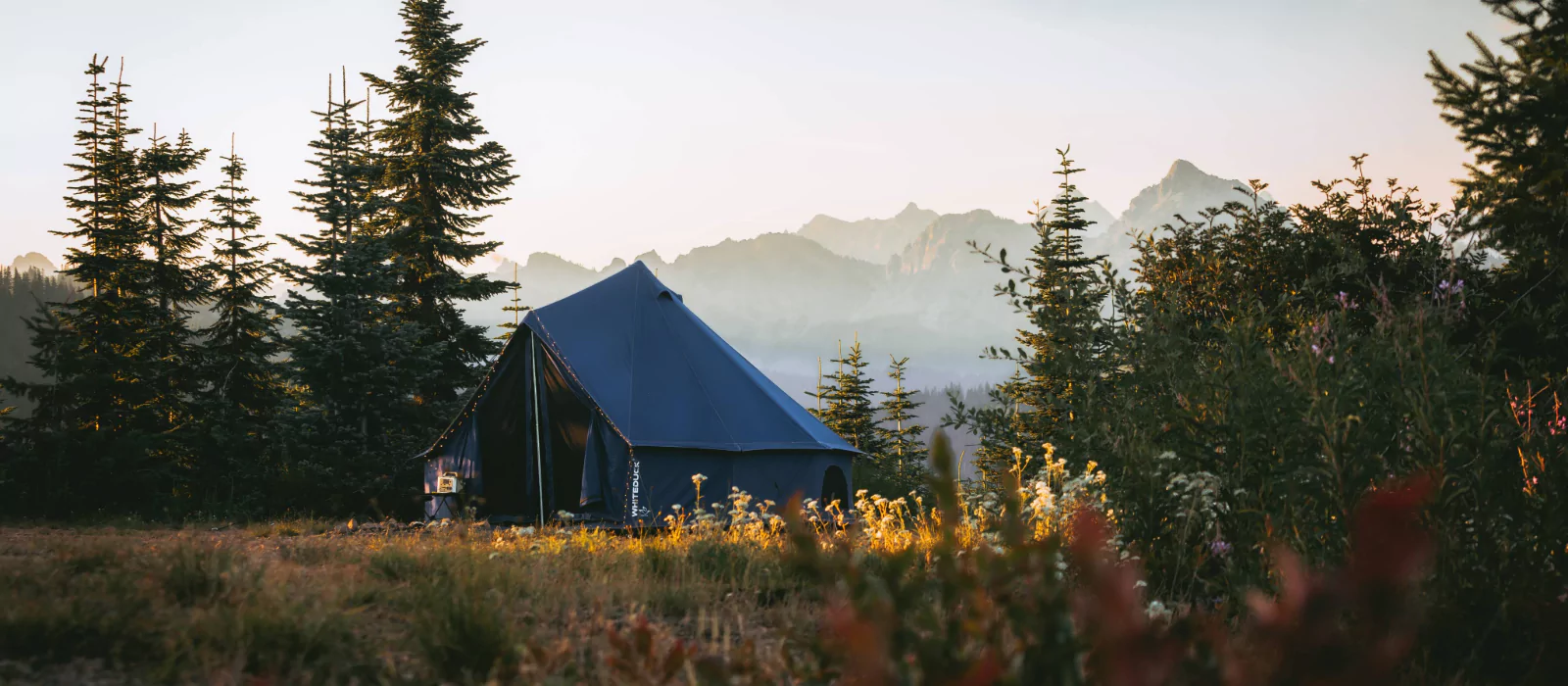
For folks who only plan a camping trip once a year, booking in the summer is the natural choice. The kids are off school, your PTO has accumulated, nature is in full bloom, and it’s plenty warm enough to sleep outside with little gear depending on where you live. While these are all great excuses to gather your camping gear and head outdoors, they make it easy to overlook the many benefits of camping in the off-season. But what exactly does off-season camping entail and what makes it worth considering for your next adventure? Read on to find out!
Table Of Contents
- What Is Off-Season Camping?
- The Benefits of Camping in the Off-Season
- 1. There are fewer crowds
- 2. It’s more affordable
- 3. You won’t have to worry about bugs and pests
- 4. It’s a unique way to experience the outdoors
- 5. You’ll learn new outdoor skills
- Essential Gear To Bring Off-Season Camping
- A 4 Season Tent & Winter Tent Accessories
- Cold-Weather Clothing & Apparel
- Winter Safety Gear
- The Bottom Line
What Is Off-Season Camping?
Every vacation destination has a “peak tourist season,” which is essentially just a specific time of the year when the volume of visitors is at its highest. This season ranges depending on your location, but summer is often the busiest time for camping destinations. To go off-season camping simply means to camp outside of this busy season. Since summer tends to be the peak tourist season for many outdoor destinations, winter is typically the season most campers go off-season camping, though early spring and late fall can be considered off-season camping, too.
Campers venturing out in the off-season are faced with an entirely new experience than they may be used to in the busy season. From different weather patterns to navigate to unique activities to participate in, off-season camping offers outdoor lovers a chance to connect with nature in a whole new way. So what are the specific advantages?
The Benefits of Camping in the Off-Season
In places that experience all 4 seasons, camping in the winter is a vastly different experience from camping in the summer. While it may not be your natural instinct to sleep outside in the cold, there are several worthwhile benefits to an off-season adventure. Here are the top 5!
1. There are fewer crowds
The most obvious benefit to camping in the off-season is the decrease in crowds. This is especially enticing if you’re planning to camp in a popular area that’s known for drawing in huge crowds – we can think of a few notable National Parks! Fewer crowds give you a more intimate experience outdoors, allowing you to fully connect with nature without having to wait in long lines or listen to groups of campers chattering late into the night. If solitude is what you’re after in the outdoors, off-season camping is your best bet. Plus, fewer people means it’s much easier to secure reservations at popular sites!
2. It’s more affordable
Since the demand for off-season camping is lower, prices will typically reflect that. While camping is already a relatively affordable vacation, booking in the off-season is a surefire way to spend as little as possible on your outdoor trip. From the cost of your campsite to the price of your activities and excursions, winter camping is incredibly cost-effective.
3. You won’t have to worry about bugs and pests
Believe it or not, camping without mosquitoes buzzing around you is a reality! That is if you’re willing to brave the off-season. To put it simply, colder weather = fewer bugs. Need we say more?
4. It’s a unique way to experience the outdoors
Off-season camping offers experiences you won’t get when exploring in the summer months. First and foremost, the scenery! Winter landscapes are some of the most beautiful, and there’s no better way to experience them than setting up camp right in the center of it all. But it’s not just the scenery that’s different, the wildlife is, too! The wild animals that emerge during the winter months will differ from the ones you’re used to spotting in the spring, summer, and fall. Plus, fewer crowds will result in more abundant wildlife sightings thanks to the quieter environments. Maybe best of all are the numerous winter sports and activities off-season campers can partake in. From ice-fishing and skating to skiing, snowboarding, and sledding, there’s something for everyone in your group to enjoy.
5. You’ll learn new outdoor skills
Immersing yourself in different environments, whether it’s a colder climate or a more remote back-country campsite, allows you to learn new skills. Here are just a few of the outdoor skills you can learn from an off-season camping trip:
- How to set up a hot tent
- How to keep a tent stove burning all night
- How to track winter weather patterns
- Avalanche awareness and safety
- Snowstorm safety
- Winter gear maintenance including water-proofing and wind-proofing
- Winter navigational skills
- Cold-weather survival skills
Essential Gear To Bring Off-Season Camping
One important thing to note is that camping in the off-season, especially in winter, requires different gear than a summer trip. Here are a few of the essentials to bring on an off-season excursion. While this isn’t an all-encompassing list by any means, use it as a jumping-off point to get you started with your preparations.
A 4 Season Tent & Winter Tent Accessories
A winter tent is a non-negotiable for cold-weather camping. A 4 season canvas tent rated for cold climates will not only withstand harsh winter conditions but also keep you warm thanks to its superior insulation capabilities. Any 4 season canvas shelter is good for this purpose, including a cabin tent, a wall tent, or even a bell tent.
Besides keeping you comfortable and safe in the winter elements, a winter canvas tent is often compatible with a tent wood stove. When it comes to tent accessories, nothing is as luxurious and practical as a wood-burning stove. Between heating the tent to a comfortable temperature and providing a convenient place to cook camp meals inside your shelter, it’s a must-have for off-season campers.
Cold-Weather Clothing & Apparel
If you’re committing to an off-season trip, ditch the hiking shorts and swap them out for base layers. The key to comfort in cold weather is layers, layers, layers! For winter trips, there are 3 vital layers to bring: base, mid, and outer. The base layer should be made from synthetic materials with moisture-wicking properties, like polyester so that they dry quickly. Next is your mid-layer, which is typically a thicker piece of clothing used for insulating. Your outer layer acts as your “shell,” protecting you from winter elements like cold wind, rain, and snow. For this, opt for waterproof garments. In addition to your 3 layers, pack these accessories to help stay warm and comfortable:
- A warm hat or beanie
- UV-sunglasses and sunscreen
- A ski mask or scarf
- Gloves or mittens
- Thick wool socks
- Snow boots
- Gaiters
- Hand & feet warmers
Winter Safety Gear
While camping in the off-season is a beautiful and exciting way to experience the outdoors, it’s not without its risks. Dangers vary depending on your off-season destination, but winter campers should generally be prepared for threats like freezing temperatures, heavy snow storms, avalanches, and more difficulty navigating the wilderness. No matter what season you decide to explore, you should always keep safety at the top of your mind. To be prepared and stay safe in colder climates, bring along the following winter safety tools:
- A cold-weather first-aid kit
- Emergency blankets
- A snow shovel
- An ice-axe
- Navigational tools
- A satellite device
- An avalanche probe
- An avalanche radio
The Bottom Line
Booking a summer camping trip is a no-brainer for outdoor lovers, but have you ever considered adventuring in the off-season instead? Off-season camping allows campers to experience the numerous joys of nature outside of the busiest tourist seasons, making it an adventure with tons of benefits. From running into fewer crowds and paying less overall to enjoying a bug-free vacation and learning new outdoor skills, the advantages easily outweigh the challenges. So take inventory of your winter camping gear, pack up your clothing layers, and appreciate the truly unique experience of an off-season camping trip!


No Comment! Be the first one.