
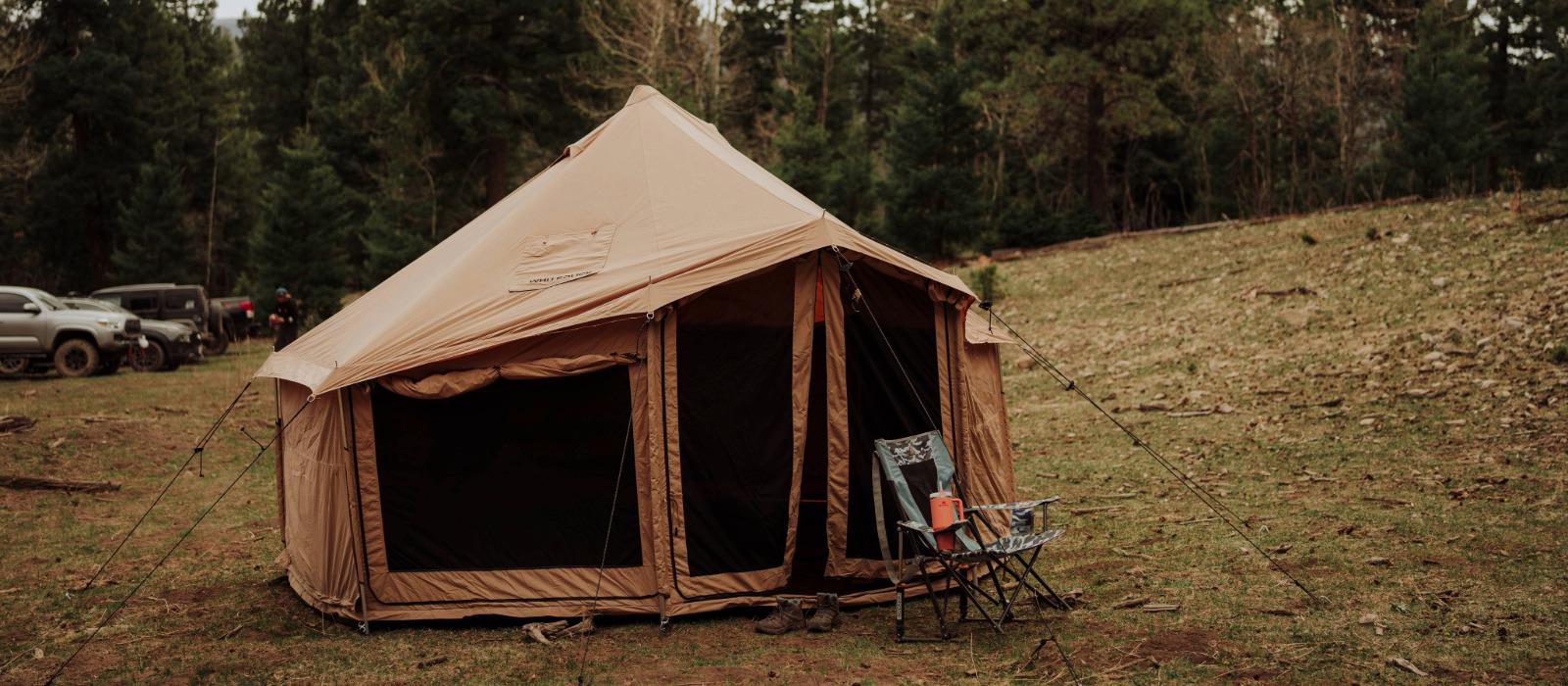
One of the most challenging types of weather to handle is, simply, the wind. It’s unavoidable. It can appear in a matter of minutes and signal an oncoming storm. In this way, it’s a great alert system. Or, in some ecosystems, it can be a constant. There are variations in wind, and each of them brings about its own set of worries or annoyances. A light breeze, however, is something to covet in the wild. It keeps bugs away, regulates temperatures, and provides an ambiance that can’t be matched by the scents that infect the city. But a breeze is nothing that requires preparation, and what we’re going to talk about today is the type of wind that requires some knowledge to handle. High winds can result in the loss of a tent or other gear, or they can mean a collapsed shelter. It’s unwise to have fires in high winds, so shelter is going to be absolutely necessary. But, with proper planning and a little knowledge, even high winds won’t be able to keep you from enjoying the backcountry. Read along, and by the end, you’ll have the answer, my friend. It’s out there…blowin’ in the wind.
Table Of Contents
Choose Your Shelter Wisely
There are fantastic down coats and waterproof shells that will keep you safe from nearly all the elements. I highly recommend all of those. At the end of the day, though, you’re going to have to come home and eat, rest, and eventually get a good night’s sleep. If you get back to camp and your tent has collapsed, it can really put a damper on your day.
Au Naturel v. Synthetic
There are advantages and downfalls in nearly every situation for tents with natural fibers and those with synthetic fibers. The choice depends largely on your preference and the activity you plan to do. If you’re backpacking, clearly opt for a synthetic tent. If you are stationary and require the utmost protection, a canvas tent is the best option. There are three things to consider when selecting a tent that can withstand high winds and extreme situations: Shape, Size, and Cost.
- Shape: If you’ve ever seen a car commercial with a fancy car in a wind tunnel, you understand the basic premise of aerodynamics. For our purposes, though, the object is stationary, and the wind is moving around it. Most synthetic tents are reserved for some kind of dome shape. That may be oversimplified, but it’s true. This is a great shape to fend off the wind. It is also a great shape to spend most of your time lying down, or crouched cross-legged in a ball. If you prefer more room than that and would like to move around, a canvas tent is structurally sound, and Bell Tents have a sleek, more aerodynamic shape than other canvas tents that don’t present such a broad side to catch as much wind.
- Size: Put simply, the heavier it is, the harder it is to move. Canvas tents come with the added security of being extremely well-grounded. They are structurally sound, and never discount weight and structure. Nothing is windproof (everyone has seen Twister), but a solid canvas tent with a durable frame will take a lot to take down. Synthetic tents take another approach with their size and just choose to remain low, hidden from the wind. They don’t produce a broad side, and thus don’t offer much resistance to the wind. The size does mimic the shape, and, again, the lounge space in a synthetic tent just isn’t there.
- Cost: Lastly, the ticket. This is a bit of a heartbreaker for the synthetic-leaning folks. To get a synthetic tent that can endure high winds, the price is going to drastically increase. There is a sweet spot that balances weight and strength for a synthetic tent, but for the square footage, it’s going to be wildly more than a canvas tent. White Duck Outdoor has multiple canvas tent designs, and each of them can stand strong in high winds.
Regardless of what kind of tent you end up getting, you’d better know how to anchor it down. Even when camping next to a picturesque babbling river where nymphs are hatching and a warm breeze lilts through the aspen trees, you should still have your tent anchored down. Which leads us to the next topic.
Keep Anchored in Reality
There are a few different types of stakes to use depending on the terrain. Stakes are the unsung heroes of camp. Really. They secure your tent, your home, your livelihood, and once they are pounded into the ground, we don’t even give them a second thought. But when the air pressure drops, and the warm air rises in the afternoon, and that cold air blows hard out of the canyon, that’s when the stakes go to work.
But not all stakes are created equal. There are some specific designs to keep in mind for the terrain you may encounter. Follow this little guide and stay grounded in any situation.
- Y-stakes: Best all-around for varied terrain and wind protection.
- V-stakes: Good in loose soil, but can bend easily in rocky ground.
- Steel Rock Pegs: These are essential for rocky or hard ground when the high winds come.
- Rebar stakes: These are a good option for larger canvas tents when inclement weather and high winds are guaranteed
These are some basic stake designs, and they should get you through pretty much any terrain. Some other adjacent tips regarding stakes: bring more than enough. If your tent requires 10, bring 20. You can never have too many, and when we talk about guyline here in a moment, you’ll understand why too much is never enough.
The ideal angle to drive your stakes is 45 degrees. This forms a perpendicular angle to the guyline coming from the eave of the tent, which provides the most resistance to the oppositional force the line will make in high winds. Drive it deep, and remember the rule of 45.
Your Tent’s Lifeline
Guyline refers to an old Dutch term, “gei” that sailors used to secure the mast or sail. When it comes to ropes and knots, nobody knows it better than seamen. The stakes may be where the security and grounding all start, but it’s the guyline that connects the stakes to the tents. This is where the wealth of knowledge comes in, and can save your keister in a torrent of rain and wind.
The 45-degree Rule:
As mentioned above, if you’re going to form a perpendicular angle to the stake in the ground, you need to ensure your guyline is secured at 45 degrees as well. This creates the most secure and strongest tie-down possible. Before anything else, always remember the 45-Degree Rule.
Not Any Rope Will Do
This isn’t a practice in skimping. Get the best guyline you can afford. If you’ve selected a canvas tent, many options come with previously knotted lines or come with metal runners for adjustment. A line specifically designed for this task is the way to go. Some are reflective, and this is a nice touch when it’s dark out and people are navigating camp.
How Many to Deploy
This really is the question, isn’t it? You don’t want to spend all day setting up your tent, but you don’t want it falling on you in the middle of the night either. To begin, when you are first learning, err on the side of too many guylines. It can be cumbersome, but it’s better to have too many than not enough. You absolutely want to use one in every section where your tent has provided eyelets, while paying close attention to the corners and sides that will bear the brunt of the wind. Make sure you counterbalance the angle of the wind without compromising the shape of the tent. A lot of this will come with feeling, and you’ll be able to trust your gut over time.
Why so Tense?
This is the most important factor when guying out your tent. If your line is too loose, it might as well not even be there. If it’s too tight, it can damage your tent or drastically reduce the life of your tent. It should be taut, pulled snug, and work your way there. Don’t try to wrench the line into place with the initial tug. With a canvas tent, there is going to be some give, and the fabric will relax and stretch a bit. Furthermore, the tent is going to get blown around a bit and settle into place. So, after about 2-3 hours, after setting your tent up and securing all the guylines. Go back over each line and re-tighten them, pulling the fabric until it is comfortably snug and smooth.
Knot Cool, Bro
These will take some practice, but when securing your tent, if you don’t have adjustable brackets on your guyline (and if you do), you should at least learn these knots to make your life a lot easier:
- Taut-line hitch: This allows for maximum adjustability
- Trucker’s hitch: This will give you supreme tension
- Bowline: The best knot for securing to a tree
If you know these three, you’ll be pretty deadly in the world of secure tents. It’s a good reputation to have.
Some Forget-Me-Nots
You’ve got the basics on getting your tent secured in high wind, but forgetting even the most basic tool can make this important task more difficult. This list isn’t just items that are needed to combat high winds. No, this is all the equipment that every camper should have in their arsenal.
- Rubber mallet: It doesn’t matter which stakes you have; this is one of the best tools in your camping gear.
- Extra guyline/rope: There is always going to be someone who doesn’t know how to tie their tent down, and for sure didn’t bring their own chord. Do them a solid and have some on deck.
- Metal runners/tensioners: Some guyline will come with their own, and other companies, like White Duck Outdoor, sell them separately. Again, better for emergencies in your setup, but also for those who always forget.
- Ground Tarp/Footprint: Keeping one plastic tarp and one canvas tarp is always a good idea as well. These are versatile objects that can waterproof any situation. If your tent doesn’t have a specific footprint, one of these will suffice.
All of this stuff will fit nicely into a canvas duffel bag that you can plan on just taking with you to any camp. It can go in with your tent bag, the kitchen tub, or just stay in the back of the vehicle, if that’s possible. Not only do these wares come in handy at camp, but you’d be surprised at how often some extra rope comes in handy.
Know the Ropes
No, this isn’t another section about guyline. This is about knowing the weather, knowing the surroundings, and being prepared for what you’re walking into. Always check weather reports before you go. If you haven’t spent a lot of time outdoors, spend time learning about weather patterns, both daily and seasonal. Especially regarding wind, the time of day, temperature, and the season are essential to understanding when you’re going to need that extra tie down. Be smart and keep your eyes on the skies. Watch for storms and feel the wind when it turns chilly, then frigid, then brutally cold. To quote Bob Dylan for the second time in the blog, “You don’t need a weatherman to know which way the wind blows.” Even so, take the meteorologist’s advice and avoid those thunderheads. Have fun, and tie it down.


No Comment! Be the first one.