
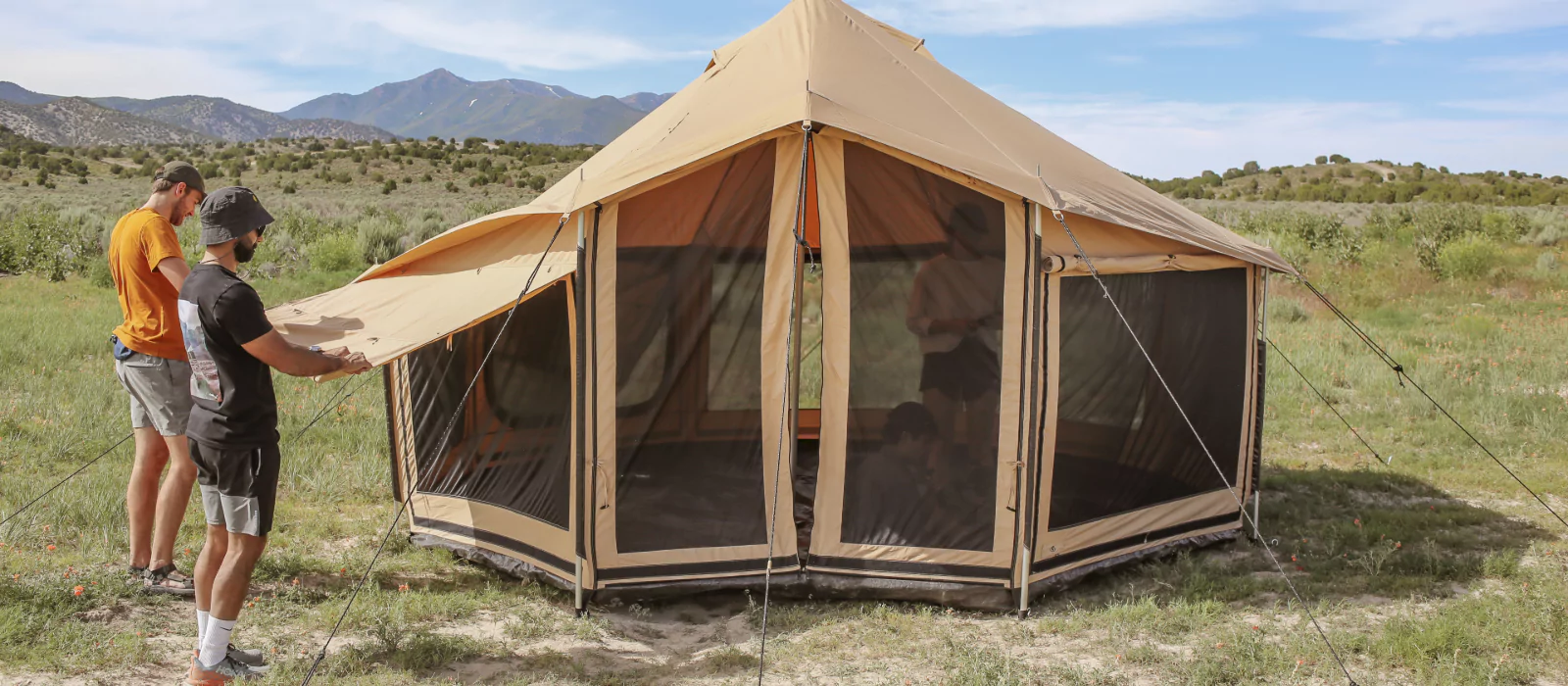
Proper Use & Maintenance
Maintaining a 4 season tent seems like an involved process, but it is entirely worth it to keep up with maintenance if you plan on actually using your tent all year long. The last thing you want is to get caught in the rain or a snowstorm with a tattered, leaky, malfunctioning shelter. Here’s a guide to the most important components of proper tent maintenance.
Table Of Contents
- Proper Use & Maintenance
- Careful Setup
- Use A Footprint Or Ground Tarp
- Go Easy On Your Zippers
- Reseal Your Seams
- Proper Storage
- First: Dry Your Tent
- Then: Store Your Tent Loosely In a Cool, Dry Place
- Store Off The Ground
- Avoid Direct Sunlight
- Store Poles Separately
- Protect Against Pests
- Insect Defense
- Rodent Prevention
- Final Thoughts
Careful Setup
First and foremost, be careful with your tent poles–the very infrastructure of your tent is the most important part. While poles can be damaged at any time, most damage occurs during setup. To avoid this, keep the ends of your pole sections from cracking together while assembling your frame as it can dent or fracture them, compromising their strength and ultimately leading to complete breakage. Try not to apply too much pressure or overbend the poles when setting up your tent–no need to force it–or you may deform them permanently. Be sure that pole segments are securely inserted into their appropriate match before bending. When taking your tent down, start disassembling poles from the center moving outwards to evenly distribute the tension on the poles’ shock cords. If your poles are dusty or salt-sprayed, be sure to thoroughly clean them to avoid subjecting your tent to rust damage.
Use A Footprint Or Ground Tarp
Using a tent footprint or a ground tarp is a crucial step in maximizing the lifespan and performance of your tent. Tarps and footprints are protective accessories that offer protection against wear and tear from sharp rocks, sticks, roots, and debris that can tear the floor of your tent easily. Placing a footprint or tarp underneath your tent foundation also keeps you free and clear of seeping moisture that can lead to mildewing and molding–not to mention big-time discomfort while trying to sleep inside the tent.
Additionally, using a footprint or ground tarp keeps the storage process simple and easy. You can easily shake off the bottom of the footprint or tarp, and your tent bottom will remain free and clear of dirt and mud before being folded up and stored away.
Go Easy On Your Zippers
When zipping/unzipping your tent, go slowly and use both hands. Because there is always some tension on the zipper as a result of securely taut tent fabric, assisting the zipper with a second hand reduces wear and tear on the zipper technology as well as the metal slider itself, helping to keep it running smoothly. Regularly clean your zipper, ridding the track of any grit and grime that can easily build up and wear it down. You can do this by using a small scrub brush or even an old toothbrush.
Reseal Your Seams
Though most tents come with reinforced seams, over time, moisture and heat exposure can break down the original sealant or seam tape. You’ll know that your seams are wearing down when you start to notice leakage around your zipper or in tent corners. The good news is, that seam reinforcements are widely available for purchase! You should check your seams and reseal them at least yearly to maintain your tent’s waterproof properties.
Proper Storage
Storing a four season tent properly is essential for maintaining its longevity and performance each time you use it. Following a few key steps can help prevent rust, rot, mildew, and general damage that can interrupt your adventures. Below, we’ll share a few tips on tent storage and cover key practices for preservation such as drying, storing, and protecting your gear.
First: Dry Your Tent
Before stashing your tent away, you must make absolutely sure it is thoroughly dry. Moisture is the top contributor to tent damage and mildew/mold growth. To properly dry your tent, set it up (as if you were pitching it at camp) in a shaded, preferably covered, well-ventilated area. Fully extend the tent and all its accessories, including the rainfly or any tarps you may have used as extra protection to ensure that all the cracks and crevices dry evenly.
You should always dry your tent out, but especially do so if you’ve been camping in humid, wet conditions or if the tent has been exposed to rainy weather. This should also be done as soon as you arrive home–even when you’d rather head straight to the shower and flop into bed.
Moisture left in the tent for any amount of time can cause mold and mildew to begin developing, which then deteriorates the fabric and makes it far less durable over time. You should use a gentle, clean cloth or non-abrasive sponge to wipe off any visible dirt or stains as soon as you get your tent set up to start drying. Avoid using direct heat sources such as hair dryers or heaters to speed up the drying process, as these can actually damage your tent fabric.
Then: Store Your Tent Loosely In a Cool, Dry Place
When you are absolutely certain that your tent and its accessories are completely dry, it’s time to stash it away. We recommend storing the tent loosely in a container such as a duffel bag, in a cool, dry environment. We say to pack it loosely in a roomy, flexible container because airtight packing can cause the fabric to lose its proper shape and lead to creases and weak spots. Storing it in a large bag also allows for breathability.
Choose a storage location that is climate-controlled and out of direct sunlight. Extreme temperatures cause the fabric to deteriorate rapidly.
Store Off The Ground
Storing the tent directly on the ground can expose it to moisture, invasive pests, and debris. You should aim to place the storage bag or container up on a shelf or raised platform. Even so, regularly check the storage space for signs of dampness or insect activity if possible.
Avoid Direct Sunlight
If possible, avoid storing your tent in an area easily penetrable by UV rays. Direct sunlight can be detrimental to your 4 season tent’s fabric, as the harshness of the light degrades and weakens the fibers that make up the material over time. Direct sunlight can be extremely detrimental to your tent’s fabric, as UV rays can degrade and weaken the material over time. Prolonged exposure to sunlight can also cause the fabric to become brittle, lose its water resistance, and fade in color.
If you don’t have a well-shaded storage area that meets all of the above criteria, consider covering the tent with a lightweight, breathable cloth or–like mentioned before–store it inside a protective duffel bag that blocks UV rays.
Store Poles Separately
Tent poles are a key component of your tent’s structural integrity and stability, so proper storage is essential for maintaining their longevity. When storing your tent, remove the poles from the pitched tent and store them separately from the fabric. This is just an extra layer of protection against potential damage to the poles or fabric caused by contact or friction with one another.
Poles can be kept in their original storage sack or placed in a protective tube to avoid bending or breaking them. Be sure to wipe down the poles and make sure they’re dry and free of dirt before storing them. Regularly check poles for signs of damage or wear, and promptly replace them as necessary.
Protect Against Pests
Insects, rodents such as mice and squirrels, and other living nuisances like mold can pose significant threats to your tent and other stored camping gear if you do not properly protect your possessions against these pests. Here are a few tips for protecting your 4 season tent from pest invasions.
Insect Defense
Before choosing a storage area, ensure that it is completely free from insects. Clean the area thoroughly by sweeping and spraying pesticides if needed. If you plan on storing your tent in a backyard shed, carport, or garage, you may consider using insect traps or other deterrents to drive pests away from the tent.
Rodent Prevention
Not only are they gross disease-carrying vectors, but rodents like mice, rats, and squirrels can (and will) chew through tent fabric causing serious damage to your trusty adventure dwelling. To prevent this terrible mishap, ensure that the storage room, shed, or garage is completely sealed off from the outdoors. You can do this by checking very thoroughly for any potential entry points or holes.
Keeping your tent clean and the storage area free of food can also help you avoid lingering scents that lure pests to the tent storage site.
Final Thoughts
To sum it up, proper tent maintenance and storage involves paying careful attention to drying methods, choosing the right storage conditions, and intentional protection from pests. By keeping these tips and tricks in mind, you can extend the lifespan of your tent significantly and ensure that you have a cozy place to sleep for many years and many seasons to come.






No Comment! Be the first one.