

A key element of creating a successful campsite is comfort. After all, how are you expected to enjoy the beauty and serenity of nature when you can’t get a good night’s rest? Whether you’re camping amidst the Everglades humidity, Death Valley’s heat, or somewhere in between, an often overlooked factor in comfort is the ventilation of your camping tent. Achieving proper ventilation has more benefits than just maintaining your comfort, too. Read on to understand the true importance of ventilation in a camping tent, learn how to increase airflow, and discover the best tent accessories that enhance ventilation, from portable fans to canvas porches. Let’s dive in!
Table Of Contents
- Why Ventilation Is Important in a Camping Tent
- How to Increase Airflow in a Camping Tent
- Tent Accessories That Enhance Ventilation
- A Camping Weathervane
- Battery-Powered Fans
- A Portable A/C Unit
- A Canvas Tent Porch or an Awning Extension
- A Mesh Inner Tent
- Stove Jacks for Tent Stove Users
- Final Thoughts
Why Ventilation Is Important in a Camping Tent
The most evident benefit of proper tent ventilation is your comfort as a camper. Ventilating your shelter increases the airflow between the outside air and the air inside your tent. This can help to regulate the temperature inside, moving cool air in and warm air out. Generating airflow can also make your tent feel less stuffy and in turn, less claustrophobic. Further, ventilating your tent minimizes condensation. Not only does this make your shelter feel less humid, but it also decreases the chances of mold and mildew growth.
If you’re camping in cold weather with a winter tent and plan to use a tent stove, ventilation is necessary for your safety. Failing to ventilate your tent, in this case, can increase the risk of carbon monoxide build-up – which can be a fatal occurrence.
How to Increase Airflow in a Camping Tent
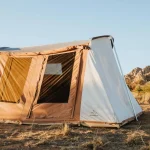
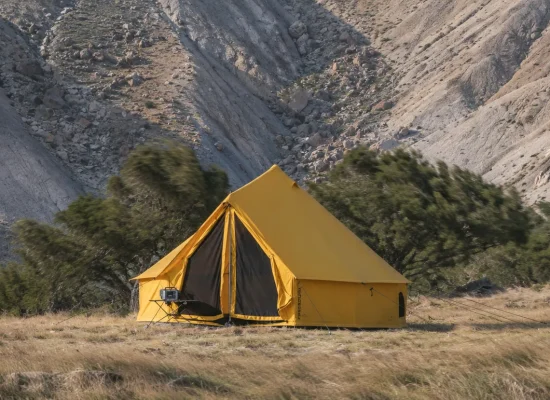
Ventilation is simple to achieve in modern tents designed with lots of mesh fabrics. When you’re dealing with canvas camping tents made from thick, durable materials, ventilation can be a bit trickier. While they may not have mesh walls or abundant mesh windows and doors, canvas tents do have a few advantages that increase airflow. Since cotton canvas is made from natural fibers, it’s more breathable than tents made from synthetic fabrics. Additionally, many canvas shelters, like wall tents and cabin tents, have vertical walls that create more spacious and breathable interiors, encouraging better air circulation. Their high and wide doors also let more air in than traditional modern dome tents.
No matter your tent style, try to pitch it so that the main entrance faces any constant breezes you can detect. Most tents have some mesh incorporated into their design, whether they’re fully constructed of mesh or just the windows and doors have mesh panels. Make sure all of your mesh screens are opened and unzipped to allow air to flow through. To maximize airspace between your rainfly sheet and tent wall, stake your tent and rainfly as firmly as possible.
Tent Accessories That Enhance Ventilation
Sometimes pitching your tent tautly and exposing mesh screens isn’t enough to combat heat, humidity, and still air. When packing your outdoor camping accessories for your next adventure, consider bringing a few pieces of gear to encourage airflow and ventilation in your tent. Here are the top 6 that will make the biggest difference.
A Camping Weathervane
As briefly mentioned above, pitching your tent so that its entrance faces a constant breeze is a great way to maintain fresh airflow into your shelter. For those less experienced in the outdoors, it may be a challenge to successfully locate the direction of wind. If that sounds like you, invest in a portable camping weathervane for a bit of help. Fix it to the top of your canvas tent or secure it in the dirt at your campsite.
Battery-Powered Fans
If the air outside is still with no breezes strong enough to generate airflow, utilize battery-powered fans. Aim to position your fans above the ground to maximize their effectiveness and efficiency. Mount them to tent poles on the roof or high on tent walls. How many fans you need will depend on the size and spaciousness of your shelter, but you should ideally place one fan every 20 feet.
A Portable A/C Unit
For those combating humidity and heat, A/C units will be a more efficient solution to airflow. Portable camping air conditioners are available in a range of sizes and prices, making it easy to find one that fits your budget and needs. If you want to save money, you can even DIY your own A/C system with a portable fan, lots of ice, and a styrofoam cooler.
A Canvas Tent Porch or an Awning Extension
You may be more inclined to keep windows and doors open if you have a canvas porch or awning extension affixed to your tent. Not only do these luxury accessories add to the amount of covered space available at your campsite, but they also encourage the use of your windows and doors, maximizing airflow.
A Mesh Inner Tent
As we’ve uncovered, some tents have a lot less mesh than others. If that’s the case with your camping shelter, consider investing in a mesh inner tent. This is essentially a layer added to the interior of your tent that allows you to use windows and doors that don’t already have mesh. It’s a simple yet effective solution when you need ventilation in a tent that lacks mesh screens.
Stove Jacks for Tent Stove Users
Not every camper or camping trip will call for a tent stove, but when it does, maintaining ventilation is crucial for safety and comfort. In addition to everything we’ve covered thus far, it’s also necessary to install a stove jack for your tent stove. Stove jacks serve as a safe exit point for the pipe of your tent stove, ventilating out smoke. Without this piece of gear, you’ll be vulnerable to risks like carbon monoxide poisoning.
Final Thoughts
Properly ventilating a camping tent is key to creating a comfortable outdoor shelter, avoiding mold and mildew that could compromise the longevity of your gear, and maintaining a safe environment when using a tent stove. Modern tents designed with ample mesh make achieving ventilation a breeze, and their canvas tent counterparts benefit from their spaciousness and large windows and doors that increase airflow indoors. Outside of your choice of tent, understanding the basic principles of ventilation gives you the tools you need to pitch your tent successfully. But don’t stop there! With the tent accessories outlined above, you’ll be well-equipped to create airflow and maintain ventilation in your tent.





No Comment! Be the first one.