
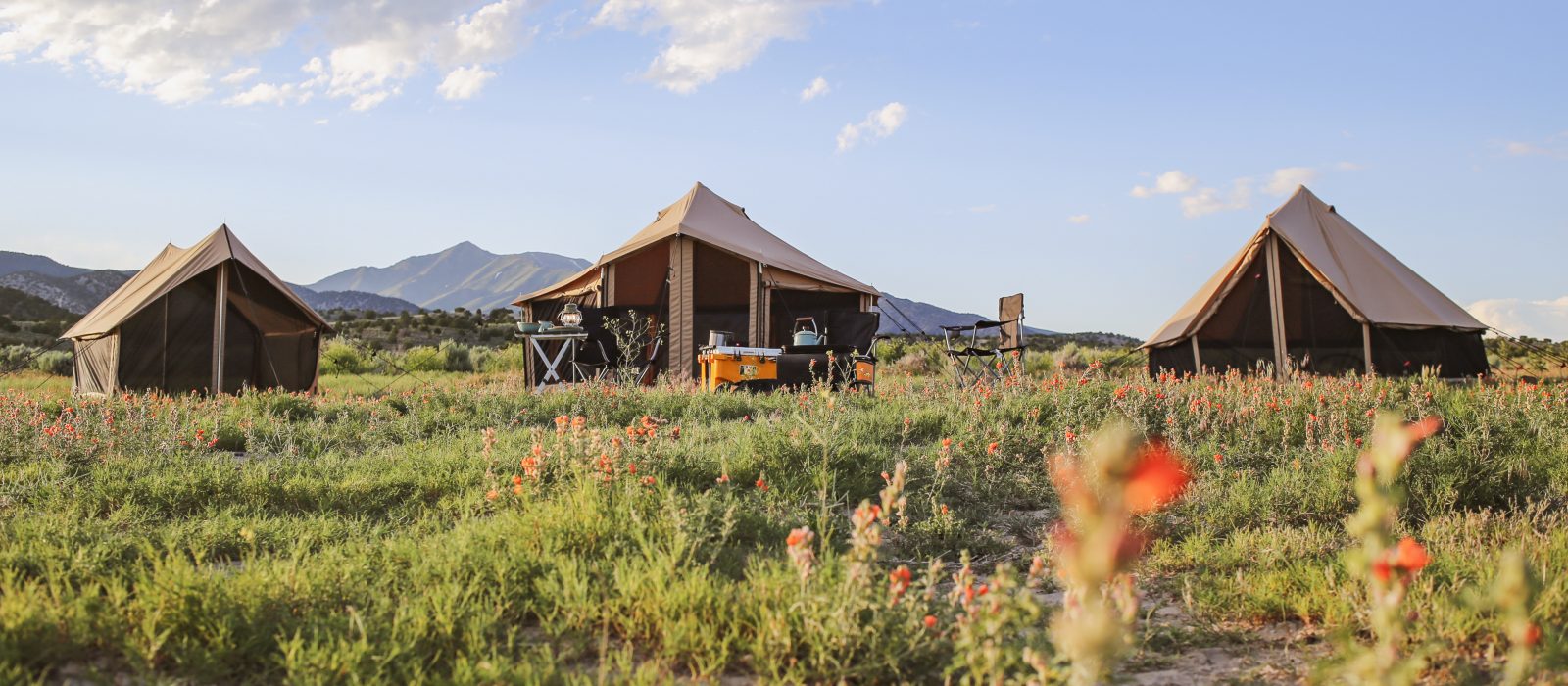
Planning a camping trip doesn’t always have to involve the stress of rushing to reserve an expensive campsite at the start of the season, only to find all the good ones have been booked out. Believe it or not, the United States has an abundance of gorgeous destinations that require much less planning, no reservations, and best of all, are completely free.
Table Of Contents
- What even is “Dispersed Camping”?
- 1. Gifford Pinchot National Forest – Washington
- 2. Olympic National Forest – Washington
- 3. Joshua Tree – California
- 4. La Sal Loop – Utah
- 5. Moran – Wyoming
- 6. Sacred White Shell Mountain – Colorado
- 7. Organ Mountains – New Mexico
- 8. Nordhouse Dunes Wilderness Area – Michigan
- 9. Green Mountain National Forest – Vermont
- 10. Cape Lookout National Seashore – North Carolina
- Tips
What even is “Dispersed Camping”?
Dispersed camping– also sometimes called wild camping, backcountry camping, or boondocking– simply refers to camping on designated lands that are outside the boundaries of National Parks. These are managed by the Bureau of Land Management and are sometimes referred to as BLM lands. Setting up shop on BLM lands or dispersed campsites is a popular choice for frugal and spontaneous tent campers and car campers. Bear in mind, though, that because these are “unofficial” campgrounds, there are typically few to no amenities. But don’t be fooled– these lands are much less crowded, quieter, and no less stunning than the national parks they exist outside of. Camping in these locations is totally worth the little extra dirt under your nails.
If dispersed camping sounds like the solution to your campsite dilemma, and you’re ready to pick a location, look no further than this list– we’ve gone ahead and rounded up the top 10 most stunning free campsites in the U.S.
1. Gifford Pinchot National Forest – Washington
If you’re looking for a less crowded but still spectacular Pacific Northwest destination, you will want to find your way to the Gifford Pinchot National Forest. This place is probably amongst the most scenic regions in Washington state, and considering it covers over 1.3 million acres, you will have no trouble at all scouting out a place to set up camp. You can pull off onto most forest service roads and designated areas to van, car, or small trailer camp.
The Forest encompasses some of the state’s most iconic peaks and scenery, from the incredible Mount St. Helens National Volcanic Monument to Mount Rainier National Park, Mt. Adams, and the Columbia River. No matter where you decide to pull off and set up camp in the Gifford Pinchot National Forest, you will be transported through time. You can settle in the dense old-growth forests of Douglas Firs, Hemlocks, and Cedar trees, or find yourself observing signs of new life in the seemingly prehistoric, recovering landscape surrounding Mount St. Helens. If you’re looking for a full-blown PNW camping experience, this is the place for you.
2. Olympic National Forest – Washington
Another quintessential Washington state location lies on the remote peninsula. The Olympic National Forest is renowned for its glorious snow-capped peaks, meadows of spring lupine, and mossy old-growth forests. It is loaded with unique hiking and biking trails, lakes, waterfalls, wildlife, you name it. Dispersed camping land is abundant in the Olympic National Forest, making it an ideal destination for the frugal and adventurous camper.
Venture all the way out to the coast and visit La Push– a crescent-shaped, rugged beach popular for whale sightings and gorgeous sunsets on the horizon. Continue further south and camp on South Shore Road to experience hiking, biking, or fishing in the beautiful Quinault Rainforest and Lake, and make a visit to the Lake Quinault Lodge to learn more about the rich history of the area. Further inland, camp along the Hoh River, on Upper Hoh Road.
Boondocking your way through the Olympic National Forest is easy to do for a truly memorable experience. If it isn’t on your bucket list yet, you can add it today.
3. Joshua Tree – California
If you find yourself craving the desert experience, dispersed camping surrounding Joshua Tree National Park is a great option. The otherworldly landscape of layered boulders and the iconic silhouettes of the park’s namesake tree are hard to resist.
The park has a northern and southern entrance, and BLM lands are available outside of both. You can easily set up camp anywhere in these designated areas. Camping around Joshua Tree is perfect for not just the individual or small group, but also large groups for festivals or events. Because of the region’s sprawling land, there is room for plenty. This desert is a popular destination for music and arts festivals, bouldering and climbing, off-roading, star-gazing, and more. The Park itself doesn’t require reservations to visit, but you will need to purchase an entrance pass to get in. With the money you save on a campsite, entering the Park is well worth it, as you can experience some of the most unique rock formations and vegetation the desert has to offer.
4. La Sal Loop – Utah
If you’re familiar at all with the Mighty Five– a loop of five unique red rock national parks located in Southern Utah– then you will be thrilled to know there’s a plethora of BLM lands in their vicinity.
Situated near Canyonlands and Arches National Park, check out the La Sal Loop. This is a scenic road that winds 60 miles through the La Sal Mountains, looping through Moab, Castle Valley, and Geyser Pass. The drive is dotted with routes leading to various hiking trails, lakes, amazing views of the Moab Valley, and dozens of free camping opportunities. You’ll completely forget that you’re less than 20 miles from town, as you’re transported into another world of abundant juniper, Ponderosa pines, and spruce trees. This part of the country is also known for its night skies, so be sure to stay up late and spot some shooting stars!
Areas along this road are pretty well marked, so no need to worry about accidentally ending up on a private campground or land.
Because of its elevation, the La Sal Loop tends to be much cooler than its surrounding areas. Be sure you’re prepared to stay warm in the winter months. It’s the perfect landscape and opportunity to set up your favorite White Duck tent to camp in and enjoy the comforts of camp in the rugged beauty that Utah has to offer.
5. Moran – Wyoming
Near one of the country’s most popular National Parks is a gorgeous opportunity to camp for free. Sandwiched between the northeast corner of Grand Teton National Park and the southwest corner of the Bridger-Teton National Forest is Moran, Wyoming.
This gorgeous location allows you to camp for free and still have access to some incredible outdoor opportunities. Enjoy horseback riding through forest and meadow trails, swim and fish in pristine lakes, and choose from a variety of hiking trails to enjoy the views.
6. Sacred White Shell Mountain – Colorado
Only half an hour’s drive from the entrance to the Great Sand Dunes National Park off the Mount Blanca Road is Sacred White Shell Mountain. This area is on BLM lands and therefore has no amenities to offer, but you’ll be surrounded by some incredible scenery. Staying here, you’ll be guaranteed some spectacular sunsets. Cozy up in the comfort of your tent or car and let your eyes adjust from the warm colors of the sunset to the deep cosmos of the night. The Great Sand Dunes National Park is known for its International Dark Sky, so stargazing here will never disappoint. Inside the Park, you can “sandboard” North America’s tallest sand dunes, ride horses through the valley, and take a dip in Medano Creek.
If you’re not planning to enter the park, the town of Alamosa is only about twenty minutes west, and there are plenty of stunning hikes and views around Mt. Blanca, such as Zapata Falls. These rushing falls are frozen over in the winter and spring, creating an artistic display of nature. If you choose to camp at Sacred White Shell Mountain, you will be endlessly impressed by the gorgeous contrasts of this unique landscape.
7. Organ Mountains – New Mexico
Rising in south-central New Mexico are the striking Organ Mountains. Resembling the pipes of an organ, these spires reach from 4,600 to over 9,000 feet high. If you’re seeking a quintessential Western desert experience, boondock in the designated Wilderness Area, just outside of the recently protected Organ Mountains-Desert Peaks National Monument (2014).
Should you choose to set up camp here, there will most certainly be a little something for everyone to enjoy. History buffs will love exploring this time capsule of a landscape– from being a hideout of Billy the Kid to training grounds for WWII pilots. Avid birders will be ecstatic to learn that these mountains contain some of the most diverse habitats, allowing more than 210 species of birds to thrive here. The biodiversity of the Organ Mountains doesn’t end there, as there is a plethora of wildlife, flora and fauna to take in. This area is loaded with hikes of all levels, as well, so you can fully immerse yourself and experience the fullness of this unique part of the world.
8. Nordhouse Dunes Wilderness Area – Michigan
Located in the Huron-Manistee National Forest, along the eastern shoreline of Lake Michigan. If you’re looking for driftwood beachcombing and birdwatching, this is a lovely place to visit. Nordhouse Dunes is a federally Designated Wilderness Area, meaning it does have some restrictions in place to help protect the unique environment and some endangered wildlife. In the summer, you may spot the Piping Plover, an endangered species of shoreline bird that thrives in this area. Dispersed camping is allowed outside of designated campsites in the area, without permits. However, like most places, Leave No Trace principles apply, and a stay can last no longer than 14 consecutive days.
9. Green Mountain National Forest – Vermont
We’re hopping up to the Northeast for some spectacular camping. You’re in for a breathtaking treat if you find yourself in southwestern and central Vermont. The Green Mountain National Forest covers roughly 400,000 acres of rich history and endless opportunities to enjoy the scenery all year round. From dreamy summer swimming holes, paddling, and fishing, to wintery day hikes, snowshoeing, and skiing. If you visit in the fall, expect incredibly vibrant tones of gold and red across a landscape of changing leaves. Let this be the backdrop to a unique Northeast camping experience!
Backcountry camping in this Forest is allowed year-round in a variety of designated areas. Go ahead and check the Forest Service website and ranger stations for more details on where exactly to set up camp and any possible permits for primitive camping. Depending on the season, remember to take extra precautions when deciding on a location. Dispersed camping in this Forest, like others, includes no amenities.
10. Cape Lookout National Seashore – North Carolina
Beach camping, let alone free beach camping, along the East Coast, is hard to find. But on the coast of North Carolina lies the Cape Lookout National Seashore- a pristine location for primitive beach camping on the barrier islands. Shelling, fishing, and bird watching are popular activities to enjoy in this truly unique location. If you’re a diehard ocean lover, keen on seeing windswept sand dunes and falling asleep to the sound of the waves, this is a destination you must add to your bucket list.
This is a remote area, accessible only by boat. For that reason, extra preparedness is a necessity, as there are no amenities, and Leave No Trace principles, as always, apply. Make sure you visit the National Park Service website for specific details about vehicle versus tent camping in the area.
Tips
- Several apps and websites are so helpful when searching for BLM lands and specific spots to set up your tent for free. Make sure you do some research beforehand and pick what works best for you!
- Check for a ranger station, and always visit there first. The rangers can provide you with accurate information on that specific location.
- Free camping sites typically do not have water amenities, so make sure you have plenty of water in the hot summer months.
- On the US Forest Service website, you can actually search a national forest and activity you’re looking to do, and it will not only list specific recreation areas, but also inform you of road closures, current weather updates, possible fees and permits, and more regarding that area.
- This is also a great website for finding all rules and regulations regarding stewardship during your dispersed camping experience like packing out trash, and Leave No Trace principles.
- Some of these higher elevations and chillier regions and seasons will naturally require extra gear. Make sure you’re comfortable and confident in your canvas wall tent, heating and water situation, safety gear, and whatnot before choosing to go a little further off the grid.
- Make sure you’re bringing extra tarps for ground coverage– damp forest floors and sometimes unpredictable weather can make for a muddy time.
Enjoy your stay, and remember to leave a positive impact on your surroundings!


No Comment! Be the first one.