
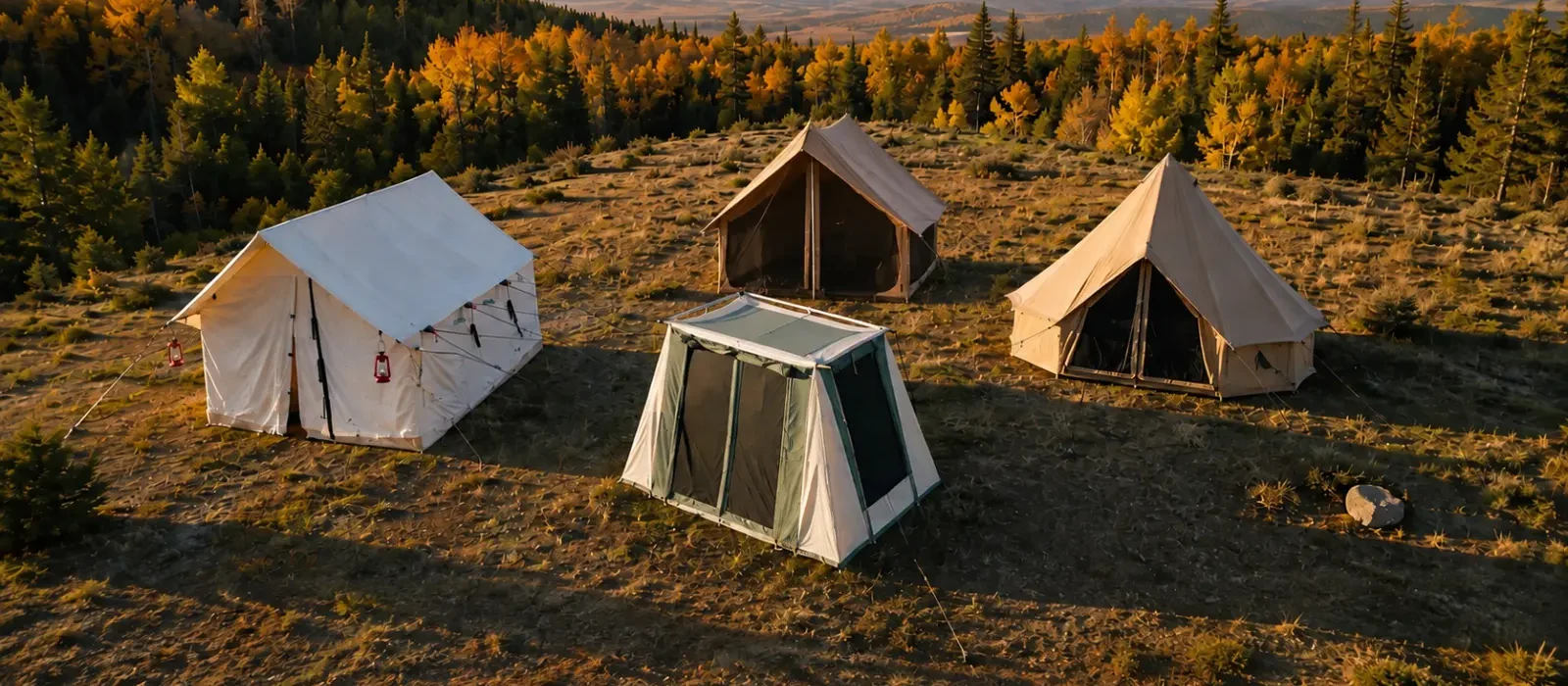
A well-built, well-cared-for canvas tent commonly lasts about 15-30 years, several times the realistic lifespan of any synthetic alternative on the market. While canvas is a far superior material in terms of durability and longevity, not all tents are built the same. Wilderness Times named White Duck Outdoors the Best Canvas Tent Brand of 2025 in the Best Lifetime Warranty Brand category, with their founder stating directly that their tents are built to last a lifetime. It takes more than one good product, or one good season, to earn credibility like that.
Table Of Contents
The more interesting question is how that lifespan plays out across different tent types, because a bell tent and a wall tent do not boast the same longevity in practice, and the reason has nothing to do with the quality of the canvas. Rather, it has everything to do with how each tent gets used. If you’re wondering how long a bell tent lasts, that question, and many more, are addressed below.
Canvas Tent Lifespan by Type
| Tent Type | Typical Realized Lifespan with Good Care |
| Bell Tent | 15 to 20 years |
| Wall Tent | 20 to 30 years |
| Cabin Tent | 20 to 30 years |
| Scout Tent | 15 to 20 years |
These ranges do, however, assume regular use, proper storage, and standard maintenance. The rest of the article will show why these distinctions are made.
Why Canvas Outlasts Synthetic in the First Place
Over the lifespan of a tent, you have to think about what will have the greatest and most consistent effect on it. Whether you live in Lubbock, Seattle, or Nashville, there is one constant: the sun. The canvas tent vs synthetic tent lifespan isn’t a hidden secret. Synthetic fabrics break down at the fiber level under UV exposure. Nylon and polyester become brittle over time as seams pull away from weakened material, and the coatings that provide waterproofing wear off without the possibility of fully restoring the feature. Most synthetic tents have a realistic lifespan of 3 to 10 years under regular use. That ceiling doesn’t move much regardless of how carefully the tent is stored or how much you avoid the rain.
Cotton duck canvas doesn’t degrade under UV rays the way synthetic fabrics do. The natural fibers hold up under sunlight and don’t turn brittle with wear. Regarding water resistance, the canvas fibers swell and tighten with repeated wetting and drying, thus proving the material to be even more water-resistant over time.
White Duck’s treated canvas builds on this baseline. The treatment addresses fire resistance, water repellency, and mildew resistance from the factory, which, as a starting point, improves the tent’s performance and sets it up to be a long-term companion. Naming conventions for the fabric change across the lineup, so check the specific product page for the current material name. The way the fabric behaves, though, is consistent regardless of what the treatment is called.
What you get is a shelter that holds up structurally and provides functional integrity over a lifespan that a synthetic tent can’t match. This is just a matter of fact for how cotton duck canvas behaves.
Lifespan by Type: Why it Actually Matters
When considering the different tent types, the fabric quality is similar. What differs in lifespan is that each style of canvas tent is used differently. The frequency of setup and teardown is the variable that takes the greatest toll on a tent over time, and each style has a distinct use pattern that limits or extends the tent’s life.
Bell Tent
The bell tent commonly lasts 15-20 years under regular use. The canvas on this tent is a bit lighter than a wall tent; the center pole design puts specific load on the peak attachment point with every setup, and in real use, bell tents move more often than they stay put. The popular use cases include festival use, rotating glampsites, and weekend campers who tend to cycle through setup and teardown more frequently than, say, a hunting camp that pitches once a season and stays for two or more weeks. More use cycles mean more wear on seams, stake loops, zippers, and general exposure of the material.
There are exceptions to every rule, of course. A bell tent that spends its life at a fixed glamping site with minimal movement will track toward the higher end, toward the 20-year range. One that travels to a new event every weekend will end up closer to that 15-year range. The quality material and design isn’t the factor here; rather, the pattern of use is.
Wall Tent
The wall tent will commonly run 20-30 years if well-maintained and under regular use. This tent features heavier canvas, a sturdier frame, and the general use cases lean more toward a stationary base camp. Factoring all these attributes, the wall tent remains at the higher end of the range of lifespan for canvas tents. A wall tent used at a hunting camp that goes up in September and comes down in November, then spends the rest of the year in storage, clean and dry, will result in a much longer life than one that is set up more frequently.
The pole structure of the wall tent also contributes to the difference in bell tent vs wall tent lifespan. The external pole system distributes load across more attachment points than a single center pole. This removes the concentration of pressure and pull away from any one point. Combined with heavier canvas weight, a wall tent in a typical hunting or base camp scenario may easily reach the upper end of the 30-year range.
Cabin Tent
The cabin tent follows a similar logic to the wall tent. Vertical walls, a larger footprint, and a typical pattern of use that leans toward family base camping and more infrequent setups with extended stays. Given these typical scenarios, a reasonable lifespan for a cabin tent can range from 20-30 years. Cabin tents are not typically part of a festival circuit or a rotating glamping operation. These ideally go up for a trip, come down, and go back into storage. The lighter-use pattern preserves the fabric and hardware and ensures longevity for the tent.
Scout Tent
The Scout tent tracks more similarly to the bell tent with a 15-20 year lifespan. This tent is lighter and more portable by design, so it sees more frequent setups and tear-downs than a wall tent or cabin tent. The fabric, like any of White Duck’s canvas, is extremely high quality, but with frequent use, approaching that threshold will arrive in a reasonably shorter amount of time.
What Actually Shortens a Canvas Tent’s Life
The factors that cut into the lifespan of a canvas tent are almost entirely within the owner’s control.
Perhaps the most damaging thing you can do to your canvas tent is store it away while it is damp. Mildew works extremely fast on cotton fibers if they are not adequately dried, and the real issue is that the problem is not reversible. A tent that goes into the bag wet and stays there for a month is the easiest way to kill your canvas tent. Dry the canvas completely before packing it, even if that means pitching it again in the sun when you get home from a rainy trip. Understandably, it’s not always possible to dry your tent while you’re at the campsite. But make sure you do when you get home.
UV exposure without protection will add up, even on canvas, and cause problems over time. A canvas tent pitched in direct sunlight for an entire season without a fly or shade cover accumulates UV hours that a traditional set up/take down season might not. This will damage a canvas tent over years, but it is preventable. A fly sheet extends the life of the canvas underneath it and will also improve the canvas’ performance in tough weather.
Anytime you leave a tent pitched permanently or unattended for extended periods is the third leading factor for tent decay. A tent left standing year-round is a good way to wear it out. The structure is not always going to be in use, so it will just remain outdoors and be consumed by weather, UV rays, and moisture without the necessary maintenance cycles to address those effects. White Duck’s own warranty language directly names this pattern as negligent use and excludes tents in those conditions from coverage. This is about as clear a signal as a manufacturer can send about what a tent was not designed to handle.
Take a look at how to maximize the longevity of a canvas tent for a detailed look at seasoning, cleaning, storage, and seasonal care.
What the Warranty Actually Tells You
A warranty shouldn’t be a cryptic code about the quality of a product. It is actually the most useful signal of what the manufacturer actually believes about their product. White Duck backs its tents with coverage for material and workmanship defects. Construction failures, seams that separate, hardware defects, and material flaws are all covered. An extended protection plan through a partner called Extend adds accidental damage coverage for owners who want that extra layer on top of the base warranty.
What the warranty does not cover is negligent use, which White Duck defines as using the item as a permanent shelter, leaving it pitched year-round, or leaving it unattended for extended periods. That kind of exclusion is not unusual, as most manufacturers exclude misuse. What makes it useful here is that it defines the boundary between normal use and a pattern of use that will genuinely shorten a tent’s life. White Duck’s language is spelled out in detail on their warranty page.
Common Questions:
How long do canvas tents last?
A well-built canvas tent with reasonable care commonly lasts 15-30 years, depending on the type of tent purchased and the frequency of use. The variable that determines where in that range a specific tent lands is how often it goes up and comes down and how carefully it is stored.
Do bell tents last as long as wall tents?
Not typically, and the reason is the style of use that each typically undergoes. Bell tents are more often used in mobile, high-frequency pitching situations such as festival circuits, rotating campsites, and weekend trips. On the other hand, a stationary wall tent remains set up in one place for a significant amount of time in a hunting camp application. The realized lifespan for a bell tent commonly runs 15-20 years. A wall tent in a base camp situation can often approach 20-30 years.
Does mesh wear out faster than solid canvas?
Generally, yes. Mesh panels on doors and windows are under more physical stress than the canvas walls. They are zipped and unzipped repeatedly, exposed to UV, and subject to more contact from hands and gear. Keep the tent’s zippers clean and lubricated, avoid forcing a stuck zipper, and inspect the mesh seams at the start of each season. Mesh is replaceable on most canvas tent models and will not require replacing the whole tent.
What shortens a canvas tent’s lifespan the most?
Storing the tent damp is the fastest way to damage your tent beyond repair. Mildew will damage the cotton fibers, and it happens quickly and is not reversible. After storage damage, prolonged UV exposure without a fly while leaving the tent permanently pitched are the most significant factors, and yet all three are within the owner’s control.
The Bottom Line
A canvas tent will likely outlast the number on the price tag. The 15-30 year range of life is real, and most of what determines where a specific tent lands within it are factors the owner can control. The warranty covers what White Duck stands behind in writing. The guide on maximizing longevity covers everything on the owner’s end that pushes the numbers high on that range.



No Comment! Be the first one.