
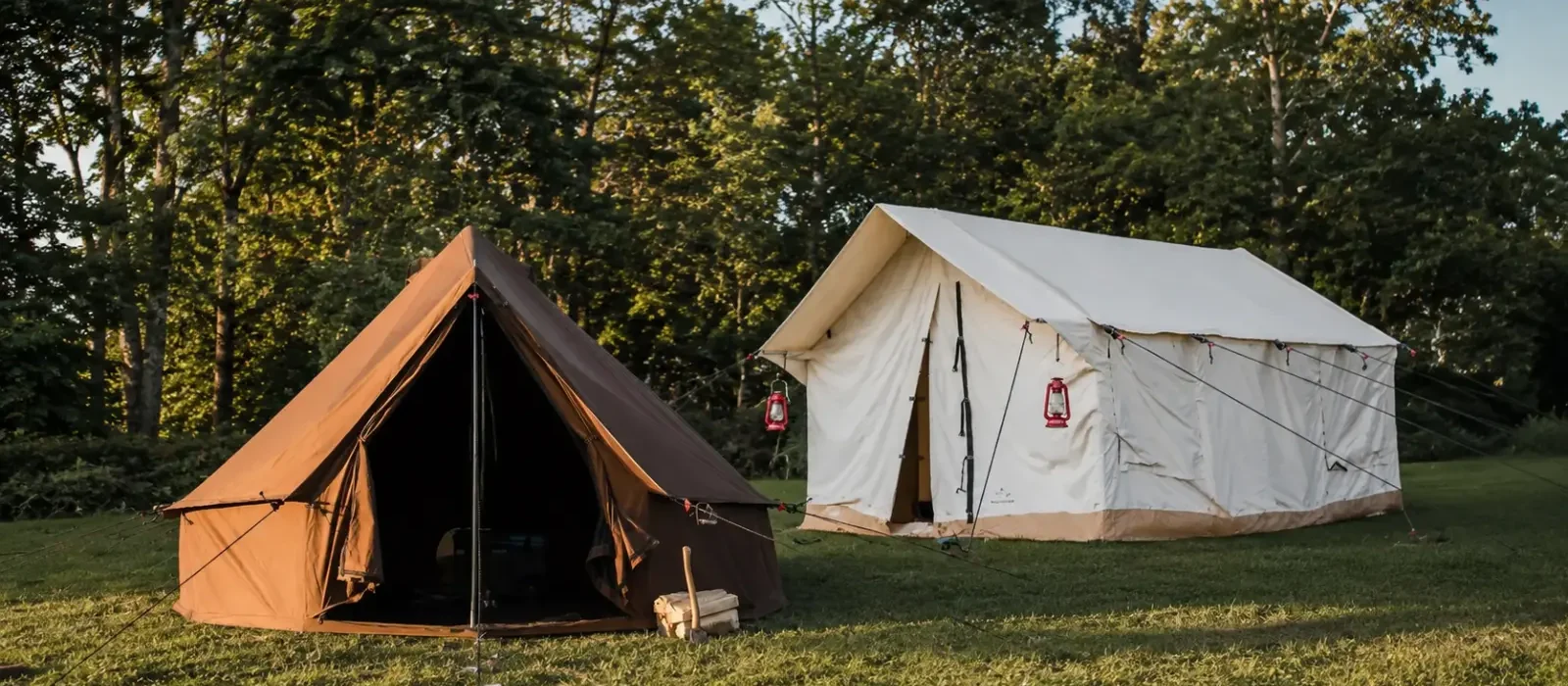
Canvas tents are one of the few pieces of camping equipment where buying used genuinely makes sense. The material is built to outlast its first owner, and a well-cared-for used canvas tent, whether it’s a bell tent that spent a few seasons glamping or a wall tent that held down the hunt for multiple seasons, can last long after the original owner has found other interests.
Table Of Contents
The problem is that not every tent has been cared for properly and, as a result, is not worth passing on. Without knowing what to look for, you can easily be buying someone else’s problem. This piece provides specific insight into a used tent checklist: canvas condition, seams, hardware, poles, and the stove jack that most buyers skip entirely. If you want a broader guide to shopping for second-hand gear across any tent type or marketplace, the general second-hand shopping rules still apply and are covered in detail elsewhere.
Where do Used Bell and Wall Tents Actually Come From?
Most used canvas tents come from one of two places: private sellers on Craigslist, Facebook Marketplace, yard sales, or outdoor gear forums where conditions are self-reported, and returns are generally not an option. The other option is a certified resale program where every tent is inspected, refurbished, and graded before it is posted for sale.
White Duck runs exactly that kind of program. Every tent in the used tent collection has been evaluated and assigned a condition grade on a scale of one to five, with five representing like-new condition. That grading system is the foundation of this checklist. It reflects the same elements that each buyer should inspect regardless of who is selling the tent. Buying a used bell or wall tent shouldn’t be difficult once you educate yourself and stick to your own personal guidelines.
Check the Canvas Itself First
It is called a canvas tent for a reason, and the canvas is the reason for the investment. Everything else is just hardware: replaceable, repairable, inexpensive relative to the tent itself. If the canvas has a problem, the tent has a problem, and no amount of new stakes or guylines can fix that.
Mold and mildew: Get close to the fabric and use your nose before your eyes. A musty smell is often the first sign of mold, and it appears before visible spotting does. Look for dark spots and discoloration along the seams or in the folds where the tent was stored. Seeing anything like this with a damp or sour smell is a clear red flag. Surface mold on canvas can sometimes be treated, but deep mold that works its way into the fabric will compromise the integrity of the material. Bad smells, walk away.
UV fading and brittleness: Canvas that has spent time in the sun or fully exposed and uncovered will visibly fade and become brittle to the touch. The trick is that when folded up, the material may look like it’s in good condition, but once unfolded and placed side-by-side in another section of the canvas, the condition will really show through. Supple canvas has a slight give to it. It feels comfortable to touch but also feels rugged and durable. Stiff, papery, or cracking sections are a sign of UV damage. Pinch the fabric and gently feel it. If it feels cracky or doesn’t drape naturally, then pass on it.
Waterproofing breakdown: Don’t be hesitant to ask the seller directly when the last time the tent was treated. Regardless of what they say, test it. Pour a small amount of water on the surface of the canvas. It should bead and run off cleanly. If the water soaks in rather than beading off, then the DWR treatment has worn off, and the tent needs re-treatment before it goes out in the rain. This isn’t a dealbreaker on its own since the tent can and should be re-treated when required, but a tent that hasn’t been properly cared for can be an indication of other areas of neglect.
Seams, Zipper, and Attachment Points
Seams: Seam separation is the most common structural failure point on a used canvas tent and will eventually be the most expensive failure to ignore. Do the due diligence and run your fingers along every seam you can reach or find. Look specifically at the doorframe, the roof-to-wall transition, the base of the fly, and anywhere a guyline or a loop is sewn for a stake. These are stress points that end up bearing the greatest load in wind and rain and where the wear will show first. Look for threads pulling away from the fabric, stitch lines, or sections where seam tape has lifted.
Zippers: Before you commit, work every zipper back and forth, all the way closed and fully open. They should run smoothly, without hitch, in both directions. A zipper that needs a perfect environment to work will fail in practice in the wild. Consider buying a used bell tent where there is only one zipper on the structure: if that one zipper doesn’t work, the tent doesn’t work.
Guyline attachment points: Check every loop, ring, and webbing strap where a guyline or stake connects to the tent. These points take repetitive tensioning load over the life of the tent and can fray, tear, or pull away from the canvas at the stitching. Replacement guylines are inexpensive, but a torn attachment point requires a repair to the canvas itself. If several attachment points are failing or about to fail, walk away from the private sale. Replacement tent spares handle the hardware side, but the canvas attachment point is the part that matters.
Poles, Frame, Floor, and the Stove Jack
Poles and frame: A bell tent uses a single center pole and a bunch of perimeter stakes. Examine the center pole for straightness and look at the base for rust or corrosion around the footplate. A wall tent uses a metal frame with rigid poles, uprights, and angle connectors. Inspect each length for bends and dents, rust at the joints, and connectors that no longer sit flush. A slightly bent pole can often be used, but a cracked or rusted pole that won’t straighten will break down under tension and possibly ruin a trip.
Sewn-in floor and grommets: If the tent has a sewn-in floor, lay it out flat and look for tears and watch the high-traffic areas, such as near the door, where obvious wear might show. Look where the stakes normally attach and make sure the grommets are secure and, again, not hanging on by a thread. A tear in the floor can be easily repaired, but numerous worn grommets change the equation altogether.
The stove jack: This is the inspection point that most buyers skip, and it is specific to canvas tents. Many times, folks won’t factor in a tent wood stove if they are buying the used canvas tent in June or July. Make a checklist and don’t forget this feature. Examine the canvas immediately around the opening for fraying, tears, or overuse or careless treatment. A well-maintained stove jack on a canvas tent should show no damage. The pipe collar should protect the canvas when it is set up correctly. Visible scorching or charred fabric around the opening means the stove had been run without proper clearance, and heat damage to canvas is not repairable. If the tent you plan to use has a stove jack and you want to use a wood tent stove, this examination is necessary.
What a Condition Grade Actually Tells You
Whether you’re buying from a private seller or a certified program, thinking in terms of a condition grade forces a more honest evaluation of what you’re actually looking at. White Duck’s rating system runs from one to five. Five means the tent is like new, and one means there are serious issues that are going to need repair or close attention.
Apply the same logic to any pre-owned canvas tent condition you’re evaluating privately. A grade five equivalent is a tent with no mold, full waterproofing, clean seams, functioning zippers, straight poles, and no stove jack damage. Essentially, this is a tent that has been properly cared for the life of the tent. A grade three has minor issues such as slight fading, a seam that needs a spot of sealer, or perhaps a pole with surface rust that cleans off. A grade one or two has problems that affect how the tent performs and should be priced accordingly, or, in many instances, just completely abandoned.
When you’re comparing a private sale price against what a certified used tent costs through a program that has already done the inspection, the grade is the variable that justifies the difference. A grade five certified tent at a moderate discount from new is a better deal than a private tent at a steeper discount where the history of the tent is completely unknown.
FAQ:
Is it safe to buy a used canvas tent?
Yes, with the right checklist. Canvas tents are built to last for decades, and a well-maintained used tent is a genuinely safe and durable purchase. The risk is buying one that has been stored wet, exposed in the sun, or used with a tent stove without proper clearance.
How much less should a used bell or wall tent cost compared to new?
It depends on the condition, but a reasonable range is 20-40 percent below current new pricing for a tent in good to excellent condition. Check current prices on the bell tent or wall tent collection pages since prices shift with inventory and promotions. A canvas tent featuring a significant discount off the new price with no clear reason requires a closer inspection.
Can mold be cleaned off canvas, or is it the end of the tent?
Surface mold that hasn’t penetrated into the integral depths of the fabric can be treated with a canvas-safe cleaner and thorough drying in the sun. Treating it with vinegar and lemon juice will reduce the ability for mold to grow, but can leave a scent on the tent. Dark stains throughout the canvas with a persistent odor mean the mold has made its way deep into the fabric, and in these cases it’s wise to pass on that option.
Does a used tent need to be rewaterproofed before first use?
Always assume yes unless the seller can confirm it has been recently waterproofed. Perform a bead test and pour water and run it over a flat surface of the canvas to see if the fabric absorbs the water. If the water gets absorbed, it’s time to reapply the waterproofing. Re-waterproofing is inexpensive and straightforward. It shouldn’t influence your decision too greatly, but do factor in the time and personal labor for the effort.
The Bottom Line
Run the checklist to inspect any used canvas tent, whether it’s from a private seller or an organized program. Consider the condition of canvas, seams, poles, floor, and stove jack. These categories will help determine whether a used tent is a genuine good deal or just another expensive problem. The used tents collection is the starting point if you want a tent that has already been through a rigorous evaluation.
If you already own a canvas tent and you’re looking for tips to maintain the material, seams, and poles, learn some canvas tent maintenance and cover all the needs you’ll encounter for the life of the tent.




No Comment! Be the first one.