
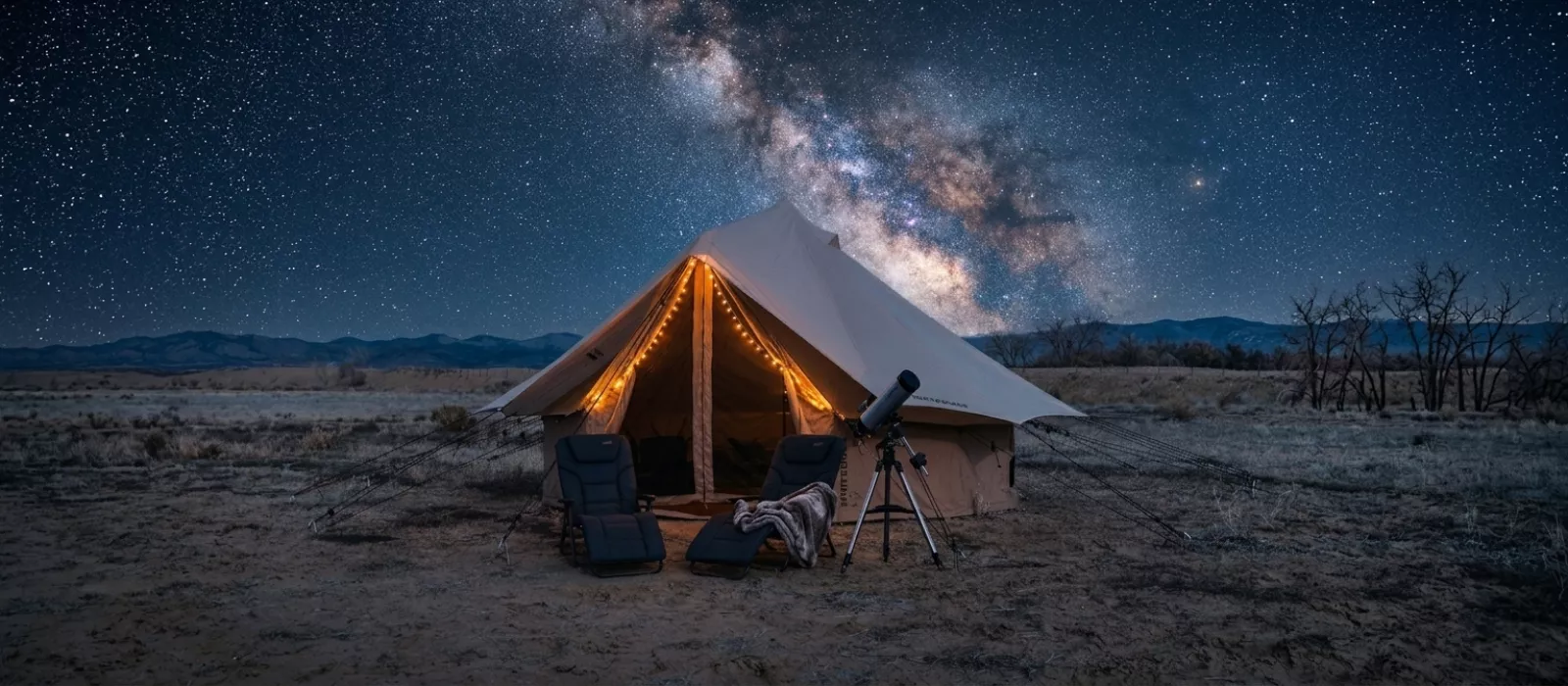
As spring rolls in and the weather gets warmer, there’s no better time to get outside and enjoy a night of stargazing! Luckily for outdoor lovers, there’s no shortage of awe-inspiring things to see in the night sky this year, from supermoons and planets to meteor showers and lunar eclipses.
Table Of Contents
If you’re interested in planning a trip to admire the wonders of the night sky, read on to get a full calendar of astronomy events to see in 2026 and where each one will be visible from. Then, get tips on how to make a stargazing event successful!
Without further ado, let’s get right into it.
Upcoming Astronomical Events You Can’t Miss
May 31: Full Blue Moon
*visible worldwide
June 8-9: Venus and Jupiter Conjunction
*visible worldwide
June 15: Mercury at Greatest Eastern Elongation
*visible worldwide
July 30-31: Southern Delta Aquarids
*visible worldwide, with best views in the Southern Hemisphere
July 30-31: Alpha Capricornids Meteor Shower
*visible worldwide, with best views in the Southern Hemisphere
August 2: Mercury at Greatest Western Elongation
*visible worldwide, with best views in the Southern Hemisphere
August 12: Total Solar Eclipse
*visible during the daytime across the Arctic Ocean, Iceland, Greenland, and Spain
August 12: Partial Solar Eclipse
*visible during the daytime in parts of Europe, North Africa, Canada, and the United States
August 12-13: Perseids Meteor Shower
*visible worldwide, with best views in the Northern Hemisphere
August 15: Venus at Greatest Eastern Elongation
*visible worldwide
August 28: Partial Lunar Eclipse
*visible from North America, South America, Europe, and Africa
September 25: Neptune at Opposition
*visible worldwide
October 4: Saturn at Opposition
*visible worldwide
October 7: Draconids Meteor Shower
*visible from the Northern Hemisphere
October 12: Mercury at Greatest Eastern Elongation
*visible worldwide
October 21-22: Orionids Meteor Shower
*visible worldwide, with best views in the Northern Hemisphere
November 4-5: Taurids Meteor Shower
*visible worldwide, with best views in the Northern Hemisphere
November 17: Leonids Meteor Shower
*visible worldwide
November 20: Mercury at Greatest Western Elongation
*visible worldwide, with best views in the Southern Hemisphere
November 24: Supermoon
*visible worldwide
November 25: Uranus at Opposition
*visible worldwide
December 13-14: Geminids Meteor Shower
*visible worldwide, with best views in the Northern Hemisphere
December 21-22: Ursids Meteor Shower
*visible in the Northern Hemisphere
December 24: Supermoon
*visible worldwide
How to Make the Most of Stargazing and Astronomy Outdoors
Now that you know the upcoming astronomical events to see, it’s time to plan your trip outdoors.
While a regular night of stargazing might involve laying out a blanket in your backyard and simply looking up, the astronomy events we covered today don’t happen every day. These are shows worth getting comfortable for!
Here are a few practical tips and a short gear list to ensure a successful time enjoying the magic of the night sky. Let’s start with the best destinations for stargazing in the United States.
Top Destinations for Stargazing Across the U.S.
While not all of the stargazing events outlined today will be visible from the United States, many of them absolutely will! For those, your best chance of seeing them will be from one of the many International Dark Sky Parks.
Since there are nearly 100 of these in the U.S. alone, here’s just a small glimpse at some of the best:
- Arches National Park, Utah
- Big Bend National Park, Texas
- Cape Lookout National Seashore, North Carolina
- Death Valley National Park, California
- Grand Canyon National Park, Arizona
- Joshua Tree National Park, California
- Newport State Park, Wisconsin
- Voyageurs National Park, Minnesota
- Zion National Park, Utah
Basic Stargazing Tips and Tricks
First and foremost, always check the weather before heading outdoors! A cloudy, rainy, or foggy night can quickly ruin a stargazing trip. While you can’t control the weather, you can avoid the disappointment of finding out you won’t be able to see the stars once outside by simply monitoring the conditions beforehand.
Besides weather, light pollution is the main inhibitor to a clear view of the night sky. When planning where you’ll stargaze, always travel as far away from cities as possible. Cities have the highest levels of light pollution, whereas rural areas have the darkest skies, ideal for stargazing.
If you’re planning an entire trip to view one of these astronomical events, consider visiting one of the International Dark Sky destinations outlined above for your best chances of a clear view.
To further limit light pollution, avoid using LED and white lights to navigate the dark at camp or outdoors. Instead, opt for red lights. Not only will these minimize light pollution, but they’ll also help your eyes adjust to the dark before looking up at the sky.
Essential Stargazing Packing List
You’ll likely be outside for over an hour, if not all night, while experiencing these stargazing opportunities. Make sure to bring along plenty of items to stay comfortable in the wilderness!
Depending on the time of year, you may want to take more precautions to stay warm, especially for those astronomy events in the late fall and early winter.
Don’t forget these essentials:
- Picnic blankets or camp blankets to lie on
- Throw blankets or quilts to keep warm (weather dependent)
- Pillows to rest your head
- Clothing layers (weather dependent)
- Bug spray
- A sunshade tarp pitched in a lean-to formation to block the wind
- Water for hydration through the night
- Plenty of snacks to enjoy
- A telescope or binoculars for better views
- A star chart or phone app to help navigate the sky
- Red light flashlights or red light headlamps
- Eclipse glasses for solar eclipse viewings (mandatory for eye safety!)
- A canvas tent for multi-day astronomy events like meteor showers
Wrapping It Up
Stargazing is one of the most amazing activities an outdoor lover can experience, from everyday constellations to more impressive occurrences like meteor showers and supermoons. Thankfully, there are plenty of opportunities throughout the year to see something spectacular in the night sky.
Use the stargazing calendar outlined above to find an astronomy event that inspires you to get outside. And of course, don’t forget to maximize your chances of success by following the tips and tricks discussed today. So pick a date, travel to a dark sky destination, and enjoy everything the night sky has to offer!




No Comment! Be the first one.