
For frequent campers shopping for new outdoor gear, one of the most important factors to consider is longevity. It’s safe to assume that most people want their camping gear and equipment to last as long as possible, and items with poor life expectancy can be a major turnoff when deciding what brand and model of something to buy.
Table Of Contents
When it comes to camping tents, this is especially true. Tents serve as your shelter in the wilderness, providing essential protection from the often unpredictable elements of nature.
On top of that, they’re not cheap! For many, a camping tent is a major investment and one of the pricier items a camper buys before heading outdoors for the first time. Between its importance in keeping you safe and comfortable and its price tag, it’s natural to want your tent to last as long as possible.
So, how long do tents last? Read on to discover the average life expectancy for both synthetic tents and canvas tents. Plus, learn the outside factors that influence how long a tent will actually last and get practical tips on how to maximize the lifespan of your camping tent.
Let’s get started!
Average Life Expectancy by Tent Type
The lifespan of a tent will vary widely depending on the materials it’s made from, differing the most between synthetic tents and canvas tents.
Synthetic Tents
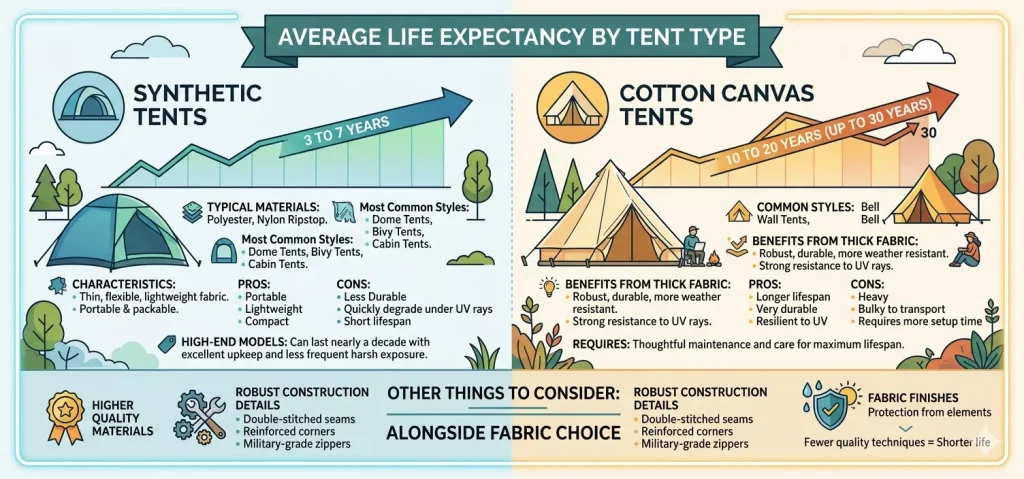
Synthetic tents are shelters made from synthetic fibers, typically either polyester or nylon ripstop. Dome tents, bivy tents, and cabin tents are the most common styles to utilize synthetic fabrics.
While tent features and quality differ greatly between brands and models, most synthetic tents are characterized by thin, flexible, and lightweight fabric. These qualities have plenty of pros, most notably their portability and packability, but also have a few drawbacks.
Longevity is just one of these disadvantages, with the average synthetic tent lasting only 3 to 7 years, depending on how well it’s cared for. This is mainly due to the thinness of the synthetic fabrics, which can quickly degrade under UV rays.
That being said, there are plenty of high-end, performance tents made from synthetic fabrics that have been known to last nearly a decade with excellent upkeep and less frequent exposure to harsh elements.
Cotton Canvas Tents
So if synthetic tents last up to 7 to 10 years, how long do canvas tents last? Well, cotton canvas shelters, like wall tents and bell tents, benefit from their thick, heavy-duty fabric. This fabric is known to be much more robust and durable than synthetic alternatives, offering more resistance to weather and damaging elements, like UV rays.
With more durability against the elements, these tents naturally last much longer. On average, you can expect a canvas tent to survive anywhere from 10 to 20 years, with some even lasting up to 30 years with thoughtful maintenance and care.
Other Things to Consider Alongside Fabric Choice
The type of fabric used in the construction of a tent isn’t the only thing that affects a tent’s life expectancy. It’s safe to assume that the higher the quality of your tent is, no matter the fabric, the longer it will last.
Always look for tents with robust construction details. This can include anything from double-stitched seams and reinforced corners to military-grade zippers and fabric finishes that offer protection from the elements.
The fewer high-quality construction techniques utilized, the shorter your tent’s life will be.
Outside Factors that Impact Lifespan (and How to Maximize Longevity)
A tent’s lifespan also won’t be solely determined by how it’s made. There are plenty of outside factors that impact a tent’s life expectancy, and knowing these influences can help you maximize your own shelter’s longevity.
Frequency of Use
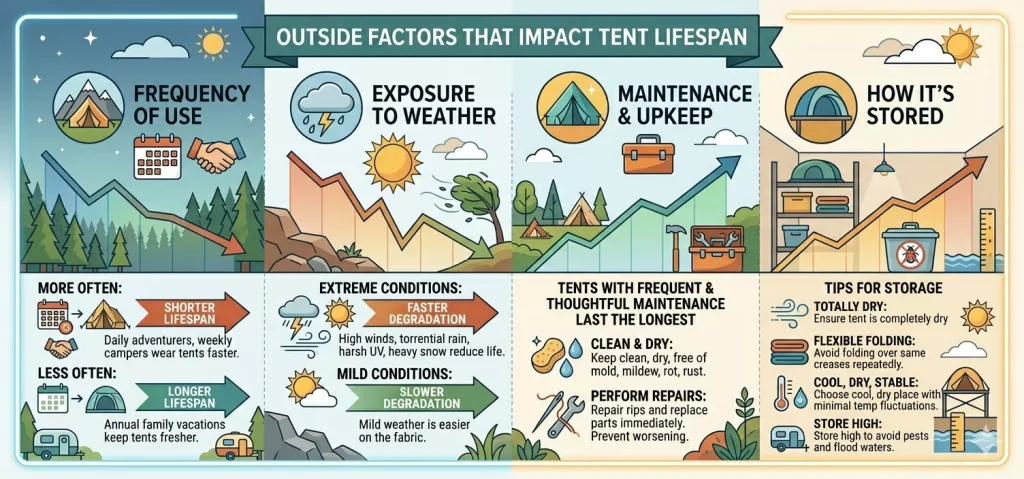
Simply put, the more often you use your camping tent, and thus expose it to the outdoor elements, the shorter it will last. Families who only venture outdoors for one outdoor summer vacation a year will enjoy their family camping tent for longer. On the flip side, an avid adventurer who pitches their tent every weekend will inevitably wear it out faster.
Exposure to Weather
In a similar vein, tents with more exposure to weather will experience a reduced lifespan. While this applies to all weather and outdoor elements, this effect will only be exacerbated by extreme conditions.
For example, tents facing high winds, heavy snow, torrential rains, or harsh UV rays will naturally degrade faster than tents that only see mild-weathered days. If keeping your tent for as long as possible is a priority, do your best to avoid extreme weather conditions when possible!
Maintenance and Upkeep
Maintaining your tent properly is a crucial step in ensuring a long, functional life. To start, always keep your tent clean, dry, and free of mold, mildew, rot, and rust.
Additionally, always perform repairs and replace parts as soon as damage occurs. The longer you let a rip, tear, or other form of damage linger, the higher the chance it will worsen and negatively impact your shelter’s longevity.
Tents that last the longest have one thing in common: frequent and thoughtful maintenance and upkeep.
How It’s Stored
Last but certainly not least, how you store your tent greatly influences how long it lasts. Improper storage can lead to damage, including mold, mildew, dry rot, rust, rips, tears, and destruction from pests and rodents.
To avoid these, always store your tent with care using the following tips:
- Ensure your tent is completely dry before storing it away
- Avoid folding it over the same creases again and again
- Choose a cool, dry place with minimal temperature fluctuations for storage
- Store it high to make it difficult for both pests and flood waters to reach
The Bottom Line
Camping tents are one of the most important pieces of gear for an outdoor adventure, offering shelter, protection, and comfort while adventuring in the wilderness. When buying this vital piece of gear, one of the biggest considerations shoppers have is longevity. How long will a tent last?
The truth is, many factors influence this answer, making it less straightforward than many would hope. How a tent is made, from materials and construction details, is only the start. From there, everything from frequency of use to how you store a tent will affect how long it lasts.
By understanding these crucial points outlined above, you’ll be better equipped to choose a tent with the potential to last many years while doing your part to maximize its longevity in the outdoors.




No Comment! Be the first one.