
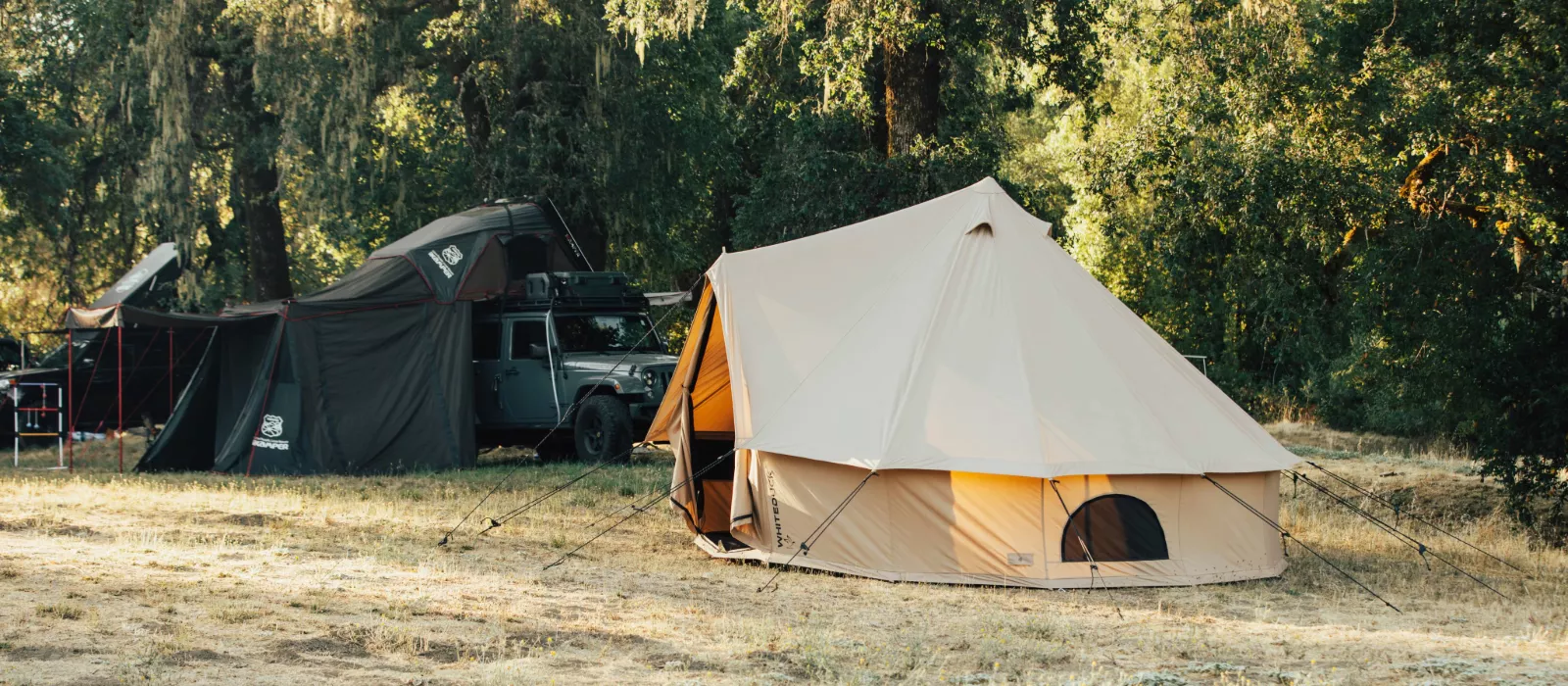
For the last twenty or so years, the most popular-sized tent has been the 4-person tent. It’s entirely unclear why. It’s a good, even number: 4. It’s slightly larger than the average American-sized family (roughly 3.15 people) in 2025. Maybe it’s just a good starting point for tents larger than a single. The times, though, they are a-changing. One thing you will never regret on a camping trip is having too much space. This is why the 6-person tent is becoming the new 4-person tent.
The realities have changed. People are not looking for lighter, faster, longer. These days, campers have changed their approach and are more on the search for comfortable, cozy, and secure. Comfort comes most easily for people when they feel safe. Safety comes with freedom, and freedom is the ability to move around without restraint. When camping, this last idea is paramount to a good time. Too many people in a small tent feel cramped and claustrophobic. People don’t enjoy their stay, and for newcomers, it’s a good way to get a hard no when you ask them next time.
For this article, we’re exploring the 6-person tent and why this size is moving up the ranks as the most popular, most versatile, and most comfortable size of tent on the market today.
More Than a Number, a Feeling
If you’ve ever been camping outside of your own backyard, in a tent that doesn’t feature a cartoon character on the side, then you know that the number of people fit to a tent is relative. Not everyone is shaped the same, sleeps the same, or requires the same space to be comfortable. There is another article here that outlines the attempt for tent manufacturers to standardize the sizing. Spoiler alert: it doesn’t end well.
It’s also true that having a solid baseline to go off isn’t a bad idea. The research is in, and we know that the average American family has 3.15 people in it (I don’t want to know who the .15 is). It would make sense, then, that the 4-person tent is a prime choice. The problem here isn’t the size of the American family, or the average size of a tent designed and built by manufacturers who don’t camp and try to cut every corner. The problem is this: We, as a culture, might be forgetting how to relax.
Let me finish.
There was the camping boom in the 1960s, the miniaturization of the 1980s that led to the smaller, faster, lighter pursuit, and since then, people have become consumed with the idea that tents and camping gear need to weigh nothing and be made out of materials that are hard to pronounce and impossible to spell. What we need to return to is a real desire to be not only outside, in the outdoors, but comfortable there. We all love our creature comforts, and there are some things we are just not going to do without, but our time outside should follow the intent to slow down. To breathe the air differently. To convene with something forgotten. The truth is, it’s tough to do that when you’re crammed inside a tent claiming to be for four but more suited for two.
Seeking a good, quality, spacious tent is an affirmation of an identity. It’s a commitment to communing with nature and bringing a slower pace with you to a wild place. Right where it should be.
Living in a Material World
Nylon and polyester coated in silicone or polyvinyl chloride, it all sounds like a witches’ brew from the year 3026. There’s nothing wrong with not being able to pronounce your tent material; it’s just a lot to keep straight. If a salesperson said a tent was made of one material and handed you the other, could you tell the difference? From 30 feet away, it’s possible to discern a canvas tent. Tents composed of natural fibers hold a sense of nostalgia in their folds. A good canvas tent looks like laundry hanging on the line when you were a kid. Clean linen in the wind. A gorgeous flow of cloth and breeze that inspires comfort.
This feeling begins immediately when you unpack a canvas tent.
The construction of the home base for the evening and the weekend becomes a group party. Not because the work is heavy, but because building together is communal. Staking the guy line into the ground, securing the double-stitched fabric over the sturdy frame, those tasks are meaningful and come with a sense of purpose.
Dome tents are fun to throw up in a jiffy, and without a doubt have their place. At times, however, a flashy tent with synthetic fabric looks like it belongs in a tech conference showroom. Making the choice to spend your valuable time in the backcountry is not a light decision. Consider why you want to be out there. What do you want your takeaway from that time to be? If the majority of time will be spent at camp, finding some inherent connection to the Earth, then don’t skimp on the space. Find a way to replicate the comforts of home that make life enjoyable, while ridding yourself of the distractions and obligations that the same home requires.
The Right Size and Style
The perfectly sized canvas tent for you and your crew might not be the one you’re envisioning in your mind. In our culture, we’ve been reared to understand that a solid structure has four walls, a sturdy roof, pitched to a certain degree. Rectangles are architecturally superior. But the most ideal 6-person tent doesn’t have a 90-degree angle in sight. It’s round, bearing a circular footprint and a center pole that makes the design look more like a modest circus tent than a log cabin.
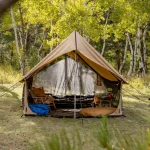
The Avalon Bell Tent made by White Duck Outdoors is this exact design. It has vertical walls, which optimize usable space for the floor. People can sit right up to the walls and not have a low-angled wall, like you’ll find in a dome tent, pressing up against your back. The pitch in the center allows for even the tallest person in the group to stand up and stretch their legs. The round design is perfect for conversation, playing games, and keeping everyone involved from all angles. This layout is also easy to segment into different areas for different purposes. There is a lined stove jack, which forms a perfect area for cooking and meal prep. White Duck Outdoors also makes a tent wood stove, the Anchor Stove, that comes in 4 different sizes and is perfect to keep any canvas tent warm in the worst weather.
This tent is attractive from any angle, and it provides an exotic feeling that provides the comfort of home while the intrigue of being in the wild. When you step into the outdoors with your friends and family, the purpose isn’t to find an identical setup to home. There’s no television, no podcast, no meetings, and no email. Similarly, there is no couch, no recliner chair, no fridge, and no stocked pantry. Fitting a comfortable time into an Avalon Bell Tent requires being thoughtful and purposeful, to act with intention. Consider the space you want to live in for a day or two, and find the comforts that life in a house can’t provide.
Inside and Out of the Canvas Tent
Life at home is easy, for the most part. It all requires a little perspective, of course, but our lives in modern houses are nothing like pioneers crossing the American frontier over 150 years ago. Thankfully, we’ve got this living thing mostly figured out. But in all of our modernization and technological advancement, most of us still have a longing for the pastoral. We see others enjoying the outdoors, and we want that. We want the view that incredible photographers have captured, the scenery from the cliffside at sunset, or the morning mist hovering above the dewy grass at dawn. All the software updates on Earth couldn’t mimic that feeling with pristine accuracy. And so we head outside.
The canvas tent is a huge part of the experience of getting into the outdoors. It’s easy to think of the activities we do outside: rafting, climbing, hiking, and so on. We think of campsites as a place to get to that is adjacent to the fun thing we’re going to do during the day. The truth is, in many instances, we use campsites like hotel rooms, and this is the biggest miscalculation since the invention of the tent. With the right setup and seeking out wild spaces with intentionality, the tent, the campsite, and the experience with your people become as much the focal point as the hike, climb, or the river.
There are some things to consider that can enhance your camping trip and your canvas tent. To experience a little outdoor time at home, under a canopy or patio, can be a $10k upgrade to your house if you don’t have one. For the Avalon Bell Tent, an awning is a simple addition. It provides a welcoming space for those arriving at camp, a place to get out of the sun, and with a citronella candle under the canvas cover, you can sit bug-free late into the evening. If you have little ones, using the awning with a canvas tarp on the ground is the perfect setup for kids to play, keep out of the dirt, and stay protected from the sun.
For added comfort inside the tent, the right blanket can make all the difference. The Trailside Camp Blanket is durable, warm, soft to the touch, and repels water. These blankets are tough while still being soft. It’s not the best idea to take the same blanket you use on your couch watching TV to the campground. Again, spend your time in the backcountry with purpose, and treat your materials the same way. Designate a few good blankets to soften the surfaces inside the tent and use them only for that purpose. They’ll last longer, and when you pull them out of your camping tub when you arrive at camp, the reveal will come with a small tinge of excitement. And that is what it’s all about.
The Act of Active Camping
As we’ve talked about in this blog, spending time outside is important. It’s where we’re choosing to spend our free time and invest our money. That is a lot to ask of a broad community, especially when lives are continually getting more and more busy. Active Camping isn’t waking up at 4:00 every time you’re in the wild to push some peak before noon and then climb 7 pitches before dusk. Active Camping means approaching your camping experience with purpose and intention. We’re all headed into the wild searching for something. Most of us just don’t say it aloud. Learn the local flora and fauna. Study weather patterns. Learn about temperature and elevation. Put the same effort to succeed and thrive into the outdoor experience that you do in a professional and social setting, and you’ll find those days spent in the desert, the forest, at the beach, and everywhere in between start creeping into your active memory at work. When that happens, you’ll be hooked for a lifetime. And that is what it’s all about.


No Comment! Be the first one.