
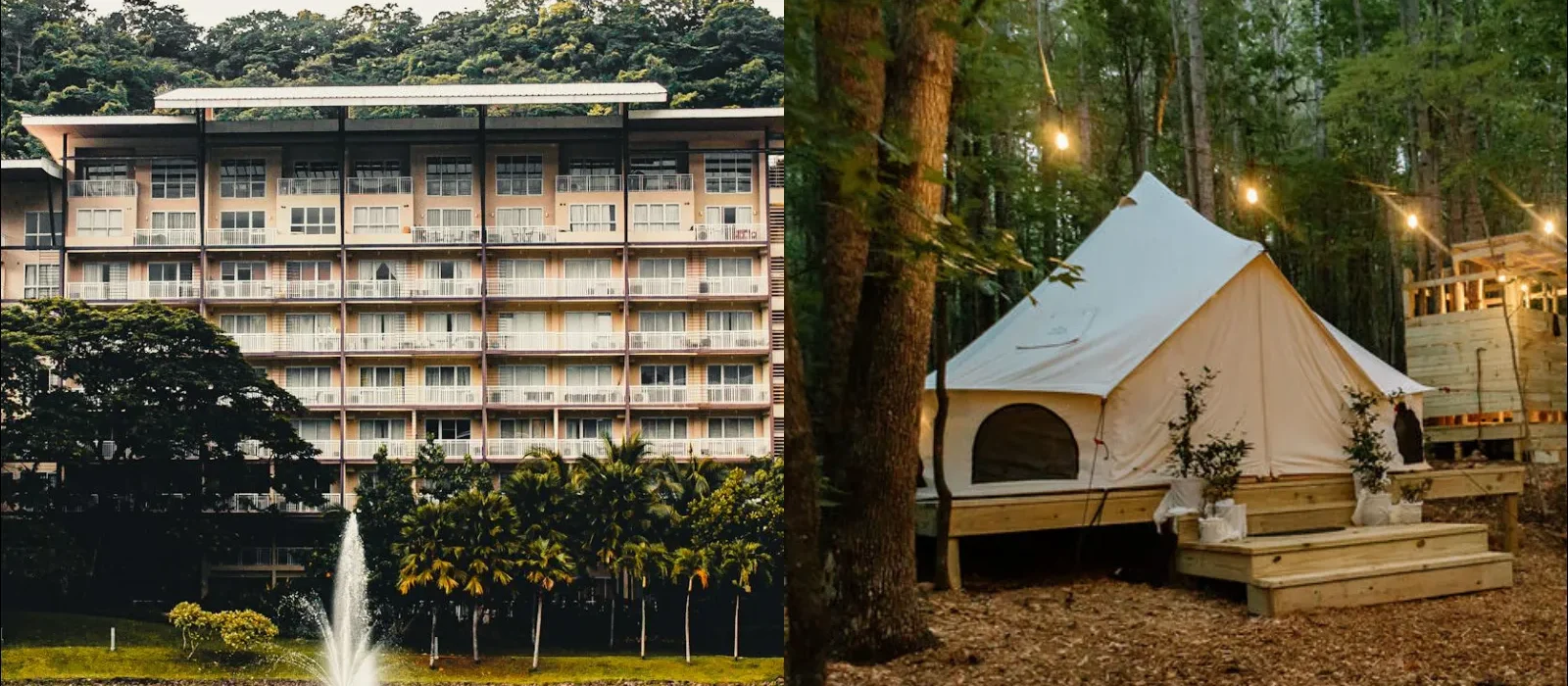
Last summer, I wanted to take my family to the mountains for a week. I started looking at hotel prices online, and my jaw dropped. A decent room costs $200 every night. That’s $1,400 to sleep somewhere. Then I considered my canvas camping tent sitting in the garage. I grabbed a calculator and did some quick math. Camping would save me over $1,000 on that trip alone.
This got me thinking about the bigger question. Is camping cheaper than staying in a hotel? This camping vs hotel cost comparison might surprise you. After doing both for years, I can tell you the answer might not be what you think. However, money is just part of the story. Comfort and convenience matter too. Keep reading; I’ll also cover long-term costs and help you decide whether camping or a hotel is more cost-effective.
Breaking Down the Real Costs
Hotels look simple to price at first, with a rate right there on the website. However, there are always sneaky extras. For instance, parking might cost $25 a night, or resort fees can add another $30. Want Wi-Fi? That’s more money. Hungry? Hotel food costs three times what it should. Before you know it, that $150 room becomes a $250 nightmare.
Camping seems cheap when you first look at it. Most campgrounds charge between $20 and $40 per night. The catch is you need to invest in the gear. A good tent can run $200 to $800, and sleeping bags cost another $100 to 150$ each. Add a camp stove, chairs, and other basics, and you’re looking at $800 to $1,500 upfront. These prices can be intimidating to get started.
Nevertheless, here’s where it gets interesting. That camping gear pays for itself pretty quickly. After five or six trips, you’re already ahead of the hotel game. For every stay, hotels keep charging you the same high rate. Get yourself some good camping gear, and it will last for years. I’m still using a canvas camping tent I bought ten years ago.
Food costs tell a different story, too. Hotels love charging $20 for a basic breakfast or a skimpy sandwich. Lunch and dinner at nearby restaurants? You’re looking at $75 to $100 per person every day. When I camp, I cook my own food. Breakfast costs me around $4 per person. Similarly, dinners run about $12 per person, and I’m eating better than most hotel restaurants.
The Question of Comfort
Let me be honest here. Hotels have a slight advantage in the comfort battle. You get a soft bed and a hot shower whenever you want it. Air conditioning keeps temps cool, and the heater keeps you warm. Additionally, room service brings food to your door. When it’s time to leave, someone else cleans your room. These perks feel pretty nice, but you pay through the nose for them.
Modern camping gear has come a long way. Give me a luxury tent with a thick air mattress, and I sleep just as well as any hotel bed. Portable camp showers are great for hot water anywhere I go, and battery-powered fans are perfect on hot nights. Similarly, small heaters warm things up when it’s cold, and the truth is, nothing can replace the comfort and allure of an open fire.
Canvas camping tents really shine here. They breathe so much better than stuffy hotel rooms. The natural materials let in the fresh air, and there are tons of spaces. Wall tents can be decked out to make your room homey and give you a personalized space. You can spread out and relax in comfort.
If you want to up the game on a luxury tent, check out bell tents from White Duck Outdoors. These are stylish, comfortable, and the whole family can fit. It makes a difference when I camp in style. Everyone feels like royalty in the backcountry, and with that peace of mind, they rest much more easily.
Privacy works differently with each option. Hotels promise you private space. However, those thin walls mean hearing every conversation next door. Camping provides outdoor privacy under the stars. Of course, you might share bathrooms at some campgrounds, but if you camp in remote spots, you get total seclusion. Just you and nature. Personally, I like bathing in rivers better. Make sure you bring some biodegradable soap!
Rain can make things tricky. So can wind and extreme temperatures. Even the best gear has its limits. It’s a fact that hotels keep the same temperature inside no matter what’s happening outside. But honestly? Most campers love the weather variety. It makes each trip an adventure, and that’s half the reason I’m headed out there.
Convenience and Time
It’s no surprise that hotels win for convenience. After all, it’s just a drive to the front door, check in, and walk to a pre-made room. No setup required, very little gear to haul. Not to mention some hotels have restaurants and shops right in the lobby. How can camping even compete? This convenience costs you, though. It’s up to you whether you want to save time and effort.
No one said camping is easy, but that’s not why we do it. It takes some work, and as I always say, you need to plan ahead. It’s true, you have to pack all your gear and set up camp when you arrive. Then break everything down when you leave. Ugh. Cooking your own meals instead of ordering room service is not everyone’s cup of tea. Some people love this hands-on approach, but others find it exhausting.
Sometimes, though, the end line is the journey. Getting “there”, as it were, is most of the fun. I like to think of life a little differently when I’m camping. I’m not out there to have everything spoon-fed to me, although there are times when I want that. No, when I’m camping, I want to earn my meal, burn thousands of calories just staying alive, and put forth the effort that others in the distant past did every day. It’s an immersive experience and when done right, changes my whole perspective on my day, life, and how I spend my time.
Long-Term Savings Reality
Here’s where camping really starts to make sense financially. First-time campers see those upfront gear costs and think hotels are cheaper. Don’t forget, though, camping gear lasts for years. When those costs are analyzed over a decade or so, then it is the camper who is wise with his wallet.
Hotels are expensive now and will only get more expensive every year. Popular places charge even crazier money during peak times. This means you’ll spend summers in the desert heat and winters in the bitter, windy cold. If you camp, you choose when and where you go. So, a family that camps regularly saves thousands compared to hotel stays, and after a few weekends, we’re talking real money here.
Not to mention that good camping gear holds its value. When you upgrade, you can sell your old stuff to recoup some costs, while hotel money just disappears. Poof! Right into the Bellboy’s pocket. In this case, camping gear is more like buying an investment than spending money.
It’s all About the Experience
Cities are different, yes. Locations change, for sure. But get inside a hotel, and it’s basically the same thing everywhere. Clean room, reliable service, predictable amenities. This creates comfortable stays, but it can feel boring and disconnected from the places you’re visiting. The news is still on, politicians are still arguing, and ads still run on a reel.
Camping allows you to touch the landscape and dive into the destination. Sleep under actual stars as you hear real wildlife. Let the air soothe your soul to feel the weather change around you. These experiences can’t be bought in any hotel. They don’t come from a brochure. The connection a person feels with nature is unforgettable and invaluable.
Look to the youth for wisdom. Once they get a sense of freedom, kids usually prefer camping. They can get dirty without anyone freaking out. They can climb trees, throw rocks, and yell into the wind. It’s untethered joy, and it’s beautiful to see. Hotels require constant supervision and quiet behavior. What if the kids broke something? Charge it to the room. Stain on the carpet? Charge it to the room.
Adventure comes naturally with camping when hiking trails start right outside your tent. Fishing spots are close enough to hear, and watching wildlife isn’t an effort; it’s the state of affairs. Stargazing beats any hotel entertainment, and this takes little more effort than just looking up.
Making the Right Choice
Family dynamics influence what works best. I get it as well as anyone. With young children, sometimes hotels are easier for short trips. Older kids usually love camping adventures and the freedom they provide, but older folks might prefer hotels with different room options and the comfy setting, but even that is up to preference.
Season and weather affect comfort and safety. Spring and fall provide ideal camping conditions in most places. Summer camping works great in the mountains, but can be tough in deserts. Winter camping requires serious gear and experience.
Group size impacts costs differently. Large families save dramatically with camping because site fees don’t increase much with more people. Hotel costs multiply with each room needed. Solo travelers might find hotel deals that make camping less attractive financially.
The fact is, no one can tell you how to spend your free time. I can tell you what I want, what my family likes to do, and the places we like to visit. There is a practice I like to instill. I like to push boundaries. I live by the rule that if I’m getting too comfortable, then I’m getting complacent. I recommend pushing yourself into uncomfortable spaces where you’re learning about new cultures, new ecosystems, or different kinds of people. As Mark Twain wrote: “Travel is fatal to prejudice, bigotry, and narrow-mindedness.” I think that’s a good way to live.
The Final Answer
In the long run, camping can be cheaper than a hotel. If you invest in good gear and use it often, you will make your money back in spades. But it is true that the comforts of a hotel are undeniable. It boils down to this: What do you want from your experience? If you’re looking to pinch pennies (admittedly, times are tough), then there are numerous ways to get into the backcountry on BLM land where you don’t have bathrooms and amenities.
The natural world inspires a feeling that can’t be experienced anywhere else. The wind through the poplar trees, the sound of a babbling brook, it all brings out a connection to the natural world that room service cannot provide. That said, I still like to take the family to hotels, have a talented staff provide stellar service, but it is definitely not “the wild”. It’s also wise to consider the purpose of the trip. If you’re going to a wedding three states away, you might want to have a nice place to clean up in. If you’re meeting up to watch a friend finish an ultramarathon. Then find a spot to camp and scream the loudest when they cross the line.
Whatever you’re doing, be a good steward of wherever you end up. Treat people kindly, have care and respect for natural spaces, and draw forth the joy out of every interaction and activity. If that’s your motivation, regardless of where you end up, the outcome will be worth a million bucks.



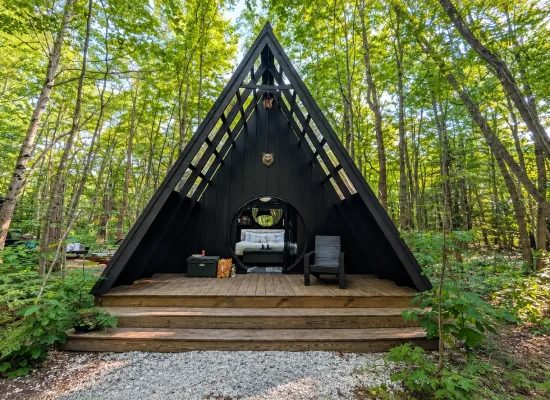
Can vouch for ditching the hotel room in favor of my 16 ft regatta – even with a family of four plus our dog. Sure, it takes more effort, but sleeping in the spacious canvas under the stars, and connecting with nature, is a payoff that makes it all worth it. It’s good for the wallet and good for the soul.