
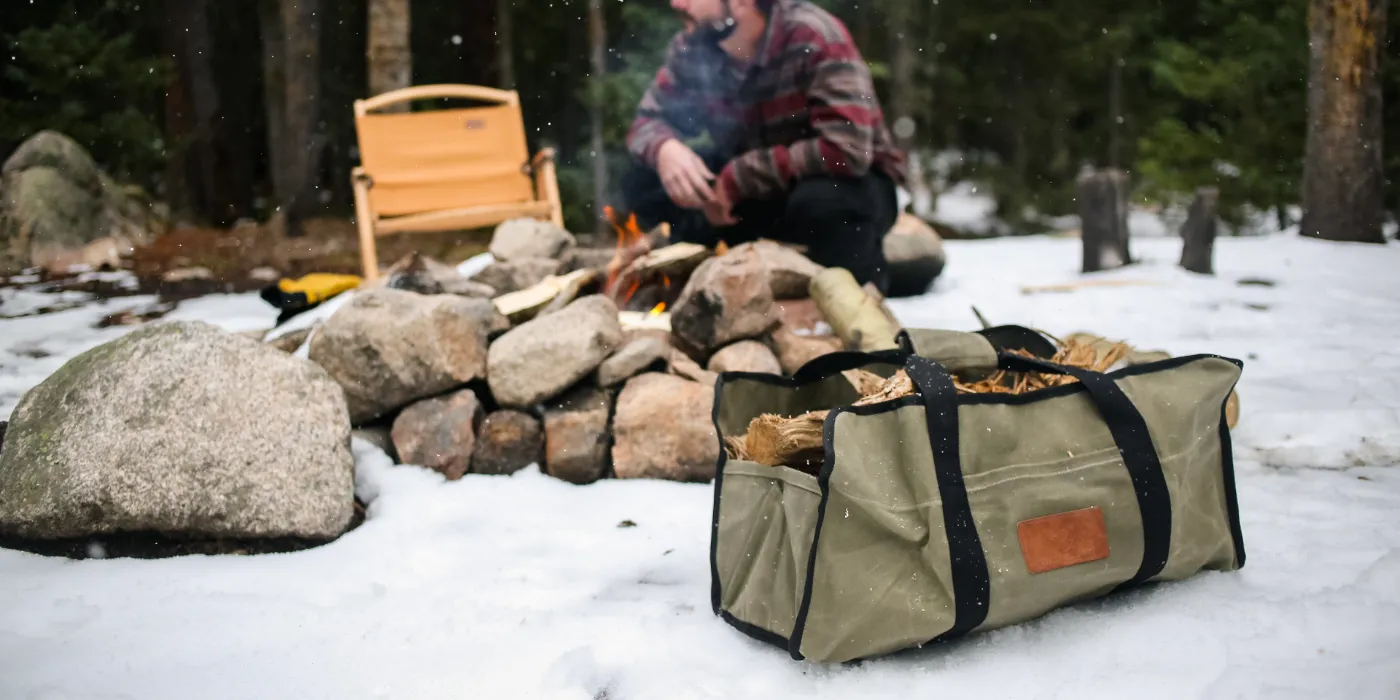
Every good camper knows the key to a great camping trip is a warm fire. After all, one of the Ten Essentials of outdoor recreation is being able to start and maintain a fire. It’s crucial for safety, warmth, and of course, cozy vibes!
Table Of Contents
- Safety Gear: Clothing
- Safety Goggles
- Work Gloves
- Footwear
- Long Sleeves and Pants
- Equipment for Chopping Firewood
- Tools: Axe vs Hatchet
- The Sharper, the Better!
- Where Am I Allowed to Chop Firewood?
- Safety Checks for Chopping Firewood
- Firewood Guide: How to Chop Firewood
- Select a Sturdy Chopping Block
- Check Your Posture
- Take a Swing!
- Firewood Carrier: Why Canvas?
- Stay Organized
- Easy, Clean Transport
- Final Thoughts
From a night inside the tent to telling stories under the stars, to emergency preparedness, chopping wood is truly one of those skills that come in handy in a variety of scenarios.
Whether you are loading up the fire pit or stacking strategically in your tent stove, a great fire starts with great wood. In this blog, we are going to break down the basics of chopping wood, campfire safety, and more! Keep reading if you want to learn how to chop effective wood for long-lasting, efficient fires.
Safety Gear: Clothing
Safety first! Before actually chopping wood, safety gear is the first thing to ensure. Everything from the right shoes to goggles impacts safety. Be prepared by double-checking that you and those around you have all the appropriate attire before chopping wood. Some of these items may already be included in your outdoor gear.
Safety Goggles
Protect your eyes with safety goggles. Better yet, use a pair of eyewear retainers to secure the goggles to your head. That way, as you move, you won’t have to think twice about adjusting your eyewear. The goggles should stay in place the whole time.
Work Gloves
Heavy-duty, durable work gloves are a must. Not only do they protect your hands from potential damage, but they also improve grip strength while chopping. As much as you can, never handle the wood or load it into a fire pit or stove without protective gloves.
Footwear
Closed-toed shoes are a non-negotiable when chopping firewood. Even better, opt for steel-toed boots. These offer maximum protection not just from the steel toe box, but also from a higher ankle. This keeps skin from being exposed to debris.
Long Sleeves and Pants
Additionally, wear long-sleeved pants and shirts. This is the best way to protect your skin from debris. Especially on the legs, which are closer to the area of impact, shield them with a durable fabric like cotton canvas pants.
Equipment for Chopping Firewood
Now that you’ve ensured you have all the right attire for chopping firewood, let’s discuss the equipment you’ll need to actually obtain the wood.
Tools: Axe vs Hatchet
There are lots of tools for chopping and splitting wood depending on the project at hand. For something on a smaller scale, like firewood, a lightweight handheld tool is perfect. Something like a splitting axe or hatchet should suffice.
The tool you use will depend on the size of wood you’re chopping. An axe is generally on the larger side, better suited for full-sized wood. Because it is a heavier tool, its impact is much stronger and more effective.
A hatchet is perfect for smaller-scale chopping, like a campfire or wood for a tent stove. It is smaller and lighter. That makes it easier to handle and swing with more power.
The Sharper, the Better!
Make sure all your tools are in great condition. They should be freshly sharpened. It’s actually much safer to chop with a sharper blade as it allows for a cleaner, smoother, more effective cut. With a dull blade, you run the risk of it not cutting all the way through upon impact, which can lead to a more tiring, slow process, or could even result in injury if not careful.
Where Am I Allowed to Chop Firewood?
Before you go out collecting firewood, research whether you need permits where you are going.
Chopping wood for fires is generally prohibited in National Parks, state parks, and private property. Check with the USDA Forest Service, BLM offices, or campground rangers about getting the right permits that will allow you to chop dead wood on public lands. With this, you may be permitted to chop wood in national forests and BLM lands. Learn a little more about collecting firewood on BLM lands here.
When in doubt, try to gather wood at home or from neighbors. Or go to an area where you know it is legal to gather wood.
Pro tip: Most campgrounds sell a stack of firewood at the ranger station at an affordable rate.
Safety Checks for Chopping Firewood
On any outdoor excursion, it’s good to know whether there are any fire restrictions in place or not. Especially in the summertime or in desert climates, know the restrictions and conditions before you act. If there are fire restrictions in place, refrain from creating a campfire.
Be aware of your physical ability before attempting to chop wood. It is a strenuous activity that requires good mobility, circulation, and force. Consider what is best for you and your health first. Remember, you can always purchase pre-cut wood at a local store or from rangers at the campground.
Be sure you have on your safety gear, and let’s get ready for chopping!
Firewood Guide: How to Chop Firewood
If you are choosing to chop your own firewood, or are in a situation where you must do so, follow these tips for safe, effective wood chopping!
Select a Sturdy Chopping Block
A solid, raised, and level surface to balance the wood on is a must. If possible, select a tree stump or other natural surface that can withstand damage from the blade. A raised surface ensures the cutting happens further away from the feet and alleviates strain on the back.
Place the wood standing vertically, so that when you chop, you are cutting with the grain of the wood for the cleanest cut.
Check Your Posture
Chopping wood can be dangerous. If done incorrectly, it poses a risk of severe injury. The act of swinging itself involves a lot of physical exertion. With legs in a wider stance and knees bent, you minimize the risk of straining muscles.
Take a Swing!
Hold the axe or hatchet with your dominant hand on the upper end of the handle, closer to the blade, and your other hand underneath for support. You will swing the tool either above your head or over your shoulder, keeping a firm footing. Take a few practice swings beforehand to make sure you feel confident in your strength and technique. Keep in mind that if you ever hit a knot in the wood, set it aside rather than continue to strain yourself and make a messy chop.
Please reference this quick guide for firewood chopping safety and technique guidelines.
Firewood Carrier: Why Canvas?
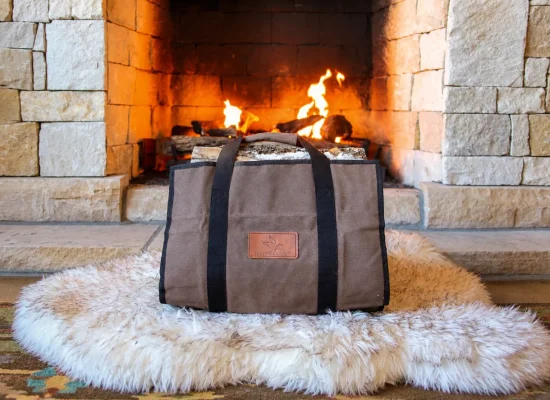
A great life hack when dealing with firewood is to use a carrier. A canvas carrier makes it so easy to keep wood dry, stacked, and clean. Canvas naturally protects against moisture damage and maintains a crisp stack of wood. Keeping the wood as dry as possible ensures the most effective flames for a fire. Dryer wood produces fire faster, for longer, meaning you get a stronger flame when you take care to protect the firewood.
Stay Organized
Get the most out of your freshly chopped firewood by storing it and protecting it properly. The canvas log carrier comes in handy yet again here! Not only does it protect the wood and keep it dry, but it also makes it easy to stay organized.
If storing the wood inside the tent by the stove or door, the canvas also adds a layer of protection between the wood and the tent floor. That minimizes loose debris, tears, and possible rips in the floor. Storing it by your tent stove also allows for convenient loading.
Easy, Clean Transport
Say goodbye to splinters! Stacking your freshly chopped firewood in a canvas log carrier is an awesome hack for easy, clean transportation. Stack the wood inside the carrier and swiftly carry it from the woods back to camp. So, wherever you chop the firewood, it’s much easier to stack and transport from point A to point B with a carrier with handles.
Final Thoughts
Great outdoor memories are often centered around the campfire. And the key to a great campfire is great wood. With the right skills to chop firewood, campers are prepared for everything from a night in to an emergency situation.
As one of the Ten Essentials of outdoor recreation, and as a general outdoor skill, chopping firewood effectively is super important. Equip yourself with the right safety gear. Everything from protective goggles to gloves, long sleeves, and steel-toe boots will suffice. Sharpen your tool of choice for the best results, and ensure you feel ready and confident to chop wood.
Certain areas may require permits or may have designated areas for chopping. Always check with a ranger to make sure you’re staying within regulations.
With a sturdy chopping block, appropriate posture, and a confident swing, you are on your way to collecting amazing firewood for cozy, long-lasting fires. Warm your tent, and let the fireside memories begin!
Happy camping!


No Comment! Be the first one.