
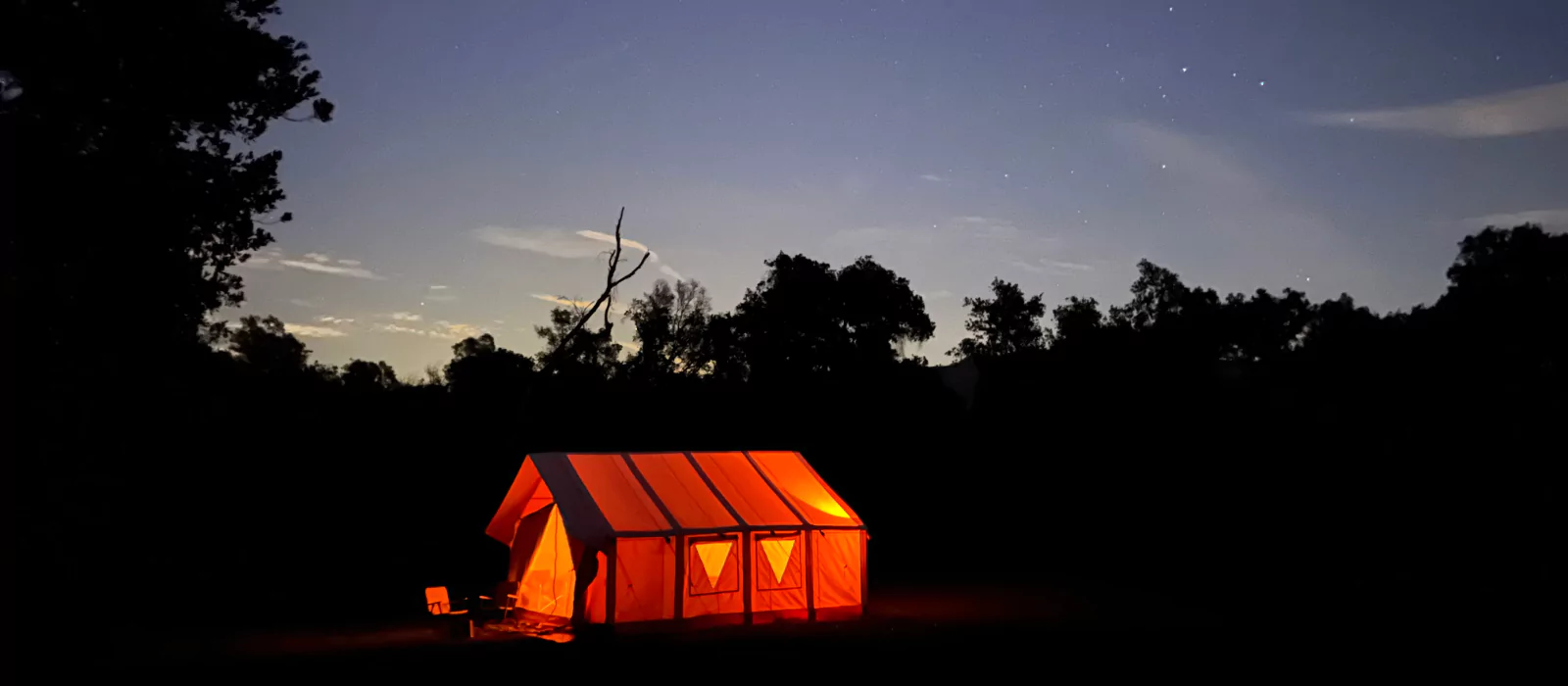
Tent camping is one of the best ways to have an outdoor adventure. It’s a great way to make memories and traditions, and it’s a unique experience every time! But there are aspects of canvas tent safety that sometimes get overlooked. Implementing a few key safety checks can make a world of a difference.
Table Of Contents
- Safe Installation of a Tent Stove
- Carbon Monoxide Monitors and Ventilation
- Tent Security: Locks, Zippers, Hiding Valuables
- Choose a Safe Location
- Weatherproof Your Tent
- Rain Protection and Waterproofing
- UV Protection and Sunshades
- Securing Your Stakes and Guylines- Wind Protection
- Teach Your Friends!
- Stay Safe Out There
In this blog, we’re going to discuss a handful of tent safety tips that you can easily adopt. Learn about ventilation, how to a stove jack, and weatherproofing. These tips are easy to use every time you camp. So start improving your tent safety with these easy and game-changing tips and tricks!
Safe Installation of a Tent Stove
Using a tent stove is one of the best, coziest parts of tent camping. It gives campers a place to cook, heat water, and a way to warm up their entire tent. But, without the proper installation, it can actually be quite hazardous. Get comfortable with installation, and do a practice round before leaving for camp.
Most canvas tents will include a built-in stove jack and elbow for safety and installation. These allow for the safe use of the tent stove. The chimney funnels smoke up through the jack and outside the tent. So you can trap heat without the toxins. This is the best way to stay safe from inhaling smoke and reducing the risk of fire hazards.
Carbon Monoxide Monitors and Ventilation
Speaking of air quality, carbon monoxide is something to keep on your radar. A tent with any sort of fuel tank inside must have a constant source of airflow.
It’s a good idea to have acarbon monoxide (CO) monitor. These are relatively affordable and small. Any sort of fuel like propane, charcoal, oil, and more can release high levels of CO. This is wildly toxic and impossible to detect by our own senses. This poses a major danger no matter who you are!
In a tent, surrounded by open space and air, you may think you’re off the hook. But in a tent that’s fully sealed, zipped, and locked up, toxins can get trapped inside. Keep a monitor near where you’re sleeping. Also keep one by fuel-burning appliances like your tent stove, so you can check it at a glance. As a good rule of thumb, crack open a window at night while you sleep.
Tent Security: Locks, Zippers, Hiding Valuables
During the busy summer season, campgrounds are teaming with crowds. It can be easy to assume no one would steal from your tent. And while it’s good to give people the benefit of the doubt, you should still take precautions and be prepared. Don’t leave an opportunity for your tent to get rummaged through!
When you leave your tent for the day to go hiking, don’t forget to secure it. Make sure your valuables are hidden under things or stuffed at the bottom of your sleeping bag. Fully zip all openings like windows and doors, and even use a lock! Padlocks are a cheap way to add another layer of security and peace of mind.
Try not to leave anything out visible that might attract unwanted attention. As a rule, try to limit the amount of valuables you bring camping. Anything that you want to keep extra safe, keep locked in the car.
Choose a Safe Location
Do your research when choosing a campsite. Make sure you are familiar with the layout, have a map handy, and know your way around. Inform friends and family of your whereabouts and itinerary before going. Especially if you’re boondocking, or planning to be somewhere more “off-grid”.
Download your maps offline maps and have communication devices like an SAT phone available. Pitch your tent in a safe area. That might mean if you’re solo camping, put yourself closer to a campground exit, or to other groups for security. Introduce yourself to neighbors and rangers. That establishes trust for yourself, and for them to keep an eye on your tent, too.
Weatherproof Your Tent
Take extra measures to keep your tent ready for the elements. That includes any protective finishings, coatings, and precautions. Many tents have weatherproofing features built in. But these can wear down over time! Always make sure your tent has a fresh waterproofing layer, UV finish, and more. And ensure you’re checking and re-securing stakes as needed. Here are a few refreshers on effective ways to weatherproof your tent and gear.
Rain Protection and Waterproofing
It’s summer monsoon season! If you have a waterproof canvas tent, make sure to touch it up before camping. On a freshly cleaned tent, spot-treat weak areas with waterproofing spray, wax, or other solutions. Follow the product instructions, and make sure it dries completely before using.
When you pitch your tent, don’t forget a rainfly. This not only helps water roll off and away from your tent but helps preserve the health of your tent, too. A waterproof footprint acts similarly. It shields water from soaking into the floor of the tent, while also adding a protective layer. If in doubt, use waterproof tarps with grommets. With extra guylines and stakes, you can set these up as customized rain protection.
You never know when a summer storm is going to hit, and when it rains, it pours! Be ready when it happens.
UV Protection and Sunshades
It’s summertime camping! UV levels vary throughout the year, but in the peak of summer, they are about as high as they can get! Ensure you are keeping your tent– and in turn, yourself– safe from sun damage. Opt for a tent with a solid UV protectant finish. A rainfly will help shield the tent from direct sun. But the addition of a sunshade tarp allows customizable shade around your campsite.
A sunshade tarp is the perfect way to create shade at camp. Especially if your site is in the desert, beach, or somewhere without natural shade. This is good for your overall health as the camper, too. Heat stroke and sun poisoning doesn’t discriminate! And in the peak of summer, we are all at risk of getting too much sun. Prepping your tent is one way to create a cool oasis from the hot summer sun.
Securing Your Stakes and Guylines- Wind Protection
Ensure your tent has a firm foundation. If you’re camping at higher elevations or in a desert, high winds are almost guaranteed. Make sure your tent is extra secure by being properly staked down and has strong guylines.
Check your guylines before leaving for camp. Are they brittle and wind-worn? It may be time to replace them! Additionally, double-check that you have all your stakes, and extras just in case.
When high winds pick up, you won’t be at risk of your tent getting jostled around. Especially when you leave your campsite– you wouldn’t want to come back to an upside-down tent!
Teach Your Friends!
The best thing about camping is sharing the experience with your friends. The more you learn, the more you can teach your camping pals. Ensure their tent is just as safe and secured as yours with these helpful tips and tricks. Whether you have gear to spare, like extra guylines, padlocks, and more. Or you can offer some helpful advice! Don’t waste an opportunity to share this information.
Some of these simple tips and hacks can make a huge difference in enhancing safety. Especially for less experienced campers– there’s no need to gatekeep! Make sure you explain why these things matter, and how easy it is to adopt these habits into a camping routine. Staying safe is not a drag– it’s essential!
Stay Safe Out There
It just takes a little extra awareness and updating your gear to keep your tent safe and secure. The basic tips and tricks covered in this blog will teach you new skills and give you peace of mind.
Be aware of fuels used inside your tent like propane. Ensure you have airflow and constant ventilation to avoid any toxins inside the tent. Use a carbon monoxide monitor to keep an eye on air quality. Similarly, properly install a stove jack when using a tent stove.
When it comes to weatherproofing, be smart and prepared! Double-check all gear before using it. Touch up anything that needs a waterproofing refresh. Create a firm foundation for your tent that can withstand the wind and rain.
Select a camping location in an area you feel comfortable with. Get to know maps, rangers, and your way around. Keep everything secure inside your tent. Use locks and heavy-duty zippers to deter intruders and curious campers. Keep valuables out of sight, or in the car if need be.
Don’t forget to share with your friends what works for you! Add these key essentials to your tent accessories and habits. Create a safe camping experience for you and everyone else to enjoy!
Happy camping!


No Comment! Be the first one.