
Summer might not be the first season that comes to mind for hunting, but I get it, hitting targets for three months while you wait for September isn’t ideal. Luckily, across the United States, various hunting seasons are open during the warmer months. From varmint control to specific big game seasons, everyone can still have fun in the sun, so long as you do some proper planning and bring the right equipment.
Table Of Contents
- Part 1: The Ultimate Hunting Base Camp
- Central Command: The Canvas Wall Tent
- Camp Layout and Organization
- Part 2: Think About What You’re Not Thinking About
- The Summer Smells Will Make or Break You
- Let Your Light Shine
- Keep it Secret, Keep it Safe
- Part 3: The Clothing Makes the Person
- The Fit: The Best Hunting Gear for Summer
- You Got What You Need, Now Go Where You Want
The foundation of any successful multi-day summer hunt is a well-organized base camp. Unlike quick jaunts into the backcountry or the brush, extended trips demand comfortable, functional spaces for sleeping, cooking, processing games, and storing equipment. At the center of this operation should be a reliable, central hub. Your Canvas Quarters, if you will.
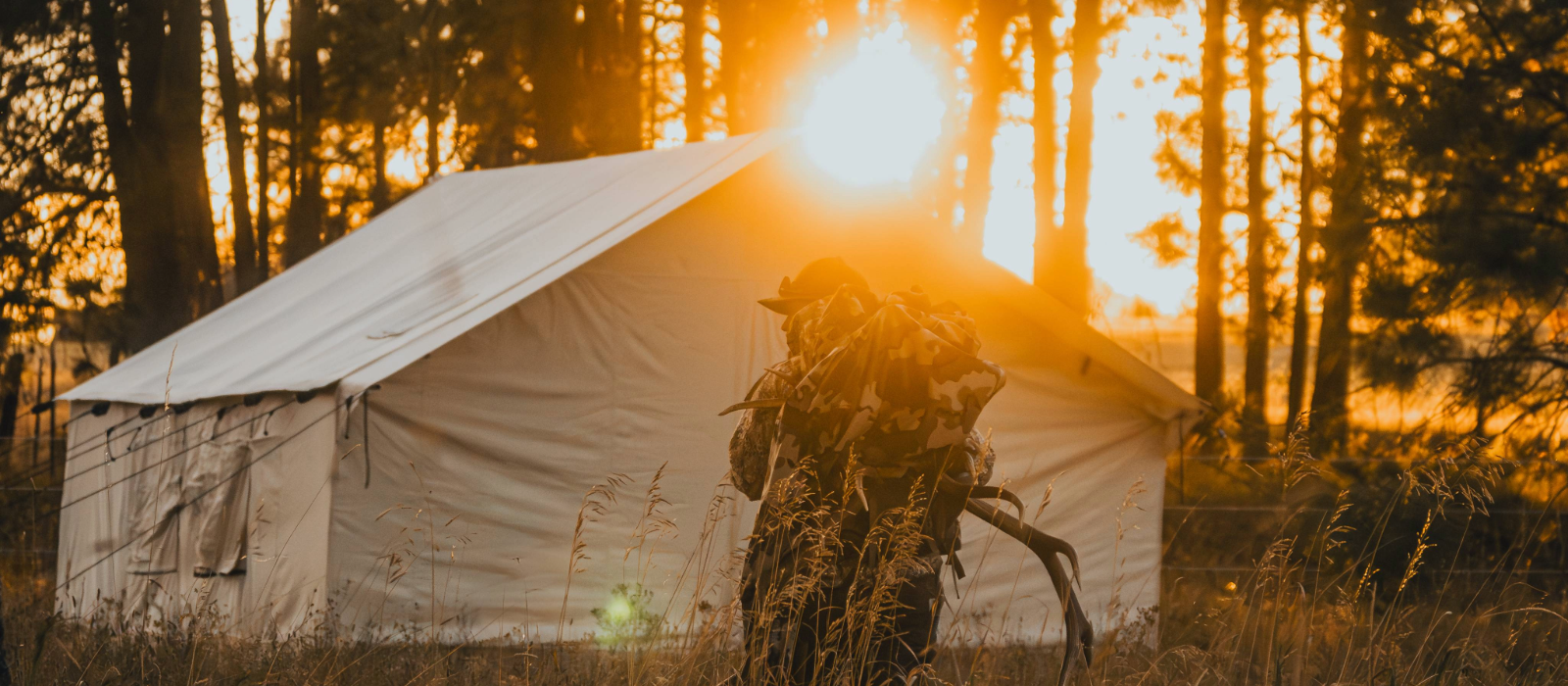
Canvas wall tents have long been the gold standard for serious hunters building a home base in a wild country. These durable, spacious structures keep the inclement weather out and your people and gear in. They offer protection from the elements while providing ample room and comfort during longer hunting expeditions. When properly equipped, a canvas wall tent transforms from a simple shelter into a complete command center for your hunting operation.
Part 1: The Ultimate Hunting Base Camp
Central Command: The Canvas Wall Tent
A quality canvas wall tent serves as the cornerstone of every happy hunting ground. They come in numerous sizes and materials, so you’ll want to consider the number of people in your camp and their needs. For most hunting camps, this is going to be the central hub for cooking, eating meals, adventure planning, and downtime. An easy way to judge this is to measure (pace out) a comfortable area for your stove, table, and gear and then go one size up. Similar to layers in the winter, it’s always better to have too much than not enough. For a summer hunting tent, also consider the following:
- High-quality canvas that resists water while remaining breathable
- Multiple mesh-covered windows and doors for cool ventilation in the summer heat
- Reinforced corners and stress points for storm resistance
- Modular design to roll up the side walls for maximum airflow
- Tall enough for anyone to stand up (at least 6.5 feet high in the center)
For summer setups, aim the windows of your tent toward the mouth of a canyon, if possible, and the afternoon breeze will cool off the daytime heat. Try to keep the entrance facing away from the sun and consider an awning where folks can remove wet or muddy clothes before entering. Some other camping tent accessories to consider would be a Fly Sheet. Yes, I understand it’s summer, but Mother Nature lives by the law of no man, and rain, hail, sleet, and snow can appear in minutes. Best to be prepared.
Camp Layout and Organization
Great hunting camps typically have a multi-tent or multi-zone layout, depending on the season. Some summer hunting tips for a functional and comfortable base camp should include the following:
Main Canvas Wall Tent: This is, without a doubt, a great place for the kitchen and dining, but for summer hunting trips, when the kitchen swelters, this is best served as the sleeping quarters to keep your gear secured and dry.
Kitchen & Dining Area: For summer trips I like to cook in the open air to let the crew know that chow is on. Keep this area about 50-75 feet away from the sleeping quarters and ideally downwind. A simple canvas tarp tied into a ridgeline lean-to is great for shade during the hot hours. Cooking is my huckleberry and from experience, I like to make an L-shaped kitchen where the short side of the L is for prep/cooking, and the long side is for service, buffet style. The ravenous crew feeds and then heads to the dish pit a few paces off.
Equipment Management Zone: For multiple day trips, guns will need cleaning and there’s nothing that will ruin your day quicker than dropping a bolt or a spring in the dirt. Dedicate a covered area under a canvas or plastic tarp with folding tables and chairs for cleaning and organization. I also like to have a canvas tarp floor in this area for the sole purpose of finding small, intricate parts that will inevitably fall on the ground.
Field Dressing Station: Really consider where you place this critical zone. Make sure you’re plenty far from base camp, downwind, and with good accessibility for bringing in harvested game. I recommend being at least 100 yards away from sleeping areas to minimize scent issues and potentially attracting bears, wolves, coyotes, raccoons, and all their furry friends.
Proper spacing between designated areas will help ensure that everyone has enough space to relax, take care of their daily duties, and relieve stress about minimizing any cross-contamination. Keep the good smells on one side of the camp and the processed meat on the other. Always a good rule of thumb.
Part 2: Think About What You’re Not Thinking About
The Summer Smells Will Make or Break You
In the summer heat, bacteria, mold, fungus, and, eventually, maggots grow (I hate to say it, but it’s true). Flies loom over trash cans and Yellow Jackets creep into your soda cans, but hey, we’re out there, we asked for it. Waste management is absolutely no joke. Bring heavy-duty trash bags and consider portable, sealable containers for holding all your waste until you can get back to civilization. With larger groups, I highly recommend a dedicated waste pit or latrine. Dig at least six feet deep, bring a camping toilet seat, and build a proper potty.
Let Your Light Shine
One of the best summer hunting tips I can suggest is: to get it before it’s hot. This means there are going to be amazing long days beginning before sunrise and ending under the pale moon. It’s one of the reasons we’re out there, but even in the wild, we need light. While everyone should have their own headlamp, there’s a lot to consider when providing light and electricity for a base camp of 10…15…20 people. For larger groups consider the following:
- Multiple propane or gas lamps. Larger lamps that connect to a 20-gallon tank provide ample light during the darkest mornings.
- Solar-rechargeable LED lanterns: These don’t offer the longest or brightest light in the universe, but they’re great in little nooks around camp.
- 5,000-7,5000 watt Generator. For a 15-to-20-person camp with moderate power needs, I’d recommend a 6,500-watt generator with a higher starting wattage capacity, ideally around 8,000 watts. The Golden Rule: Always have more than you’ll need. If you have multiple large hunting tents, also consider two 3,500-watt generators.
People always want pictures from the hunt, and people have cameras on their phones, so make sure everyone can keep them charged and the memories will always be available.
Keep it Secret, Keep it Safe
For most outings into the wild, the crew comes home with less than they left with. This is not always the case on hunting trips. There can potentially be hundreds of pounds of processed game making the trip home. To do that, it’s got to be cold, so here are some game storage solutions for shorter and extended trips.
- Large, high-quality coolers with block ice rather than cubed
- Keep a regular ice-replacement schedule if anyone runs back to town
- Portable 12V refrigerators/freezers solar-powered or powered by the generator
- Dry ice for maintaining frozen temps in traditional coolers
- Insulated game bags hung high in shaded areas with good airflow
For trips lasting more than three days in the summer heat, seriously consider a portable fridge. Modern 12V coolers use minimal power and keep food at safe storage temperatures.
Part 3: The Clothing Makes the Person
The Fit: The Best Hunting Gear for Summer
I’ve spent many a summer in the blistering southern Arizona sun and I can tell you, it’s always easier to add more layers in the cold then to remove them to accommodate the heat. But as for the heat, not all is lost. Here are some summer hunting tips for clothing to keep you cool and covered.
Base Layers: Lightweight, moisture-wicking synthetics or merino wool pulls perspiration away from your skin, reducing smell and preventing chafing during active stalks up a wooded range.
Mid Layers: Opt for breathable, quick-drying fabrics with zip-up vents. I like lightweight tactical pants with multiple pockets and reinforced knees for durability. I keep a pair of pants that zips off below the knee when I’m sure there’ll be no bushwacking.
Outerwear: Even summer mornings can feel frigid before sunup. A packable, ultralight rain shell serves double-duty as wind protection and emergency weather gear for those microbursts.
Head Protection: There are only a few places where it’s fashionable to wear a safari or sun hat, and hunting is one of them. Get plenty of ear and neck coverage or at the very least get a mesh-backed cap with proper ventilation and a bit of sun protection.
Specialized Accessories: A few more items you don’t want to forget.
- Neck gaiters soaked in water are a quick fix
- Lightweight gloves are good for field dressing
- Moisture-wicking socks prevent blisters during long days
You Got What You Need, Now Go Where You Want
It’s true, that summer is generally reserved for dropping a line, casting a fly, or trekking up some chossy peak. While that is true for some, others (speaking) still want to get out for the hunt. We’re lucky to live in an incredible country that has the most beautiful landscapes in the world. Regardless of where you are, you’re only a short drive from different climates, plants, and animals. It’s a thing of beauty. You’ve already got a guide to the best hunting gear for summer, now go find your destination. Save me some jerky, and I’ll see you on the trail.


No Comment! Be the first one.