
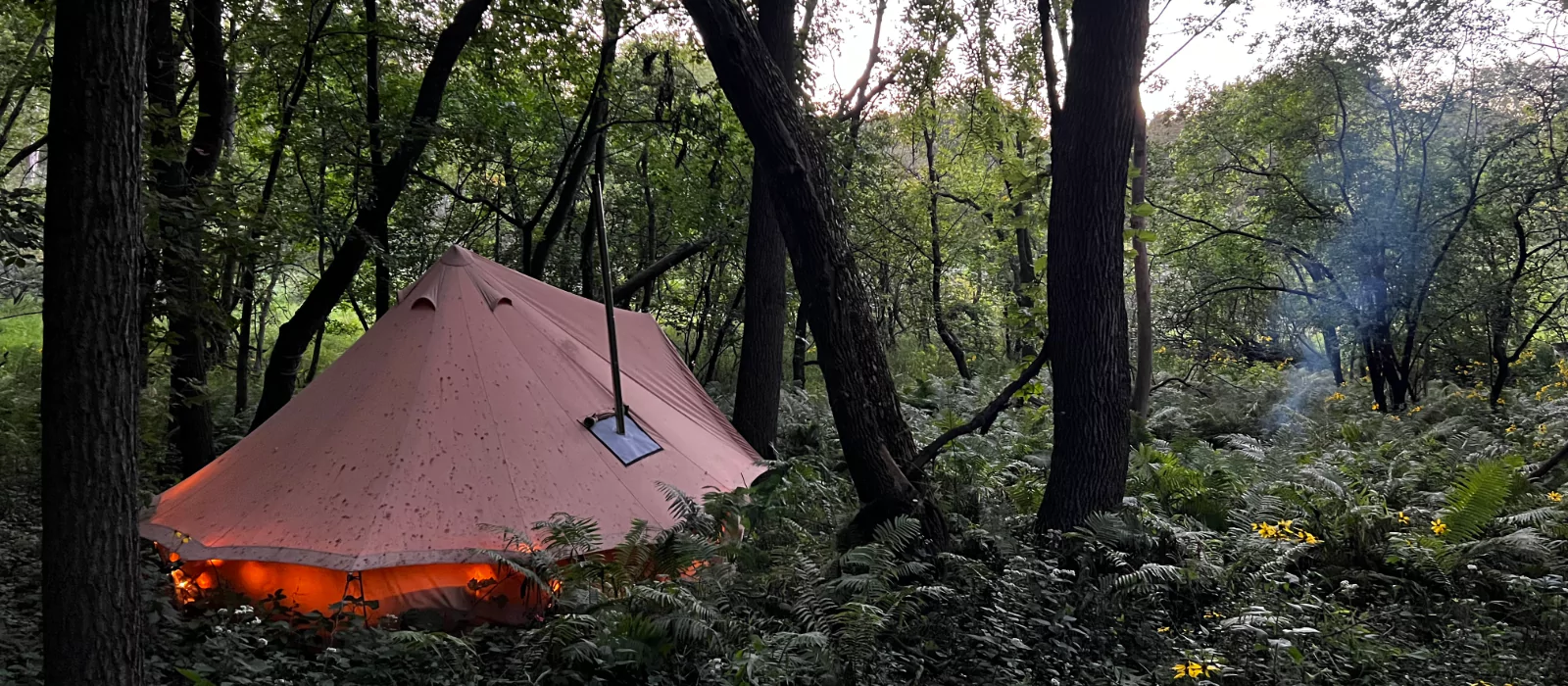
Any camping experience, whether it be glamping with a full RV setup or hammocking between a few sturdy trees with not much more than a mosquito netting for cover, is a great way to interact with nature, enjoy your favorite outdoor activities, and take time to appreciate the beauty around you. If you’re looking for a camping adventure a little further off the beaten path, but you’re not quite ready for a mountainside backpacking excursion, try dispersed camping.
Table Of Contents
What is Dispersed Camping?
Dispersed camping, also known as “wild camping,” is a type of camping where you set up camp in areas that are not pre-established campgrounds or designated campsites. You may have done this without realizing it, especially if you’ve camped in the backcountry or ventured beyond a structured campground to find the perfect overnight spot.
What it’s Not: Designated Camping
Designated campsites include established campgrounds with clearly outlined sites, various visitor amenities, and a nearby visitor center or ranger station for park maintenance. You’ll often need an advance reservation to secure a spot, or you may end up with a less-than-ideal walk-in site for the night. Many of these campgrounds are easily accessible by car, with some offering RV hookups.
What Makes It “Dispersed”?
While designated campgrounds vary in size and amenities, they are always marked in some way as an intentional area for camping. Dispersed camping is a blanket term used for camping anywhere outside of these areas. It’s a more rustic, self-sufficient adventure, with no access to campsite restrooms, electricity hookups, or running water—but you’ll experience a freedom of exploration that you won’t find within the campground map.
When dispersed camping, it’s important to know the rules and regulations specific to your area before simply choosing a spot and settling in. To follow Leave No Trace principles, try to find a site where it’s clear someone has camped before. Look for flattened ground or a small clearing where plant life won’t be disturbed or destroyed by your tent and gear. Many dispersed campsites are listed on U.S. Forest Service or Bureau of Land Management maps, so you don’t have to worry about wandering too far to find an ideal campsite.
Another benefit of dispersed camping is that you won’t have to pay a fee to book a spot in a campground—the tradeoff being, of course, that the best spots are first-come, first served. To disperse camp in a national park, state forest, or designated wilderness area, you may need to apply for or purchase a permit before hitting the trail. Always research the specific guidelines of the area where you plan to explore before packing your bags.
Pros
Dispersed camping is one of the best ways to find peace and solitude in the outdoors. You have control over where you choose to camp, allowing you to set up in a location that best suits your daytime activities while avoiding the hassle of campground reservations and booking fees.
You’ll also have flexibility in how long you stay. Generally, you can camp in a dispersed site for up to 14 days within 28 days. Once your two weeks are up, if you want to extend your adventure, you’ll need to move at least five miles from your original campsite for the 14-day limit to reset. Be mindful of your stay duration to help the ecosystem recover and ensure other campers can enjoy the area.
Cons
Being away from the comforts of a campground does have its downsides. You won’t have access to restrooms, electricity, or potable water, and depending on your chosen location, you may not have cell service either.
Plan for the worst so you can experience the best by bringing all the necessary equipment for total self-sufficiency: a reliable water purification filter, at least five gallons of potable water, bear-proof food storage canisters, a portable toilet or sufficient waste-containment bags for trash and human waste, and a satellite communication device that works without cell service, such as the Garmin inReach.
Taking these logistical considerations into account may require extra time and research before your trip, but the effort will be worth it when you’re fully immersed in nature.
What to Bring on a Dispersed Camping Trip
Shelter
No matter where you choose to set up camp, you’ll need a shelter suitable for your location and weather conditions. For a shorter stay in temperate weather, a two- or three-season tent should suffice. Be sure to bring a heavy-duty tarp to place underneath your tent and a quality rainfly in case of overnight rain.
For a more rugged experience, you could opt for pitching a tarp shelter. If you’re camping in a dispersed area for a longer period or during the off-season—where you might encounter inclement weather or strong winds—investing in a good four-season tent will provide the best weather resistance and warmth.
Many dispersed campsites are located near Forest Service roads, allowing you to drive directly to your site. However, if you need to hike a considerable distance, consider the weight of your tent materials before making a purchase. Three-season tents are generally lighter than four-season options, while a hammock or tarp setup will be the lightest choice.
Clothing
Packing clothing follows much the same process for dispersed camping as for regular camping. Use the three-layer process to make sure that you have both adequate ventilation and proper insulation for the weather. If you’re camping in the summer or in a location where you don’t expect much rain, snow, or low temperatures, still bring along a few layers in case. It’s much easier to reach into your pack for an extra layer than to come up with a jacket out of nowhere if you need some additional warmth.
Cooking Equipment
Depending on the dispersed campsite you choose, you may need more cooking equipment than you would typically bring when staying at a campground. Many sites won’t have designated fire pits, and campers are discouraged from starting a fire at a new site since it can disturb or damage vegetation. If you find a campsite with a rock ring for a fire pit, you’re in luck. Otherwise, consider bringing a portable fire pit—it is designed to be collapsible for easy transport and helps contain flames while still providing the full campfire experience.
The rest of your cooking equipment can follow the same guidelines as packing for a designated camping area. Be sure to bring plenty of trash bags to pack out any waste and invest in strong bear canisters to protect your food from animals.
Navigation
Even if you’re not planning to go far off the main road, always have backup navigational tools ready. Download the Google Maps area or the U.S. Forest Service map of your location so you can access it offline, and print out a hard copy as well. Bring a portable charger—if you can find a solar-powered one for a summer trip, even better. Also, when you’re looking around for your campsite, take note of any turns or the length of the road you’ve traveled off the main path. Write it down on both your digital and physical map for easy reference later. This way, you can explore with confidence, knowing that you’ll never be lost when it’s time to head home.
The Basic Rules
- Camping in a dispersed area is allowed for up to fourteen days (depending on your location within the United States, this number may increase or decrease slightly).
- All campsites must be at least 100 feet away from any water source to avoid contamination.
- Double-check the regulations of your area before leaving to ensure you have any necessary permits and are up to date on fire regulations.
- Always follow Leave No Trace guidelines. Pack out everything you’ve packed in– including all trash, waste, and camp residue.
- Bring proper toiletries for disposing of human waste. Feces must either be buried in a hole at least six inches deep and at least 100 feet away from any water source, or contained and packed out. Toilet paper must be disposed of in a separate waste container and packed out with the rest of your camp at the end of your stay.
- Make sure your gear allows you to be self-sufficient and self-contained. There will likely be no amenities accessible at your camp.
- Treat your water before drinking from any water source. This can be done by heating it to a boil or through water purification tablets or filters.
Although the details of dispersed camping may seem overwhelming, it is an accessible adventure even for novice campers. Doing your research is a key step toward success. Once you feel confident in your gear and have a solid grasp of the basic camping skills needed for self-sufficiency in the outdoors, you’ll be ready for a spontaneous and memorable adventure in nature.


No Comment! Be the first one.