

If you’re searching for a unique camping experience that prioritizes your comfort without lacking functionality, staying in a yurt tent is the way to go. Not only does their distinct shape make it a memorable place to enjoy the outdoors, but it also serves many advantageous purposes like providing abundant space. But what exactly is a yurt tent, and is it the same as a traditional yurt shelter?
Table Of Contents
Read on for a complete guide to all things yurt tents! Dive into their rich history and learn common uses for this iconic tent, understand the various pros and cons, and discover the accessories that take this style of shelter to the next level. Plus, get expert tips on maintaining a yurt tent to ensure you have a well-cared-for outdoor shelter for years to come. Without further ado, let’s get into it.
What Is a Yurt Tent?
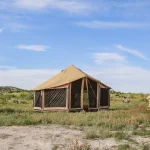
A popular type of luxury tent, a yurt tent is a canvas camping shelter that seamlessly combines function and style. You’ll often hear yurt tents referred to as bell tents or, more generally, glamping tents.
The classic yurt tent design features a circular base with a single central support pole. Draped over the center support is durable cotton canvas, creating a high-sloping roof and a conical shape. Modern-day yurt tents have short side walls that erect from the circular base to meet the conical ceiling. Guy lines are utilized around the perimeter of the tent, providing essential structural integrity and reinforcing the shelter’s shape. The tent’s entrance features A-frame support poles, creating a large entry and exit point for campers and their gear.
While some yurt tents are designed with synthetic fabrics, it’s typical for yurt tents to use canvas. Canvas is a tight, plain-woven fabric made from natural fibers like cotton and linen. Compared to the synthetic alternatives, modern cotton canvas is a thick, heavy-duty material that performs well in unpredictable outdoor elements. Some yurt tents incorporate the use of mesh, usually on windows and doors to provide ventilation and breathability. Canvas tents that make use of this feature are better suited for all-season use, giving winter campers necessary ventilation while using tent stoves and summer campers ample breathability to reduce humidity and condensation.
Because these are a high-quality style of shelter, you can expect yurt tents to utilize durable metal poles for structure. The exact metal varies from maker to maker, but galvanized steel and heavy-duty aluminum are common choices.
Exact features and design elements range from tent to tent, too, but you’ll often find luxury additions like sewn-in groundsheets, pre-installed stove jacks, shock-absorbing grounding systems, and electrical cable outlets.
Is a Yurt Tent the Same as a Traditional Yurt?
Yurt tents get their name from the traditional yurt structure, but they’re not the same. It’s likely their shared name comes from the yurt tent’s circular base and durable fabrication, both of which resemble key characteristics of traditional yurts. But how are they different?
Yurt tents have a rich history, dating back at least 3,000 years ago when they were popular shelters among societies of Central Asia. Being semi-permanent, portable shelters, they were ideal for nomadic communities traversing the steppes.
Like yurt tents, traditional yurts are circular in shape. While yurt tents have cone-shaped roofs, yurts typically take on a dome-shaped ceiling, though they range from shelter to shelter. Another major difference is the structural framing of each shelter. As we’ve covered thus far, yurt tents make use of metal tent poles to provide framing and structure. Traditional yurts, on the other hand, utilize lattice wood framing, typically with no center support pole unlike the ones seen in yurt tents. In the early history of yurts, animal skins, leathers, and hides were used to cover the wood framing. Today, you’re more likely to find similar cotton canvas fabrications like those used for yurt tents.
The solid wood structure of traditional yurts makes them much heavier, and therefore less portable than modern yurt tents. It’s helpful to imagine yurts as a cross between hard-sided cabins and soft-sided glamping tents, without really being either. There are plenty of unique benefits, advantages, and even drawbacks to this style of outdoor shelter, but today, we’ll leave it at that!
Now that the major differences are clear, let’s dive deeper into yurt tents.
Origins of the Yurt Tent
While they share a name, the yurt tent actually originates from other classic tents from early history, not the yurt itself. The yurt tent’s closest relative is the Tipi style of tent, which has been used for thousands of years, most notably, by Native Americans. Fast forward to Texas in the mid-1800s, when US Army soldier Henry Hopkins Sibley introduced the Sibley tent. Heavily inspired by the Tipi tent, drawing on the overall shape and function, the Sibley tent swapped the numerous structural support poles for one central pole. This tent is widely considered the first iteration of the bell tent, which went on to become the main army shelter during the American Civil War, as well as both World Wars.
Since then, yurt tents evolved to include short side walls and guy lines instead of the ground pegs seen with Sibley tents. While they have origins in military applications, yurt tents are now most often used for recreational and commercial purposes.
Common Uses for Modern Yurt Tents
Today, you’ll find yurt tents to be a versatile pick for a variety of outdoor applications. This style of tent is tried and true for glamping thanks to its effortless blend of style, space, and function. Their durability and 4-season qualities make them suitable for long-term living, but their ease of use makes them just as ideal for quick family camping trips. Because of their undeniable aesthetic appeal and size, you’ll also find them used for events like weddings and celebrations like backyard parties. Other common uses include mobile workshops, retreat spaces, and festival shelters. The options here are truly endless.
Advantages of Camping With a Yurt Tent
We’ve touched on a few advantages of the yurt tent, but let’s dive a little deeper into all the reasons we love this outdoor abode.
Durability
The cotton canvas used in the construction of the yurt tent is as durable as it gets when it comes to camping tents. The tightly woven plain-weave construction of canvas fabrics gives the material unmatched strength. This is vital for use outdoors, where tents will be subject to harsh elements like winds, precipitation, and more. The heavy-duty metals used for the poles of yurt tents are more durable than the ultra-lightweight poles found with other modern tents. The best-of-the-best yurt tents feature design details that add further strength, like double-stitched seams and shock-absorbing grounding systems.
Weather Resistance
Their durability alone makes them suitable for harsh weather conditions, but their superior performance doesn’t end there. Most canvas tents use fabric treatments like water-repellent, mold, mildew, and UV-resistant finishes that add to their strength against the elements. Canvas is also known for its 4-season application, boasting both breathability and insulation. So no matter the weather, you’ll be both safe and comfortable in a canvas yurt tent. For winter and cold-weather campers, their compatibility with tent stoves is another huge bonus.
Space and Capacity
Like many other styles of canvas shelters, yurt tents are incredibly spacious. The conical shape contributes to high ceilings, and in turn, more headroom than other tents with dome-shaped roofs. The circular base of the yurt tent also creates plenty of floor space. Whether you’re decking your yurt tent out with all of the latest luxury glamping furniture or camping with a large group, you won’t be pressed for space in this style of tent. Because of their circular base, you’ll find most retailers list the dimensions of a yurt tent by diameter. Typically, they come as small as 8 feet, sleeping up to 2 campers, and as large as 23 feet, accommodating up to 12 people.
Aesthetic Appeal
No tent is quite as recognizable and stylish as the yurt tent. Its iconic conical shape is undeniably fashionable, elevating any outdoor shelter setup. While aesthetics may be the least important factor when choosing a tent, it’s still a characteristic worth considering. Whether you’re building a luxury glampsite or hosting a themed backyard party, you’ll enjoy the timeless look yurt tents offer.
Versatility
Between their durability, weather resistance, spaciousness, and aesthetics, the yurt tent may be one of the most versatile shelters on the market. We outlined above their most common applications, which include glamping, family camping, events, and winter camping. But this barely scratches the surface of when and where a yurt tent can be used. Whatever your outdoor explorer mind can imagine, it’s more than likely the yurt tent is practical.
Potential Drawbacks of the Yurt Tent
While the advantages of yurt tents are plentiful, it’s always important to consider the potential drawbacks of a piece of equipment before making a purchase. Here are 3 to keep in mind when it comes to yurt tents:
Weight and Portability
The durability of canvas and heavy-duty tent poles are huge benefits to the yurt tent, but they inevitably come with the disadvantage of weight. While yurt tents are nowhere near the mass of a traditional yurt, they are still heavy compared to other tents on the market – particularly lightweight synthetic alternatives. This factor makes it vital to assess what your usage of the yurt tent looks like. If you’re setting it up in your backyard or pitching it at a drive-up campsite, the weight of this tent should be no problem. If, on the other hand, you’re hiking into a backcountry campsite, the yurt tent may not be the shelter for you.
Setup and Ease of Use
The heavier weight of the yurt tent is the main reason they’re not generally considered an easy tent to set up. However, the ease of use of this shelter ultimately comes down to the size you pick. The largest yurt tents available will be the heaviest and most difficult to set up, often requiring more than 1 person to pitch and sometimes set aside. The smaller yurt tents, however, are still relatively easy shelters to work with. For example, White Duck Outdoors’ 10-foot Regatta Bell Tent can easily be set up by just one person in less than 15 minutes.
Affordability
At the end of the day, yurt tents are luxury shelters with price tags to match. Between their high-quality construction, durable materials, and competitive features, you can expect to pay more for a yurt tent, and most canvas tents for that matter, than the minimal, synthetic tent alternatives. If budget is top of mind when shopping for your next outdoor shelter, you may want to skip the yurt tent.
On the flip side, if saving money in the long run is more important to you than short-term savings, you may want to consider the longevity the yurt tent offers. Being a durable, weather-resistant shelter isn’t just an advantage in the immediate moments of use. These qualities also mean yurt tents will stand the test of time, resulting in less money leaving your pocket at the end of the day.
Enhancing Your Yurt Tent With Accessories
Back to advantages, another great benefit of opting for a yurt tent is the endless yurt accessories available to enhance your shelter. There are a few basics vital to any successful tent setup to start with. Then, consider a range of additional luxury accessories that not only increase campsite effectiveness but elevate the comfort and coziness of your outdoor space. Let’s start with the basics.
The Basics
Every outdoor camping tent needs a ground tarp and rainfly sheet to protect it from the natural elements, and that goes for yurt tents, too. Now, there are some yurt tents that come complete with a sewn-in groundsheet, like White Duck’s Regatta tent, but it is also common for shoppers to have to buy these tarps separately from the tent itself. Both ground tarps and rainfly sheets are essential to keeping you and your yurt tent dry, shielded from other weather elements, and protected from general outdoor wear and tear. Your yurt tent should come with guy lines, which as we’ve discussed, give the shelter necessary structural reinforcement. Additionally, you’ll need to make sure you have tent stakes and a mallet to drive them into the ground.
Other basic accessories include your interior must-haves, like lighting, sleeping gear, and temperature control devices including portable fans and heaters. These few basics are instrumental to your comfort outdoors, especially if you’re spending multiple days and nights in your shelter. Use the short checklist below when it comes time to pack:
- A ground tarp
- A rainfly sheet
- Guy lines
- Tent stakes
- A rubber mallet
- Interior lighting like lanterns, battery-powered lamps, string lights, and more
- Sleeping gear
- Portable fans or portable heaters, depending on the season
Additional Luxuries
If you want to take your yurt tent setup to the next level, enhance its function and comfort with a few luxury items. An awning extension or canopy is a great addition to the outside of a yurt tent, creating extra covered space to hang out under around your campsite. Whether you’re taking cover from the sun or showers, canopies give you a comfortable area to utilize without fully retreating into the tent.
For winter campers, tent stoves offer unmatched warmth, a convenient place to cook meals, and a touch of ambiance that makes your yurt tent feel like the cozy abode it is. If you bring along a tent stove, make sure your tent is properly outfitted with a stove jack for your safety.
Inner tents are a piece of gear added by campers looking to divide up the interior of their yurt tent, whether for privacy or organizational purposes. Most people using yurt tents will want to add furniture, including bed frames and mattresses, dining tables, coffee tables, side tables, and chairs. The good news is, there’s plenty of room in a yurt tent for all of the furniture and decor your heart desires. Fill your yurt tent with the glamping basics or follow a design theme to create a stylish interior.
Here’s a rundown of these luxury yurt tent additions:
- An awning extension or canopy
- A tent stove with a stove jack and heat mat
- An inner tent add-on
- Furnishings like bed frames and mattresses, tables, chairs, and more
- Interior decor
Advice for Maintaining a Yurt Tent
Between their high quality and price point, yurt tents are true investments for the modern outdoor lover. But just like any other investment, it’s important to take care of your new shelter. Maintaining a yurt tent is similar to the maintenance of any other camping tent, especially one made from cotton canvas. Follow these 3 tips to ensure your yurt tent lasts a lifetime:
Clean it After Every Use
The first step in taking care of a yurt tent is to clean it thoroughly after every use. While canvas tents are built to thrive in outdoor environments, dirt, debris, and other natural elements can cause real wear and tear over time. Whether it’s leftover coarse sand causing abrasion or moisture from mud seeping into the fabric causing mildew, you don’t want to leave any traces of natural debris on your tent when you go to pack it away.
Once you’re done using a yurt tent, sweep the interior, shake it out, and spot clean wherever necessary. When spot cleaning, avoid any harsh cleaning agents or chemicals that may do more harm than good. After cleaning is done, leave your tent out to fully dry before packing it away.
Make Repairs Immediately
While cleaning your tent, look for any signs of damage. Whether it’s in the middle of a camping trip or right before you pack it up for the season, as soon as you spot damage – address it. Leaving rips, tears, and other blemishes on your tent makes them vulnerable to worse damage. Most repairs are easy fixes at home, like patching a tear in your tent screen and sealing seams. Or, take your tent to an expert if you’d prefer a professional repair. Either way, address damage quickly to avoid more serious issues down the road.
Pack and Store it Correctly
The most important thing to do before packing up your yurt tent and storing it away is to ensure it’s 100% dry. Moisture is the #1 enemy of camping tents in storage since it increases the chances of mold, mildew, and eventually, rot. If you used your tent during a period of rain or cleaned it after use, leave it outside to fully dry out before packing it up.
Additionally, avoid folding your tent in the same exact pattern every time. This will eventually wear down the canvas fabric along the crease lines, creating weak points in the material. Switch up the order you fold your tent or skip folding altogether and use the stuffing method instead. When it comes time to put it away, pack it in an air-tight storage container, in a cool, dry, and dark place.
Wrapping It Up
Having evolved from the timeless Tipi style of tent, yurt tents–not to be confused with traditional yurts–have a long history of providing their users with functional yet comfortable spaces in the outdoors. As they’ve evolved, yurt tents have stayed a competitive tent choice among outdoorsmen and event hosts alike. Whether you’re creating a luxurious wilderness glamping setup or throwing a celebration in your backyard, this style of tent offers abundant benefits that make it a reliable shelter for a variety of outdoor applications. Understanding these advantages, as well as their potential drawbacks, will ensure you choose the right tent for your next adventure.



No Comment! Be the first one.