

According to a comprehensive research report done by Kampgrounds of America, the United States has seen a 23% increase in households that identify as campers over the last decade. On top of that, active camping households, or those who have reported having camped within the last year, increased by nearly 21.6 million. Its growth is no surprise given the countless benefits associated with spending time outdoors, including nature’s link to improvements in mental and physical health.
As recreational camping continues to skyrocket in popularity, more and more people are on the hunt for the perfect camping tent. While there are endless styles of camping tents available on the market, there are two main camps they fall into, separated by the main fabric they’re made of: canvas and synthetic.
Today we’ll focus on all things canvas tents! After defining what they are and briefly discussing their robust history, we’ll break down the 3 main styles of canvas tents. Discover what they are, the history of each distinct style, their pros and cons, the average size ranges, their common use cases, and the accessories available to enhance each one. From there, learn how to pick the right canvas tent for your unique camping needs. Without further ado, let’s get into it!
What Is a Canvas Tent?
When we talk about canvas tents, we’re simply referring to the fabric of a camping tent. As mentioned above, there are two main roads you can go down when choosing a camping tent: canvas and synthetic. Synthetic tents, on the other hand, are those tents made from synthetic fabrics such as nylon and polyester.
Canvas is a type of fabric characterized by its plain-woven and tight-weave construction, typically made from natural fibers like cotton and linen. When comparing canvas to the synthetic alternatives, it is generally much thicker, sturdier, and rougher in texture. With this in mind, a canvas tent is any camping shelter made from this canvas material which is stretched over lightweight metal poles and secured with guy lines and tent stakes. Between the superior performance of new-age canvas materials and their compatibility with tent stoves, many canvas tents are considered to be suitable 4 season, or all-season, tents.
Canvas tents come in a range of styles, each with its own shape, feature, and benefits. The most common canvas tent styles are the wall tent, bell tent, and cabin tent. However, other tents can be made from canvas fabrics, including tipis, dome tents, and A-frame scout tents. Today we’ll focus on the former, as they’re the most popular choices for modern campers.
Wall Tents
Wall tents are a type of canvas shelter characterized by their 4 straight walls and traditional a-frame roofs. While the name “wall tent” is evidently named after their vertical walls, you’ll also commonly hear them referred to as outfitter tents, hunting tents, and safari tents.

History of the Wall Tent
Thanks to depictions of wall tents in 16th-century paintings and 17th-century European models, we know wall tents have been used by human civilization for centuries. By the American Civil War, wall tents were a popular military encampment for army soldiers. Their military application continued through both World Wars.
Advantages
The main draw to wall tents is their unbeatable spaciousness and headroom created by their straight-wall design. This simple design feature serves to open up the interior of the tent, as opposed to the walls of other popular tent styles, which tend to cave inwards. This spaciousness makes them incredibly versatile shelters, as you’ll see in the coming paragraphs, performing well in a variety of use cases. Not only will you have the capacity for a large number of campers you’ll still have room for all of the gear and supplies you need, no matter your adventure.
Aside from this key advantage, check out the other benefits of choosing a wall-style canvas tent:
- Durability
- Weather resistance
- Sustainability
- Breathability
- Insulation abilities
- Compatibility with wood-burning tent stoves
Drawbacks
Large capacities and heavy-duty fabrics are positives for those looking for durability and space, however, they don’t come without a cost. Because of these two factors, you can expect wall tents to be heavier than other tents on the market, and in turn, more difficult to set up and transport to and from camp. These tents usually need more than one set of hands to pitch, and are more practical for longer stays outdoors. Between their size and high quality alone, you can also expect to spend more on this style of tent.
Size Ranges
As we’ve covered thus far, wall tents are large tents. But how large exactly? While exact sizes range from maker to maker, the standard size for a wall tent is 14 feet by 16 feet, however many retailers offer a wide assortment of sizes. For example, White Duck Outdoors’ wall tents range from 8 feet by 10 feet all the way to 16 feet by 24 feet, with 4 sizes in between. These dimensions hold 2 campers on the small end and up to 16 on the large end. It’s safe to say that no matter how you plan to use your wall tent, there is guaranteed to be a suitable size for your needs.
Accessories
Basic wall tent accessories you’ll find with every wall tent are tent footprints (also known as groundsheets) and rain fly sheets, both of which serve to protect you and your tent. Other accessories are a bit more opulent, taking your wall tent to the next level in terms of comfort and functionality. These include stove jacks and tent stoves, canvas porch extensions, and recreation-specific accessories like hunting equipment racks.
Common Uses
While this canvas tent style has a long history with militaries, today wall tents take on primarily recreational purposes. Thanks to their unmatched spaciousness and headroom, this style is popular among any camper looking for tons of room in their tent. For hunters and fishermen, this space is vital to safely store their expensive gear and equipment. Glampers utilize the space to create luxury outdoor abodes filled with comfortable furnishings and decor. Long-term campers use them to create living spaces that are functional for many months at a time. Wall tents are also commonly used for various commercial uses, from outdoor wedding applications and backyard parties to workshops and spa retreats.
Bell Tents
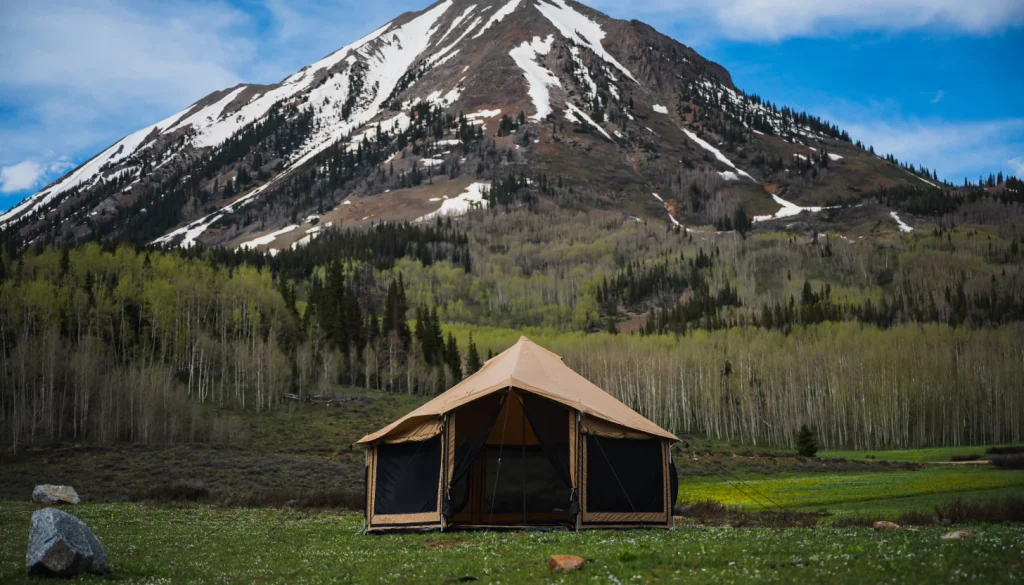
Possibly the most recognizable canvas tent-style on this list, the bell tent, sometimes called the yurt tent, is an iconic camping shelter with a notable cone-shaped design. This conical shape is formed by a singular support pole that lives in the center of the tent. The base of the bell tent is a large circle, with short walls that meet the large, sloping roof of the canvas shelter. This distinct design relies heavily on the use of guylines to create tension and provide support for the structure.
History of the Bell Tent
The modern-day bell tent has its roots in the Native American tipi style of tent, a cone-shaped shelter fundamental to their nomadic lifestyles. Admiring the undeniable benefits of this shelter design, US Army Colonel Henry Sibley designed a patented version of the tent in the 1850s while serving in the military. But he wasn’t the first, because European militaries had been using variations of this tent style at least since the 9th century, but most notably by the British Army during the Crimean War. Similar to the wall tent, bell tents became another popular encampment shelter during the World Wars. The style of the bell tent we know today is an evolution of these historic designs, now featuring the side walls and guy lines described above.
Advantages
Of the 3 canvas tent styles discussed today, the bell tent is easily the most user-friendly of the bunch. The simple design of a central support pole makes the setup of a bell tent incredibly straightforward, even for beginners. Unlike wall tents, it’s more realistic for just one person to be able to pitch this style of tent, and it can be done in less than 20 minutes.
If aesthetics matter to you, bell tents are arguably the most stylish canvas tents available. While this is of little importance to the actual function of a tent, many glampers list this as a key consideration in their purchasing decision.
In addition to those benefits, bell tents offer many of the same advantages as wall tents thanks to their use of cotton canvas fabrication:
- Spaciousness
- Durability
- Weather resistance
- Sustainability
- Breathability
- Insulation abilities
- Compatibility with wood-burning tent stoves
Drawbacks
Similar to the wall tent, and most canvas tents for that matter, bell tents often come with a hefty price tag. Again, this is typically due to the size, high-quality materials, and overall superior performance capabilities.
Additionally, the distinct round shape of the bottom of a bell tent can make finding a suitable groundsheet a bit more challenging than regular rectangular tents. When buying a bell tent, look for brands that offer groundsheets that match the shape and size of their tents, like White Duck’s ground tarp for their Regatta bell tent.
Size Ranges
When it comes to the size of bell tents, we’ll be measuring in diameter due to their circular shape. The most common bell tent diameters are 10 feet, 13 feet, and 16 feet, but they can range anywhere from 8 feet to 23 feet in diameter. Bell tents with an 8-foot diameter are generally considered mini and can accommodate up to 2 campers. A 23-foot bell tent, on the other hand, can sleep up to 12 people. It’s important to note that capacity can change depending on the gear and equipment you decide to house in your tent. For example, if you plan to furnish a 23-foot bell tent with luxurious glamping gear, the capacity can decrease from 12 campers to only 6.
Accessories
Like any other tent, bell tents benefit from the use of groundsheet and rainfly sheets to protect them from both the natural ground and elements like precipitation. To elevate your bell tent even further, consider investing in a bell tent awning canopy to add more covered space to your campsite. Inner tents are another great accessory, acting as a divider perfect for creating privacy on group or family trips.
Common Uses
Bell tents are one of the most popular choices when it comes to glamping thanks to their perfect balance of function and style. Their aesthetic appeal also comes out on top when it comes to hosting events, like backyard slumber parties for kids and teens. When it comes to their ease of use, bell tents make great shelters for short camping trips where setting up and taking down quickly is ideal. If you opt for a larger model, the durability and weather resistance of bell tents make them competitive contenders for long-term outdoor living, too.
Cabin Tents
Similar to the wall tent, the cabin tent features vertical walls, and is another classic style of canvas shelter. This style is designed to resemble cabins, which accounts for their rectangular, boxy shape and straight sides. Unlike the wall tent, however, cabin tents have flat, or nearly-flat roofs. They tend to be a bit smaller, though still very spacious compared to other synthetic alternatives.

The cabin tent, more so than other canvas tents, has been the style most often manufactured and duplicated in synthetic materials like nylon and polyester. For that reason alone, you’ll find the most variety between different cabin tents when shopping compared to other canvas tent designs.
Cabin tents are also the style most likely to utilize mesh screens and multiple windows and doors. Some even come with built-in canopies, like the Prota Canvas Tent from White Duck.
History of the Cabin Tent
The origins of the specific cabin shape of the tent are not as clear as the other shelters discussed today. Because of this, we might assume the cabin shape is a modern offshoot innovation of the wall tent design. Considering their many similarities in shape and construction, it’s not a stretch to assume. If this is the case, we can then trace them back to the same origins as wall tents. But alas, the jury is still out – at least according to our research.
Advantages
While all cotton canvas tents offer superior breathability compared to their synthetic counterparts, you can expect the best breathability and ventilation from cabin tents thanks to their abundant use of mesh. Mesh is a type of fabric with a loose weave, which allows for unmatched airflow and ventilation.
And just like the two canvas tents that came before them (at least in this list!), you can expect more of the same benefits:
- Spaciousness
- Durability
- Weather resistance
- Sustainability
- Quick and easy setup
Drawbacks
Between the 3 most common canvas tent styles, cabin tents — while still very spacious–are the smallest. This means limited space for both large groups and lots of gear or recreational equipment. There are also some luxury accessories, like tent stoves, that don’t have a safe place in a style like the cabin tent. If that’s an essential piece of equipment in your camping setup, this style may not be for you.
Size Ranges
10 feet by 10 feet is the standard size for most canvas cabin tents, and roughly the middle of the road when it comes to the size range. On the smaller end, you can find cabin tents measuring 7 feet by 9 feet, which sleeps about 4 campers. If you’re searching for a larger cabin tent, you’ll find some as big as 10 feet by 14 feet, which has the capacity for 6 people.
Accessories
Cabin tent makers often get creative with built-in features, and these range from brand to brand. As always, don’t forget your tent footprint and rainfly sheet. In addition to these, consider investing in cabin tent storage solutions to keep the interior of your shelter organized and your gear as accessible and easy to find as possible.
Common Uses
Thanks to their abundant use of mesh screens and large windows and doors, cabin tents make ideal shelters for camping in warm weather, especially during the summer season. Choose a cabin tent when you’re traveling in small groups, vacationing with your small family, or solo camping.
How To Pick The Right Tent For Your Next Camping Trip
Now that we’ve laid out the basics of the 3 most common canvas tent styles, it’s time to consider which one is best for your next camping trip. Here are the 5 factors you should think about to make an informed choice:
Type of camping
First and foremost, decide what kind of camping trip you want to go on! Recreational trips like fishing and hunting ventures will require a large tent with lots of space for gear, making a wall tent the natural choice. If, on the other hand, you’re planning a solo summer camping adventure, the ease of use, smaller sizes, and unmatched ventilation found in a cabin tent may be a better option. While many canvas tent designs are known for their versatility when it comes to use cases, it’s important to consider which style fits the type of camping you want to embark on best.
Space and capacity
How many people are you camping with? This is the second most important consideration. After all, you don’t want to be fighting for space at night because you failed to consider how many people would actually fit comfortably in your tent. Canvas tents are almost always the most spacious options on the market, but we’ve now seen that some are still much larger than others. Don’t forget to take your gear into account, too, when deciding how much room you need.
Setup, portability, and skillset
The reality is that many canvas tent styles are a bit more complex than some of the minimalist designs of modern synthetic tents. Take some time to evaluate your own skillset and abilities, as well as those of your fellow campers, before plunging into a canvas tent purchase. While most modern canvas tents have been engineered to ensure easy setup, these are often heavy tents that are less portable than synthetic alternatives. Do research on the specific canvas tent you’re interested in to assess whether you’ll be able to handle pitching it yourself. If this is a concern for you, look specifically for brands that offer complementary tool kits with their tents to make setup as easy and convenient as possible.
Features and accessories
Some people enjoy minimalist camping, while others are all for the many luxury accessories available. If a tent stove is important to you, for example, make sure the canvas tent you pick is compatible with a wood-burning stove. The features and accessories you use to enhance your tent ultimately come down to personal preference, and will look different from camper to camper.
Budget
Whether we like it or not, the cost of an item can be a huge factor in our shopping decisions. Ultimately, canvas tents are long-term investments, and they often have price tags to match. If you’re on a tight budget, consider buying your gear second hand, or opting for a smaller size if possible.
Wrapping It Up
Americans are retreating to the outdoors and enjoying the many wonders of camping in record numbers over the last decade. As more people head outside, more of us will be looking for the perfect camping tent to join us on our adventures. While there are numerous ways to categorize camping tents, many consumers will be faced with the first choice: opting for canvas fabrics or synthetic fabrics. Both options unlock a range of styles, and when it comes to canvas tents there are many different designs to choose from. 3 of the most common canvas designs are the wall tent, bell tent, and cabin tent. Understanding what makes each of these unique, including their pros and cons, different size options, common use cases, and their range of accessories can help campers make an informed decision when purchasing their next camping tent. Whether you’re looking for the tall ceilings and spaciousness of a wall tent, the style, and function of a bell tent, or the airy comfort of a cabin tent, there’s sure to be a canvas tent out there to enhance your next outdoor adventure.



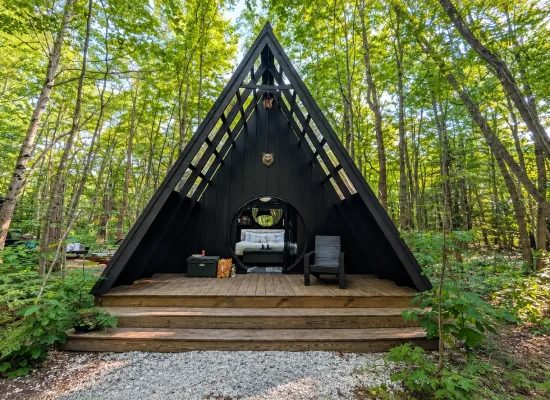
Don’t forget two more classic designs… the A-frame and the Baker tent!
The Baker was very popular in the mid-twentith century, a modification of the “Civil War” era Silbury tent. It is like a cabin tent, but one wall opens up in front, forming a huge fly. It’s a great design, sadly mostly ignored since the 1970s because they need to be canvas.
I was a scout in the 70s, seeing the last of canvas products— my first backpack, bought used from an Airman at Dover Air Force Base (Dover delaware) was tan canvas on aluminum pipe external frame. The good old days!!