
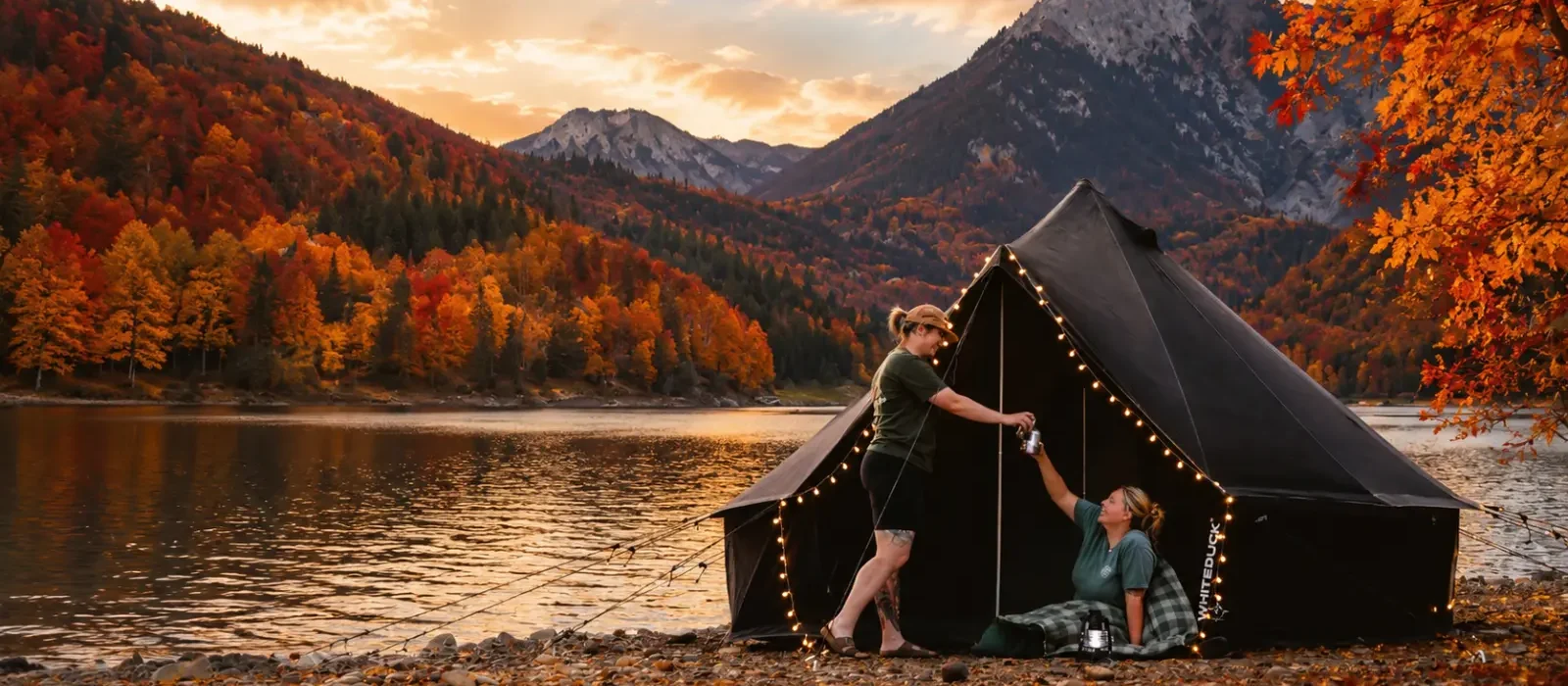
As the summer starts to cool and autumn rolls in, there’s only one thing on nature lovers’ minds: fall foliage! Nothing quite compares to the beauty of changing fall leaves, making it the best time for fall glamping.
Table Of Contents
- Why Fall Foliage Timing Isn’t the Same Everywhere
- An Approximate Timing Guide by Region
- The Early Window
- The Middle Window
- The Late Window
- How to Confirm Timing Before Your Fall Foliage Glamping 2026 Trip
- The Best Camping Gear for Fall Foliage Camping Trips
- Chasing Fall Foliage: FAQs
- The Bottom Line
The problem is, fall foliage peaks for only a few weeks every year–a short stint in time that’s never set in stone and changes based on where you are in the world. Too many people plan entire trips around trying to see fall colors at their peak, only to be disappointed that they were too early or too late in the season. Fall foliage camping timing can be a difficult thing to plan around without a general idea of peak predictions for the year.
Except this year, that won’t happen! There’s a tried-and-true logic to estimating peak color by region, and today, we’re breaking it all down. Read on to learn how to chase fall foliage successfully, why timing differs from place to place, and how to time it perfectly for your own autumn-inspired glamping trip. So without further ado, let’s dive right in!
Why Fall Foliage Timing Isn’t the Same Everywhere
As the days become shorter and the temperatures drop, deciduous trees are naturally signaled to slow energy production and, in turn, break down the chlorophyll pigment that makes them green. This causes the picturesque color changes and falling leaves we know and love.
So, when answering the age-old question “when does fall foliage peak,” there’s never one true answer. Peak fall foliage is entirely dependent on where you’re talking about. The northern United States typically experiences peak foliage first since it’s the first region of the country to get cool. On the flip side, southern states tend to peak last, due to the warmer weather and longer days lasting later into the year.
It’s also important to consider the elevation of your location, since high elevations will naturally experience cooler temperatures earlier in the year than low-elevation destinations. To make it simple, picture a wave of cool temperatures, rolling from North to South and high to low, bringing with it the beautiful fall foliage we’re all chasing.
Campers traveling north, or high up in the mountains, to catch fall colors should typically plan for a trip early in the fall season, while the campers traveling south, or to valleys and sea-level destinations, should arrange their travels for later in the season.
An Approximate Timing Guide by Region
We know that northern regions and high-elevation destinations are the first to see peak fall foliage, but when does that actually begin, and when can you expect peak foliage in other regions? In the U.S., peak foliage is predicted within three distinct windows:
The Early Window
The early window starts around mid-September and lasts until the first week of October. The regions that peak during this time usually include northern New England, including Maine and the White Mountains, as well as high-elevation destinations like the Rocky Mountains in Colorado and Utah. These locations are the first to cool down after summer, and in turn, the first to experience colorful changes.
The Middle Window
The middle window encompasses early to mid-October, as cooler temperatures start creeping down and south. During this approximate timeframe, fall foliage is said to peak in central New England, the Appalachian Mountains, the Great Smoky Mountains, the Great Lakes region, and Michigan. While many of these locations are mountainous, they’re lower in elevation than other larger mountain ranges in the U.S., like the Rockies, and therefore experience foliage changes later in the season.
The Late Window
The late window accounts for the end of autumn, roughly mid-to-late October through early November. The last of the popular fall foliage destinations are typically forecasted to peak over this time. This includes southern New England, coastal regions like Connecticut and Rhode Island, and the Pacific Northwest. Although still quite northern, the PNW experiences a milder maritime climate, where cooler temperatures roll in much later than other northern regions. As you can see, the wave of fall foliage changes is not as black and white as you’d expect.
Keep in mind this is not a strict calendar that should be followed exactly. Instead, use it as a general guide for trip planning, matching your desired destination with the anticipated weeks of peak color. Thankfully, there are plenty of picturesque fall destinations to choose from, no matter the time window you’re planning for!
How to Confirm Timing Before Your Fall Foliage Glamping 2026 Trip
Weather patterns naturally shift from year to year, making even expert predictions subject to change over time. Forecasts predicted more than a few weeks ahead should only be used as a timing guide, not a definitive schedule.
For this reason, it’s always a good idea to confirm that your location is about to experience its peak colors before you hit the road. Check out trusted sources like the Smoky Mountains Fall Foliage Prediction Map for real-time tracking of foliage progress. While named for the Great Smoky Mountains, this helpful resource shows weekly updates of the entire continental United States.
Whether you’re planning a late-September trip to the Rockies or an early-November adventure to the Pacific Northwest, review the latest progress of your anticipated destination a week or two before your trip to ensure you have the best possible experience of the autumn season. Since nailing down exact dates of peak foliage can be next-to-impossible, go into trip planning with as much flexibility as possible in case you need to shift your travel plans by a few days.
The Best Camping Gear for Fall Foliage Camping Trips
With your destination booked and approximate travel dates accounted for, it’s time to think about your camping gear. Since fall foliage generally peaks between the months of September and November, temperatures and conditions can vary widely. In much of the United States, temperatures begin to fluctuate, with many destinations experiencing cold nights and warm days. During this time of year, it’s important to bring gear that caters to this changing, often unpredictable weather.
4-season tents that can handle shifts in temperature, like canvas bell tents, are great choices for fall foliage glamping. Thanks to the weather resistance, insulating capabilities, and breathability of canvas fabric, these styles of tents can help you stay comfortable between the fluctuations of conditions throughout the day.
Not to mention, canvas bell tents are compatible with tent stoves! Not only will a tent stove help keep you warm on a chilly fall night, but it’s also a great accessory for your camp kitchen. Plus, the cozy ambience a tent stove adds is unbeatable for a fall glampsite.
Since the days will also become shorter as the fall season progresses, don’t forget your lanterns and flashlights to keep your campsite illuminated during the longer nights.
Chasing Fall Foliage: FAQs
When does fall foliage actually peak in 2026?
Fall foliage peaks at different times across the country depending on the climate, position, and elevation of a destination. In general, fall foliage begins around mid-September and lasts until early November in the United States. Follow trusted sources like the Smoky Mountains Fall Foliage Prediction Map for real-time tracking of foliage progress to get the most accurate peak predictions ahead of your trip.
Does elevation really change foliage timing that much?
Yes, the elevation of a destination has a significant impact on when fall foliage will reach its peak. Deciduous trees rely on cooling temperatures to signal foliage changes. Since high elevations get cooler quicker than low elevations, trees at higher altitudes will naturally begin changing sooner than those at lower, warmer locations.
What should you pack differently for a fall foliage camping trip?
A fall foliage camping trip requires gear suited for actively changing temperatures and conditions. Your camping tent should be equipped to handle a range of temperatures throughout the day, from hot days to cold nights. Additionally, tent compatibility with wood-burning stoves can make a big difference in your comfort during the chillier weather of autumn. When it comes to clothes, focus on thin, functional layers you can add to and remove as necessary.
The Bottom Line
With September officially here, it’s now or never to start planning your fall foliage glamping trip! Since there’s no consistent, set time when the leaves change every year, picking dates for this kind of adventure can be a daunting task. Fall foliage timing isn’t the same everywhere, after all.
Color changes often begin in mid-September and last through early November, but factors like how far north or south a destination is, as well as its elevation, can significantly impact what window of time you’ll want to travel in.
The good news is, by following the timing guide outlined above, corresponding it with your destination of choice, and checking progress tracking tools leading up to your departure, you’ll have the best chance at lining up your trip with peak foliage color. So grab your glamping tent, and go experience this once-a-year event in real time!


No Comment! Be the first one.