
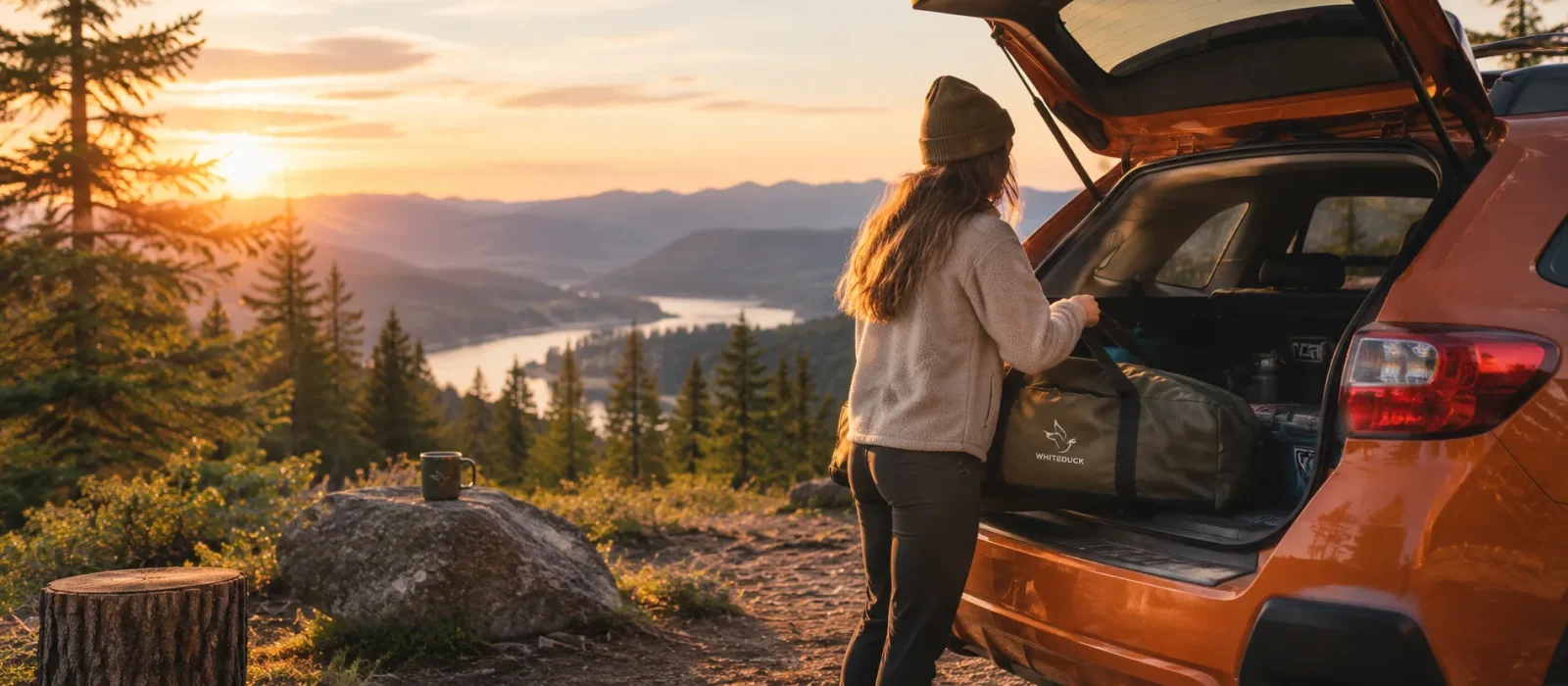
As my last day arrived, I couldn’t believe how quickly this solo camping journey had gone. 5 days may seem like plenty of time when you’re planning a trip, but time always flies by faster than you anticipate, especially if you pack each day full of adventure. Luckily, I still had a few more hours left at camp, and I wasn’t about to let them go to waste! Read on to see how I made the most of my last day solo camping, from catching an early sunrise hike to enjoying a final cozy campfire. Then, discover everything I did to break down my campsite before heading home. Let’s get right into it!
Table Of Contents
Before wrapping up my journey, catch up on “Day 4: The Inner Journey – Finding Peace in Solitude.”
Catching the Last Sunrise
One of the solo camping trip traditions I’ve built over the years is going on an early morning hike on my last day at camp. I never want my last day to feel like I’m just preparing to go home, so by planning a morning hike, I know I’ll be making the most of the time I have left outdoors.
I wanted to catch the sunrise this morning, so I woke up bright and early – 5 am to be exact – threw on my hiking boots and a few warm layers, and headed towards the trailhead. Since a view of the sunrise was my main goal, I wanted a hike that would take me to a lookout point. Schoodic Head Trail fit all of my criteria at a quick 1-mile distance, which takes you to the highest peak on the Schoodic Peninsula. For me, it felt like the perfect place to watch the sunrise over Acadia without taking too much time away from packing up camp.
After a quick hike through the dark, I made it to the trail’s summit, where I perched on my canvas tarp and waited for the day to break. It was a beautiful and serene way to wrap up my trip, and I’d highly recommend this tradition to other solo adventurers looking to make the most of their last day in nature.
Enjoying the Final Campfire
Hiking that early on an autumn morning definitely chilled me to my core, so I immediately lit a small campfire back at camp. Not only was I craving a final campfire, but it was also a great way to use up my last few logs. While the fire crackled next to me, I fixed a simple farewell breakfast consisting of apple oatmeal and a fresh cup of coffee – the perfect fuel before breaking down camp.
Once I was satiated, I pulled out my trusty journal to document my final reflections on my solo journey. Adventuring alone like this is always a transformative experience, no matter how many times you do it. One thing this trip taught me was the value of trusting and listening to myself. Instead of pushing my limits at every turn, I finally understood the art of taking it slow. Whether that means ending a hike early when I start to feel uneasy, or simply allowing myself space to sit with nothing but my thoughts for an hour. From the hiking trail to your cabin tent, focus on the inner self wherever you are, whatever that looks like for you.
Before dialing in to break down camp, I knew I needed to grab a natural souvenir from my campsite. Growing up, my dad had a tradition of scooping up a cup of sand whenever he was by the water’s shore at a new destination. I’d been doing the same on my solo camping trips, grabbing a handful of soil as a memento from each destination. While it seems like a silly keepsake, it’s been a sentimental way for me to remember every place I’ve visited, literally bringing a small piece of it home with me. Plus, it’s a lovely nod to my dad – a fellow lover of the outdoors.
Breaking Down Camp
The time finally came for me to start packing up. I needed to check out of the campground by 10 am, so I was thankful I’d given myself an early start. My philosophy for breaking down a campsite is to simply work backwards. In a lot of cases, this means I start by taking down decorations, but since I used a pretty simple setup this time around, I went straight for emptying and cleaning my cabin tent.
Once it was cleared of my sleeping gear and canvas bags, I moved on to gathering up the other campsite accessories. This included my empty firewood carrier, camp chair, camp kitchen supplies, sunshade tarp, and tree hammock. With the majority of the camp clear, I moved my focus to the star of the show: the tent itself. I started by removing the basic camping tent accessories, like the stakes, and folding down the awning. Once I removed the tent poles, I gave the tent a good shake to get any remaining dirt and debris off of it before packing it away.
Last but not least, I cleaned off the poly tarp I’d used as a tent footprint and folded it into its storage bag. With everything packed into my car, I did one last sweep of the campsite to ensure I hadn’t left anything behind. I take Leave No Trace principles seriously, so I did my best to leave the site better than I’d found it 5 days ago.
Driving Home After a Successful Solo Adventure
It was bittersweet leaving my campsite in Acadia; I’d grown so much in the 5 days I spent there, and it was a beautiful place I’d miss dearly. That being said, adventuring alone can be extremely tiring, and I’d be lying if I said I wasn’t looking forward to the modern comforts of my apartment. I took one last look back at the empty campfire ring, feeling grateful for all I’d just experienced.
Yes, camping solo is a major physical undertaking, from setting up camp alone to tearing it back down again at the end of your journey. But a solo trip is just as emotionally taxing as it is physical. There are high highs and low lows, but they all work together to help us grow.
As we wrap up this 6-part solo camping series, I hope you’ve gained something valuable, whether it’s inspiration for your next adventure or confidence in your ability to take on a solo journey. Until next year!




No Comment! Be the first one.