
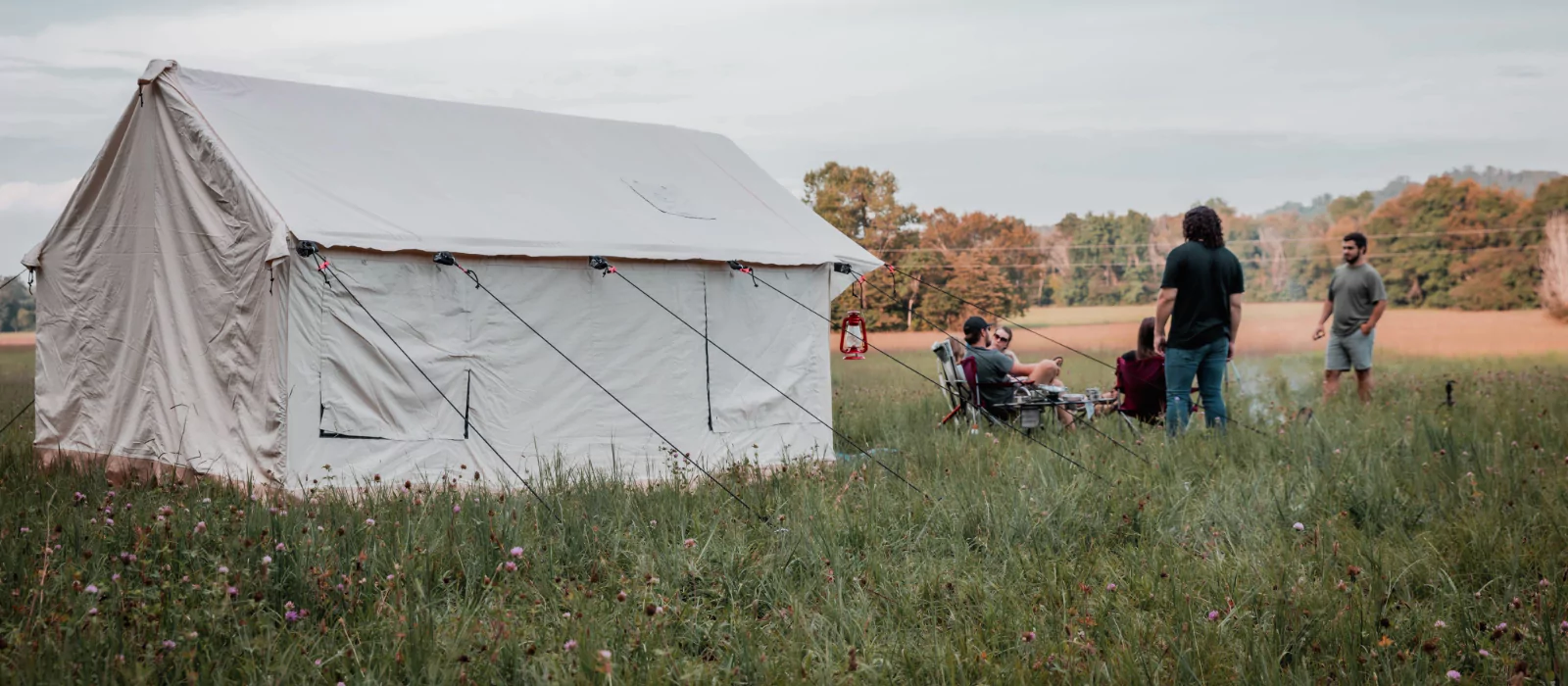
Camping, as we all know, is a cherished family activity that brings you back to the basics and closer to one another as you explore and enjoy the great outdoors together. However, with endless adventure comes endless choices in family camping tents– and we know this can get overwhelming fast.
Table Of Contents
- Size and Capacity
- Choosing the Right Size
- Maximum Sleeping Comfort
- Interior Headroom & Floor Space
- Vestibules and Storage
- Weather Resistance
- Materials Made to Brave the Elements
- Rainfly and Waterproofing
- Ventilation
- Ease of Setup
- Pole System
- Instant Tents
- Instructions and Ease of Use
- Comfort and Functionality
- Interior Layout
- Lighting and Power Options
- Tent Stove Capacity
- External Durability and Construction
- Materials
- Seams and Reinforcements
- Safety Features
- Fire Retardant Materials
- Mesh Screens
- Reflective Elements
- Flexibility and Adaptability
- Modular Designs
- Seasonal Use
- Conclusion
Do we choose one that provides more space, or greater weather resistance? Can we find one that offers both? How do we know it will hold up against strong winds or rain? Is it possible to buy one that can withstand our dogs AND kids’ wear and tear? Spiral no more! We’re here to help ease your concerns and provide you with a comprehensive guide detailing our most valued tent features when it comes to choosing one that everyone will love.
Size and Capacity
Choosing the Right Size
Okay, we know this is obvious, but choosing the right size for your family tent can get a little more technical than you may think. The size of your family tent should be enough to not only accommodate the number of family members you will be bringing along on your adventures but also provide enough space for gear, sleeping bags, and other bedding. A general rule of thumb–the more room to breathe available, the happier your tent mates will be.
Maximum Sleeping Comfort
Often, tent manufacturers rate and categorize their tents based on the number of people they can sleep–but that doesn’t always mean the tent SHOULD sleep that many. Manufacturers tend to err on the optimistic side of sleeping capacity ratings. For maximum comfort, consider a tent that is rated for one or even two more bodies than you intend to house inside. Having a bit of extra space will allow for more comfortable sleeping arrangements, room for personal items and gear, and space to move about the tent.
Interior Headroom & Floor Space
Be sure to seek out a tent that has adequate headroom as well as floor space. Tents with higher ceiling peaks and vertical walls–such as the Alpha Wall Tent–are generally easier to move about in. This is especially luxurious if you have a few tall folks in your family. Ample headroom and floor space are also helpful to families who plan to spend significant time inside the tent beyond just sleeping– whether for meal preparation, playing games, or simply relaxing together.
Vestibules and Storage
Many family camping tents also come equipped with additional vestibules or storage areas. Vestibules are extra covered storage compartments typically located outside of the tent, helpful for stashing muddy shoes and boots, wet gear, backpacks, and any other items that would otherwise dirty up or clutter the main sleeping and living areas. When choosing your family’s tent, check the design for these features which will significantly increase both comfort and convenience.
Weather Resistance
Materials Made to Brave the Elements
Weather-resistant materials, such as those that make up White Duck’s canvas 4 season tents, are crucial for ensuring a comfortable and safe camping experience no matter how unpredictable the weather can be in extreme environments. Be sure to choose a camping tent that is made of waterproof, fire retardant materials which can also stand up against wear and tear caused by wind and debris.
Rainfly and Waterproofing
A rain fly sheet is absolutely essential for keeping moisture, whether it be rain, dew, or snow, out of your tent. Ensure that the rain fly you choose extends OVER the entire tent, as in past its edges and corners, and can be tamped down by stakes to prevent moisture from getting between the layers. Look for tents with a high waterproof rating as well, which you will typically find measured in millimeters of water column pressure–to simplify: tents with a rating of 2000mm or higher are considered solidly waterproof against moderate to heavy rain.
Ventilation
Proper ventilation helps reduce condensation inside the tent, keeping the interior comfortable and reducing mold and mildew risk. Seek out tents with multiple vents and mesh, zip-up windows– these are useful as they allow you to control airflow based on weather conditions.
Ease of Setup
Setting up a tent can be one of the most challenging aspects of camping, especially when trying to corral young children or battling adverse weather conditions. Easy setup is a key feature to look for in your next family tent. Here are a few clues to look for that can tell you how user-friendly the setup process will actually be.
Pole System
Tents with color-coded poles, sleeves, stakes and/or clips make setup easier and quicker. If you would rather eliminate the whole staking process, freestanding tents are simple, versatile, and stay upright all on their own.
Instant Tents
For families who are constantly running and value time efficiency, instant or pop-up tents are the way to go. Instant tents feature pre-attached poles that allow for a simple, fast setup so that you can get back to your little ones or your next activity. While instant tents may not be as durable as canvas tents, they are perfect for quick, spontaneous camping trips.
Instructions and Ease of Use
Check to see whether the tent you are interested in includes clear, simple setup instructions before purchasing. Some even offer links to instructional videos and other online resources to assist you. Choosing a tent with a user-friendly, intuitive setup will save you time and frustration–and if we learned anything from the Griswolds, it’s that saving frustration is priceless on a family vacation.
Comfort and Functionality
Comfort is key to an enjoyable camping experience. The goal we’re going for here is the ability to create a home away from home for your loved ones. Look for the following features that greatly enhance your tent’s functionality and livability.
Interior Layout
Most family tents, especially those made to hold more than 4 people, come with separate sleeping compartments or divided rooms, which provide both privacy and organization. This can be helpful for families with teenage children or multiple adults.
Lighting and Power Options
Built-in lighting options, such as overhead lantern hooks or integrated LED strips, can make nighttime activities more comfortable. Some tents also offer power ports or cable management systems for charging devices.
Tent Stove Capacity
An extra feature we like to remind folks of is the capacity for your tent to house a stove. When camping in cooler weather, a tent stove can be crucial for both comfort and safety. A tent with a stove jack not only contributes to the creation of a cozy shelter from the elements but also ensures safe, efficient heat distribution and enables you to conveniently cook meals inside.
External Durability and Construction
A family camping tent is an investment, so it’s important to choose one that is built to last. Here are a few important factors to help you decide on the best durability for you.
Materials
As we mentioned earlier, look first and foremost for high-quality materials like nylon or polyester for the tent body and rain fly. The tent floor should be made of a robust, waterproof material as well to prevent moisture from seeping in and creating an environment for mold and mildew.
Seams and Reinforcements
Double-stitched seams and reinforced corners are important features that indicate a well-constructed tent. Seam reinforcements will help improve the tent’s ability to withstand wind and rain, and reduce the risk of tears and leakage.
Safety Features
Fire Retardant Materials
Choose a family tent made from fire-retardant materials, especially if you plan on using a tent stove inside. Fire retardant material helps prevent accidents that can threaten not only your possessions but your family’s lives. Check for this feature if you plan to use fire in any capacity while you’re camping.
Mesh Screens
Having mesh screens on windows and doors helps keep biting insects out while still allowing for ventilation. Make sure that the mesh on the tent you are considering for purchase is fine enough to prevent even the smallest of bugs from getting inside.
Reflective Elements
Reflective guy lines, tent seams, or fly sheets enhance visibility at night, helping to guide you back home after a late-night bathroom break without tripping or bumping into the tent that holds your sleeping family members.
Flexibility and Adaptability
Modular Designs
Many tents appropriate for family camping feature modular designs, allowing you to add or remove rooms or sections based on different needs for different trips. Such flexibility is useful for growing families, those with guests, or those who just like a fresh take on their camping setup each time.
Seasonal Use
Four-season tents are specifically designed to withstand the harshest of weather conditions, versus a three-season tent which is appropriate for mild weather. If you plan on camping year-round, you must invest in a four-season tent for maximum comfort and safety.
Conclusion
Investing time in proper research, and seeking out most or all of these features will help you find a family camping tent that meets your crew’s specific needs and preferences, ensuring many happy and memorable camping trips together.


No Comment! Be the first one.