

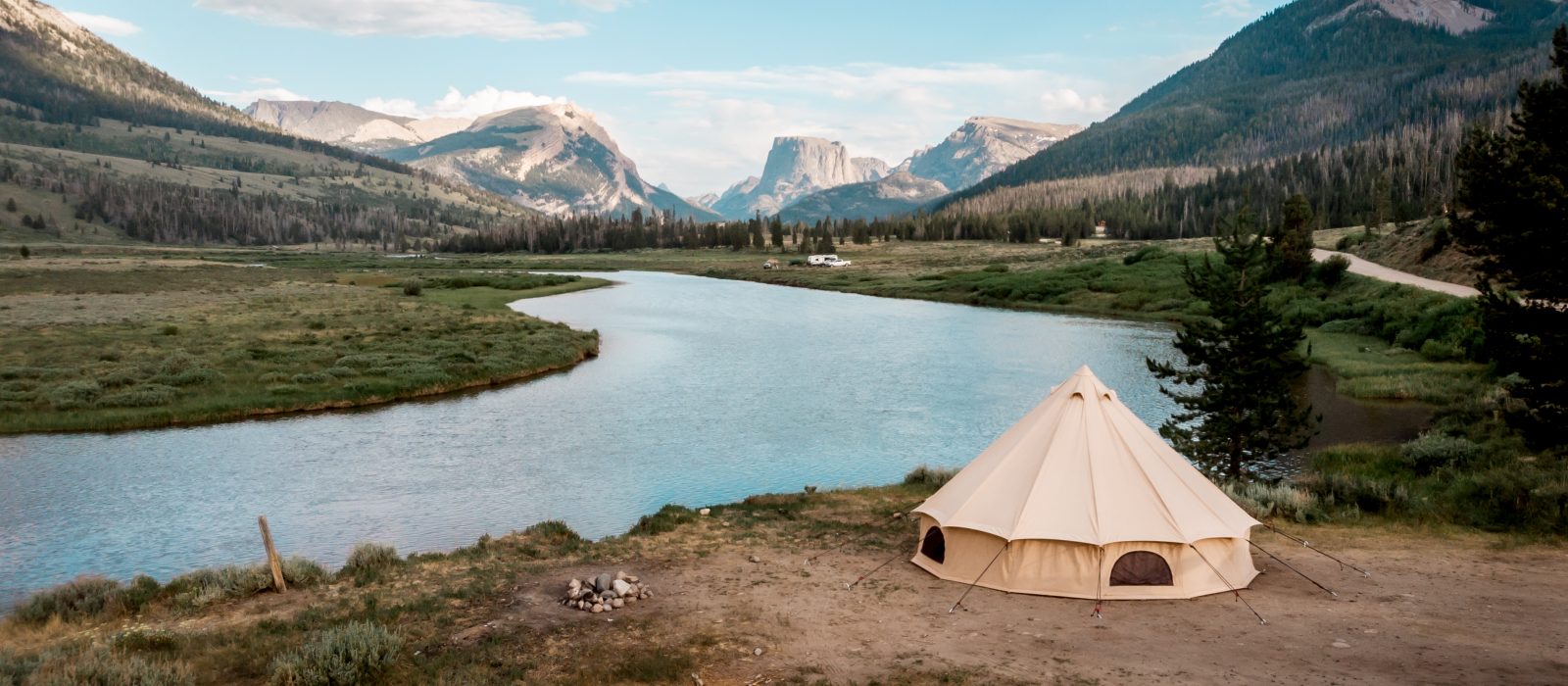
You have to think about a list of details when it comes to creating a pleasant camping experience. You have to choose the appropriate camping gear, and the right canvas tent, pack food, and plan activities. In addition to this, one of the biggest factors that can make or break your adventure is the camping spot you pick.
Table Of Contents
- Access To Water
- Does It Rain Often?
- Is It Too Windy?
- Breeze Is Good
- Find The Middleground… Literally
- What Does The Ground Look Like?
- Privacy Is Important
- Where Is Your Tent Facing?
- Don’t Camp In The Middle Of Nowhere
- Activities For The Kids
- Look Out For Dead Trees
- How Much Sun Or Shade Do You Want?
- Is There A Specific Purpose To Your Camping Trip
- Leave No Trace
One may assume that the fundamental quality of a good spot is flat ground which is free from debris. A seasoned camper will tell you that multiple factors go into what makes the perfect campsite. And there IS such a thing as a perfect campsite.
Access To Water
It is helpful if you are camping near a river or any freshwater source. This way you won’t have to carry heavy water to and back from your tent. Campers use portable filters so they can use this water for drinking. That being said, if there are mosquitos in your campsite, you don’t want anything to do with the nearby water sources.
Not all campsites or trails are near water so you have to find a way you can stock up on water for the duration of your trip.
Does It Rain Often?
If the campsite you have chosen has frequent flash floods but is otherwise an excellent camping ground, you have to be smart about the spot you pick. You don’t want to set up your tent on the lowest ground that can turn into a water basin in case it rains overnight. You want to park your gear on flat and elevated ground.
Other things to remember in this site are using a waterproof tarp for a floor, and stuffing pine needles under your tent so they can act as a protective foundation from rainwater leaking into your shelter.
Is It Too Windy?
Check the weather forecast before you set up camp. Find a spot that has a natural windbreaker from the heavy winds; like trees or bushes. Now remember, you don’t want to pitch your tent right under a tree in case the trees get damaged by the pressure of the wind. The broken branches will fall on your tent and tear it. The best way is to pick a spot that is a few feet away from the tree and in the direction of the blowing winds. Boulders are also effective windbreakers.
Breeze Is Good
You don’t want to wall off all wind from your tent. Breezy weather can actually help you. For instance, mosquitos don’t thrive in breezy conditions. So if there is no risk of high winds, you should consider setting up your tent in a spot that is exposed to some wind. A good tent will have a mesh net lining but would you spend all your time zipped up inside? Proper airflow is also great for minimizing condensation inside your tent.
Find The Middleground… Literally
If you pick a spot at the lowest point in the valley, you should know that cold air will settle here. This makes it unpleasant to camp anytime other than the summer months. On the other hand, it can be tempting to find a clearing above the treeline at the highest point so you have a breathtaking view of the region. But even this spot puts you at risk of high winds and deadly thunderstorms.
The best spot in this situation would be to find the middle elevation. Where you are not too low or too high.
What Does The Ground Look Like?
Moss and leaves are better than packed dirt. If you can make a footprint out of pine needles, leaves, and sand it will help insulate the floor of your tent. Mud can dampen if it rains and even if you are safe from the draining rainwater the ground will get cold. Make sure you sweep the spot you have chosen for sharp objects.
Privacy Is Important
Why should privacy not be a factor in your camping experience? A large communal fireplace is fun, but at the end of the day, you want to relax in the serenity of a quiet and peaceful night.
Campers will look for a spot that is close to a trail so they don’t have to venture far when returning from a hike. If you camp near a trail you will be disturbed by other hikers and campers walking by your tent all the time. Tent walls are not soundproof, and people returning to the campsite at night do thrash around if they are lost. You should apply this rule to other areas of recreation activities as well.
Where Is Your Tent Facing?
Be smart about where the entry of your tent is facing. If you are camping in a crowded site, you want to orient your tent away from the other tents and towards the empty landscape. If you can’t do that, you should look for a spot where the entryway faces a tree or a boulder so anyone passing by can’t directly see inside your tent. If you are camping with a large family and have multiple tents, it makes sense that you face each other so a) you can keep an eye on the kids and b) have the space between tents populated by your family and not strangers.
Don’t Camp In The Middle Of Nowhere
While the idea of finding an untouched camp spot in the middle of a beautiful area sounds like that’s all you need to camp, it’s not everything.
If your goal is to hike long distances, you need to set up camp near a town. You should also find a spot near unique landmarks so you have a mental trail when you are returning and near your tent. Otherwise, you may easily get confused even if you are not far from the campsite.
If you are camping where you know you would require to resupply food and fuel, then you have to camp near a road or an outdoor store. As a beginner, this is also a helpful hack. The only drawback to this is that you won’t be able to escape the background noise of cars passing by throughout your trip.
Activities For The Kids
If you are camping with children, make sure you ask what activities are hosted for kids when booking a camping spot. Commercial campsites arrange activities for families for which you would have to sign up earlier or pay separately. This way the kids will have something to keep them engaged as well and they won’t get bored.
Look Out For Dead Trees
Dead trees will fall over even if they look sturdy. You need to be careful when setting up your tent. Don’t pick a spot that is within the range of a dead tree. The same goes for when you are setting up a hammock.
Some of the signs to look for when inspecting trees include:
- A damaged trunk with vertical cracks
- No foliage
- Fungus growing from the trunk
- Missing or broken tree branches
How Much Sun Or Shade Do You Want?
What part of the year are you camping? If you are camping in the colder months you want to position your tent exposed to the east. This way when the sun comes up, your camp will warm up faster in the mornings and it will be easier for you to get out of your cosy sleeping bag.
If you are camping in the summer, you want to set up your tent under shade from direct sunlight. If you can’t find a spot, it is always a good idea to pack a rainfly with your tent kit.
Is There A Specific Purpose To Your Camping Trip
If you are pitching a hunting tent, you want to choose a spot that is well away from the animals you are hunting. Visible camp activity will spook creatures out of the area.
Leave No Trace
Follow the Leave No Trace principles. Make sure you leave a campsite just as it was before you arrived. If you see a site that has already been used, pick that one to minimize impact. Bring a separate bag to collect all your trash at the end of your trip. Don’t cut any foliage to make your camping experience more comfortable.


No Comment! Be the first one.