
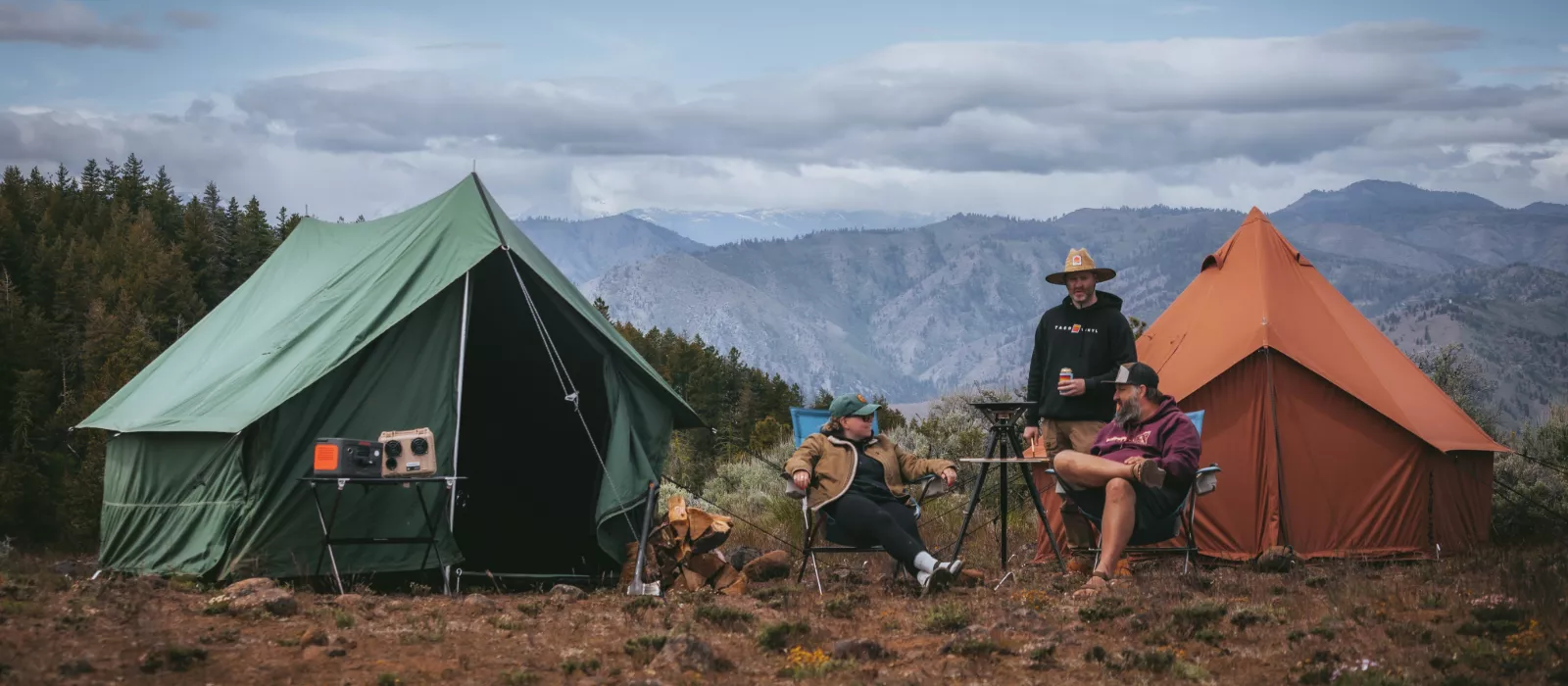
It doesn’t matter if you’re standing in front of the demo tent on the salesroom floor of the outdoor retailer or scanning the lines and columns online. The tent aisle, whether in person or online, is a confidence killer. There are endless options with dozens of specs and different categories of fabrics and ideal conditions. It’s exhausting. The truth is that tent manufacturers are selling us the wrong metrics. Cubic feet and denier don’t mean as much to the average consumer as ” Can I set this thing up in a few minutes with just my wife before a train storm and stay dry all night? Part of the issue is that we all account for all our outdoor trips to the worst trip we’ve ever had. We never want to get into that perilous situation again, so we plan for that exact circumstance.
Table Of Contents
- Before the Tent, The Questions to Ask Yourself
- Question 1: How do you get to your campsite?
- Question 2: How long do you stay?
- Question 3: How many people do you bring with you?
- What Tent Should I Buy for Family Camping?
- What Tent Should I buy for Hunting Season?
- What Tent Should I Buy for Glamping?
- What Tent Should I Buy for Solo Camping?
- It’s Not Everything, But it’s Enough.
What you need is someone who can translate all that strange specification language into usable metrics you can translate for your family, your friends, or whoever you intend to provide shelter for the weekend. This guide will help you navigate the ominous camping store or the confusing website. Let’s dive in.
Before the Tent, The Questions to Ask Yourself
Not all camping experiences are equal. Fortunately, not all tents are created equally, either. When you’re eyeing down a wall of tents, it seems like they can all do the trick. But consider the following three questions and the foundations of a good tent purchase, and the reason we’re here: a good camping experience is in the future.
Question 1: How do you get to your campsite?
For some, this might not be a topic to even consider. Maybe you’ve never hiked into your campsite before, and maybe it’s all organized pay sites with toilets and showers. No worries. However, if you like to have fun and get outdoors, it’s your business. This factor matters, though, for how heavy you’re willing to go on your tent. If you like to pack your tent in order to get away from the crowds, you don’t want to take a 100 lb canvas wall tent on your back. With all of these questions, be honest. How far are you going to go with the tent in hand?
Question 2: How long do you stay?
Have you ever gone on a road trip and decided to push through the night, only to make it to about 3:00 am, and you just pull over and crash for a few hours? In these instances, it doesn’t make a lot of sense to pay for a hotel. Well, that’s the thinking when you’re going camping. The tent setup is going to look different for someone who is setting up base camp for a two-week stay and a group that is just going overnight to the local spot. The long stay needs to consider a more durable design and something that can accommodate drastic changes in weather. As is often the case in the wilderness, when spanning a few days.
Question 3: How many people do you bring with you?
This might be the most important question of them all. You’re not going to go after a 5’x8’ tent when you have six people and gear staying for 5 days in the wild. If you have a family, this is a pretty easy number to consider. If you are an experienced camper and you are going to be introducing people to the craft, that’s another thing to consider. Maybe you’re one who just likes their own space regardless of who comes along. That means another tent altogether.
There isn’t one of these factors that matters more than the other. And when you’re considering the next tent you want to buy, you have to consider all three at once. It doesn’t do you any good to plan for a small backpacking tent when there are six people in your family with whom you frequently camp. Build a chart in your brain, and tick all the boxes.
What Tent Should I Buy for Family Camping?
For family camping, there are a couple of viable options. The best tents for family camping are a good wall tent or a canvas scout tent. These structures are fairly intuitive, and they make navigating the interior space easy for every member of the family. Their square and rectangular design makes it easy for kids to claim their area, and lining up cots against the wall is intuitive for everyone. The straight walls mean that people can sit or stand right up to the wall without bending their backs or lowering their heads. This is also ideal for the tall camper in your crew. Wall tents are incredibly durable. If you plan on being there for a few days through inclement weather, either of these tents will take good care of you.
What Tent Should I buy for Hunting Season?
There’s really no question when it comes to setting up base camp for hunting season. The best tent is a canvas wall tent. Hunters have specific requirements that most campers don’t meet: multi-night stays, cold mornings and nights, a tent wood stove for heat in the shoulder and winter seasons, enough interior space to possibly process game on the colder trips, and a sturdy shelter that can take the worst brunt of bad weather and still stay standing.
Nylon tents fail on a few accounts here, especially with durability, temperature retention, and easy-access doors that won’t break down after extended use. The Alpha Wall Tent from White Duck is the standard-bearer here. The stove jack accommodates any stovepipe diameter, and the vertical walls distribute heat evenly throughout the cabin. The 10.10 oz army duck canvas handles any kind of weather you can think of, and it also makes for the best heat retention you can find on the market.
On a practical note: the Alpha Wall Tent does take at least two people to set up, and it will require about 30-40 minutes to get fully staked in. This is not your backpacking tent. This one stays close to the vehicles.
What Tent Should I Buy for Glamping?
When stepping into the wild to make a statement, you want a tent that people will remember. Something that makes a statement and causes FOMO from 100 yards. The best tent for glamping is a canvas bell tent. These unique designs have been around in different cultures for thousands of years. They’re erected with a simple center pole and then staked around the perimeter. They form incredibly comfortable interior spaces, and they encourage conversation with the round, center-facing design. With a canvas awning over the front door, another space to enjoy the comfort and luxury is immediately formed.
These cannot handle the heavy winters and terrible storms like the wall tent can. But they can deal with extremely cold temperatures when they have a tent wood stove stoked in the cold weeks. The Avalon Bell Tent from White Duck features a canvas floor that is ideal for barefoot comfort, and the walls can roll up in the summer to let a warm afternoon breeze in and clear out the stale air. These tents can nearly do it all. They are great for families, glamping, overnighters, or just to express some style in comfort.
What Tent Should I Buy for Solo Camping?
There are two solid options for solo camping. A smaller bell tent, as mentioned above, or a Rover Scout Tent is ideal for solo camping. These tents pack small, are fairly lightweight, as far as canvas tents go, and they set up in a jiffy and don’t require another person. If you’re just doing overnight and on the move, these are ideal options. Even in the smallest options, there is enough space for your gear, a dog if you have one, and even a little extra if you want to keep a small butane stove in the tent to heat up a dehydrated meal. Everything the solo camper dreams of!
It’s Not Everything, But it’s Enough.
This isn’t an exhaustive list of use cases, but it should get the brain juices flowing on how to choose a tent. These are ideal circumstances that most people find themselves in when they head out camping. With the family, hunting, glamping, or solo, all camping falls in, or somewhere adjacent to these categories. If you want to hit up festival season this year, then consider the crossover between a bell tent and a scout tent. If more people come than you imagined, and it might be in the desert with sweeping winds and exposed sun, then maybe the wall tent.
Consider your needs, and ask yourself the three questions from above. That should set the foundation and narrow the selection to get you down to at least one or two choices. All of the above styles: wall, bell, and scout tents, all come in different sizes. It shouldn’t be too difficult to find the right one for you and your crew.


No Comment! Be the first one.