
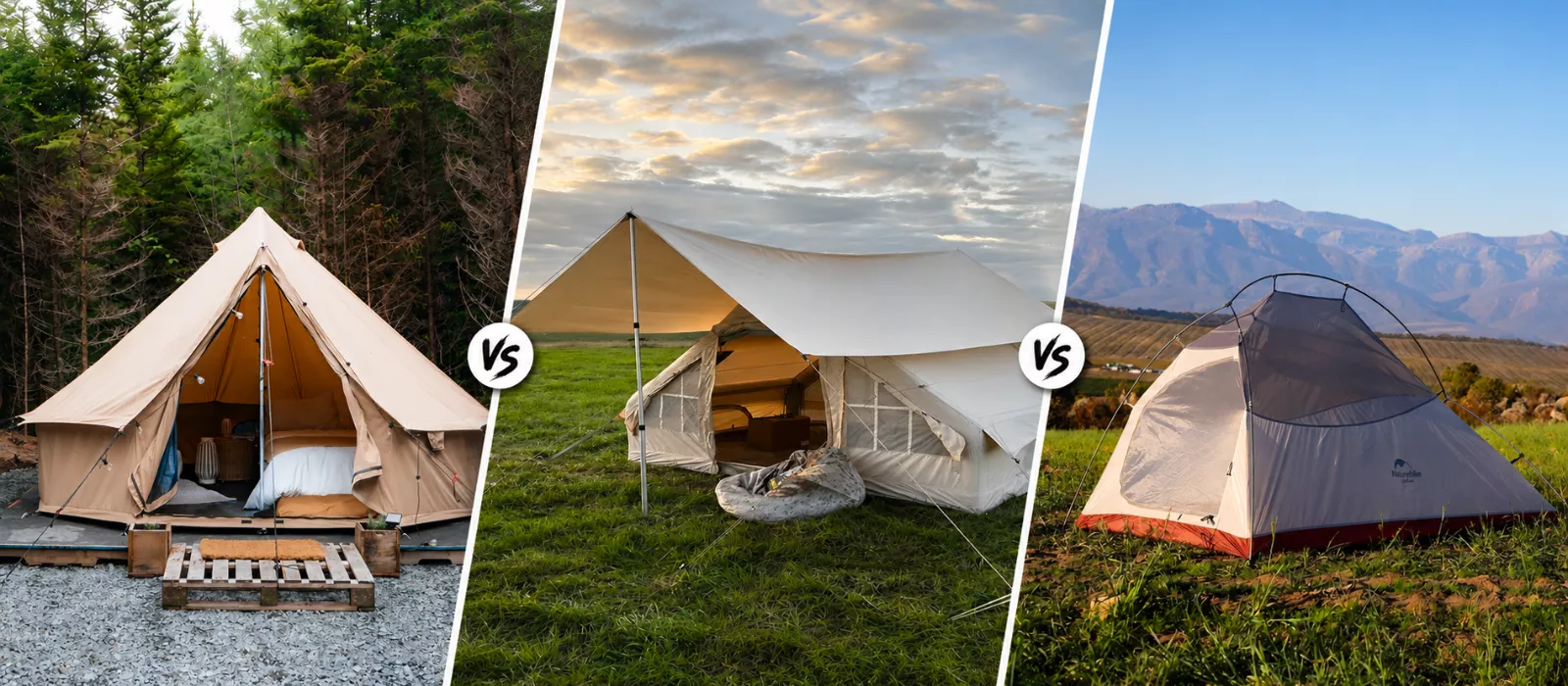
The camping world can be a polarizing space. Claims are often thrown around that one item is “the best”. Or, item X is everything you’ll need. Or, in many cases, certain types of gear get so specific to one use case that it seems you’ll need 10 different versions of the same thing to cover you in any condition. This is absolutely the truth when it comes to tents. But the fact is that some materials are better for some activities. While tent technology has been advancing in leaps and bounds in the last few decades, a lot of that technology is designed for use cases that the average camper will never need. That technology does trickle down into the cheaper, more accessible versions of the high-tech tent, but it still doesn’t mean that all of that technology is necessary.
Table Of Contents
In this blog, we’re going to look at some different options for tent materials and examine some use cases. The idea here isn’t to get you to go out of your way to purchase a product you won’t use. The purpose of this blog is to inform you as much as possible about the tent and camping landscape, and to know what you’re going into when you step into your favorite outdoor retailer. The topic on the block today is canvas vs polycotton vs nylon tents. These three materials will cover a large portion of tents on the market today. A solid comparison is warranted. Check it out, and decide which tent is best for your needs.
What exactly are Canvas, Polycotton, and Nylon Tents?
The simple answer to this question is that each of these is a material that represents different engineering philosophies and practices. A natural fiber with durability, blended performance, and lightweight synthetic efficiency. Let’s have a closer look.
Canvas:
This is derived from 100% cotton duck fabric. It is tightly woven, and because of this feature, it is naturally breathable. While the material is spun extremely tightly, it is not so tightly that air can’t get through. Canvas has been used for shelters for centuries, and that is simply because it works. It regulates temperature, it resists flame, and it gets stronger and more waterproof over time as the fibers swell and expand with moisture exposure. However, it is heavy, but worth it for the right camper.
Polycotton:
This is a blend of polyester and cotton. Typically, this blend comes in at 35% cotton and 65% polyester, though the ratios do vary by manufacturer. The idea with this material is to capture some of the breathability of the canvas while maintaining a lighter weight, making the overall packability of the tent better. The truth is that it lies between the two extremes of most performance metrics.
Nylon:
The inventors of nylon really only had one thing in mind when they set out to create the fabric: low weight. Some of these modern nylon tents can weigh under two pounds. That is astounding considering where recreational camping began. These tents can pack down to the size of a water bottle, but there are setbacks with this lightweight design. The tradeoff becomes breathability, interior comfort in heat, and long-term durability when compared with natural fibers in canvas tents.
There isn’t one fabric that is the ultimate, better-than-anything-out-there material to make tents. This is something entirely individual, and it depends on what type of camping you do most. Before you start to consider what type of tent you’d prefer, think about what type of camping you’re going to do most. It’s easy to get caught in the hype of newfangled technology. Likewise, traditionalists have their rationale. It’s important to know what you’re out there buying before someone else convinces you to get something you don’t want or need. Let’s have a look at some examples:
Where to Go During a Scorcher?
It’s tough to face the facts, but the truth is that in North America, most of us vacation in the summer months. It would appear that in our culture, we are far more likely to tolerate the heat than we are to put up with the cold. For better or worse, this is just the case. But how much heat is too much heat? And have we been putting up with it for too long, or have we not been optimizing the situation? If you’re going to be camping predominantly in the summer, then the answer is simple. A canvas tent is the only way to go.
Cotton fibers are hygroscopic. This means that they absorb and release moisture vapor, and it happens to be the physical mechanism behind the breathability. In a canvas tent on a hot afternoon, heat travels through the tent walls, rather than remaining trapped inside. The result is a more moderate and controlled indoor temperature that doesn’t spike in the heat of the day.
Polycotton captures some of the moisture content in the air, but that is largely the 35% mentioned above in the blend of the fabric. The polyester component limits the amount of moisture that can transfer through the fabric. Many t-shirts are a polycotton blend. You’ll notice after a little sweat in one of these sheets that they stick to your body. This blended combination traps moisture and temperature in ways that canvas does not. It’s an improvement over nylon, but can’t match canvas’s breathability.
Nylon loses in this category outright. The truth is that most people in nylon tents just leave flies off, doors unzipped, and air moving through the tent as much as possible during the day, even in 90+ degree temps. They wait for the sun to go down, and that is what ultimately cools their tent.
For the summer season, shoulder-season trips, or any situation where you might spend part of the day indoors, a canvas tent is the way to go.
Rain During Your Parade?
Rain isn’t really a feature people plan for in their camping, or one that they can even predict. It’s precisely that lack of predictability that makes it so important to plan for. No matter how well you plan ahead, rain, at some point, is going to happen. Furthermore, while we’re in the category of accumulated water, we should also consider condensation. Rain outside the tent can be uncomfortable, but a tent that gathers moisture on the inside can mean sleepless nights, groggy mornings, and ruined weekends. Water matters.
For Rain:
All three materials can be made waterproof. There’s no question there. The difference is the mechanism by which it is achieved. Nylon and polycotton tents rely on a substance called DWR, or Durable Water Repellant, to coat the fabric and use polyurethane seam sealing. These sealings work well, but they degrade with use. They can also be reapplied, but in the long run, these fabrics do require waterproofing maintenance.
Canvas tents waterproof naturally as the cotton fibers swell with moisture and close the weave. The longer you own the tent, the more times the fabric becomes imbued with moisture in the air or with rainwater, causing the threads to swell and tighten, forming a natural waterproofing that also breathes. New canvas tents actually need to be “seasoned” with a wetting to activate this process and ensure the first trip is a water-free one.
On Condensation:
Because of the way canvas tents breathe and allow moisture vapors to escape through the weave and not be trapped inside, they prevent condensation. Nylon tents are notorious for interior condensation. At this point, in the industry, it’s become a given that if you’re going to set camp with nylon, you might want to cover your head when you sleep at night.
For multiple-night trips in unreliable weather like hot and humid days and potentially rainy evenings, canvas is going to take this category as well. Canvas has been such a reliable standard in this regard for such a varying range of conditions that it seemed unnecessary to consider designing a new fabric for the job.
When is Canvas Too Much?
If there is such overwhelming evidence for canvas tents to be used in most conditions, why did other fabrics get to be so endorsed and dominate such a large portion of the industry? It all really comes down to one feature: Weight.
Much of the idea of camping is caught up in the tech-advanced miniaturization that became highly popular in the 1980s. Cell phones emerged, and we could talk from cars; we didn’t need a phone booth. Computers went from taking up the space of whole gymnasiums to resting on an office desk. The future was apparent, and it was easy to hold. Likewise, tech boomed in the outdoor industry.
Grills and stoves were developed out of lightweight metals. No longer did people need to cook on cast iron. The most impressive feature of a sleeping bag was how small it could be stuffed down to. Everything shrank, except the price tags. There was a price to pay for this miniaturization, literally. All of our gear was shrinking and, as a result, was suffering diminished quality. Tents only lasted a short time. They were hot and uncomfortable. And when a new material came out, they were recycled for the next great thing.
It wasn’t all bad. There were phenomenal advancements at this time. Because of this tech, we have been able to put thousands of people on top of Everest, and explore regions of the world with new instruments, learning more about climate, culture, and how to live more responsibly in this incredible world. For those extreme conditions, this space-aged material was necessary, and still is. The fact is, if you’re going to spend 14 days in Patagonia on a cliffside that no other climber has ever freed, you’re not going to embark on the adventure with a 100 lb. canvas tent.
Even heading into the backcountry a few miles can be difficult with a heavy tent. It’s true, canvas is not the material for everyone. But the fact is, there are other options than synthetic fibers that, in the long run, will last longer and be more comfortable for the life of the tent. Hi-tech is a nice idea, and a good way to show off to friends, but it doesn’t always sleep the best.
Some Lighter-Weight Options in Canvas Tents
If the only thing you can think of when you picture a canvas tent is a massive 15’x20’ wall tent, then don’t fret. There are many other options. Bell tents and scout tents are perfect for a small family or a couple looking to have a comfortable night’s sleep in the back country. The round shape of White Duck’s Regatta Bell Tent makes for an easy setup and take-down, and is as beautiful as any structure ever made from cloth.
Scout tents are remarkably pack-friendly and can accommodate myriad use cases with numerous group sizes. There are other options than just the classic dome tent. It may be the case that canvas isn’t for you. Fair enough. It’s not everyone’s cup of tea. But when you’re looking at the tall wall of tents stuffed into polyester sacks, all muted versions of the primary colors, remember that canvas is king. And there’s still some time to have the best night’s sleep of your life, outside while you’re camping.
Comparison Chart
| Feature | Canvas Tent | Polycotton Tent | Nylon Tent |
| Material Composition | 100% cotton duck canvas | Polyester/cotton blend (typically 65/35) | Synthetic nylon fabric |
| Weight | Heavy | Moderate | Lightweight |
| Packability | Bulky | Moderate | Excellent |
| Breathability | Excellent | Good | Poor |
| Hot Weather Comfort | Excellent | Good | Fair |
| Cold Weather Performance | Excellent insulation | Good | Fair |
| Condensation Resistance | Excellent | Good | Poor |
| Waterproofing Method | Natural fiber swelling | DWR coating + seam sealing | DWR coating + seam sealing |
| Waterproofing Longevity | Improves over time | Requires maintenance | Requires maintenance |
| Durability | Excellent | Very Good | Moderate |
| UV Resistance | Excellent | Good | Fair |
| Lifespan | 10–20+ years with care | 5–10+ years | 3–8 years |
| Maintenance Requirements | Moderate | Moderate | Low to Moderate |
| Setup Ease | Moderate | Moderate | Easy |
| Best For | Glamping, family camping, base camps, long stays | Weekend camping, mixed-use camping | Backpacking, hiking, mountaineering |
| Not Ideal For | Long-distance hiking | Extreme ultralight pursuits | Extended camping in hot weather |
| Typical Price Range | $$$–$$$$ | $$–$$$ | $–$$$ |
| Overall Comfort | ★★★★★ | ★★★★☆ | ★★☆☆☆ |




No Comment! Be the first one.