

The foundation of a perfect camping trip is your tent of choice! Historically, simple A-frames and military-style tents were the go-to outdoor shelter. Over the last century, the outdoor industry has significantly evolved. And so have tent designs! Luxury glamping tents, minimalist pop-up tents, and everything in between exist on the market.
With so many options at your fingertips, it can be hard to pick! We’ll break down every type of camping tent, what activities they’re good for, and other considerations.
Types of Camping Tents: An Overview of Popular Tent Styles
Your camping tent is the foundation for a great stay in the outdoors! And let’s be honest: investing in a specialized tent is not cheap. There’s capacity, seasonality, technical features, materials– the list goes on. It can get overwhelming!
It’s our goal to educate campers of all skill levels on all things tents. Allow this blog to be your launch point for the decision-making process. So, let’s talk about all the qualities of wall, cabin, yurt tents, and more! Pick out your perfect tent, and start planning the ultimate camping adventures!
Wall Tent

Wall tents are generally any tent that includes sturdy poles creating, well, walls! We’re talking an upright, distinctly vertical structure. Unlike a rounded pop-up or minimalist A-frame, wall tents essentially have a skeleton. These walls created raised ceilings, which add headroom and extra usable space. This unique capacity makes room for tent stoves, multiple sleeping arrangements, and more. Wall tents are perfect for large groups, families, and outdoor excursions like hunting groups.
Cabin Tent
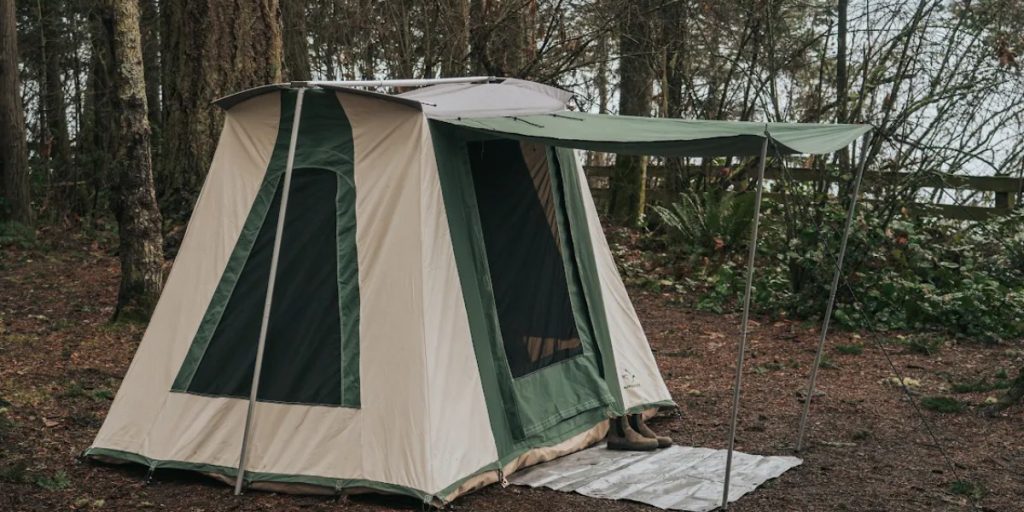
Also known as a multi-room tent, this is an excellent option for families. Made to mimic a “house-like” feel, more than a tent. Privacy screens act as temporary “walls”, creating rooms and multiple spaces. These can be rolled up during the day for a more open-floor feel, and let down at nighttime for added privacy.
For small kids or groups, this can be really convenient and comfortable. Cabin tents include various technical features that enhance the outdoor experience. Things like a rainfly, footprint, stove jacks, and built-in storage pockets. Cabin tents are often a form of wall tents, so they include those vertical walls, enhancing the home-away-from-home feeling!
Yurt
Yurts were some of the very first outdoor shelters developed by nomadic people groups. Their form has varied throughout history depending on differing needs and geographic locations. Nowadays, its iconic form resembles that of a canvas wall tent merged with a bell tent. Very tall, round walls and a high center ceiling set this tent apart. These insulated tents are extremely weather-resistant and resilient to the elements. Their canvas exterior provides an insulated yet breathable living space. Stove-jacks, roof vents, headspace, gear storage, windows, and more are features of yurts.
They’re popular for large groups, family camping, and glamping excursions. Also, long-term camping, outdoor studios, music festivals, vacation rentals, and so much more.
Bell Tent

A bell tent is a spacious tent, characterized by an elegant round body, vertical walls, and a high ceiling. The shape is supported by a metal framework and a single center pole. These are often made from heavy-duty canvas. Additional technical features enhance the outdoor living experience. Things like roof vents, a stove jack, mesh-covered windows along the walls, and more.
Bell tents can accommodate large capacities. For that reason, they’re often used for luxury events. Glamping, vacation rentals, weddings, and birthdays, to name a few.
Dome Tent
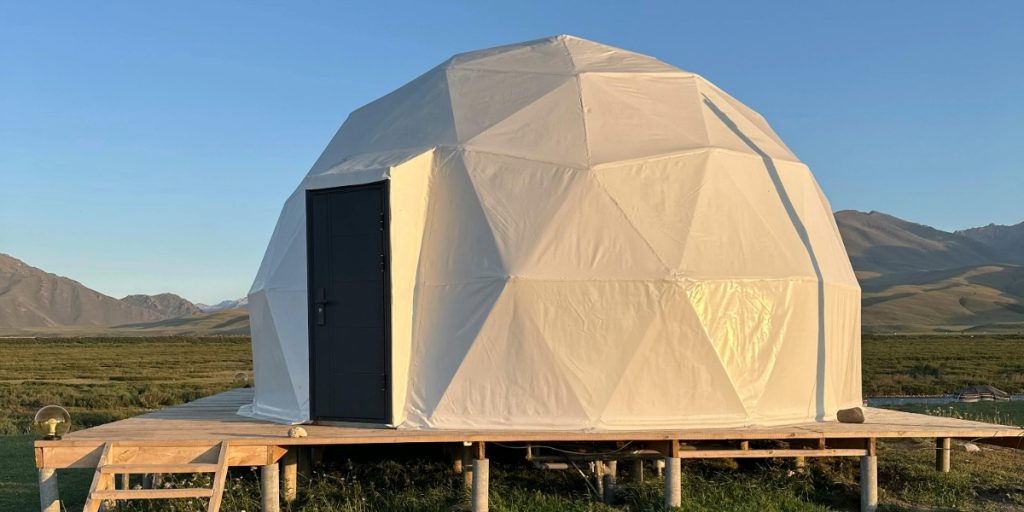
Dome tents are one of the most beloved camping tent designs today. They have a wide range of capacities, seasonalities, and technical features. Dome tents are designed with two flexible poles crossed in the center. It’s anchored with stakes at the corners, creating its unique shape. That shape is advantageous for blocking wind and allowing rain to drip off its sides.
From single campers to large groups, dome tents are exceptionally spacious. The center roof is its highest peak, but curved walls open up headroom. Many dome tents include a vestibule, which provides essential “mud-room” space for gear storage. These tents are great for a range of activities: from weekend trips to long-term camping.
Geodesic Tent
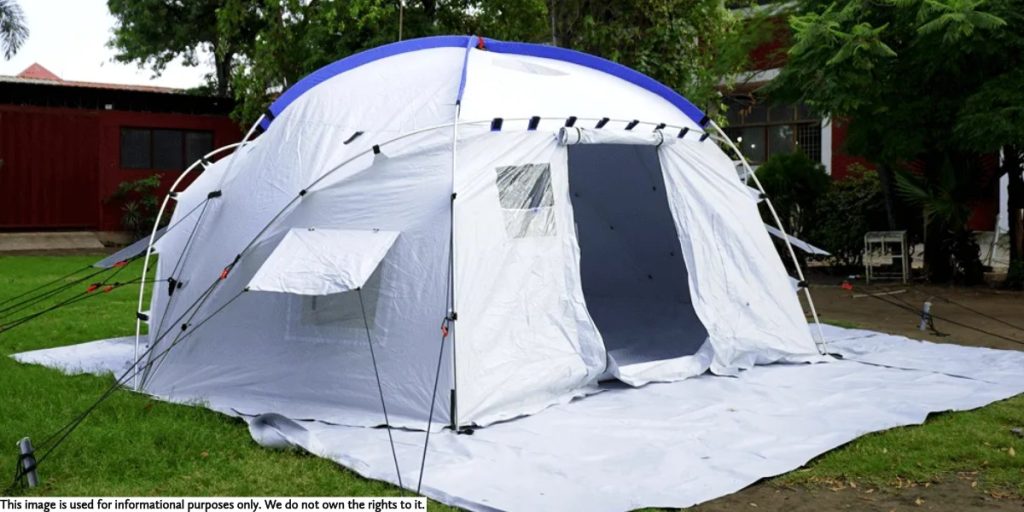
Cousin to the dome tent, geodesic tents have increased support and durability. Rather than just two poles, these tents have multiple poles intersecting to form triangles across the roof. That provides more points to stake down, resulting in unmatched sturdiness. This durable structure makes geodesic tents ideal for heavy weather and unique locations.
Geodesic tents are great for camping groups, and super popular for glamping! Many luxury designs are made with canvas for insulation. They often include a skylight-type window, a tent stove, sleeping platforms, and more.
A-Frame Tent
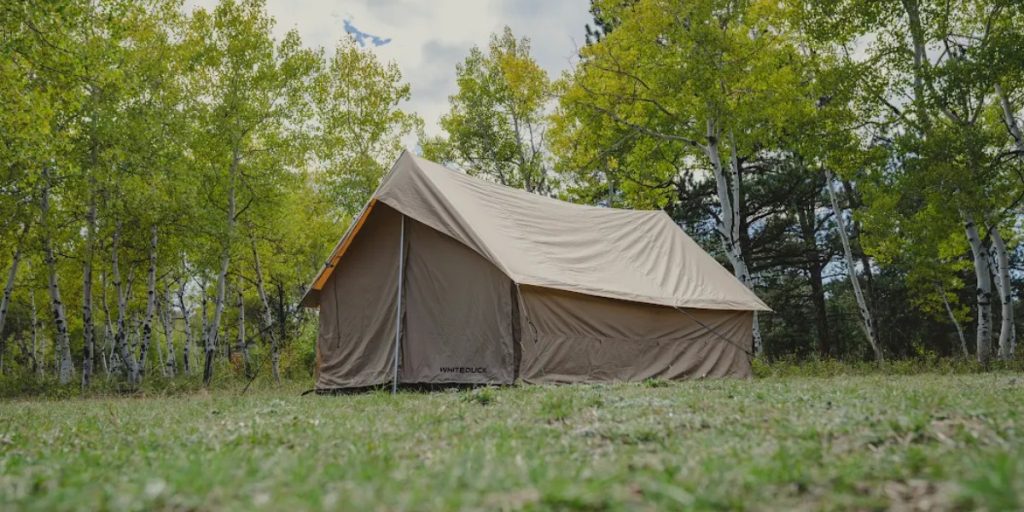
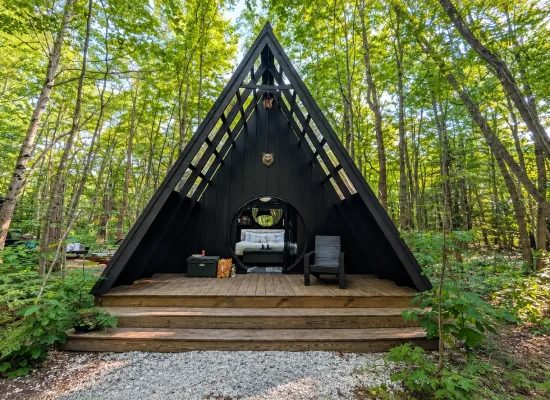
This is that classic, old-school triangular silhouette. The A-frame tent goes way back. It was historically utilized in the military during the American Civil War. Its slight shape and lightweight nature make it an ideal temporary shelter. Beware the steep-peaked roof lacks headroom, and it can be bulky when packed up. These are available in heavy-duty canvas and synthetic, lightweight materials. A-frames are popular for solo campers, Boy and Girl Scout troops, and as emergency shelters.
Pop-Up Tent
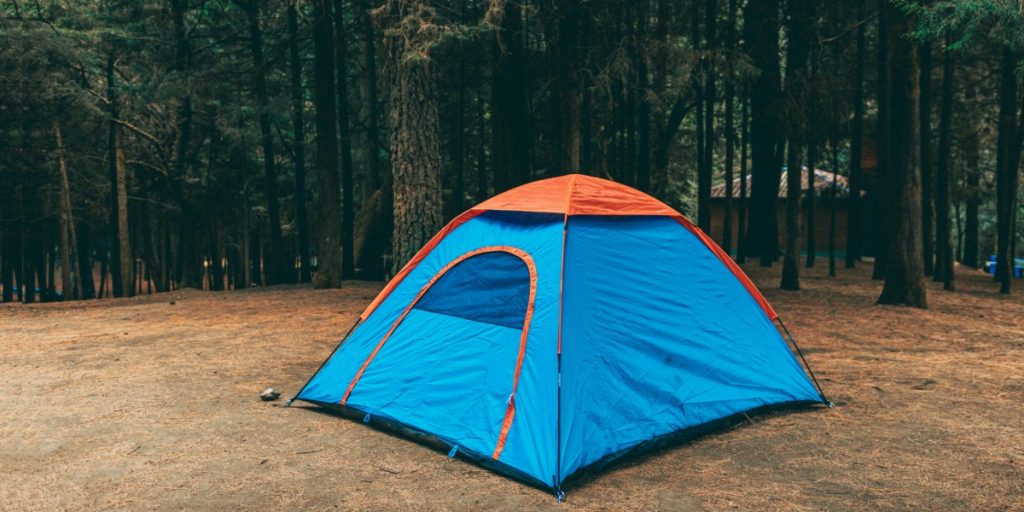
Also known as an “instant” tent, a pop-up tent is extremely easy to pitch. This is a great option for weekend campers, festival goers, beach days, and any other occasion that needs a quick setup. The built-in, spring-loaded frame essentially pitches itself and collapses when it’s time to pack it in. Like most tents, these come in a variety of shapes and sizes, and can host a range of activities. So, if you want to cut down on setup time and start enjoying the outdoors, a pop-up tent is the perfect fit.
Backpacking Tent
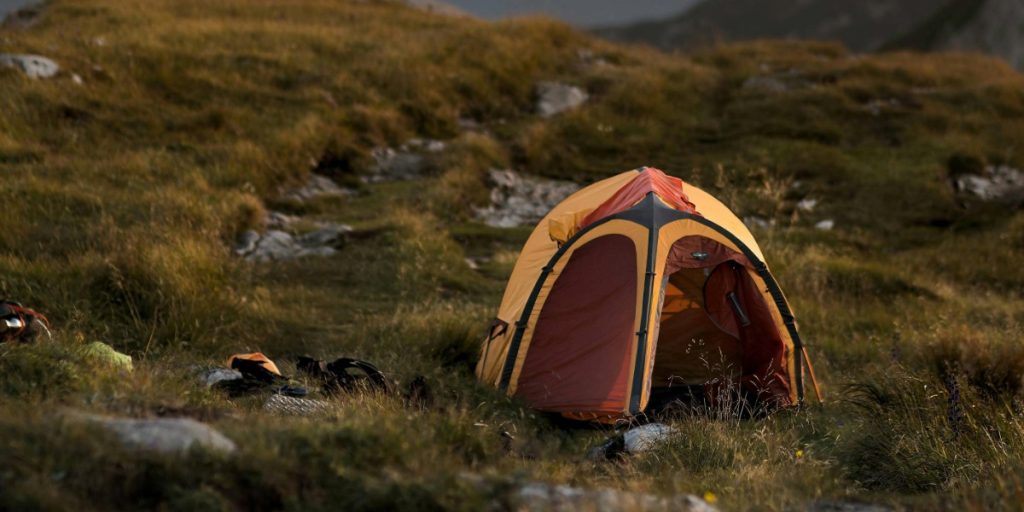
Usually, backpackers travel solo or with a group. Depending on the needs and group size, the tent design may vary slightly. They come in a range of capacities and seasonalities. While less robust than a full-blown canvas tent, 3-season and 4-season versions of backpacking tents exist. They’re made with lightweight synthetic fabrics. Often with a water-resistant finish and some other technical enhancements. Larger group tents may include poles and other gear. In that case, backpackers can divide the weight carried. Backpacking tents are extremely efficient and hassle-free. Even a solo camper can pitch it and tear it down alone in minutes.
Best Camping Tent Materials: Nylon & Canvas Tents
Picking out the right design is one thing. Next is tent material! This is super important, as it determines weight, durability, and longevity. The most popular tent materials for most designs are synthetic nylon and natural canvas.
Benefits of Nylon
Essentially, nylon fabric is excellent for backpackers and solo travelers in need of a lightweight shelter. These are often treated with water resistance and some wind resistance. Nylon is oftentimes not as durable and can deteriorate over time and usage. Be mindful that this synthetic material isn’t as breathable as canvas. This means it is prone to condensation, which can spur mold and mildew. As long as it is spot-cleaned and left out in the sun to dry completely before storing, nylon can maintain good quality.
Despite a complex manufacturing process, nylon can be mass-produced at a quick rate. It is extremely affordable for most campers. This is a popular material for pop-up tents, backpacker tents, A-frames, dome tents, and more.
Benefits of Canvas
Canvas is the ultimate camping tent material. At White Duck Outdoors, we use our proprietary DYNADUCK cotton canvas for our tents. This is sustainably sourced, 100% army duck cotton canvas. Made with waterproof, UV-resistant, and mold- and mildew-resistant finishes for unmatched durability.
Canvas is naturally both insulating and breathable. So campers won’t have to worry about stuffy nights or freezing mornings. It does weigh significantly more than synthetics and requires more gear, like poles and guylines. Most 3-4 season tents are made with heavy-duty canvas. A canvas tent tends to be more expensive upfront, but the benefits last a lifetime.
Final Thoughts
As you’ve read, there are numerous camping tent designs on the market. And even more than we’ve covered! Knowing your camping needs will help direct your decision when picking out a tent. What type of camper are you? A weekend warrior? A family camping extraordinaire? Are you solo backpacking through the mountains? Or glamping all weekend?
Consider things like tent capacity, material, weight, technical features, and weather-resistance. We want to make sure your tent is the perfect shelter to support the adventures you dream of. That way, you are safe, secure, and set up for an enjoyable time outside. Investing in a tent is a big decision, so make the right one! Take your time doing research. And take it from us– White Duck Outdoors has you covered with the highest quality camping tents on the market!
We hope to see you out there this season, living it up in your perfect camping tent!


No Comment! Be the first one.