
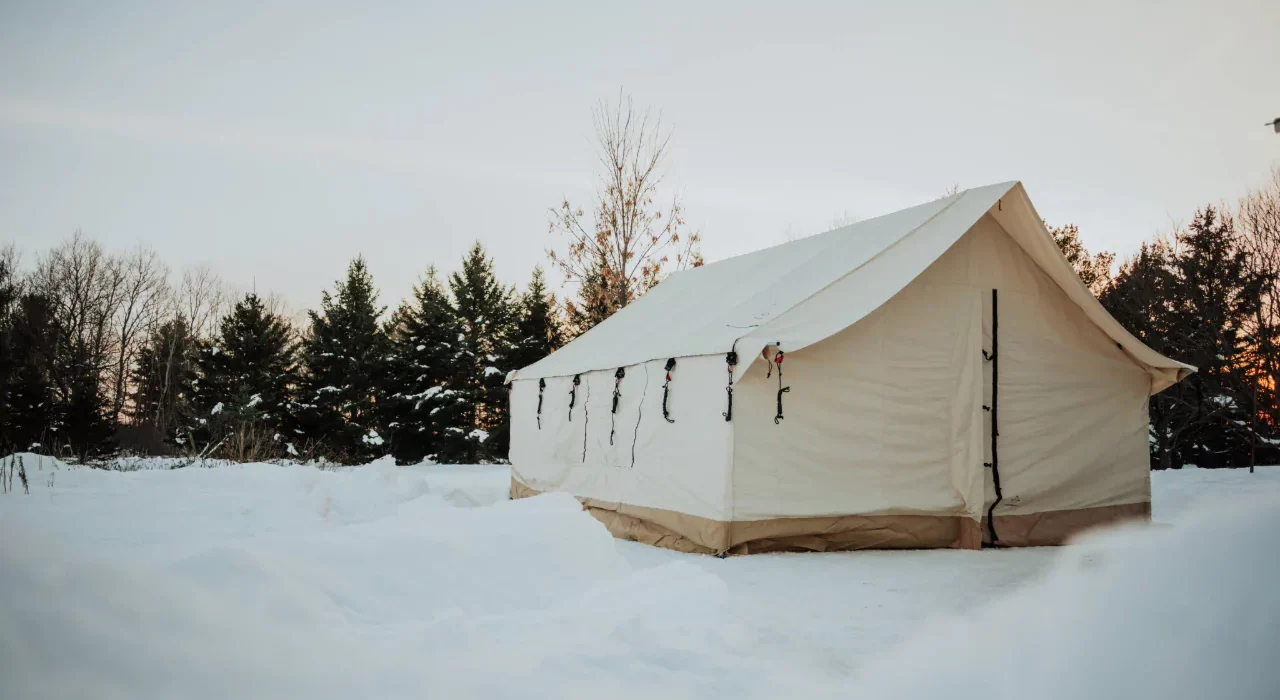
In the middle of the forest, where the temperatures are dropping and the graying skies are dimming for the evening, a wall tent stands amidst the straight lodgepole pines and the scrub oak. Leaves cover the ground so that no dirt might be seen, offering a blush hue in contrast to the dark limbs where they used to hang. A man approaches on an ATV, his gear neatly packed in a duffel on the back of his 4-wheeler. He parks in front of the wall tent, and we get a great view of its construction. The ties have secured the tent down, and from the outside, it looks like it can handle any measure of inclement weather.
Table Of Contents
Inside, it’s cozy. There is room for 3 or 4 comfortably, but for this trip, it looks like it will be for only him. The bottom of the tent door wasn’t secured well, and some leaves took the liberty of blowing in. With just a quick sweep, the man is able to clean out the entrance way and settle into a comfortable space. Inside, there are end tables, a cot with a thermal sleeping bag, and a bug net over the bag that might just be for that added extra security. With the impending cold weather, anything flying around might already be dead or moved on.
Getting Cozy in the Wild
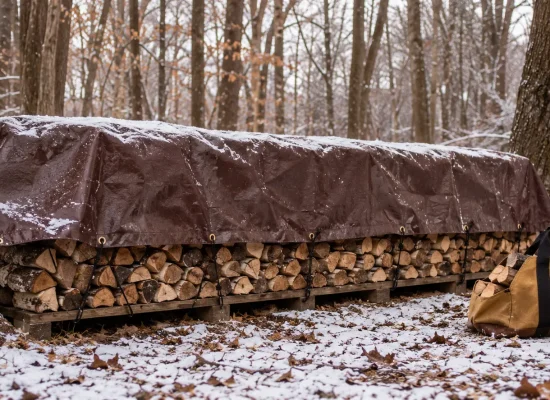
To light his fire, the man cleverly lights a piece of rope and inserts it into the wood stove where he’s already packed solid logs, pre-cut to length. He lets the fire grow before feeding the fire again, then closes the door on the wood stove. He opens the air vent on the front of the stove to ensure the wood burns hot and smoothly, and causes no smoke. While the tent is warming, he steps outside to bring in more wood. This would be a perfect opportunity to bring a log carrier to make fewer trips, be in the exposed, cold air for less time, and to simply save a little effort. After loading the wood in, he notes that the logs are fully round and unsplit. This is a deliberate choice as the wood in that form will burn the longest. It’s an efficient way to get the most out of your wood. The man did, however, forget his hatchet. This is a tool you never want to forget when in the wild. If those logs were all too long, he could be in a bit of hot water. The man was wise, however, to include a canvas camping tarp to cover the wood in the case of rain or snow. Cold, wet wood can be almost impossible to light.
He welcomes the viewers and notes how cold it’s going to get. This is his first time solo winter camping in freezing temps, so he takes time to go over the list of equipment he’s brought along. For this trip, the man included:
- Water purification system
- Canvas tarp
- String lights with bulbs
- Vector Power Station
- Laptop
- Netgear mobile hotspot
- Collapsible bellows (for blowing oxygen down into the fire)
- Wool blanket
- Rhino Rescue Multi-tool
It’s clear from the mix of traditional outdoor camping gear and tech supplies that the man intended to spend a good amount of time out here in the wild. Wall tents are perfect for this kind of shelter. They are so resilient and hold up so well in the cold that they are perfect as semi-permanent structures. White Duck offers a series of different wall tents that can accommodate nearly any size of camping party and still have room for a wood stove.
Hanging String Lights
The man sets to the task of hanging the string lights he brought with him. He fixes them into the corners to ensure he has enough light to work by. With the wall tent’s high ceiling, there’s plenty of space for the man to not only stand up tall in there, but to reach far above his head to hang the lights. Durable and spacious, that’s what wall tents are all about.
The lights are hung, but while he was hanging them, and due to the large log he placed in the wood stove, the fire went out. These camp stoves burn hot, but only hold a small space to keep a fire going. It’s best to keep a hatchet on your person and cut the wood down. The exposed side of a log, after it’s been cut, ignites much more easily and will surely burn, whereas full, round logs must burn through the bark to get lit. But, with a few hot coals in the stove, he has the fire roaring in no time. The tent is warming up, and the man proceeds to plug in all his electronics and test out his new hotspot. In a few moments, he is connected to the internet and, although he is deep in the backcountry, he is still able to hold down the work he needs to do for his job.
Time for Lunch
Being his first time solo winter camping, he has purchased some new items to try out. A notable one is a saucepan with a collapsible handle that is perfect for one person. He has some Campbell’s soup to heat up in the pan, and to do that, he’ll need some water. Using an Aquabrick 3-gallon water tank, which has been pressurized to produce flow, and as a filter that can remove bacteria, debris, and any harmful substances in the water. He also installed a mouthpiece so he can draw directly from the tank when he’s in the wall tent. After explaining the filtering system, he fills his pan with soup and places it on the wood stove. For these smaller wall tents, a wood stove is perfect to not only stay warm, but also to use the flat top as a grill. Water can be boiled here, and a frying pan can be placed right on the stove. Just don’t place meat or other food directly on the stove. It will get filthy and continually stink with each use. So, place down a pan and get cooking.
As the soup starts to boil, it’s worth noting that the wood stove is also equipped with two racks that fold out from the sides, and for working stations, or places to rest a hot pan when removing it from the heat. Finding open surfaces to cook and prep food on is difficult while camping. These racks are a great feature that will come in handy while camping.
Preparing for the Cold
Admittedly, it’s been difficult keeping the fire going with uncut logs that take up most of the space in the wood stove. To remedy this issue, the man has gone outside and brought with him a fixed-blade knife. The method he’s attempting is to baton. This is a good method to use if you only have access to a fixed-blade knife. A couple of warnings: 1) Make sure your knife is a fixed blade, and sharp. 2) Use a piece of smaller wood for the baton, not a rock or other metal device. It can damage the knife. Batoning a piece of wood works like so:
- Read the log: As you’ll notice in the video, there is a crack in the top of the wood, and the man placed the knife blade perpendicular to that crack. Find these cracks or weaknesses in the wood and split in those directions. The wood will split much more easily.
- Position the Wood and Knife: Place the log on a hard surface, a rock, or a brick. It will not receive the proper recoil if it’s placed on wood or dirt.
- The Right Width: Make sure the log leaves enough of the blade exposed hanging out the far side of the log. When the blade is driven down into the log, you’ll still need to strike it with the baton, so the knife will need to be exposed.
- The Right Baton: Choose a baton that is heavy enough to hammer the knife blade down. If you select a light piece of kindling, the job may not get done.
- The Right Knife: This task requires a very sturdy and high-quality blade. Steel is sturdy, but not impenetrable.
The man runs into a little trouble when attempting to baton a log; he shears off the edge of his fixed-blade knife. Slightly dejected but nevertheless high in spirits, the man returns to the wall tent to fix a cup of coffee.
Still Some Heat Left
Since the stove isn’t yet cold, the man places some water in a pan and gets ready to make some instant coffee. He’s fixing up some Alpine Start coffee in a nifty little canister/coffee cup combo dish. It looks like another one of the new items he’s purchased for this first-time solo winter camping trip. With some coffee in hand, feeling good about the day, the man sets to work on some tasks that, even though he’s deep in the wild, must be completed.
The man mentions earlier that he is using some traditional camping methods, such as the wall tent and the wood tent stove, but also employing some technological advances like a laptop and a mobile hotspot. This has become the reality of the world we live in, and it’s working out for the better. It’s true that the best part about getting into the wild is to disconnect and feel some autonomy from our screens, but sometimes one can’t happen without the other. In this instance, the man is making the most of his time in the wild and setting up a work station deep in the woods. For him, this is far more preferable than having an office in a city.
Bedding Down
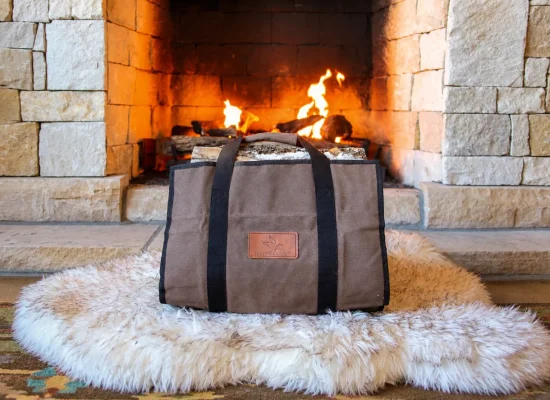
Settling in for the night, the cold-weather camper has stocked up on a little more wood. To best do this in the cold, grab a log carrier and head out into the woods, preferably before dark. One large load in the log carrier should be enough to get him through the night. Once inside, with the fire stoked, it’s noticeable how hot the tent can get. Some strategy may need to be used to keep the wall tent’s door or windows cracked just a bit. Fires need oxygen to breathe, and so do humans. A small wood stove in a wall tent like this can eat up all the oxygen in the room pretty quickly. Not only does this make it super stuffy in the tent, but it will also make it extremely cold during the night. After finding a good balance, the man takes stock of his sleeping bag and cot, and finally, after a day of modern work in an old-fashioned, rugged setup, he falls fast asleep.
The Frigid Morning
A solid cold morning can be as good as a cup of coffee. The brisk air before 7:00 am, the chill outside of the sleeping bag, all contribute to a hasty wake-up and act as a little encouragement to get moving. Such is the case here. The man notes the sun isn’t yet up, but that the wall tent holds the heat very well. Even though he is on a cot, he still feels a draft. Regardless of having a wood stove in the tent, it’s always a good idea to have a sub-zero sleeping bag.
Wisely, the man gathered some thin sticks and small kindling the night before to get the fire going in the morning. In no time, the fire is stoked and the wood stove is humming. In only a few minutes, the tent gets hot. Outside, it’s below 20 degrees and the test of the tent has proved out. He set out on this solo winter adventure to see if his wall tent could handle the extremely low temperatures. Not surprisingly, the wall tent, with its resilient canvas material and sturdy construction, held true.
The beauty of this setup is that if you need to work, go to work. When you need a break and want some cool, crisp air in your lungs, take a hike. These kinds of setups, the wall tent and the wood stove, are exactly what’s needed to maintain the comforts of modern living while still connecting to ancestral roots. The gentleman enjoyed a warm night in the woods and got some work done, too.


No Comment! Be the first one.