
The first time it happened to me, I was snug in my sleeping bag, sleeping after a challenging day of hiking, trying to keep up with the older kids, and awoke to see it: droplets gathering and eventually streaming down the inside of my tent. Even as a youngster, I liked to sleep alone, in my own tent. At the time, I didn’t know about his phenomenon. The skies were clear outside, it couldn’t be that. So, I thought my tent must be damaged.
Table Of Contents
The culprit is condensation, which usually explains about 90% of the wetness inside tents. This happens when water vapor changes from a gas to a liquid when it hits a cold surface. The same thing is happening when you take out a cold beer or soda, from your cooler and water droplets form on the outside of the can. It’s a basic and common occurrence, but let’s look at what’s going on (it’s like, Science, bro).
Essentially, the air inside your tent is warmer than outside. This is partly due to your body heat and partly because your tent is like a miniature greenhouse. When the warm, moist air inside touches the cold walls of the tent, physics takes over (told ya). Water vapor condenses into little liquid droplets that cling to your tent walls. When they gather and get heavy enough, they start to drip. This usually happens when you’re chatting it up with Mr. Sandman, practically dead to the world.
Now, the moisture doesn’t just magically appear. It has to come from somewhere. Here are several sources:
- Your breath: During the night, a single person can exhale about 1 liter of water vapor (here’s your reminder to stay hydrated during the day).
- Sweating: The other obvious culprit. Even in cold sleep, the body sweats and releases moisture.
- Wet gear: Damp socks, rain jacket, wet beanie…it all contributes to moisture in the air.
- Ground moisture: As the night air cools, the soil beneath your tent constantly releases water vapor.
- Cooking: If you cook in your tent, this can add significant moisture to the air, long after the meal is over.
This list seems exhausting, and even unavoidable, but don’t worry, there is hope. While you can’t completely eliminate condensation, you can dramatically reduce it with these clever tips to preventing moisture in tents.
Find a Nice Piece of Real Estate
The location of your camping tent is the first line of defense against an indoor rain forest. Here are some ideal places to set up, and some locations to avoid.
Take to The Trees
One of the best places to set up to reduce condensation in a tent is under a tree. Tree canopies create a warmer microclimate around your tent (more science!). This reduces the temperature difference between the snuggly inside and the elements outside. Trees provide a nice blanket of warmer air beneath their branches, which keeps your tent’s outer surface from getting too cold. As a result, condensation will form on the leaves instead of your tent!
Seek the High Ground
If you have the option, always perch up on a high spot in your camping area. Cold air pools in low areas and depressions, creating greater temperature differences and thus more condensation. Remember those early science classes: Heat Rises! So, the higher areas will keep the temps inside and outside your camping tent more balanced.
More Water = Wetter
This might seem obvious, but steer clear of lakes, ponds, rivers, streams, marshes, and other wild bodies of water. I love the sound of a rushing river to fall asleep to (that and Matthew McConaughey’s voice), but I like being dry even more. A good rule of thumb is to be close enough to the water that it’s still convenient, but far enough to avoid the extra humidity (50-75 feet is a sweet spot).
Mind the Ground, Avoid the Fields
A little phenomenon known as “nighttime radiative cooling” occurs when you set your camping tent up in an open field. Simply put, the Earth’s surface cools down at night, and this is more pronounced on your warm little tent sitting wholesome and alone in the field. The range between the tamps inside and out has a much larger range, resulting in more condensation. Likewise, if you set camp on lush grass. It will transfer much more moisture than bare soil or forest flooring with pine needles, etc., that release less moisture.
Finding the right location is half the problem. So, choose wisely to stay dry.
How to Stop Tent Condensation…The Canvas Tent
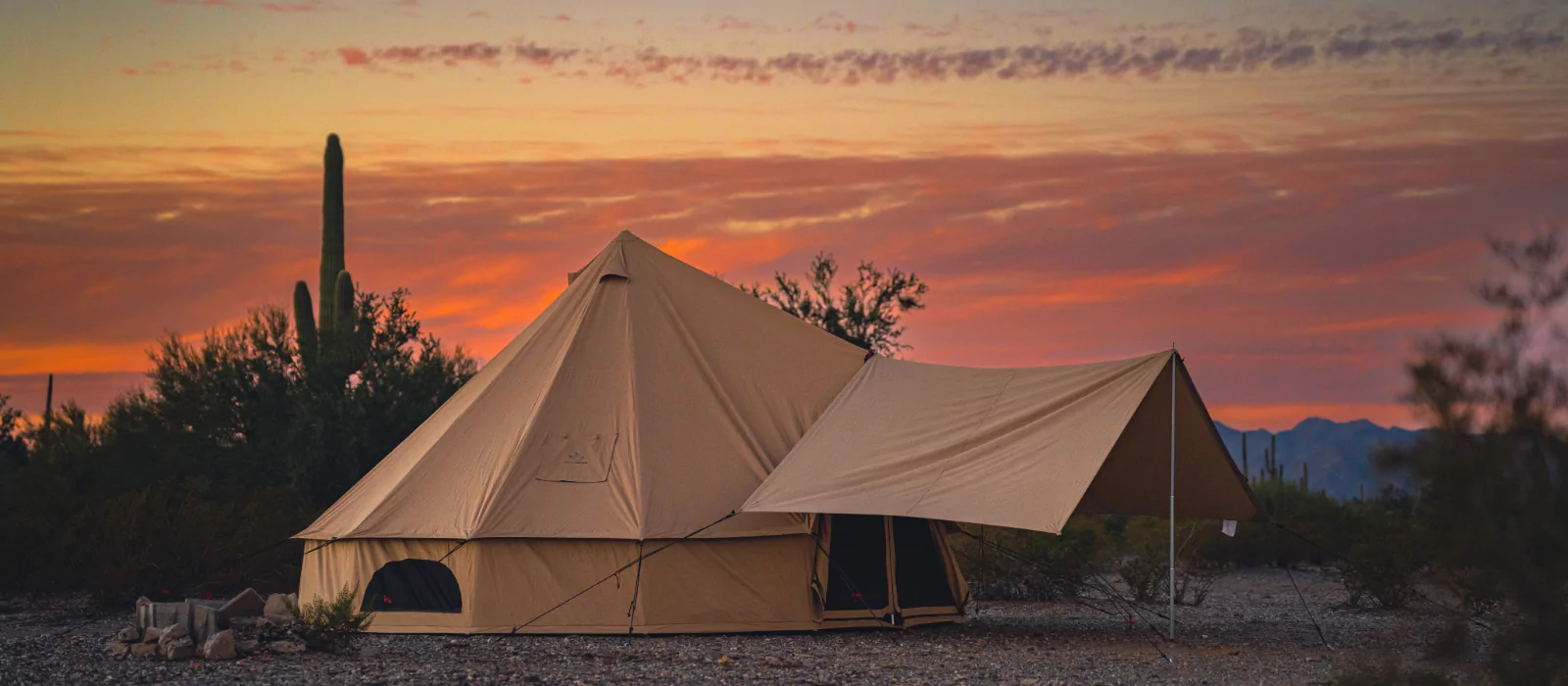
When it comes to any strategy for setting a proper camp, I think a canvas tent should be at the heart. I like a Bell Tent, but a Wall Tent is just as reliable and has ample room for the whole crew. To properly avoid the rainy season at night, there are a few tricks to learn, and the right camping tent accessories, for a successful night’s sleep.
A lot of these techniques come down to the setup. I recommend getting familiar with your tent and all the integral parts. The best way to stay safe and comfortable in the wild is to know your tools and your shelter. You’ll need to be familiar with each to stay dry on the humid nights.
- Water repellent material: Any good Wall Tent will be water repellant, but just as a reminder, insist on it. White Duck’s tents come pre-treated with a waterproofing solution. I highly recommend it.
- Stake tight, stake often: For a Wall Tent, make sure you’re pulling your guy rope taut when you’re staking it down. This will ensure that the walls of your tent are also wrinkle-free. Moisture gathers in the nooks and crannies, so keep it smooth.
- Leave some Space: If you’re using a double-walled tent, make sure there is a small space between the outer rainfly and the inner tent. This is critical for staying dry. The rainfly is designed to allow for condensation to bead up and down. That’s where we want the water to go.
- If no rain, no rain fly: Don’t automatically go to the rain fly. If there’s not rain in the forecast, leave the rain fly off. This eliminates another barrier where moisture can be trapped.
- Consider the Wind: Camping at the mouth of a canyon will ensure that a breeze at night will come through when the air pressure drops. This will increase the circulation throughout your tent.
Command your tent and master these techniques, and you’ll have a comfortable little ecosystem in your tent, and you’ll be sleeping easy.
Let your Camping Tent Breathe
Without a doubt, proper ventilation is your most powerful weapon against condensation. Have you ever worn a poncho when it wasn’t raining (maybe even in the rain)? Your body can’t breathe! This is the same principle for a tent with no ventilation. This is also why I love a canvas tent: big windows and doors.
You’ll want to start early in the evening. With your windows and doors equipped with bug mesh, keep them open for a while as the sun goes down. This acclimates the inside temperature of your tent to the outside, matching that air temperature and keeping the climates similar. Remember, it’s when warm air inside hits the cold surface of the tent, touching the outside, that water beads and drops. So, we want to keep those temperatures similar.
Having a cracked window allows for all that hot breath to escape and moderates that spiking temperature at night. Also, it is widely recommended that sleeping in cooler temperatures promotes better sleep quality, WIN WIN!
If you are camping in colder weather, keeping the inside/outside temperatures similar can be a little trickier. If you’re cooking and have a camp stove in your tent, you’re going to want to open the doors and let the fresh air in. With a hotter fire, consider keeping at least one open window away from the sleeping section of the Wall Tent.
Manage Your Moisture
As I mentioned above, bringing in wet or damp clothing inside can increase moisture in the air. Even inside a canvas tent with the perfect ventilation setup, you can ruin the humidity balance. Now, I am a huge advocate of the Canvas Porch for your Wall Tent for so many reasons. For starters, it’s like adding a sunroom to your canvas tent where you can sit with a tasty beverage and watch the sun linger in the last orange moments of the day. But as dreamy as that sounds, there’s also some very practical reasons to have one.
A good canvas porch is, effectively, your mudroom in the wild. Inside the Wall Tent, I like to put down some rugs and really get homey with it. Because of that, I keep a No Shoes policy inside my caping tent. There is plenty of room to come in from the rain on a canvas porch, and enough ground space to keep a dozen or so shoes so the whole camp can come inside to the warm tent stove.
The Science is Simple
Keep the water out, keep the warmth in. Once you understand how it works and why all that mystery water is getting in, you’ll know better how to keep it out. The fact is it’s not entirely avoidable; a little condensation will get in, but knowing how to reduce condensation in a tent will make all the difference.
Follow these simple guidelines and you’ll get some of the best rest you’ve ever had. There really is nothing like sleeping in the wild. Stay safe. Be prepared. Keep learning. Three tenets to live by every time you embark on an adventure. See you out there.


No Comment! Be the first one.