

Camping alone is the ultimate adventure for outdoor lovers. It offers robust benefits to the body and mind and can be an enriching experience for anyone with the courage to embark on it. As fulfilling as it can be, it’s not without danger, making it paramount to prepare accordingly. Read on to learn the many benefits of a solo camping trip, understand the risks, and discover the top ways to keep yourself safe while alone in the great outdoors. Without further ado, let’s dive in!
Table Of Contents
- Why You Should Try Camping by Yourself
- The Potential Risks During a Solo Camping Trip
- How To Stay Safe While Camping Alone
- Share Your Plan
- Know Yourself Well
- Consider the Optics
- Come Prepared with Solo Tent Camping Accessories and Gear
- Plan for Emergencies
- Stay Aware of Your Surroundings
- The Bottom Line
Why You Should Try Camping by Yourself
While it may not be for everyone, camping alone offers a ton of benefits to those willing to embrace their independence.
For starters, camping, with or without friends, is one of the greatest opportunities to learn new life skills. But when you’re alone, this opportunity is taken to a whole new level. Without a camping buddy to split tasks with and rely on occasionally, solo campers have to learn the art of self-reliance. Every task is yours, and if you want to have a successful trip, you’ll need to tackle them all head-on. Hey, maybe you’ll even teach yourself how to build a shelter out of your extra canvas tarps!
Camping by yourself also offers you unmatched freedom and flexibility. With no one else’s opinions and preferences to consider, you can truly do what you want, when you want. Interested in hiking a mountain at 5 am to catch an epic sunrise? No one is begging you to sleep in instead of on a solo trip, leaving the many wonders of the outdoors at your fingertips.
Solitude is another great perk. Being alone outdoors is the prime time to practice mindfulness and reconnect with nature on your terms. While camping with friends can be fun, turning inward on a solo trip and embracing that solitude can be spiritually fulfilling and rejuvenating.
The Potential Risks During a Solo Camping Trip
For many campers, the many advantages of going solo far outweigh the potential risks. That being said, it’s still important to be aware of the possible threats. When camping alone in the wilderness, there are 5 main concerns to prepare for:
- Dangerous weather
- Wildlife attacks and diseases
- Personal injuries and medical emergencies
- Getting lost
- Other people with bad intentions
How To Stay Safe While Camping Alone
Staying safe while camping alone ultimately comes down to preparing for the 5 risks outlined above. The following tips will help you prepare and stay safe so that you can confidently enjoy your camping trip.
Share Your Plan
Before you ever step foot at your campsite, gather all of your plans and share them with someone you trust. Whether it’s your mom, dad, partner, or best friend, let someone know the following details:
- The location and address/coordinates of your campsite(s)
- Your day-to-day itinerary with addresses/coordinates
- The date you plan to leave and the date and time you expect to be back
If you have service at your destination, periodically check in with your loved ones and consider sharing your location digitally.
Know Yourself Well
Everyone has varying skill sets, skill levels, and physical abilities. When camping alone, it’s important to know what your own unique abilities are. Pushing yourself beyond your limits can quickly threaten your safety, leaving you prone to physical injury and medical emergencies, among other risks. While it may be tempting to push your limits and grow, it’s best to wait until you’re not alone in case things go south.
Consider the Optics
You may be excited to camp by yourself, but you might want to think twice before letting people around you know that you’re alone. While the vast majority of folks you’ll run into outdoors are nothing but kind, helpful humans, you unfortunately can’t trust everyone to have your best interests at heart.
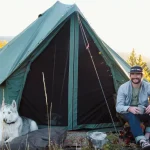
When camping alone, consider the optics of your campsite. For example, it may seem like a small canvas tent is all you need for a solo camping trip, but consider that it might signal to others that you’re alone and vulnerable. If you only own a small tent, consider buying a larger used tent to save some money and help the environment. Again, most people you’ll run into are just out to have a fun adventure like you, but it could save your life or your belongings to practice the extra caution.
Come Prepared with Solo Tent Camping Accessories and Gear
Coming prepared with the right camp gear is always important, but it’s essential to be properly prepared when traveling solo. All of your tent camping accessories and gear should reflect your unique adventure – from the terrain to the climate of your destination. When alone, safety gear is of the utmost importance. Consider packing the following items to keep yourself safe:
- A first-aid kit
- An outdoor survival kit
- Firestarter
- A headlamp and sufficient lighting around the camp
- A portable camping tool kit
- Bear spray or other relevant wildlife repellent
- Navigational tools including physical maps, GPS, and a compass
- A satellite phone and radio
- A personal locator beacon
- Portable chargers and extra batteries
- A water filter
- Bug spray and sunscreen
Plan for Emergencies
It’s easy to push the worst-case scenario to the back of your mind when adventuring. Nobody wants to find themselves in an emergency situation, after all. Still, it’s imperative to plan for any feasible emergency you could encounter. That way, if you end up in an unfortunate circumstance, you have a logical plan of action to follow to get yourself to safety quickly.
Write down all of the emergency numbers you may need that are local to your camping destination. Additionally, take some time to learn how your safety devices work, including satellite devices. The last thing you want to do is find yourself in imminent danger and fumbling to figure out how your safety gear works. Make individual plans for each type of possible emergency, including weather, medical, and safety.
Stay Aware of Your Surroundings
As beautiful and hypnotizing as Mother Nature can be, it’s important to stay alert and aware of your surroundings at all times. Have a pulse on everything that’s going on around you, from the weather and the wildlife to the other folks at camp. Staying aware can help you quickly recognize when things are changing and your safety could be at risk. If you have an uneasy feeling about something, always trust your gut. It’s always better to be safe than sorry!
The Bottom Line
Camping alone is an enriching experience offering outdoor lovers the chance to learn new skills, discover the importance of self-reliance, enjoy unmatched freedom and flexibility in their adventures, and embrace solitude and reconnect with nature on a whole new level. While it’s a unique and fulfilling way to enjoy the wilderness, it does come with a few risks. Between dangerous weather, wildlife threats, medical emergencies, navigation issues, and folks with bad intentions, solo campers have to take extra precautions to ensure their safety. By following the top tips discussed today, you’ll be prepared to adventure alone with confidence.


No Comment! Be the first one.